

In Alchemised, a 1,000-page novel by the US author SenLinYu, the protagonist is an imprisoned woman who is repeatedly raped by her captor. The pair end up together. It’s a gruesome read, but an immensely popular one: in the UK it sold almost 50,000 copies in its first week in September, while in the US it entered the New York Times bestseller list at No 1.
Alchemised is one of a number of popular novels published this year that feature a heroine who is owned or enslaved by her love interest. Others include Firebird by Juliette Cross, which is set in an alternate Roman Empire, and Rose in Chains by Julie Soto, whose protagonist is a princess auctioned off to the highest bidder. All involve attempted sexual assault and sex scenes of dubious consent.
“There’s a growing audience for very dark themes,” says Jenny Hamilton, a critic of the genres. “There’s a bunch of books coming next year where [the female protagonist] is in captivity, which I don’t love. I’m not crazy about that power dynamic.”
These novels are romantasies – a portmanteau of “romance” and “fantasy”. Spearheaded by Sarah J Maas’s A Court of Thorns and Roses and Rebecca Yarros’s Fourth Wing, the genre is known for its high-stakes drama and explicit sex, which fans refer to as “spice”. Readers pore over the characters and plots online, specifically on BookTok, TikTok’s literary corner, and what might sound like a niche concern is booming: last year the subgenre helped increase the value of science fiction and fantasy books by 41.3%, while romantasy has been credited with pushing UK fiction revenue above £1bn for the first time.
Part of the appeal of the genre is the guarantee – despite challenging or sometimes violent beginnings – of a happy ending, said Hazel McBride, a Scottish-born novelist whose first romantasy novel, A Fate Forged in the Fire, was published this year. “You have the certainty of: well, it’s all going to be OK because they are going to end up together.”
Along the way there is plenty of danger, be that because of a world at war or the threat of non-human creatures, so it’s unsurprising that the sex is on the extreme side, too.
“There’s going to be knives involved, there’s going to be dragons,” she added.
A little thrill comes with the territory. But the popularity of novels such as Alchemised shows the sex is getting darker. Brynne Weaver, the Canadian author of Leather & Lark, says this is a clear influence from her genre, dark romance, which explores societal taboos. Weaver has written romances involving serial killers and stalkers. She says she sees the impact of dark romance on romantasies such as Brimstone by Callie Hart, which features non-consensual or dubious-consensual sex (known as “non-con” and “dub-con”), and anticipates that romantasy is set to get even more morally knotty.
This is a trend that a London-based romantasy commissioning editor at one of the UK’s “big five” publishers, who prefers to stay anonymous, has also noticed. “I think what’s happening is that there is more experimenting going on. There are darker worlds, more morally complicated characters and morally grey leads,” they say.
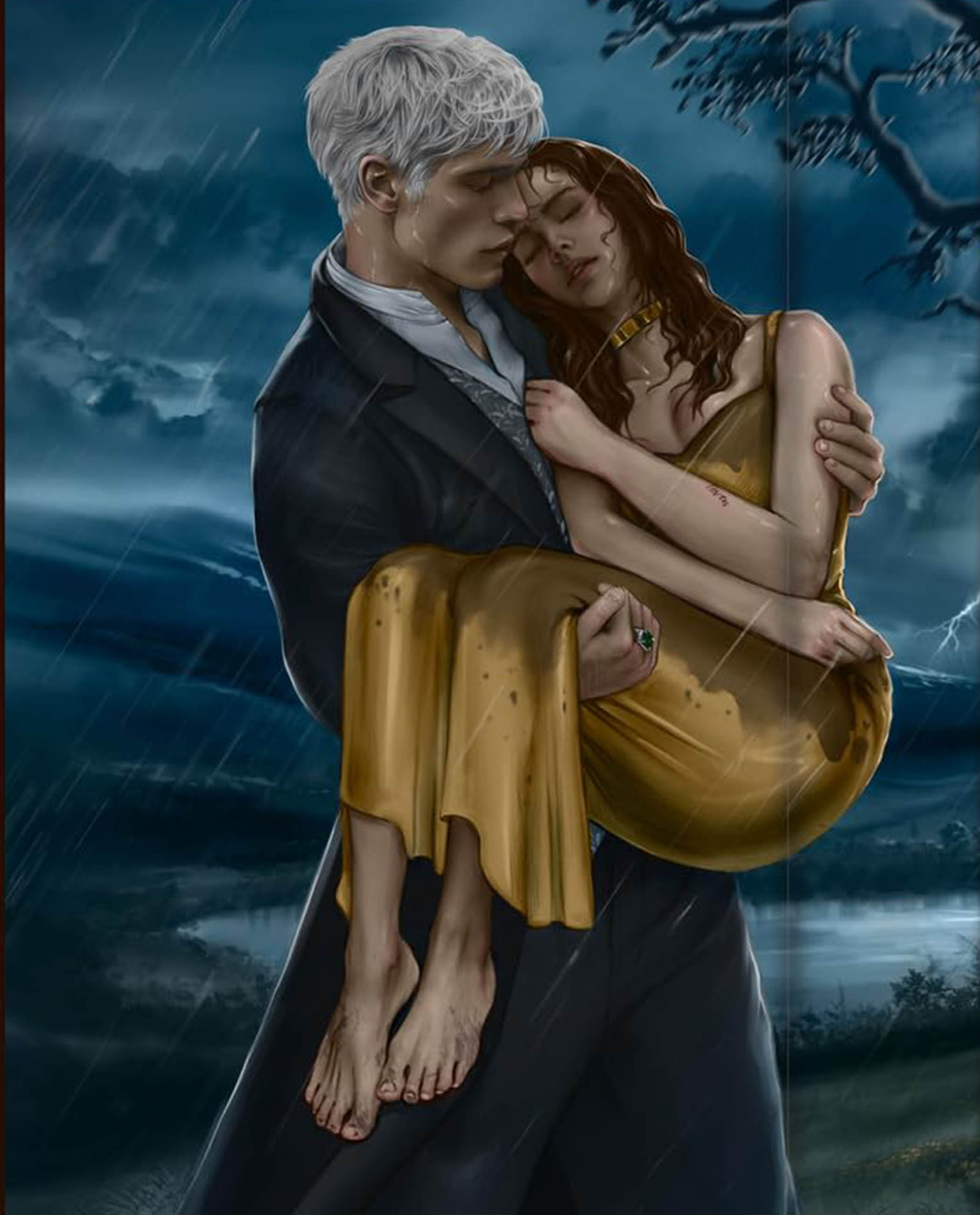
Characters from a book by Julie Soto
These ideas aren’t new. The publication of Stephenie Meyer’s teenage vampire romance Twilight set young hearts ablaze in 2005, while in 2011 Fifty Shades of Grey by EL James titillated readers with its bondage storyline.
Newsletters
Choose the newsletters you want to receive
View more
For information about how The Observer protects your data, read our Privacy Policy
The late Anne Rice, famed for her Interview with the Vampire novels, wrote erotic BDSM (bondage, discipline, sadism and masochism) fantasy under the name AN Roquelaure. Erotic literature has long existed in more niche circles, while Katie Deane, a PhD researcher at Birmingham University, points out that “these sorts of dangerous, threatening heroes have existed since the dawn of the novel”, citing Samuel Richardson and the shocking stir caused by his 1740 bestseller, Pamela, or Virtue Rewarded.
More than ever before, the genre’s popularity today speaks directly to the desires of readers. McBride points to fiction as a non-judgmental place for young people to explore their fantasies. “Spice or smut is an empowering way to showcase sexuality in all its forms,” she says, adding that because of the nature of books and that the novels are typically written by women,reading is far safer than watching porn or experimenting in real life. “It’s a way for women to consume sexual content in a way that is incredibly consensual.”
Weaver says this can be particularly beneficial for readers who have experienced sexual violence: “A lot of readers gravitate towards dark romance because they’ve had similarly traumatic experiences. A lot of people find healing in the pages – they can prod the boundaries of old wounds, but then close the book and put it away.”
Kalie Cassidy, the US author of In the Veins of the Drowning, who says her books fall “within the one to two range” on a chilli-pepper scale – that is, pretty tame – doesn’t enjoy very explicit novels. “Those books are not for me. They don’t make me feel safe.” However, that doesn’t mean she thinks others should not be able to read them. “What a wonderful thing to have a moment to explore those things in the safety of your own mind,” she says.
One novelist, who wished to be anonymous, thought the trend was at odds with the rise of an apparent caution in publishing when it comes to causing offence, but defenders of the genre disagree. “Women who write and read in the genre definitely don’t feel like it’s at odds with #MeToo,” says Weaver. “It’s not at odds with any kind of feminism because it’s a a way we can take back certain negative experiences.” She adds that the “abrupt turn” of sexual politics in the US – including the overturning of Roe v Wade and Donald Trump’s second re-election – “will continue to strengthen the genre because women are going to say: ‘I don’t want to be puritanical. I want to read what I want to read.’”
The commissioning editor agrees, arguing that the rise in more extreme sexual scenes is “an overt rejection of the purity culture that’s growing online and offline”.
This debate gets to a fundamental quandary at the heart of modern sexual politics: can you be a feminist if you desire a protective man or enjoy being submissive in the bedroom?
Chloe Seager, a literary agent at the Madeleine Milburn Agency, points out that it isn’t just romantasy and dark romance grappling with this conflict. Want, a nonfiction book edited by the actor Gillian Anderson, who starred as a sex therapist in the teen TV show Sex Education, became an instant bestseller in 2024. “Women were invited to submit sexual fantasies, and a lot of them are rape fantasies,” Seager notes – something that “as a modern woman, you might not feel you can admit to desiring”. According to the commissioning editor I spoke to, publishers have become “moral arbiters”. “But,” they add, “it would be disingenuous to act like there’s not an appetite out there for more extreme content. That’s why these books are doing so well.”
Image by FairytaleDesign/Getty Images