


By now we’re familiar with the most famous names in the Epstein files – Trump, Mandelson, “the invisible man”. But there are other celebrity men who’ve received far less attention. Picasso, Munch, Da Vinci, Rembrandt and Titian are among the artists listed on one intriguing spreadsheet released last month by the US Department of Justice, attached to works of art with valuations ranging in the tens of millions of dollars.
The document appears to relate to a massive loan taken out by the private equity billionaire Leon Black, one of Epstein’s closest clients in the years after his 2008 conviction for having sex with a minor. According to the files, artworks by some of history’s most famous painters were used as collateral for nearly half a billion dollars in borrowing – an arrangement that hints at the quiet but booming industry of art-backed lending.
A number of the works match promised gifts made by Black to various museums, including the Museum of Modern Art (MoMA), where he was chairman of the board from 2018 to 2021 until he was pressured to resign over his association with Epstein.
Epstein and Black became close around 2011, when Black took his hedge fund Apollo Global Management public. By then, Epstein was a registered sex offender and in need of cash to fund his lavish lifestyle. Black hired him to advise on investments and estate planning, paying him an initial sum of $5.5m and then $23m several months later. Over six years, Black would pay Epstein a total of $170m – far in excess of the market rate for financial consulting even by gilded Wall Street standards – making him Epstein’s primary benefactor in the years following the late paedophile’s 2008 conviction.
Early on in their relationship, Epstein claimed to be involved with Black’s $3bn art collection. This was surprising: Epstein had no background in the art world and was not known to work as an art adviser.
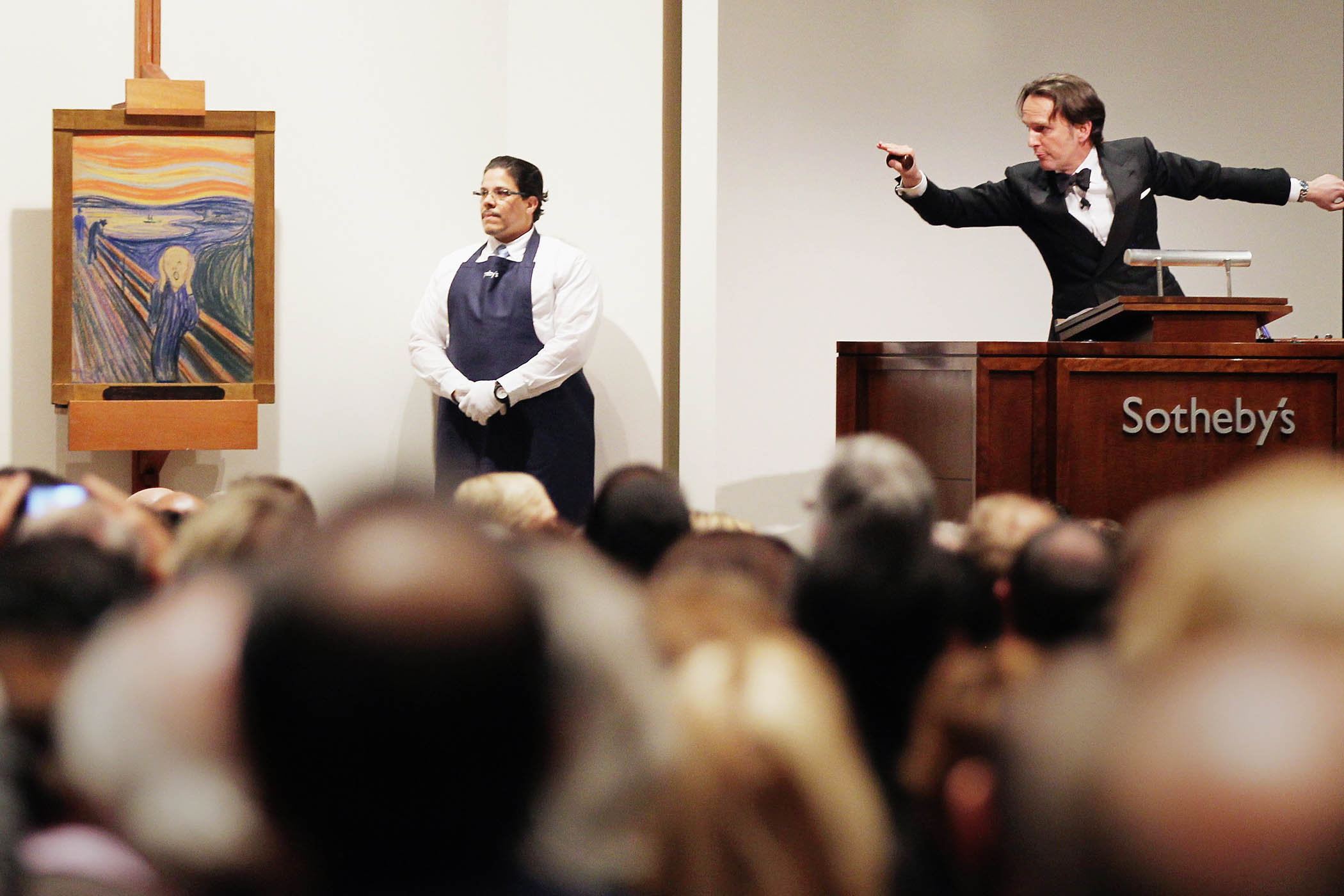
In one 2012 email to a banker at JP Morgan, Epstein said he was advising on the $120m purchase of Edvard Munch’s iconic painting The Scream, a claim which Black has since denied.
Art advisers consult their clients on what art to buy and then help secure coveted works from galleries or private sellers, usually collecting a 5-10% fee. Epstein was hardly qualified to do this kind of work, and at least once he claimed to have an adviser of his own.
In a 2019 email to the journalist Michael Wolff, he said he’d passed on the opportunity to buy the Salvator Mundi, a painting attributed to Leonardo Da Vinci, because “my art guy said the painting wasn’t very good”. (Salvator Mundi sold to Saudi Crown Prince Mohammed bin Salman for $450m dollars in 2017.)
“You have an art guy?” Wolff asked. “Doesn’t everyone,” Epstein replied.
Files indicate that in March 2015, Epstein helped Black secure a $484m loan from Bank of America backed by high-value masterworks in Black’s collection, including those listed on the spreadsheet by Picasso and Rembrandt.
Newsletters
Choose the newsletters you want to receive
View more
For information about how The Observer protects your data, read our Privacy Policy
Art loans are a bit like taking a loan out on your house: you can claim the cash and continue living there, at least until you default and the repo man comes knocking. If a debtor can’t pay, their paintings will get seized. The works on the spreadsheet could remain in Black’s homes in New York, London and Miami, or on loan on the walls of MoMA, while he sourced the funds to pay back the generously low interest.
The kind of people who own Rembrandts usually have other assets they can sell off in case of default, so banks are typically willing to offer them cushy terms. Bank of America charged Black an interest rate of 1.43%. Compare that to the 28% capital gains tax he would have paid had he put the works on the market.
Collectors call this “Buy, Borrow, Die”. Art can be purchased and used to back up loans, and when their heirs die, they can sell off those assets to pay outstanding debts without ever being liable for estate taxes.
In recent years, a cottage industry has cropped up to facilitate such arrangements at the top end of the art market, from Sotheby’s Financial Service to International Art Finance and the Fine Art Group. Increasingly, large banks like UBS and Goldman Sachs have also begun offering art loans to their top clients. According to a report last year from Deloitte and ArtTactic, the market for art loans is expected to top $50bn within the next two years.
Such manoeuvring is perfectly above board, and there is no evidence that Leon Black has broken any laws. He has consistently denied all wrongdoing in his dealings with Epstein.
Still, the loan is remarkable for its scale. It’s unusual that Epstein should have been involved at all, given that he had no art historical training and by all accounts very poor taste.
The auction of his own collection late last year was like a creepy uncle’s junk yard sale, from the low-quality reproduction of Kees van Dongen’s painting Femme Fatale (1905) to the bronze female nude which hung from a rope in his stairwell, made by the obscure French sculptor Arnaud Kasper. Epstein seemed mostly interested in art as a gag: why else would he have displayed, in the foyer of his Upper East Side mansion, a painting of his friend Bill Clinton dressed in Monica Lewinsky’s famous blue dress?
The documents offer a glimpse of the world Epstein ran: one in which masterpieces by Picasso and Rembrandt circulate not as cultural treasures but as extremely convenient financial assets – paintings that can hang in a public museum while quietly underwriting hundreds of millions of dollars in private borrowing.
Photograph by Mario Tama/Getty Images