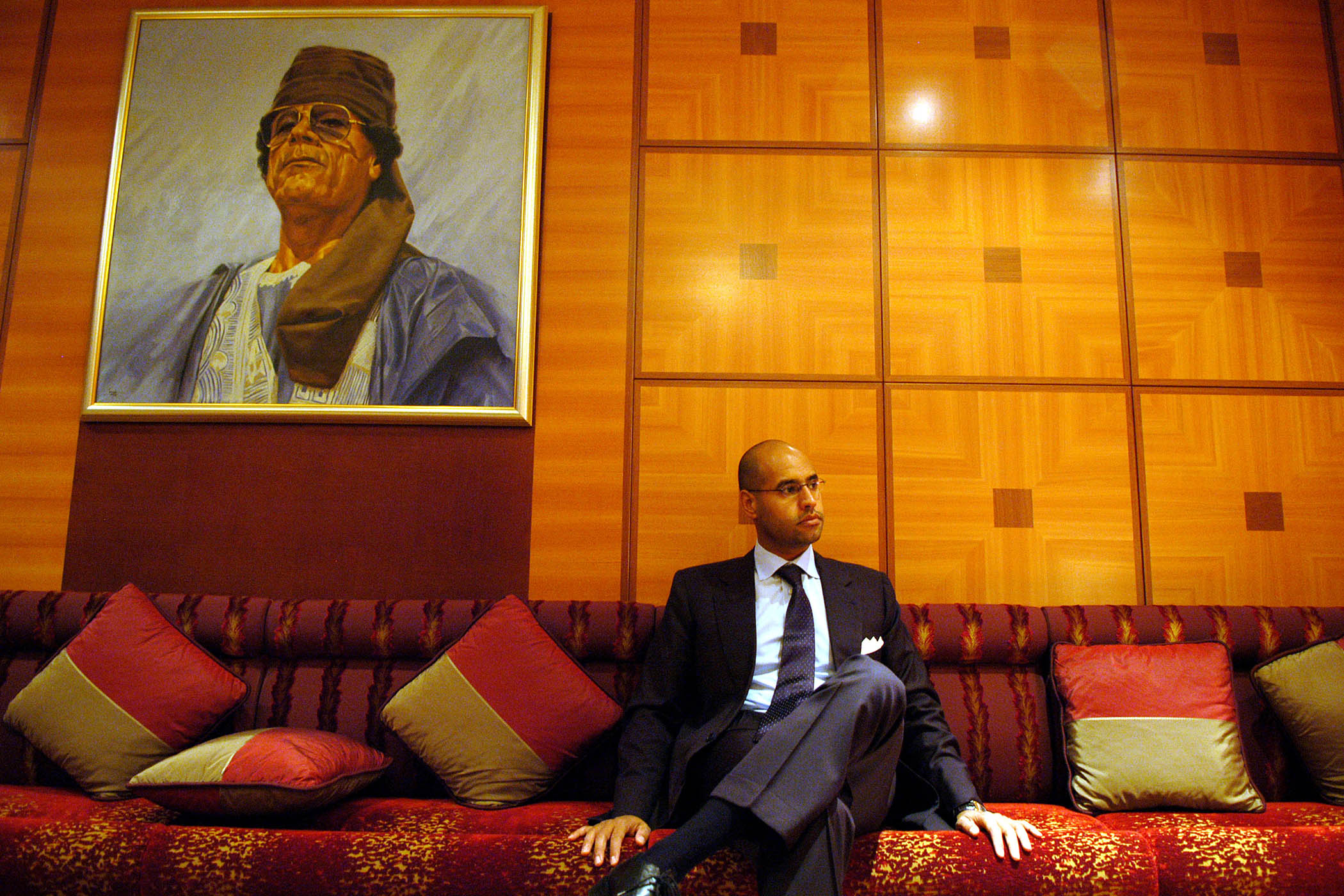

A remote town on a mountainous plateau in north-western Libya is a long way from a box at the opera in Vienna alongside US model and actor Carmen Electra. But it was in Zintan where Saif al-Islam Gaddafi, the playboy-turned-politician who had once been seen as Libya’s future, was assassinated last week.
The son of the late Libyan ruler Muammar Gaddafi, once believed to be a potential heir, was killed by four gunmen in the garden of his home, his lawyer said, describing the attackers as commandos who the 53-year-old “directly confronted”.
According to local reports, the assassination was unusually slick.
‘This wasn’t militia clashing. It was timed, coordinated, professional’
‘This wasn’t militia clashing. It was timed, coordinated, professional’
Anas El Gomati
“This wasn’t militia clashing. It was timed, coordinated, professional. They knew when he’d be there, disabled surveillance, executed the operation and vanished. That level of planning rules out standard militia operations,” Anas El Gomati, director of the Tripoli-based Sadeq Institute thinktank, told The Observer.
In the murky and fractious world of Libyan politics, though, while rumour abounds, there have been no credible reports of who was behind the killing.
“Motive is everywhere. Evidence is nowhere,” El Gomati said. “We’re reading smoke signals in a country where the fire never stops.”
It was a tawdry full stop to a life that saw Saif al-Islam become the second most powerful man in Libya after his father, trusted to lead important diplomatic initiatives.
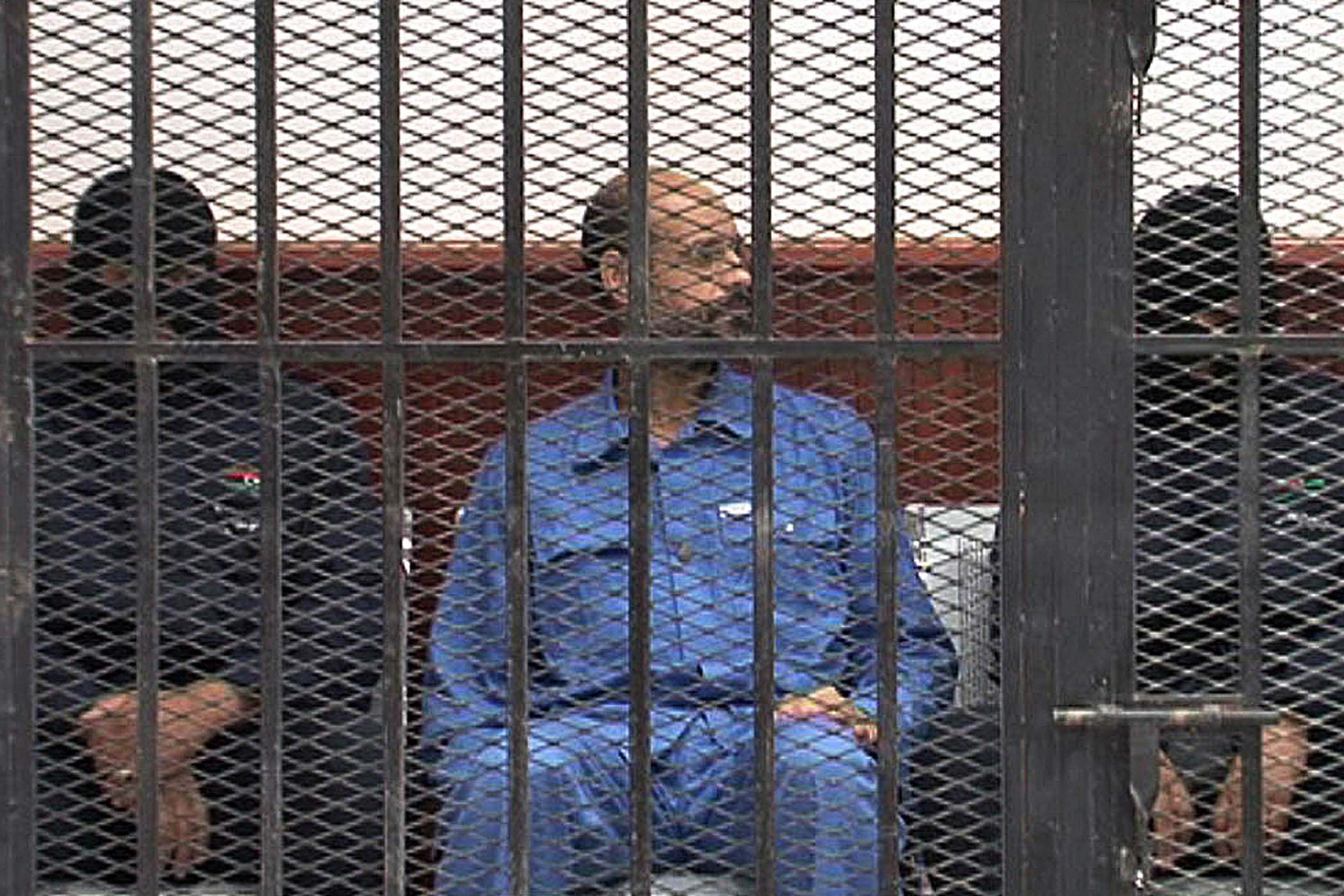
Saif al-Islam in 2013, two years after his capture
He was the acceptable face of the country in the west, rubbing shoulders with political elites across Europe, most notably in London, where he paid millions for a mansion in the wealthy Hampstead Garden Suburb.
The visit to the opera in 2006 came at a time when Saif al-Islam’s charm offensive and efforts to bring Libya in from the cold had been under way for years.
Though considered a more sober version of the elder Gaddafi, he wasn’t averse to a little flamboyance, owning two tigers, wearing only the sharpest suits, and enjoying opulent parties and the company of models.
Newsletters
Choose the newsletters you want to receive
View more
For information about how The Observer protects your data, read our Privacy Policy
He positioned himself as a genuine reformer who wanted to gently push his autocratic family towards a more democratic future.
It wasn’t all talk. Relations with western nations improved considerably when Muammar Gaddafi agreed to give up his nuclear ambitions in 2003, a massive concession believed to have been brokered by his son, which eventually led to the lifting of longstanding sanctions.
Saif al-Islam dangled access to Libya’s oil, hindered by increasingly dilapidated infrastructure, believing he could leverage it to strike favourable trade deals.
He often called for the drawing-up of a constitution that would guarantee human rights. And in the most controversial move among his father’s loyalists and the state security apparatus, he extended an olive branch to sworn enemies in Libyan Islamist groups, leading to the release of many from the country’s dungeons.
In Britain he numbered among his circle Peter Mandelson, who faced a tirade of criticism in 2009 when the Spectator revealed he had joined Saif al-Islam in a shooting party at Lord Rothschild’s Waddesdon Manor in Buckinghamshire.
Mandelson’s office said in a statement at the time that it was not in the habit of commenting on his social engagements, but that he would never kill a pheasant.
Saif al-Islam’s penetration of British high society was deep and reportedly included two meetings with Andrew Mountbatten-Windsor, but after Libya’s civil war broke out in 2011, his friends frantically distanced themselves.
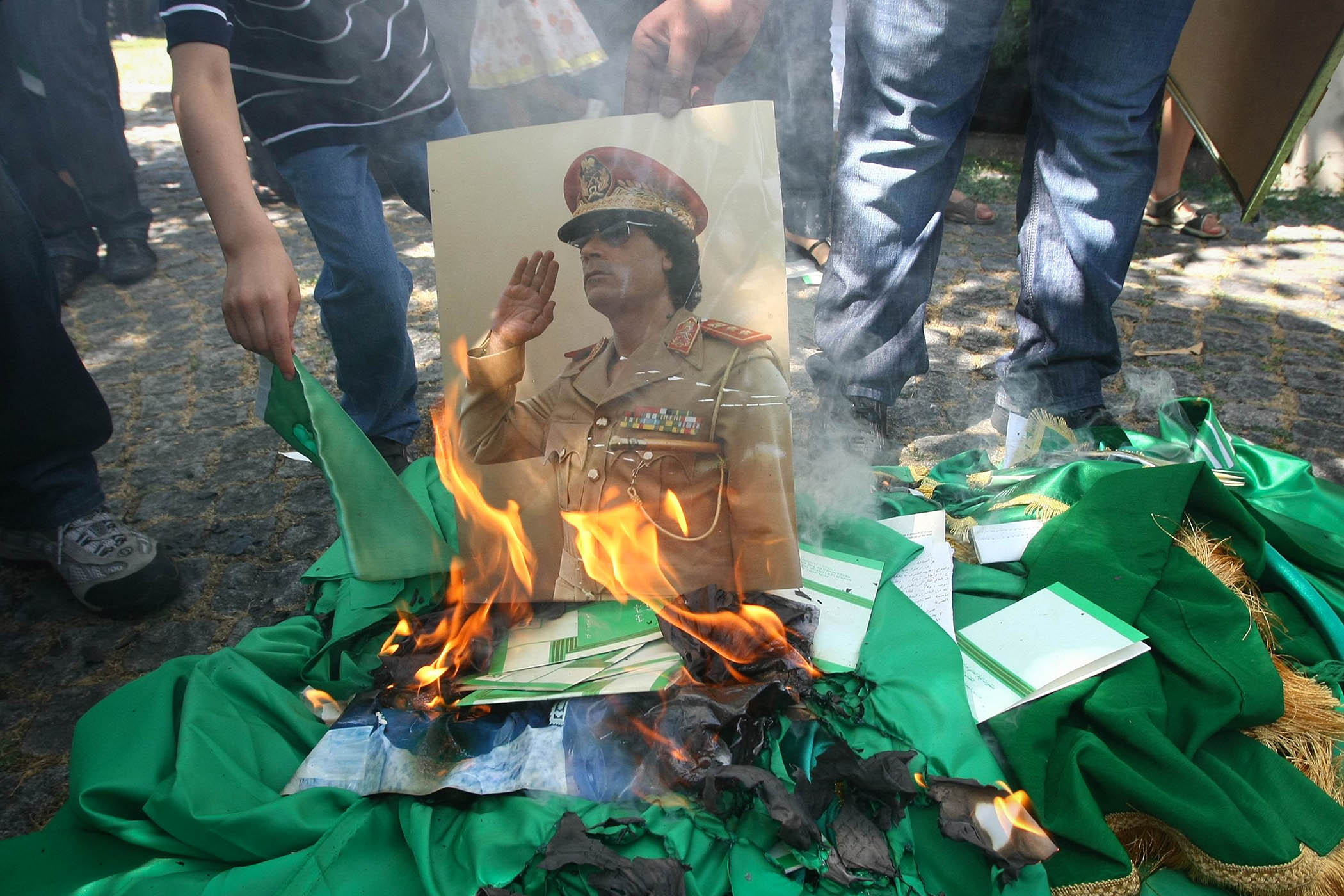
Protesters set fire to a picture of Muammar Gaddafi in 2011
Howard Davies, then director of the London School of Economics, was forced to resign after admitting “errors of judgment” in accepting a £1.5m research donation from Gaddafi junior and in travelling to Libya to advise the government.
The university was also forced to investigate allegations that a PhD it awarded Saif al-Islam – titled “The Role of Civil Society in the Democratization of Global Governance Institutions: From ‘Soft Power’ to Collective Decision-Making?” – had been plagiarised or that he had paid consultants to write it on his behalf.
It could have been very different, and indeed his western friends may have been forgiven for thinking they were about to be rewarded for their patronage and foresight when, with the nascent rebellion against his father under way, Saif al-Islam appeared on television to address the Libyan people.
Many expected that he would announce concessions, perhaps even that Muammar Gaddafi was about to step down in favour of the reformist heir.
Instead the Libyan people and the world watched as Saif al-Islam jabbed his finger at the screen and warned that the country would end up awash in “rivers of blood” if the protests did not stop. “The language he used sounded just like his dad,” a western diplomat told me at the time. “A mask dropped and an instinct to protect the dynasty kicked in.”
In a speech that would go down in infamy, protesters were described as “rats” and the government, he said, would fight “to the last man, woman and bullet”.
The soft face of Libya had made a choice. And that choice was to join with his father and Mutassim Gaddafi – his hardline younger brother who observers in Tripoli said was in close competition with him to succeed their father – and fight.
What happened next is well documented. The revolution, with the help of Nato, succeeded and Muammar Gaddafi was captured and summarily executed.
Saif al-Islam, who after making a dramatic appearance on the streets of Tripoli to rally the troops as rebels closed in on the capital, went on the run before he was caught on his way to neighbouring Niger disguised as a Bedouin tribesman.
It began a long period of imprisonment during which he was held by a militia in the revolutionary hotbed city of Zintan. Though there was an international criminal court warrant out for his arrest and he was sentenced to death by firing squad in a Tripoli court in 2015, the fighters of Zintan refused to give up their valuable negotiating chip.
The Gaddafi family’s warnings of a splintered Libya should the western-backed revolt succeed came to pass and the country quickly fell into chaos post-2011 with power brokers, militias, and tribes running fiefdoms and competing for influence.
There are now, in effect, two administrations, one based in Tripoli in the west and the other in the eastern city of Tobruk, each supported by a dizzying assortment of armed groups and foreign governments.
A sense of frustration among the people of Libya with both governments, and with perceived corruption, is what led Saif al-Islam to make his one and only audacious move since he was unexpectedly freed in an amnesty in 2017.
In 2021, as a UN-led initiative to hold a presidential election bore fruit, he made the journey from his safe haven in Zintan to the southern city of Sabha to formally register his candidacy, grabbing attention because of how rarely he was seen.
It was a bid that most saw as rooted in nostalgia for the relative stability of his father’s time and a desire among some remnants of the Green Movement, Muammar’s loyalists, to have a figurehead they could rally round.
“Saif wielded entirely symbolic power – no territory, no militia, no political organisation,” El Gomati told The Observer. “He’d been invisible since 2021, living under Russian protection in southern Libya and Zintan, where he relied on local groups.”
According to Jalel Harchaoui, an analyst at the Royal United Services Institute thinktank, the journey to Sabha was facilitated by troops from Russia’s Wagner mercenary group, who guarded him on the ground and flew jets above.
“His appearance in Sabha at the electoral commission wouldn’t have been possible without the protection of Russia,” he told The Observer.
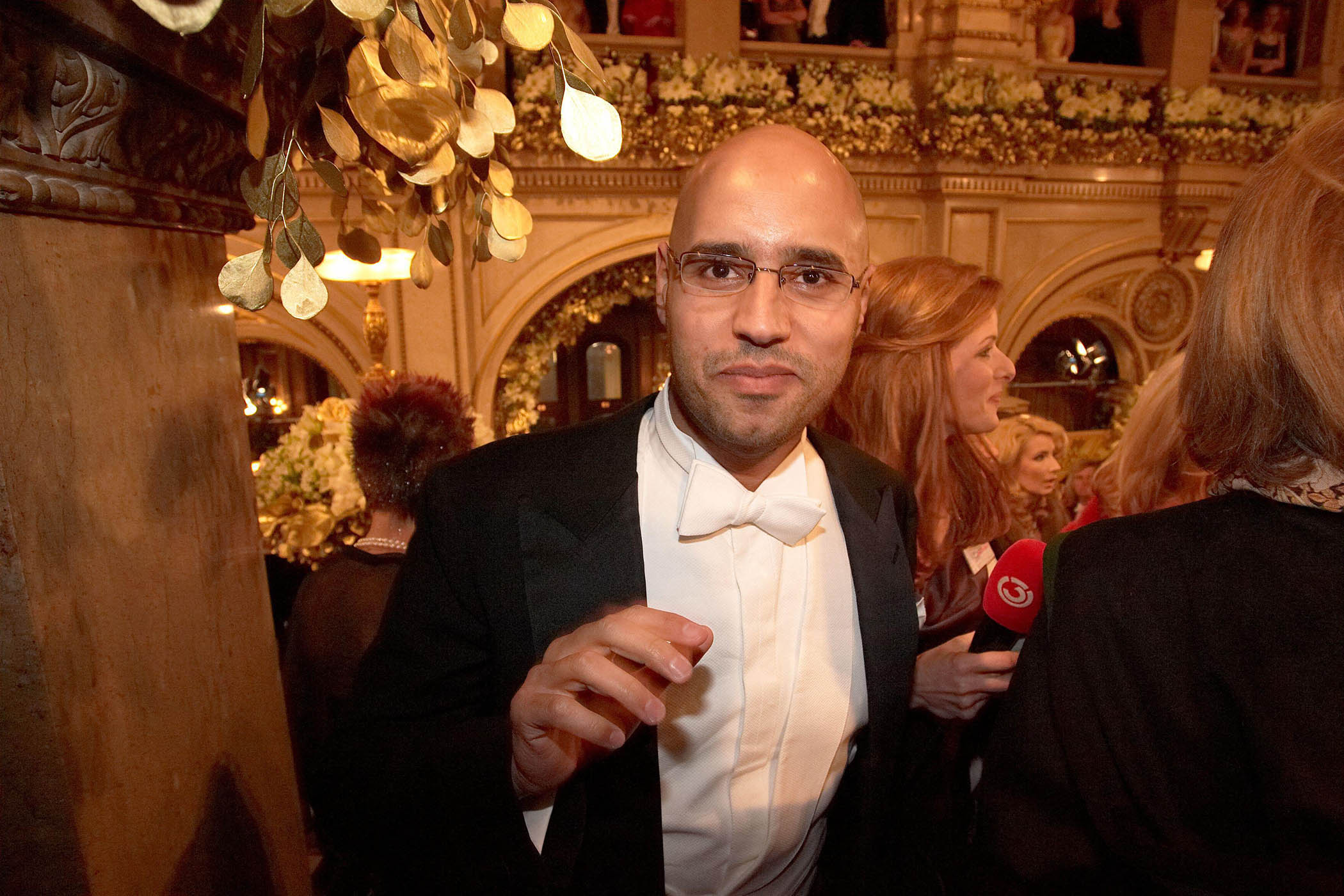
Saif al-Islam at the Vienna Opera Ball in 2006
Russia, Libyan analysts said, nominally supported the administration of Gen Khalifa Haftar but saw Saif al-Islam as an insurance policy.
Harchaoui said that the appearance was very brief, the prospective candidate didn’t say much and it was a security feat more than anything else.
“He showed up, declared himself as a candidate, and just disappeared into the wilderness within 20 minutes,” he said.
For Harchaoui, Saif al-Islam was an asset to those who backed him simply because “he was biologically alive, and that was enough to use him as a symbol”.
But, he said, reliable polling showed he could achieve as much as 40% of the vote.
The election didn’t go ahead, partly due to the possibility of what some were calling the “third option” disrupting power-sharing between east and west. Saif al-Islam is now out of the way, and with the four surviving Gaddafi children abroad and lacking heft or influence, Muammar’s dynasty is dead.
In the end, it appears that a man who had survived a war, international arrest warrants and a death sentence could not, or would not, articulate to the Libyan people or the country’s many powerful factions what he stood for.
“I don’t think he knew who he was beneath the costumes. He wasn’t a democrat or reformer – he was a would-be heir who outlived his inheritance, method acting through personas until someone decided the performance had run too long,” El Gomati said.
Barry Malone was the Reuters correspondent in Tripoli during the Libyan war
Countdown to a killing
February 2011 Violent protests break out in Benghazi against the government of Muammar Gaddafi as the Arab Spring takes hold across north Africa. They spread to other cities.
March 2011 In response to Gaddafi’s violent crackdown, the UN Security Council imposes a no-fly zone over Libya, which Nato enforces with airstrikes across the country.
October 2011 Rebel fighters (pictured, below) capture and kill Gaddafi, who had ruled for more than four decades. The main opposition group, the National Transitional Council (NTC), says that Libya is “liberated” and promises elections.
November 2011 Gaddafi’s son, Saif al-Islam, is captured in the Sahara while attempting to flee to Niger. He is disguised as a tribesman.
August 2012 The NTC hands power to the General National Congress (GNC), but this is not a time of peace. The following month, Islamic militants kill the US ambassador in Benghazi.
February 2014 Protests erupt after the GNC refuses to disband in accordance with its mandate. The east and west become host to warring sides.
July 2015 A Tripoli court sentences Saif al-Islam to death for crimes committed during the 2011 uprising. He is freed in 2017 as part of an amnesty deal.
March 2016 The presidential council of the UN-backed Government of National Accord (GNA) arrives in Tripoli by boat. Over the next two years, Islamic State is rooted out of Libya.
September 2020 The eastern government, led by the warlord Khalifa Haftar, resigns after protests in Benghazi. A ceasefire follows between the GNA and his Libyan National Army.
November 2021 Four years after he is released, Saif al-Islam says he is running for president. He is disqualified, the election falls apart and the impasse remains to this day.
February 2026 Saif al-Islam is shot dead at his home in the city of Zintan.
Photographs by Lynsey Addario/Getty Images, AFP via Getty Images, Adem Altan/Getty, AFP, APA-PictureDesk/Alamy