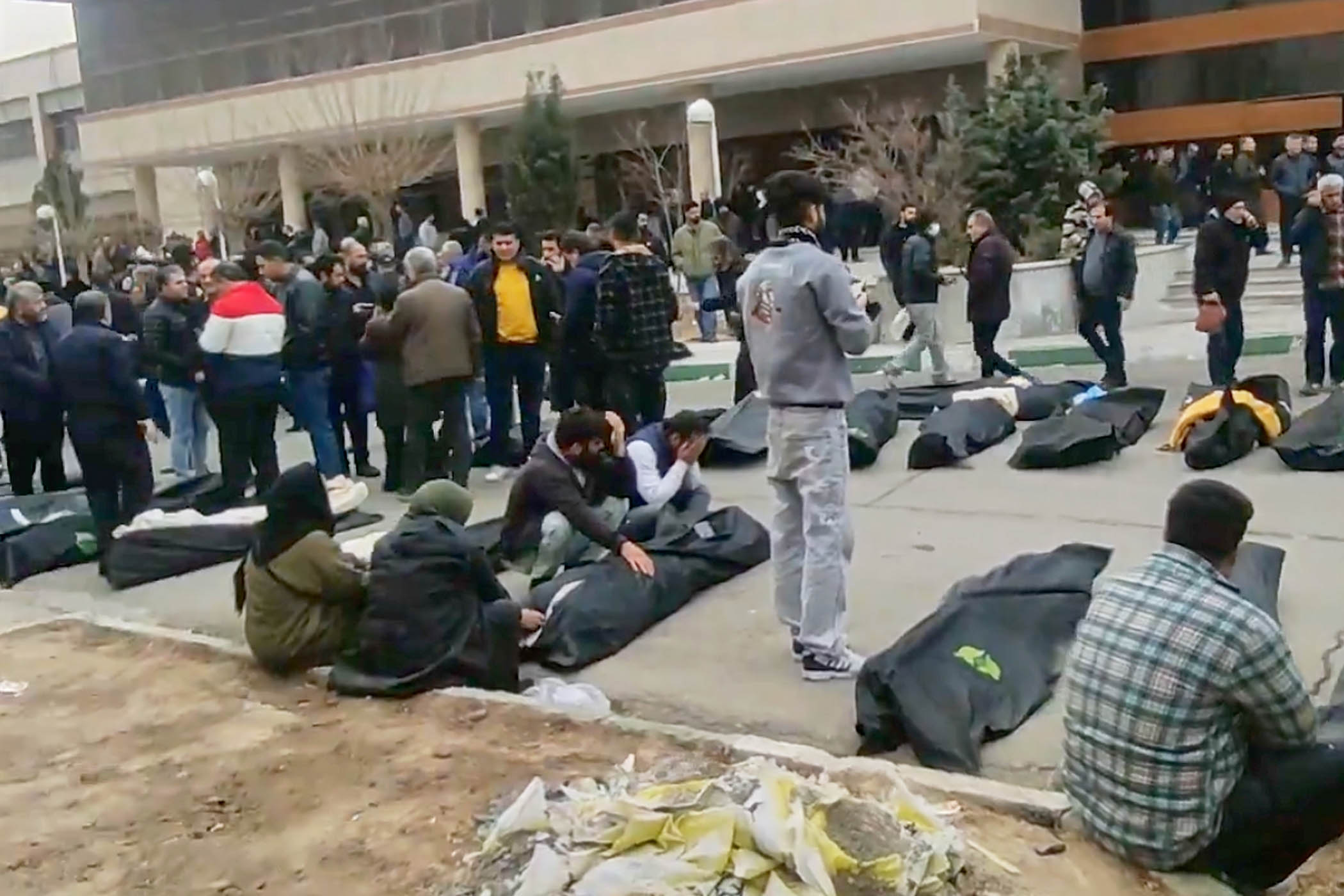
As an armada of US warships reaches the waters around Iran, the regime in Tehran is suppressing evidence of the largest wave of killings in its modern history.
Officials are charging the families of protesters for each bullet lodged in corpses to return their bodies, arresting doctors who treat demonstrators, demanding that relatives claim the deceased was a member of the Basij, the paramilitary force of the Islamic Revolutionary Guard Corps, and pressuring medics to change information on death certificates – all intended to mask the scale of the killings.
One family in eastern Tehran learned their 18-year-old son, Mehdi, had been shot and wounded during protests in early January – before he was taken to a nearby hospital, where a doctor issued false records masking his injuries in order to treat him. On arriving at the hospital and seeing her son with a bullet wound in his neck, his mother, Farzaneh, had a heart attack and died. Two days later, the bullet in his neck claimed Mehdi’s life.
“The family couldn’t get his body from the hospital as security forces had detained the doctor,” said a friend of the family. “A few days later, they had to pay a ‘bullet fee’ of 700m tomans [about £4,000] to get his body back. They paid by borrowing money from family and friends. Nobody knows the fate of the doctor.”
While even Iran’s supreme leader, Ali Khamenei, has admitted that “thousands” were killed, revealing the true scale of the atrocity remains a red line. Mehdi Tabatabaei, a spokesperson for the office of Iran’s president, Masoud Pezeshkian, said officials would release personal information from “all those who lost their lives in the recent tragic incidents”, to combat what he termed “fabrications and falsified statistics”.
Those tracking the Iranian regime’s decades-long record of killing, arrests and mass executions say this is part of a sweeping effort to control the narrative. “There is a pattern here of gross underestimation,” said Payam Akhavan, an Iranian-Canadian lawyer and former United Nations prosecutor.
Weeks after security forces turned machine guns on crowds of demonstrators, the true death toll is still not yet known. Akhavan referred to death certificates and other medical evidence gathered by a network of doctors, forensic experts, medics and mortuary workers across Iran, funnelled to a Munich-based statistician, who has issued a projection of the likely death toll: 33,000 people.
Akhavan cites the projection, he said, “to raise the alarm, to make the world stand up and take notice”.
He stresses this figure is likely still an undercount. “There is reason to believe the number is much higher,” he said, pointing to the information reaching his network from hospitals, clinics and morgues in large cities in Iran, despite an internet blackout that has largely cut its citizens off from the outside world for more than two weeks.
‘We hear stories of a father burying his son in his garden to avoid taking him to the morgue for proper forensic examination – this further distorts statistics’
‘We hear stories of a father burying his son in his garden to avoid taking him to the morgue for proper forensic examination – this further distorts statistics’
Payam Akhavan, lawyer
Data from provincial towns and remote locations has been harder to obtain, but many fear the violence in these places was more severe.
Newsletters
Choose the newsletters you want to receive
View more
For information about how The Observer protects your data, read our Privacy Policy
“We hear stories of a father burying his son in his garden at home to avoid taking him to the morgue for proper forensic examination – that further distorts statistics,” said Akhavan.
“We have accounts of morgues running out of bodybags... there is evidence of mass burials of bodies, transported in refrigerated trucks used to transport meat.”
Mahmood Amiry-Moghaddam, who heads the Iran Human Rights organisation in Norway, said he believes a death toll of more than 30,000 “is not unrealistic”, based on testimonies and data it has received. His group stopped issuing a count of the dead in recent weeks because it is unable to verify information using the same methods as in the past – a consequence of the internet blackout.
Eyewitness testimonies, he said, “show the same pattern” of widespread and systematic killing in 400 cities and towns across Iran. “The intention has been to kill as many people as possible: They follow people fleeing and shoot them, and people who are wounded laying on the ground.”
Charging bullet fees of sums well beyond the means of most Iranians, and a death sentence meted out to at least one doctor who treated wounded protesters have left many terrified to engage with the authorities – once again concealing the true toll of fatalities.
The number may soon rise. State television has aired forced confessions of some of the more than 40,000 demonstrators believed detained, amid fears the regime could hang thousands more.
Donald Trump has repeatedly threatened to strike Iran if protesters are harmed. As the scale of the killings emerged, Trump prevaricated while weighing up military action. In the Oval Office, he told reporters he had given Iran a deadline to cut a deal.
On the red carpet at the premiere of the first lady’s documentary, Melania, Trump said he had spoken with Iranian officials and expected to do so again. “I told them: ‘Number one, no nuclear. And number two, stop killing protesters’ – they are killing them by the thousands,” he said.
“We have a lot of very big, very powerful ships sailing to Iran right now and it would be great if we didn’t have to use them.”
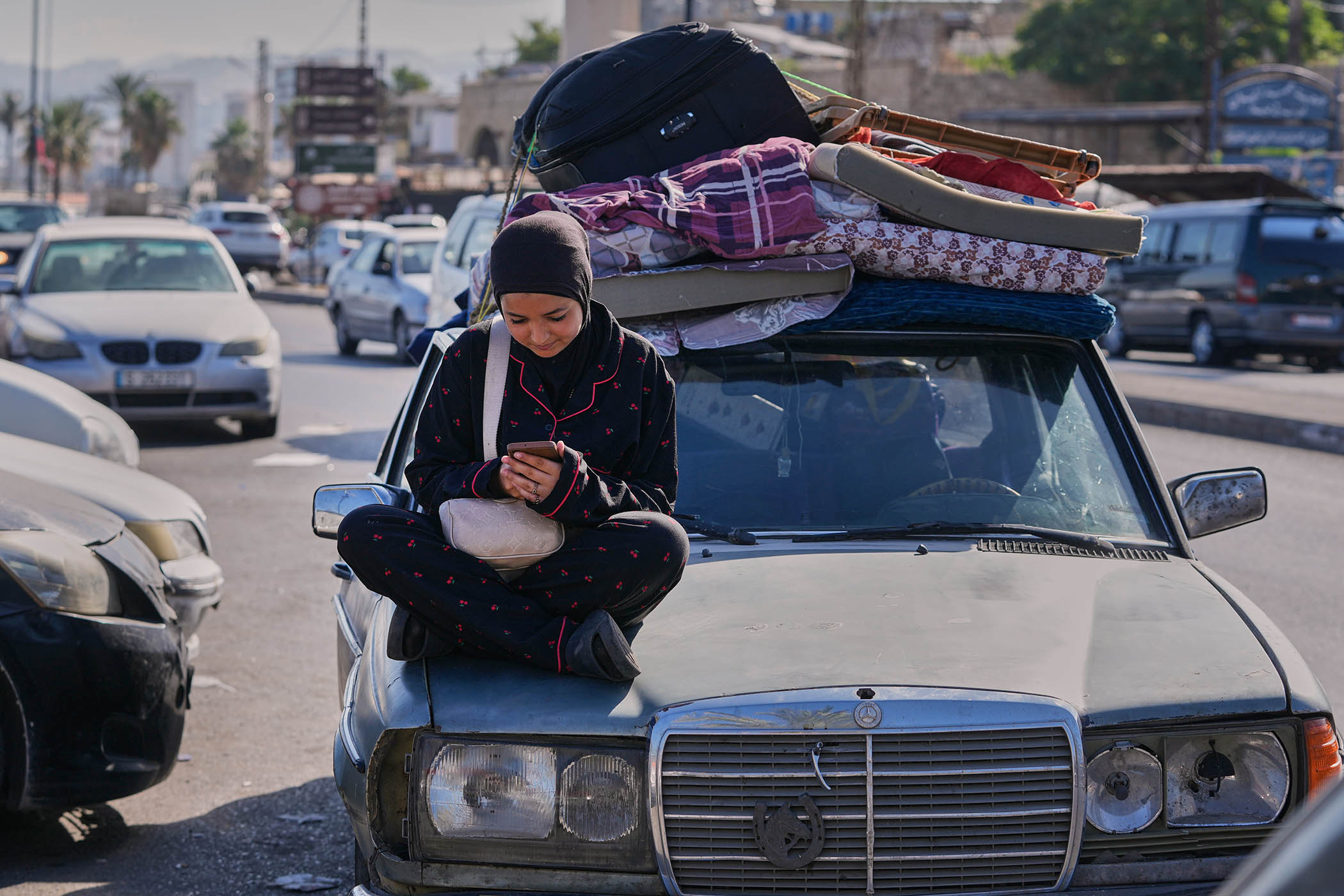
Turkish officials and their president, Recep Tayyip Erdoğan, engaged in a flurry of diplomacy, talking with the country’s American ambassador, Tom Barrack, and hosting the Iranian foreign minister, Abbas Araghchi, in an attempt to spur negotiations and avert military action.
Ankara fears an attack could destabilise the wider region after Tehran’s promises to retaliate “You do not start negotiations with threats. First of all, they should leave aside their threats,” said Araghchi adding: “Just like we are ready for negotiations, we are also ready for warfare.”
For Iran’s human rights activists, the focus for now is on shining a light on the horrors of January. “Families are under pressure – more so than ever before,” said Amiry-Moghaddam.
“The authorities are trying to create such an atmosphere of terror – in the 18 years we have been doing this, we have never seen anything like it. They are threatening families and the lives of their children, warning them not to communicate with the media or rights groups.” Still, he said, the testimonies keep flooding in.
Akhavan was unequivocal. “This has been an extermination. I think the scale is such that it can legally qualify as a crime against humanity,” he said.
Photograph by UGC via AP