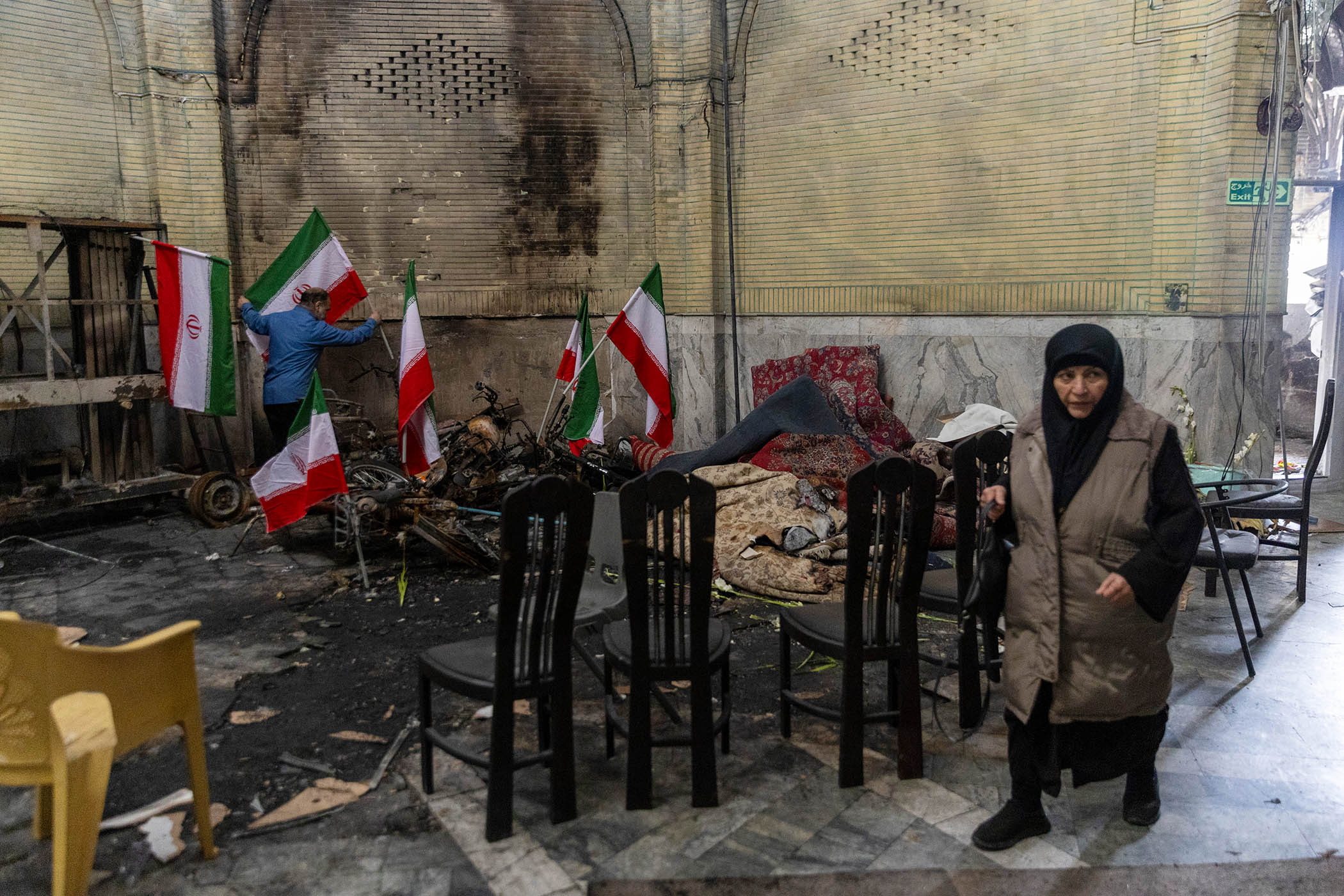
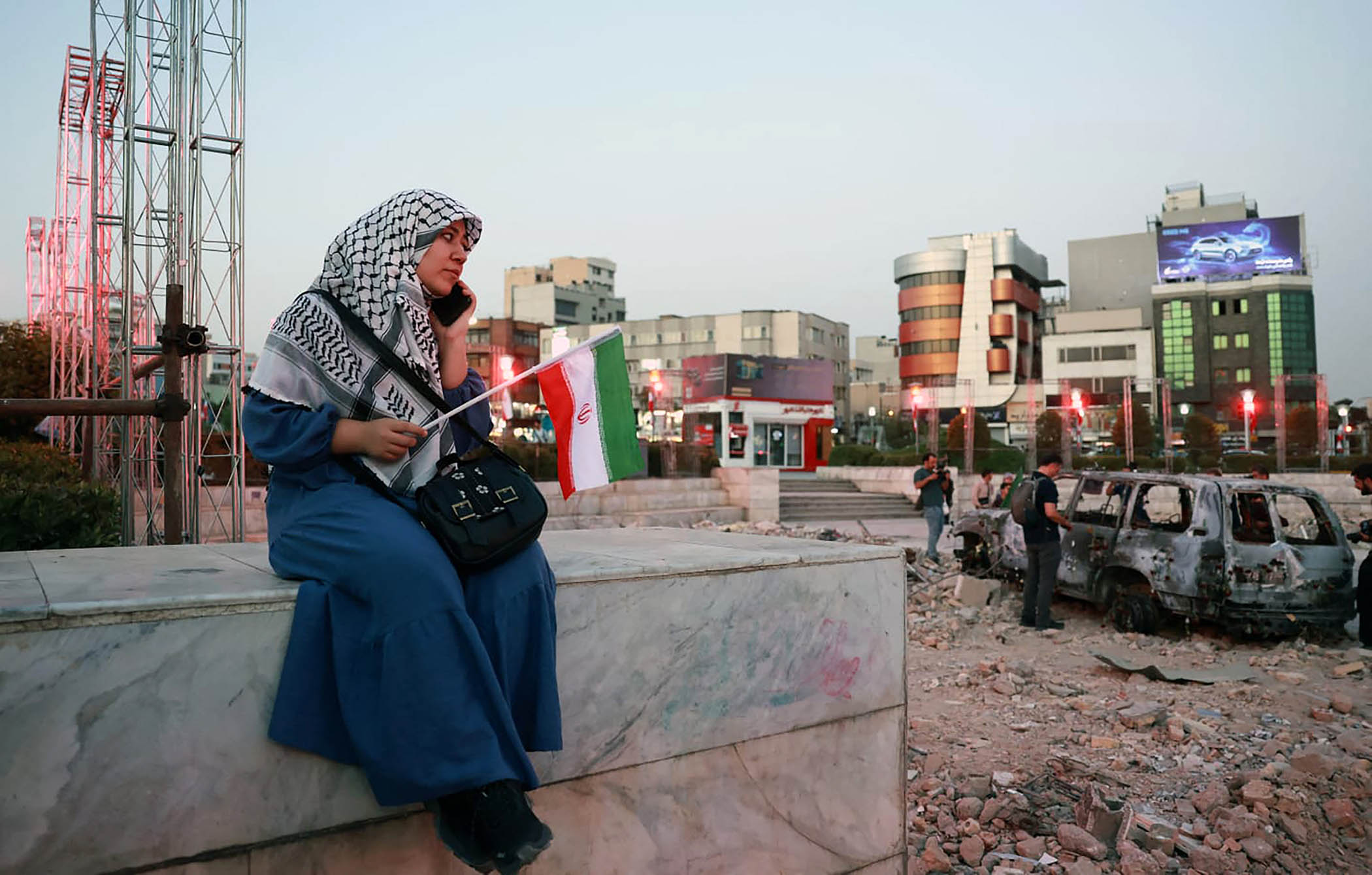
The Iranian regime is conducting a show of power; on the streets of Tehran, its security agencies are out in force. New flags hang at the entrance to every metro station, including some where protesters were teargassed inside. A burned-out fire engine was left in central Enghelab Square, adorned with signs blaming terrorists for the destruction.
The authorities have quickly welded new street signs to the walls to cover up any altered by demonstrators and are hunting for satellite dishes on rooftops. Metal bars now ring branches of a supermarket chain linked to Iran’s Islamic Revolutionary Guard Corps (IRGC) that protesters targeted, to prevent anyone setting them alight.
Parinaz, a blogger and protester, tried to take some comfort from the fact that the authorities had not yet managed to cover up all the anti-regime slogans sprayed on the walls. She only stopped leaning out of her windows at night to chant slogans last week as protests ebbed. Still, she overheard two people yell curses about the country’s supreme leader, Ali Khamenei, when they spotted plainclothes security on motorbikes.
But these moments of rebellion are rare. Among the demonstrators who took to the streets night after night, fear has replaced hope. “These days, I don’t dare ask around to see who has been killed and what has happened to people I know,” said Parinaz. “The situation is awful – there are crowds of plainclothes police, security forces and Basijis everywhere,” she added, referring in the last instance to members of the IRGC’s paramilitary group.
“Everyone who survived has bullets in their body or has been badly beaten. People are so deeply sad. Nobody laughs. Everyone is filled with tears they haven’t had the chance to shed yet.”
Life in the Islamic Republic has never looked bleaker; the aftermath of the bloodiest crackdown in its modern history has left citizens wondering what may happen as the regime digs in. There is no relief from the cost of living crisis that sparked the largest protests in years, while the internet shutdown that has kept people in the dark is only deepening their poverty and has left many struggling to afford food.
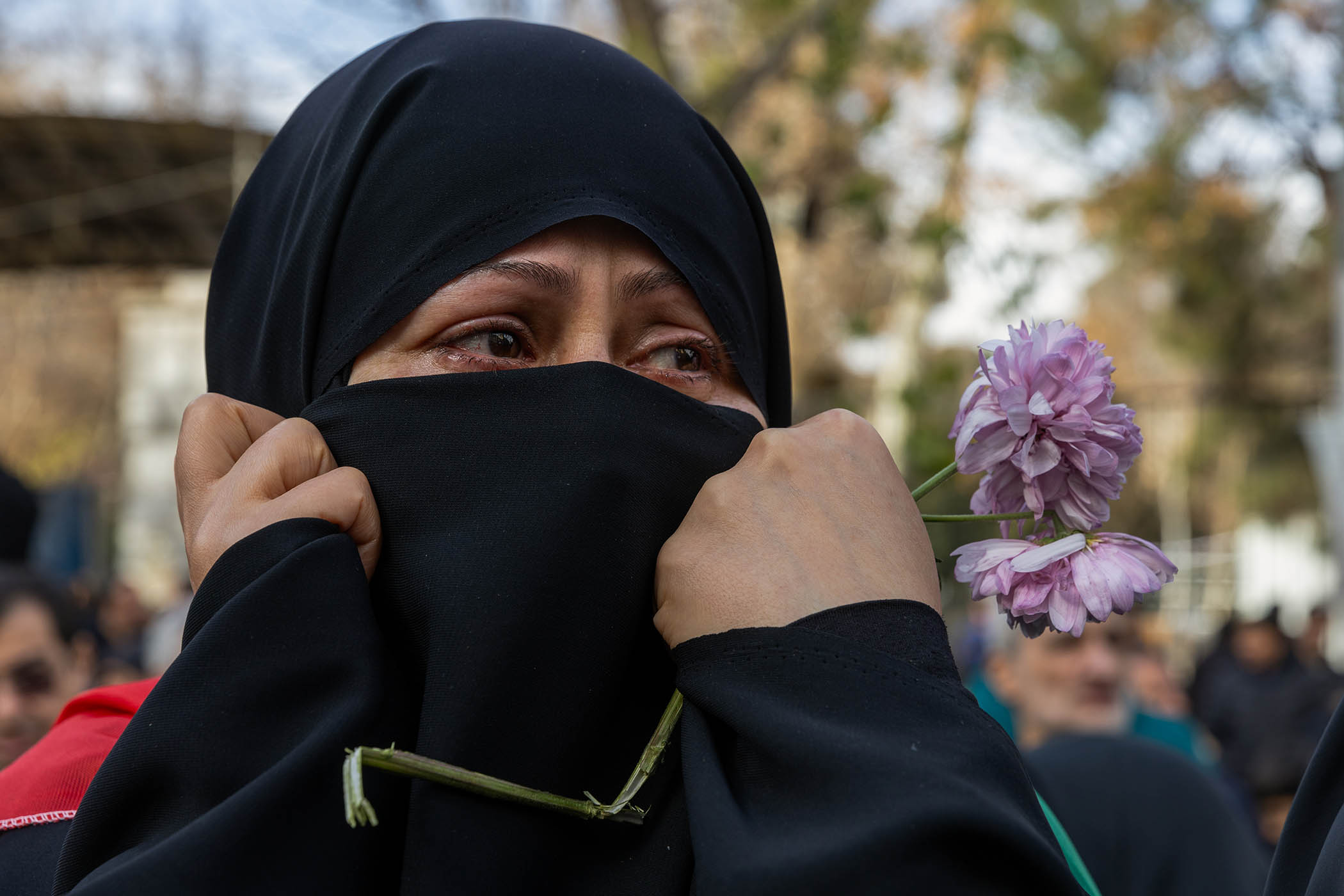
A woman attends a mass funeral outside Tehran University
Demonstrations prompted by a plummeting Iranian rial quickly became demands for the regime’s overthrow, and authorities imposed an internet blackout as security forces unleashed a wave of violence. Even Khamenei admitted “thousands” had been killed, as monitoring groups outside Iran recorded a mounting death toll. Fears the regime will execute detained protesters persist as forced confessions are broadcast on state television.
Payam Akhavan, a former UN prosecutor, told the human rights council in Geneva on Friday that the killings represent crimes against humanity.
“Five days ago, a report by medical doctors inside Iran put the number at 16,500 killed and 330,000 injured. The number increases each day because the killings haven’t stopped,” he said. “We may not know the exact number because of the internet blackout, but by any plausible estimate, this is the worst mass murder in the contemporary history of Iran.”
Despite Donald Trump becoming the recent focus of international attention by threatening Greenland, the US president reiterated his warning to Iran last Thursday. Speaking to reporters onboard Air Force One, he described “an armada” of US warships sailing towards Iran “just in case” he opts to strike in retaliation for violence against demonstrators.
Newsletters
Choose the newsletters you want to receive
View more
For information about how The Observer protects your data, read our Privacy Policy
Iran’s top prosecutor, Mohammad Movahedi-Azad, said Trump’s claim to have halted more than 800 hangings was “completely false”, adding: “We do not, under any circumstances, take instructions from foreign powers.”
Iran has been cut off from the outside world for more than two weeks, with only the occasional flickerings of online access – although pro-regime channels still broadcast without restrictions. Internet monitoring groups such as FilterWatch warn the regime could continue to block access in the long term, with only supportive voices from the elite able to communicate with the outside world.
Parinaz fears the consequences of the internet blackout, not just for the news, but also for the business she runs over Instagram; making money offline has become nearly impossible for many, and her job at a bookshop does not pay well. But more than this, she is worried about the link between the shutdown and the state’s violence.
She only learned of the soaring nationwide death toll when she went into a neighbour’s apartment and turned on a satellite television channel. Meanwhile, a friend described security agents pointing lasers at him when he went to grab his satellite dish off his rooftop, as if they might shoot at him. He dropped the satellite dish and ran, she said.
“It seems like the internet is going to be cut permanently, and this is really horrifying,” she said. “They want to kill us all.”
The sense of misery that hung in the air for Iranians came alongside the belief that some form of change is inevitable – even if things could get worse. Soaring food prices and growing poverty are fuelling despair, desperation and resentment at the regime, although for now it has an iron-fisted control of the streets.
Parinaz was miserable but undeterred by the security forces she cannot escape. “The situation is out of the regime’s hands. People have nothing to lose any more,” she said.
Photograph by Majid Saeedi/Getty Images, Stringer/Getty Images