The first earthquake struck Venezuela at 6.04pm local time on Wednesday. Less than a minute later came the second – the strongest in more than a century, with a 7.5 magnitude. Its epicentre was 100 miles (160km) west of Caracas, the capital, and closer still to other cities. Local people say there were just seconds between the warning on their phones and the first rumble: no time to escape the homes that fell in on them.
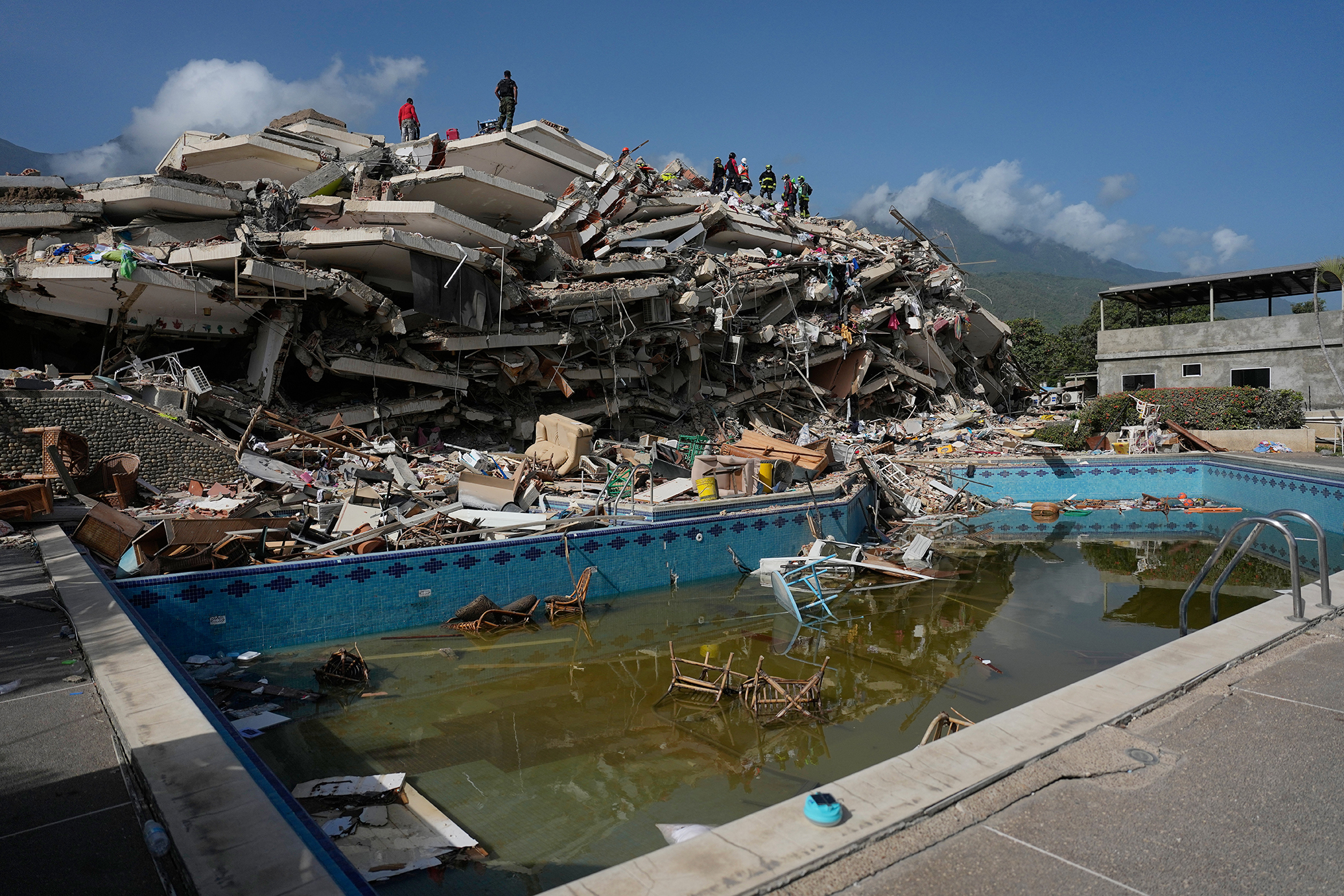
The destruction is immense. Hundreds of buildings have collapsed, including 15-storey high-rises reduced to rubble. Many more are uninhabitable. As of Saturday, the Venezuelan government was reporting at least 920 dead and more than 3,360 injured. But the true figures are probably far higher: the US government estimates the death toll could exceed 10,000, while more than 50,000 people are reported missing.
The disaster comes at a critical moment for Venezuela. Less than six months ago, the US military swooped on Caracas to capture the regime’s then leader, Nicolás Maduro. Donald Trump’s administration replaced its longtime adversary with his pliant vice-president, Delcy Rodríguez, turning Venezuela into a de facto US protectorate and opening its natural resources to foreign companies.
Now the question is how the US will help its new ally. “It’ll be big, it’ll be fast, and it’ll be effective,” said the US secretary of state, Marco Rubio, on Thursday about the coming US response. The political future of Venezuela’s regime is at stake.
As the hours, then days, passed, frustration mounted over the sluggish and uneven pace of relief in hard-hit areas such as La Guaira, the coastal region where more than 100 buildings collapsed. In the absence of heavy machinery, videos on social media show desperate civilians trying to haul slabs of concrete with ropes and dig survivors out of the rubble with their hands. Hospitals and morgues are overwhelmed with the dead and injured.
Years of economic turmoil and corruption left Venezuela’s regime desperately unprepared for such a disaster. The electricity grid was already rickety and liable to blackouts. The military and emergency services had been hollowed out. Repression and censorship meant that there was little local media to provide on-the-ground information. Many who could have led the response to the crisis are elsewhere in the world, among the 8 million who have emigrated since 2014.
“The rescue teams, the health system and the communications infrastructure arrive at this tragedy destroyed,” wrote opposition leader Edmundo González on X. “We have said it before. Now it becomes visible to the world. Venezuela will need international support. And it will need it because its own state has abandoned it.”
The scale and speed of the international response will be critical. By Thursday, Washington had committed $150m in aid and deployed search-and-rescue teams, while the military dispatched two ships with helicopters and aircraft to support rescue efforts. Countries across the world sent emergency responders, aid and equipment.
Foreign crews were only just starting to reach devastated areas on Friday, almost two days after the quakes. By Saturday, the Venezuelan regime said 17 flights carrying 1,600 rescuers had arrived, and another 25 were expected. But rescue efforts were being impeded by hundreds of aftershocks, and cities nearer the epicentre were still without electricity. As The Observer went to press, the critical window of 72 hours to save those trapped under the rubble was running out.
After that comes the risk of a humanitarian crisis. More than half of the 30 million people in Venezuela live in extreme poverty, and nearly 8 million were already in need of humanitarian assistance. A UN report estimated that close to 7 million people would be affected by the quakes. Many are now homeless, sleeping in cars and on the streets.
Newsletters
Choose the newsletters you want to receive
View more
For information about how The Observer protects your data, read our Privacy Policy
Further ahead lies the task of rebuilding. Venezuela will struggle to do it alone: just hours before the quakes, the Financial Times had reported that it was due to reveal $240bn in public debt, well over 200% of gross domestic product, largely racked up during the regime’s 27 years in power.
Trump has spoken about big US oil companies taking on a nation-building role in Venezuela, which, on paper, has the world’s largest oil reserves, investing tens of billions of dollars to revive production and restore the economy in the process. That undertaking is only more daunting now.
Whether the regime remains in charge for the rebuilding is another matter. For now, Venezuelans are focused on rescuing survivors. But if Rodríguez fails to demonstrate competence in her response, then people’s patience with the US-installed leader – and the lack of elections – may soon run out.
Photograph by Fernando Vergara/AP