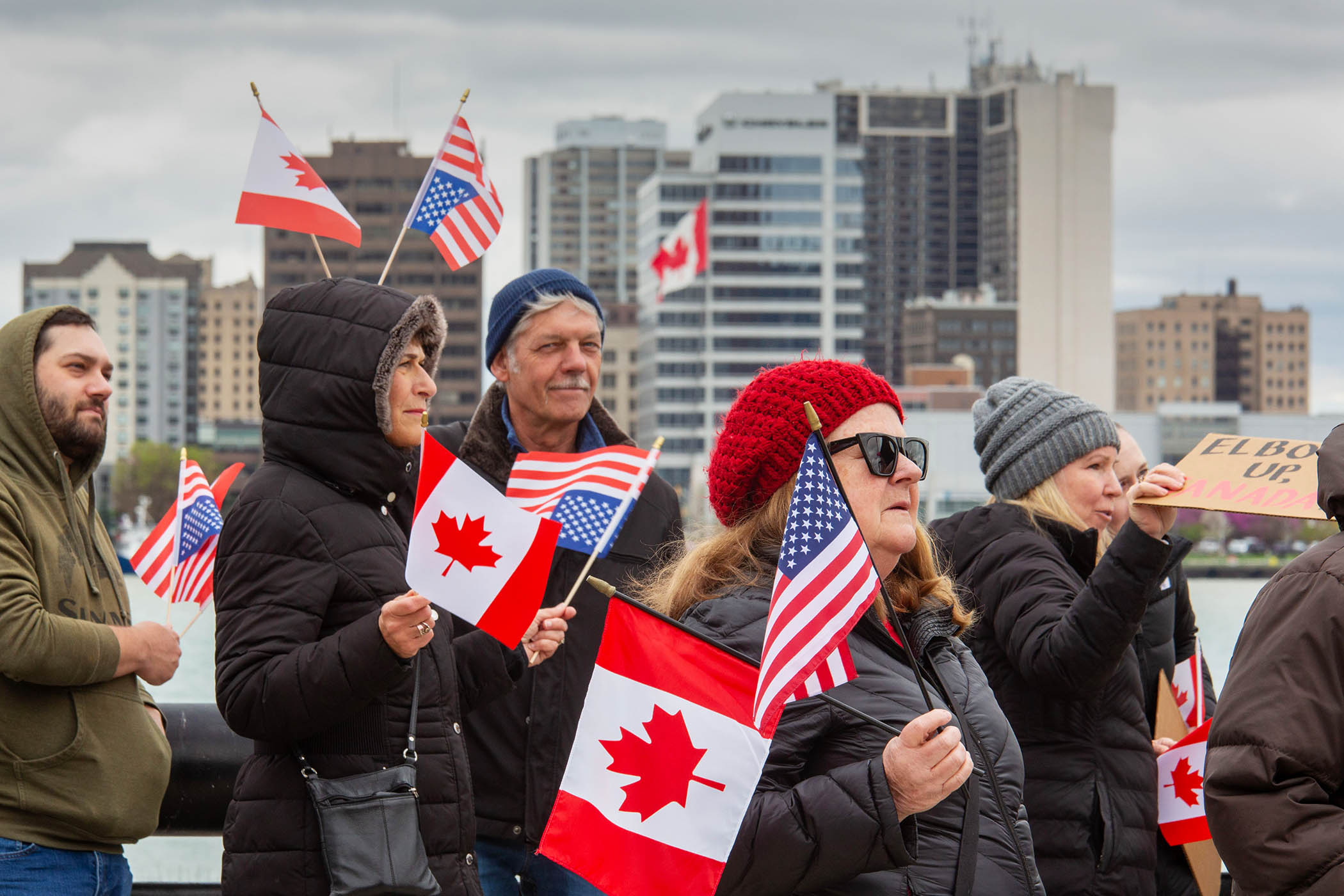



Most of us have had the experience of seeing an old friend or relation go weird, perhaps trying to appear younger or cooler than they really are or hanging out in louche bars. Or a benevolent old uncle turns vicious bully. That’s how Canadians are feeling about the United States. Someone we considered a friend has turned enemy. President Trump slaps punitive tariffs on Canada and repeatedly says it should be the 51st state, only to say, as is his way, he was just joking. Some joke. As his words and actions over Venezuela show, he is channelling the spirit of a 19th-century imperialist.
We Canadians are deeply concerned, and the rest of the world should be too. We are entering, or perhaps regressing, into a new age of empire-building, governed, as Trump’s trusted consigliere Stephen Miller said a few days ago, “by strength, that is governed by force, that is governed by power”. Those, he assured CNN, “are the iron laws of the world since the beginning of time”.
Like so many who quote history for their own purposes, he gets it wrong. The past also contains many examples of international cooperation, of powers recognising that they don’t have to be engaged in a zero-sum game, that all can benefit in a peaceful world where trade and investment can cross borders and nations work together on shared problems, from pandemics to drug trafficking. The Concert of Europe, after the Napoleonic Wars, the establishment of the League of Nations after the first world war, and the United Nations and allied organisations after the second world war show what can be achieved, while their failures give grim warning.
As the international order crumbles, Canadians struggle to comprehend the existential threat facing the country. We keep asking why the US wants to dominate Canada even more than it already does, or annex it completely. Our economies are intertwined to the benefit of both. Yet hints are dropped in Washington that the free trade agreement up for review between Canada, Mexico and the US may be dramatically altered or abrogated altogether. We provide the US with resources, shared production and markets. Many Canadian elites were educated at US colleges. We have many of the same tastes, from sports to movies. We’ve fought side by side in the two world wars, in Korea and in Afghanistan. We are partners in Nato, in the defence of North American aerospace through Norad and in the sharing of intelligence. The new National Security Strategy bluntly asserts the US “must be pre-eminent in the western hemisphere as a condition of our security and prosperity”. Outside powers (read China) must be prevented from spreading their influence and the US has appointed itself as both judge and enforcer.
We keep asking why the US wants to dominate Canada even more than it already does, or annex it completely
We keep asking why the US wants to dominate Canada even more than it already does, or annex it completely
Canada has had serious crises with the US before but we thought they were well in the past. In 1775, the US invaded today’s Quebec and was roundly defeated. Throughout the 19th century there were fulminations from politicians south of the border and extravagant claims to territory, botched invasion attempts and threats to use tariffs to force Canada into union with the US.
That was long ago, or so Canadians thought. The 20th century brought an ever-closer relationship as Canada moved from under the aegis of the declining British empire to that of the new superpower. We were allies and friends. Our long mutual border was one of the most open in the world. It’s amazing how quickly things can change.
Nearly 90% of Canadians today say they do not want to be part of the US. You can get apps to scan barcodes so that you don’t buy American goods. Try finding Jack Daniel’s anywhere. Canadian tourism to the US has fallen sharply. Trump’s ambassador to Canada tells us our reaction is “mean and nasty”. More seriously Canadians are having conversations, until recently unimaginable, about what we can do if they try to invade. Even the once taboo question of whether Canada should develop its own nuclear deterrent – we have the uranium after all and the technology – is now being raised.
I am part of an informal email group of Canadian historians and we try to understand where this new manifestation of the US comes from. Perhaps older strains in US policy are reawakening: that belief in its manifest destiny, the American assumption of moral superiority or simply the conviction that the western hemisphere is the exclusive neighbourhood of the US. The possession of great power makes possible such unilateralism. And we always come back to the phenomenon of Donald Trump, his willingness to ignore norms, laws, treaties and institutions including Congress, whatever gets in his way.
The international order is being disrupted by an unpredictable power that seems to prefer rivals to old friends. History has many examples of great powers getting rid of undependable allies, but not of dependable ones. What, after all, is the point? For the Trump administration the answer seems to be that relationships are inherently transactional and power determines all. Countries will make deals if it suits them or if they have no choice. Learning to live with each other, understanding what motivates others, building trust – all of that is a waste of time. What is being lost is the capacity to build for a shared future, to avert potential disasters, to deal with crises before they get out of hand. In its place is emerging a world uneasily balanced among spheres of influence where aggression can be rewarded.
These questions are not just for Canadians.
Newsletters
Choose the newsletters you want to receive
View more
For information about how The Observer protects your data, read our Privacy Policy
Margaret MacMillan is emeritus professor of history at the University of Toronto and emeritus professor of international history at Oxford
Photograph by Jim West/UCG/UIG via Getty Images