
Hollywood is no stranger to earthquakes. Founded on some of the most seismically active land in the US, the world’s entertainment capital has survived everything from the multibillion-dollar damage of 1994’s Northridge quake to the countless ownership and name changes to the studio system since the birth of its golden age a century ago.
But nothing has prepared it for the shake-up now under way: a n unprecedented mega merger that puts a sizable share of Hollywood’s total output in the hands of one man and could redraw the entertainment landscape for ever.
In a matter of months, David Ellison, a 43-year-old former aspiring actor and son of billionaire tech mogul Larry Ellison, has slipped into the driver’s seat at Paramount, the 114-year-old studio that made Sunset Boulevard and The Godfather, and – pending regulatory approval – will soon take over the vast conglomerate that is Warner Bros Discovery (WBD).
The resulting behemoth will be responsible for a huge slice of the industry’s television and film output, incorporating two movie studios, television studios, large cable networks such as HBO Max and CNN, broadcast network CBS, as well as streaming services and a treasure trove of lucrative IP, including Top Gun, Mission: Impossible, Star Trek, DC Comics, Harry Potter and The Lord of the Rings. Meanwhile, questions abound about how David Ellison, seen variously as an inexperienced nepo baby and champion of the action movie, will fare at the helm.
If it sounds like a lot, it is. The yet to be named Paramount-WBD empire (nicknames so far include ParaBros and WarnerMount) is set to be worth an estimated $120bn and, to critics, represents an unacceptable monopoly that will decimate competition, crush creativity and slash jobs. Alarm bells are also ringing over the Ellison family’s close ties to the Trump administration and Paramount’s apparent attempts to censor on-air content since Ellison’s Skydance Media companyacquired it for $8bn last August.
Writing on X last week, Bernie Sanders, the democratic socialist senator from Vermont, listed 20 of the main assets that “the rightwing Trump-aligned Ellisons” will soon control, stating: “This is oligarchy.”
The context for the merger, which will cut Hollywood’s “big five” studios to just four, is one of growing panic in an already contracting industry. Years of consolidation, job losses and cost-cutting in the wake of the pandemic, Hollywood strikes and streaming wars have left writers, actors, animators, crew members, producers and executives scrambling. Now they fear it will only get worse, with fewer places to sell projects and even less production.
Opponents are organising furiously before the deal’s closure, which many predict will be fast-tracked to enable the Paramount Skydance chair to start integrating, and possibly streamlining, the companies’ assets. A “block the merger” campaign is building momentum and anti-monopoly experts have promised a “knife fight”. Last week, members of the Writers Guild of America West (WGAW) met California’s attorney general, Rob Bonta, who has pledged a “vigorous” legal review of the deal, although it is far from certain that state-level pushback could derail the merger’s approval by regulators in Washington and Europe.
Michele Mulroney, the guild’s president, warned the merger “would be a terrible outcome for everyone in this industry”, leading to fewer and less diverse films and TV shows, lower pay and higher prices for everyone, she said. “It’s a disaster and it must be blocked.”
Celebrities attending Sunday night’s Oscars ceremony in Hollywood were due to be greeted by an anti-merger protest staged by members of Free Press, a media reform advocacy group. It is planning to display a billboard with an image of Ellison as a puppet with Donald Trump above, pulling his strings. “For your consideration,” the billboard reads. “Best performance in a puppet show. David Ellison, Paramount Skydance. Corruption, capitulation, censorship.”
Newsletters
Choose the newsletters you want to receive
View more
For information about how The Observer protects your data, read our Privacy Policy
“I’m not a historian, but in terms of the modern era of Hollywood, this is completely unprecedented and what the impact will be we just don’t know yet,” said the veteran Hollywood journalist Kim Masters, a partner at digital media company Puck and former editor-at-large of the Hollywood Reporter.
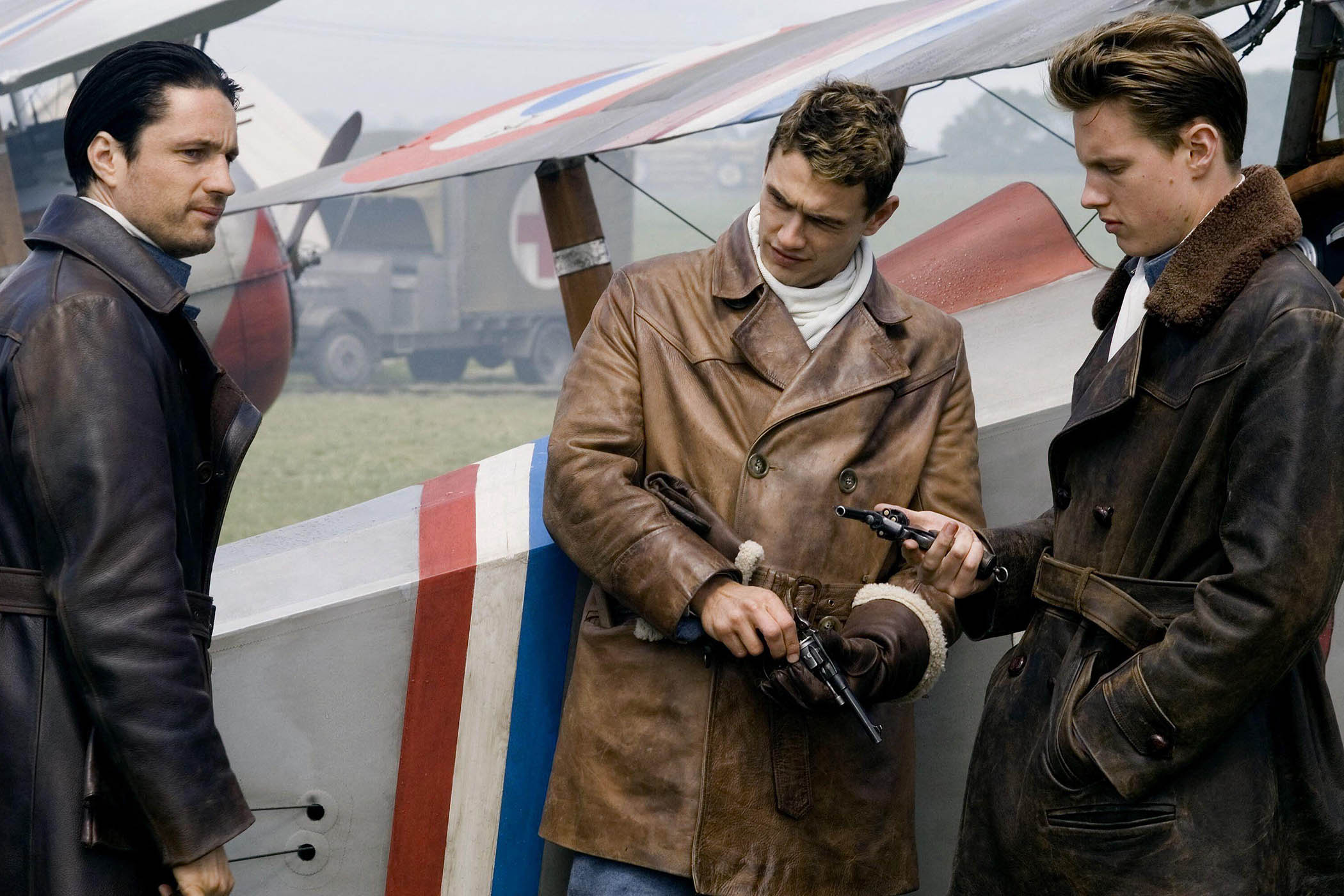
“I don’t think Hollywood, and people at Warners in particular, are remotely happy about this,” she said. There’s just a lot of fear.” She pointed to Ellison’s track record at Skydance Media, the company he founded in 2006, which produced few successful films that were not existing franchises, and to his lack of experience in cable and streaming. Its first release, Flyboys, in which Ellison acted alongside James Franco, bombed.
“It’s just such a random thing that this young heir, who happens to be the son of one of the world’s richest men, owns these two things, or will own them if it goes through, just because he wanted to, even though he didn’t build up a fortune on his own,” Masters said. “There’s literally nothing on the résumé that says: ‘This guy should run two studios, or even one.’”
She added: “What I would be most worried about is: can he not destroy one or both? Can he do this? What qualifies him? I think it’s existential.”
Paramount’s proposed merger with WBD was the final plot twist in a protracted bidding war overseen by WBD’s chief executive, David Zaslav, who fielded offers from Comcast, Netflix and Paramount. Last autumn, Paramount made a series of unsuccessful bids, before Netflix announced in December that it was set to acquire WBD’s studio and streaming assets in an $83bn deal.
But Zaslav invited Paramount to take another shot, and in February, Ellison offered nearly $111bn for the whole company, backed by his father and investment manager RedBird Capital Partners, along with a reported $24bn from sovereign wealth funds in Saudi Arabia, Qatar and Abu Dhabi.
Netflix declined to make a counteroffer shortly after its chief executive, Ted Sarandos, met White House officials, leading Democratic lawmakers to ask exactly what was discussed at the meeting. Trump is known to have favoured a Paramount takeover of WBD, criticising Netflix as “woke”, and has long waged war against CNN, denouncing its output as “fake news”.
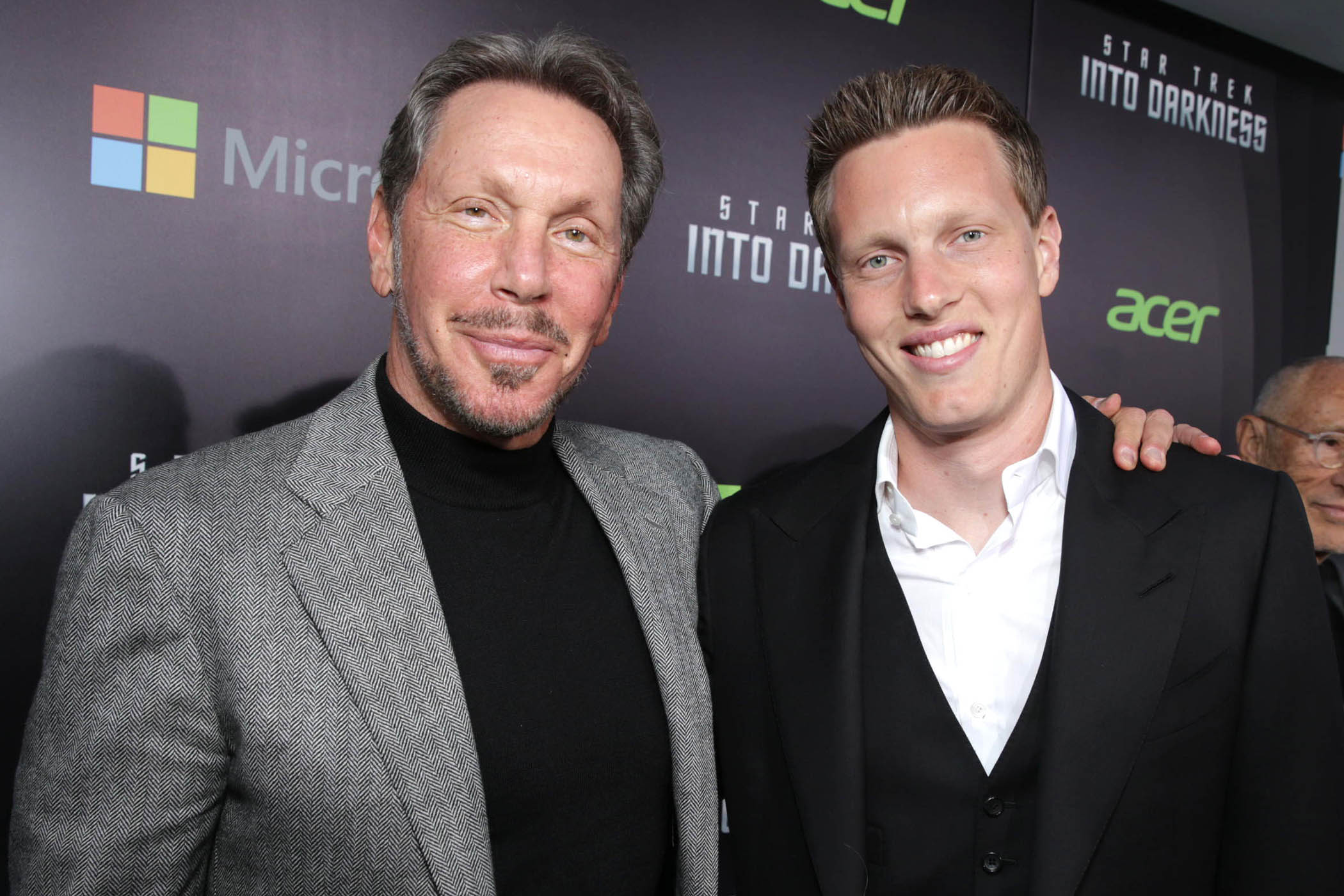
Larry Ellison and his son David at the LA premiere of Star Trek Into Darkness
Ellison said the deal was about “reinventing the business” and pledged to invest in content. “That’s going to be good for the creator economy. It’s going to be good for Hollywood,” he told CNBC. Both film studios would continue to run side by side, with each producing 15 movies a year, he said. The streaming platforms, Paramount+ and HBO Max, would be merged but he denied there would be sweeping job cuts.
Sceptics have dismissed such promises, given the $79bn debt burden the deal saddles Paramount with, and its prediction of $6bn in cost “synergies” – a process that usually involves job cuts and streamlining when two companies merge.
“There’s no way they are [going to make that many movies],” one successful film director said. He predicted a future of fewer people working, less content and smaller budgets, but argued that this was already happening across the industry.
He said: “Not to defend these guys, but they are being vilified as the people that have killed the business, but this is just endemic in what’s happened to the business.”
Because audiences have migrated to YouTube, TikTok (which Larry Ellison’s Oracle corporation recently acquired part of) and other social media, legacy entertainment divisions have suffered, he added. “At least it wasn’t bought by [private equity companies] TPG or Blackstone. Then everyone would be fired and they’d sell off all the stuff. I think we should thank our lucky stars that the one person who did this consolidation wants to be a movie mogul.”
Others disagree. Tracey Baker-Simmons, a veteran television producer and creator of the Being Bobby Brown series, warned that the merger would be bad for diversity and representation, and offered little hope for those working in the non-scripted sphere.
“I feel like every consolidation raises the floor for who gets in and lowers the ceiling for the voices that get heard, and underrepresented creators like myself,” she said. “We are always working with the least amount of space, so when the walls are closing in, it’s not just bad for diversity – it’s bad for the culture.”
WBD, considered one of the most film-maker-friendly studios, has enjoyed a year of box office and critical success, with 30 Oscar nominations for releases that include Sinners, One Battle After Another and Weapons. But one senior executive at a rival studio predicted WBD’s film studio would lose its independence and freedom to back features such as Sinners. “I just don’t see these kinds of movies getting the green light at this new company.”
Chief among the fears of the merger’s critics is about bias at the new company’s news divisions. Ellison has promised that “editorial independence will absolutely be maintained” at CNN and CBS News.
But recent changes at Paramount, including the installation of Bari Weiss, a former conservative commentator with no previous television experience, as editor-in-chief of CBS News, indicate otherwise. Paramount was also criticised for settling a $16m defamation lawsuit with Trump and cancelling his vocal critic Stephen Colbert’s chatshow shortly before the Federal Communications Commission greenlit its merger with Skydance.
“I think, for a lot of people, [the biggest concern] is the fate of CNN because the situation with Bari Weiss at CBS News has been just a series of unforced errors and moves that look like they’re designed to suck up to Donald Trump,” said Masters. “David [Ellison]… has done such a job of courting Donald Trump, he’s making a lot of the writers and producers in town who can afford to pick and choose queasy.”
If anyone is the undisputed winner in this deal, it is Zaslav, who will walk away from WBD with just under $800m in shares and equity, according to estimates. But while Wall Street may celebrate him as the financial wizard who tripled the company’s share price in a year, others see his lucrative exit as just more evidence of the rich getting richer while everyone else in Hollywood suffers.
Photographs by Cinematic/Alamy, Eric Charbonneau/Getty Images for The Hollywood Reporter