


The age of criminal responsibility should be raised from 10 to 14, an expert review will recommend this week.
The Bar Council panel found that putting children into the criminal justice system from the age of 10 “undermines public safety” and creates more victims by increasing the chances that young people will reoffend.
Developments in neuroscience also make the case for raising the age at which young people can be arrested, prosecuted, convicted or sentenced for a criminal offence, the review concluded.
Kirsty Brimelow, the chair of the Bar Council, said the minimum age had not changed for more than 60 years and the law in England and Wales was now increasingly out of step with other countries. “The recommendation is that the minimum age of criminal responsibility is increased to 14,” she said. “The current minimum age is 10, which is an outlier. It’s the lowest in Europe, and we have countries like Italy and Germany, for example, where it is 14.”
‘Conviction for a criminal offence has a significant impact on how a young person sees themselves, and how others see them’
‘Conviction for a criminal offence has a significant impact on how a young person sees themselves, and how others see them’
Dr Richard Church, Royal College of Psychiatrists
The UN committee that monitors the Convention on the Rights of a Child has repeatedly called for the age of criminal responsibility to be raised to 14, which is the most common age around the world. In Scotland, the threshold is 12.
The Bar Council chair said a higher minimum age was not “soft on crime” but was instead “smart” on crime. “It replaces the ineffective criminalisation of young children with interventions that evidence shows are more likely to change behaviour, protect the public and reduce future victims,” she said. “Being tough on children is not the same as being tough on the causes of crime.”
The proposal to introduce a higher threshold will be controversial. Politicians have shied away from increasing the age of criminal responsibility for fear of a backlash following the murder of James Bulger in 1993 by two 10-year-old boys. But in its recent white paper on youth justice, the government promised to “carefully consider” the Bar Council’s findings.
David Lammy, the justice secretary, told The Observer he would “look at their work in detail”.
He said: “There’s complexity to this. Very sadly, we do see a small proportion of very young children commit horrific and terrible crimes. That has been a pattern now for 30 years. It really began with the Bulger case… these things have to be considered in a very careful and delicate way.”
Brimelow said the Bulger killing was an “emotional and compelling” case but it was also “very rare” for children to be so violent. “The question is whether the rare case of extreme child offending should determine the age threshold for all children, or whether such cases can be addressed through a non-criminal system that still protects the public and recognises the harm done,” she continued.
Newsletters
Choose the newsletters you want to receive
View more
For information about how The Observer protects your data, read our Privacy Policy
In the year to March 2025, 233 children aged between 10 and 12 entered the criminal justice system for the first time and only one received a custodial sentence.
Brimelow insisted children who commit violent offences would still be punished even if they did not go through the criminal justice system. “It’s absolutely not suggesting that 13-year-olds are going to be roaming the streets with machetes. It is looking at a different process to punish but also to protect the public that’s effective outside the criminal justice system.”
According to Home Office data, two-thirds of young offenders go on to commit more crimes and 80% of adult persistent offenders first entered the justice system as children. “Young people convicted between the ages of 10 to 13 are likely to become the most persistent offenders with longer and more prolific careers,” Brimelow said. “When children go through the criminal justice system, they will generally then be on a path of more serious crime.”
‘Being tough on children is not the same as being tough on the causes of crime’
‘Being tough on children is not the same as being tough on the causes of crime’
Kirsty Brimelow, chair of the Bar Council
Sarah-Jayne Blakemore, a professor of psychology and cognitive neuroscience at Cambridge University and member of the Bar Council panel, said the understanding of brain development had been transformed since 1963, when the law on the minimum age was passed.
“The brain is still very immature at 10, supporting the argument that the current age of criminal responsibility is too young,” she said. “Evidence of social-cognitive development in adolescence, such as the increased propensity to take risks or commit crimes when with friends, and the challenge of inhibiting impulsive actions, especially in emotional situations, is also relevant.”
Dr Richard Church, the chair of the adolescent forensic psychiatry special interest group at the Royal College of Psychiatrists, welcomed the call to raise the minimum age of criminal responsibility. “Conviction for a criminal offence at a young age has a significant impact on how a young person sees themselves, and how others see them,” he said. “Current arrangements do not serve the interests of the public or victims, nor do they meet the needs of young children who come into conflict with the law.”
Enys Delmage, a consultant in adolescent forensic psychiatry, said the current threshold was “not in keeping with the modern-day scientific understanding of brain development and emerging capacities in very young children”. He said he would “advocate strongly for a raise of the age” in line with other countries. “If we are genuinely interested in reducing reoffending, the only direction the evidence points towards is help, not harm.”
Thank you for reading. Tell us what you think by writing to letters@observer.co.uk
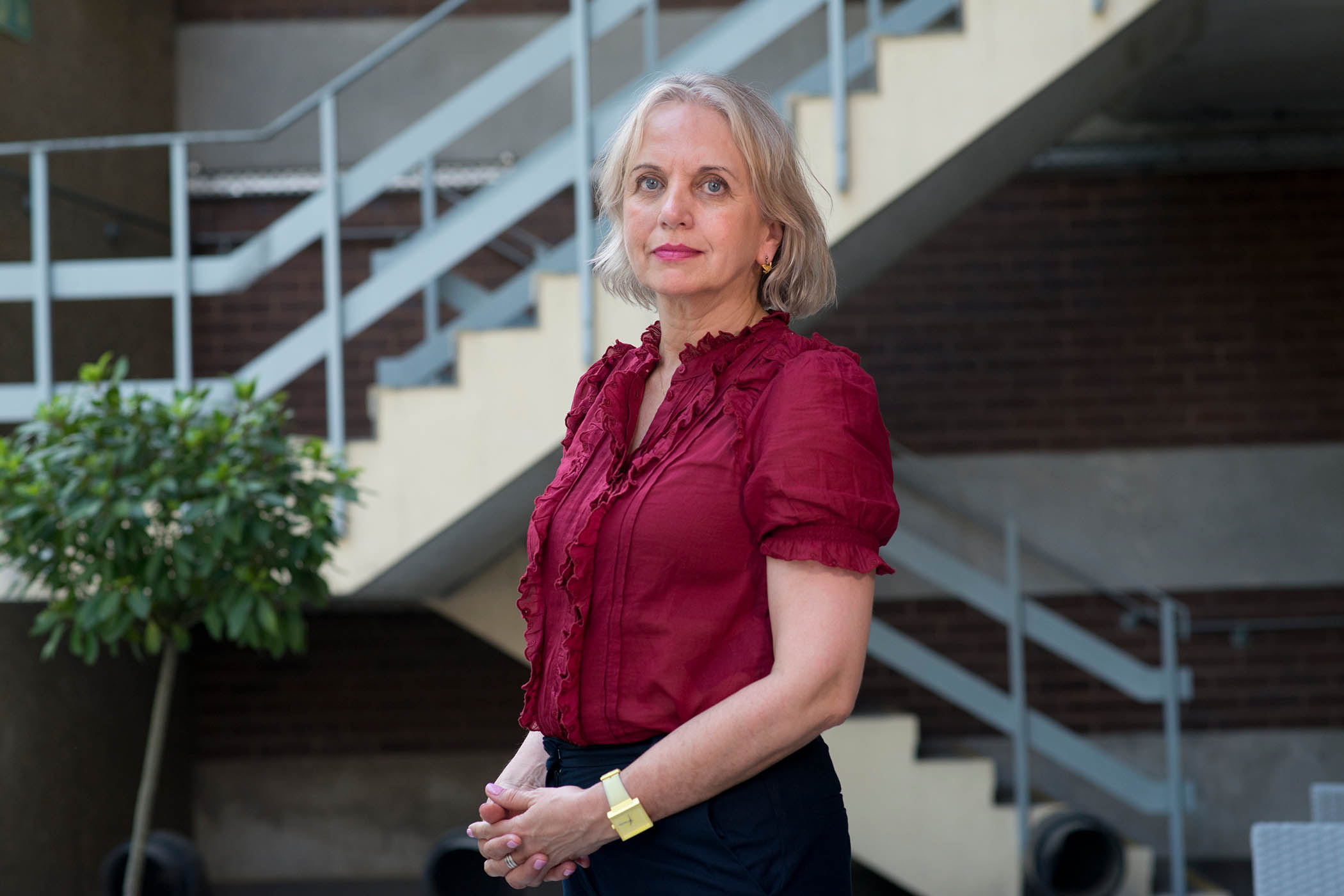
Photograph Sophia Evans for The Observer