
Related articles:


Britain was built on apprentices. “At every point in the three centuries from 1500 to 1800, apprenticeship was the main focus of human capital investment in England,” writes Patrick Wallis, a professor at the London School of Economics, in a new book. Since the 1990s we have been busy rediscovering this old-fashioned idea, which seems like an alluring solution to all sorts of modern problems: social mobility, the skills gap, youth unemployment, overpriced university degrees and crippling student loan debt. But in more than three decades we have never quite managed to get it to work.
Reforms due in April are the latest in a long series. There are plenty of reasons to covet apprenticeships in 2026. As AI disrupts the job market, career changers will need to retrain. And last week the Office for National Statistics reported that nearly a million young people are not in work, training or education, which is worse than the EU average.“There’s a broader fear that parents and grandparents have, that their kids… are not going to do as well as we’ve done. That’s the first time that’s really happened in a century,” warned Alan Milburn, the former health secretary, who is chairing a review of youth unemployment.
Politicians have often preferred to diagnose the failure of apprenticeships as a perception problem. Theresa May lamented their reputation as wonderful opportunities for other people’s children. In 2023, then education secretary Gavin Williamson pointed the finger at “snobbish” middle-class parents who felt their children should go to university as a “rite of passage”. And today policymakers and campaigners still fret that apprenticeships are seen as “second best” to university degrees. Britain is often compared to Germany, where apprenticeships are highly respected. On this analysis, the task ahead is of persuading teenagers, parents, teachers and the wider culture of their value.
But there’s another explanation, which is that people are perfectly right not to trust them. Young people and their parents tend to be rather good at acting in their own interests. (In the 18th century, writes Wallis, when apprenticeships were key to advancement, sharp-elbowed parents devoted a great deal of energy – and money – to netting their children a good master.) Solving a perception problem may, after all, be cheaper than dealing with the real hold-ups. The story of apprenticeships is a long struggle to make a scheme built for a time of trades and manufacturing fit into a modern flexible service economy – a wobbly journey of correction and overcorrection.
In the 2010s there was a dramatic rise in the number of apprenticeships, as David Cameron attempted to get them “level pegging” with university degrees. Despite these good intentions, they were often poor quality. An Ofsted report at the time found too many companies put young people to work “making coffee, serving sandwiches or cleaning floors”, rather than teaching them proper skills. Some trainees were even unaware they were on an apprenticeship in the first place.
Under May, an “apprenticeship levy” was an attempt to solve this. New rules required training to last for a minimum of 12 months, and large companies to put aside funds for it – money they would otherwise forfeit. It was assumed they were unlikely to entirely use up this cash, which would then flow to smaller companies.
The hoped-for shift in perception was achieved: these higher-quality apprenticeships were at last coveted by the “snobbish” middle-class. But this came at a cost to the very people they were supposed to benefit the most, who were then pushed out of the way. Instead of using their levy on school leavers, large companies started funnelling existing employees into management courses – some that they may have offered anyway – in order to eat up their pots of ring-fenced funding. Meanwhile, the number of apprenticeships offered by smaller firms plummeted, as these companies were put off by the bureaucracy of the new scheme.
That brings us to today’s problem. Despite rising demand, and a new industry devoted to matching people to the right apprenticeships – such as Euan Blair’s company Multiverse – the total supply of apprenticeships fell by 45% between 2015 and 2024. The steepest fall in new starts was among young people and those from the most deprived areas, who were also most likely to drop out. A good half of those who start an apprenticeship in England are now older than 25; about 40% have been working for the company for a year or more. That’s a problem not only of social mobility but also productivity. Apprenticeships give the largest salary boosts to those who start them before they hit 25.
Related articles:
Labour’s latest reforms will attempt to change this, but they also hold new dangers. The plan is to do away with maths and English tests and to shorten the length of training. That may attract more young people, but it also smacks of dumbing down. They will limit higher-level apprenticeships to under-22s and fully fund under-25 trainees at smaller businesses. They may also do away with “general management” courses, but that will get rid of a “transferable skill”, one that the UK, notorious for poor managers, has long been short of.
The reforms fail to deal with a bigger problem, however, which is that apprentices are still paid less than the minimum wage. “If you are from a lower-income family, you’ll be struggling to live,” says Rebecca Montacute at the Social Market Foundation. “Not everyone can live at home.”
Newsletters
Choose the newsletters you want to receive
View more
For information about how The Observer protects your data, read our Privacy Policy
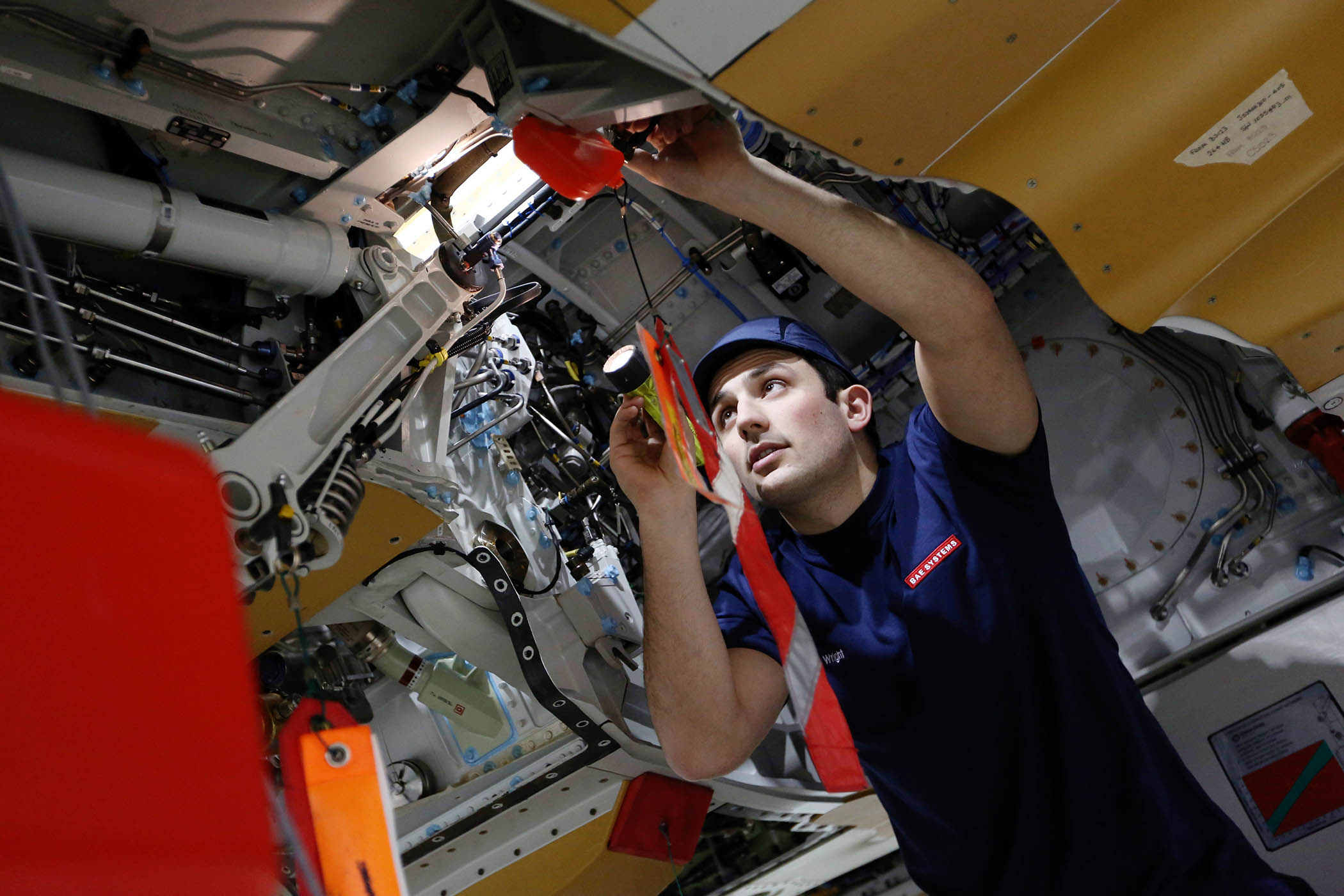
Photograph by Chris Ratcliffe/Bloomberg via Getty Images