Related articles:
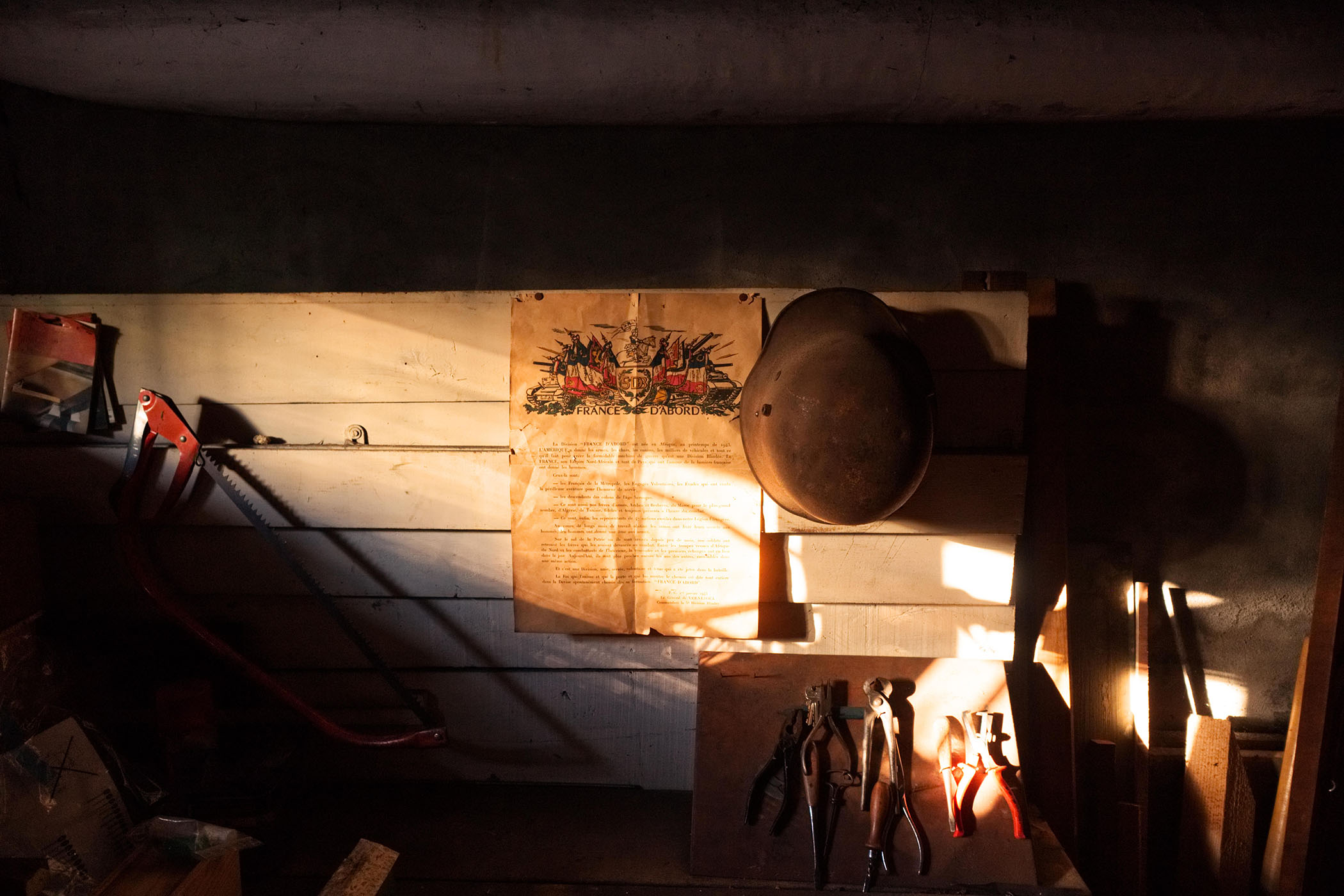
I didn’t understand my father’s actions until many years later, when I had grown up enough to see the world with a little more patience. I had always thought of him as quiet, ordinary, a man who went to work every day and returned home without making noise, without drawing attention. Yet, in a small attic hidden from view, he had a secret that I just discovered one winter afternoon when I was 17, in 1949.
The radio was small, older than the one we used to listen to news every evening, and it was hidden under a grey cloth that smelled of dust and old wool. Next to it there was a notebook, worn at the edges, filled with numbers, dates, and short words that seemed meaningless at first, but later revealed a structure I could only begin to understand. I knew that the regime controlled all communications, that it was forbidden to listen to foreign broadcasts, and that sending any message could mean arrest, imprisonment, or even death, but at that moment I only felt confused with a sense of betrayal because my parents never had told me anything about it.
Years later, when I finally understood, I realised that my father was part of a small, informal network of civilians who helped the resistance by transmitting information in secret, using the skills and knowledge he had from his daily work in the train schedules office. Every day, he saw official documents with lists of trains carrying soldiers or weapons, timetables of patrols, and notes about supplies being moved across the country, and he used that knowledge to send coded messages to prevent danger, to save lives without revealing his identity. He never signed his name, and if he had been discovered, the consequences would have been unimaginable, not only for him, but for my mother, for me, for anyone who had been close to him.
At 17, I could not see this clearly. I only saw the secret and the fact that my family excluded me. I thought that truth was something simple, something that should be told openly, and that love required honesty in every word. I didn’t understand that under certain circumstances, the truth can be dangerous and silence can be a form of protection, rather than betrayal.
We listened to the official radio every evening, which reported events with a confident voice that made everyone believe in the reality of what they said. I thought my father’s calm presence at the table meant that he accepted the words as true, that his silence meant agreement, but I was wrong, as I discovered when I opened the notebook. He hadn’t been silent because he agreed, but because he understood that truth spoken at the wrong time, or to the wrong person, could destroy life, and sometimes the only one way to protect someone is carry the burden alone, without sharing it.
The messages he transmitted were never public. They were simple phrases, numbers, or words that seemed meaningless but contained essential information about military trains, patrol movements, and arrests planned by the regime. He didn’t try to overthrow anyone from power or to become a hero. In fact, he had acted in silence, without recognition, without applause, just because he believed that small actions could make a difference.
For a long time after discovering the notebook, I was angry and I felt excluded, as if my life had been built on a lie that I had the right to know. But as I grew up and began to think about the war, the fear in the streets, the control over words and information, I realised that his silence had been a shield, not a lie. He wanted to give me a life as normal as possible, protected from dangers I couldn’t understand at the time.
Even after the war ended, when the official voice disappeared and new voices replaced it, my father never spoke about what he did. He returned to his ordinary life, working in the office. He didn’t correct anyone who repeated false versions of events in the town. He simply lived, carrying the weight of the truth in his mind, a responsibility that I began to understand years later when I could see that truth is not always for display, and that sometimes the most important actions are those that nobody sees.
Related articles:
I understood that courage isn’t always loud. It is often small, careful, and hidden. It’s the decision to act when speaking openly would be dangerous, to transmit information accurately when lying is easier, and to refuse to let silence support injustice, even when nobody is watching. My father had done all this quietly, without expectation, and his bravery had not been measured by the applause of others, but by the lives that he helped.
Not all battles are fought publicly. Some are fought between two frequencies, in attics and basements, in notes written in pencil and radios hidden under cloths. Some truths don’t need to be shouted to exist. They only need someone to transmit them, to carry them carefully from one place to another, and to protect them until they can be heard safely.
The regime tried to control reality by controlling the radio, forcing people to repeat lies with confidence and punishing those who dared to question them. For many people it probably felt as if the truth itself had disappeared, buried under voices that sounded certain and powerful. But my father showed me something different. With nothing more than knowledge, caution and quiet courage, he proved that reality cannot truly be erased. It can be hidden, it can be twisted, and sometimes it can be forced into silence, but it continues to exist somewhere. When I think of him now, I no longer see the secret he carried as a betrayal. I see it as responsibility, and as a form of love that protected both the truth and the people he cared about. And maybe this is what I understood in the end: some truths do not need to be loud to survive. They simply wait, patient and quiet, until someone is brave enough to carry them carefully between two frequencies.
______________________________
The Orwell Youth Prize uses the writing of George Orwell to inspire young people aged 11-18 to write bravely and creatively about their own ideas and experiences. This year’s winning entries, selected by judges Nandana Sen, James Bloodworth, and Sophia Smith Galer from an original list of more than 1,300 entries, were announced at University College London by George Orwell’s son, Richard Blair. Their writing, published digitally in full with The Observer for the first time, ranges from intimate personal reflection to engagements with issues of censorship, propaganda and resistance.
George Orwell wrote regularly for The Observer and its former editor David Astor was among his closest friends and most important supporters. But this is also a forward-looking partnership, rooted in a shared commitment to nurturing the next generation of talented journalists. Entries for the new prize cycle will open, with a new theme, in autumn 2026, and everyone who enters before February 2027 will receive free personalised feedback on their writing.
Photograph by Iscotlanda/Alamy
Newsletters
Choose the newsletters you want to receive
View more
For information about how The Observer protects your data, read our Privacy Policy