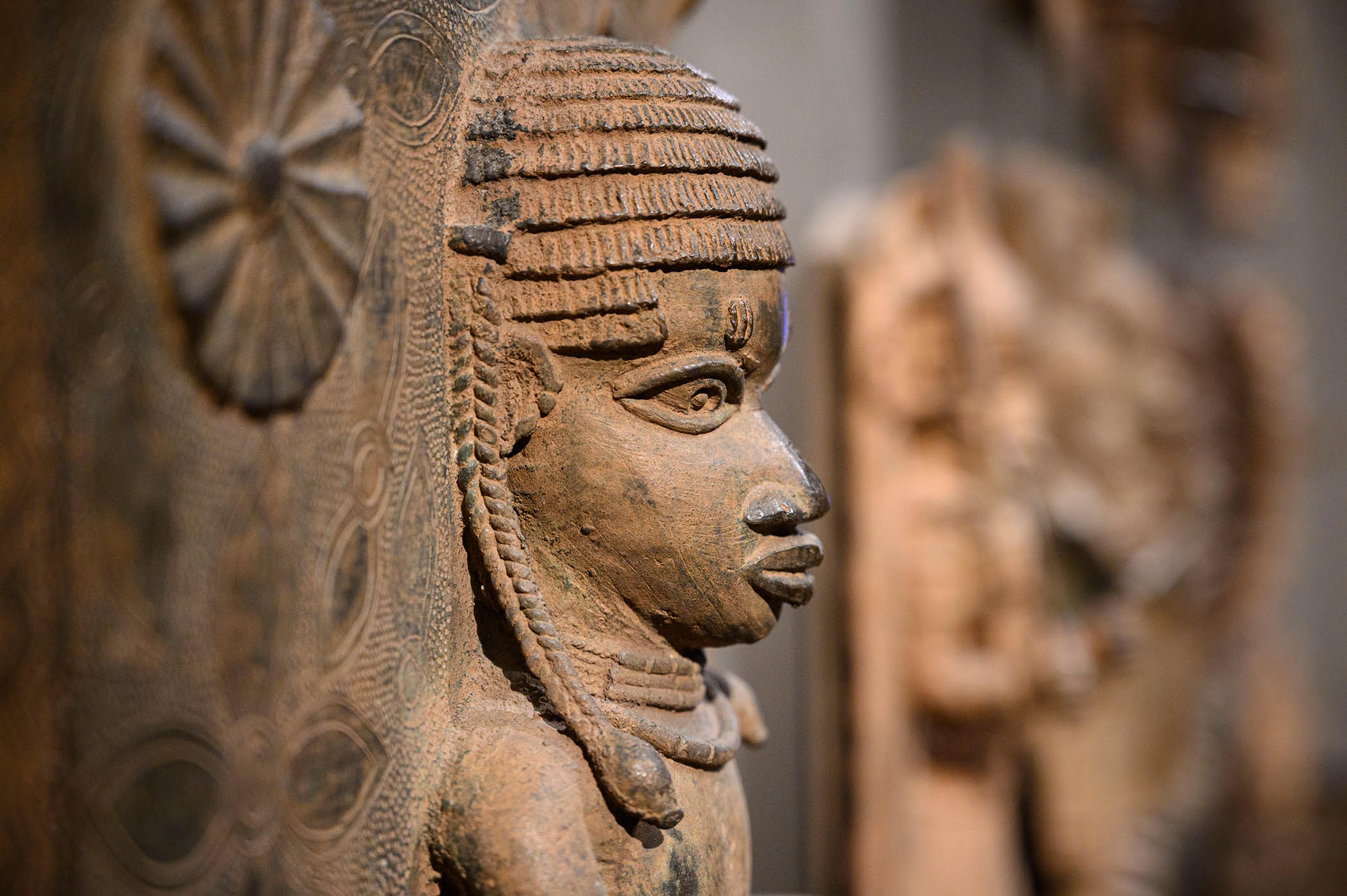

Ownership of more than 100 bronze sculptures looted from Benin by the British military in 1897 has been transferred to Nigeria by Cambridge University’s Museum of Archaeology and Anthropology (MAA) in a move that will increase pressure on other British institutions to follow suit.
These include several impressive commemorative heads depicting kings of Benin, or obas, plaques depicting warriors and animals, smaller pendant masks and highly decorated armlets. The museum’s director, Nicholas Thomas, told The Observer that after “thorough and robust consideration [the] overwhelming view” was that it should relinquish ownership of all 116 Benin objects taken in 1897. About 100 are expected shortly to be sent to Nigeria, at the university’s cost; the rest will stay in the MAA on long-term loan.
The director general of Nigeria’s National Commission for Museums and Monuments (NCMM), Olugbile Holloway, said he now expected a “domino effect” of artefacts being returned, including from the British Museum, which has 900 Benin bronzes, the world’s largest collection. “The issue has come to their doorstep,” he added.
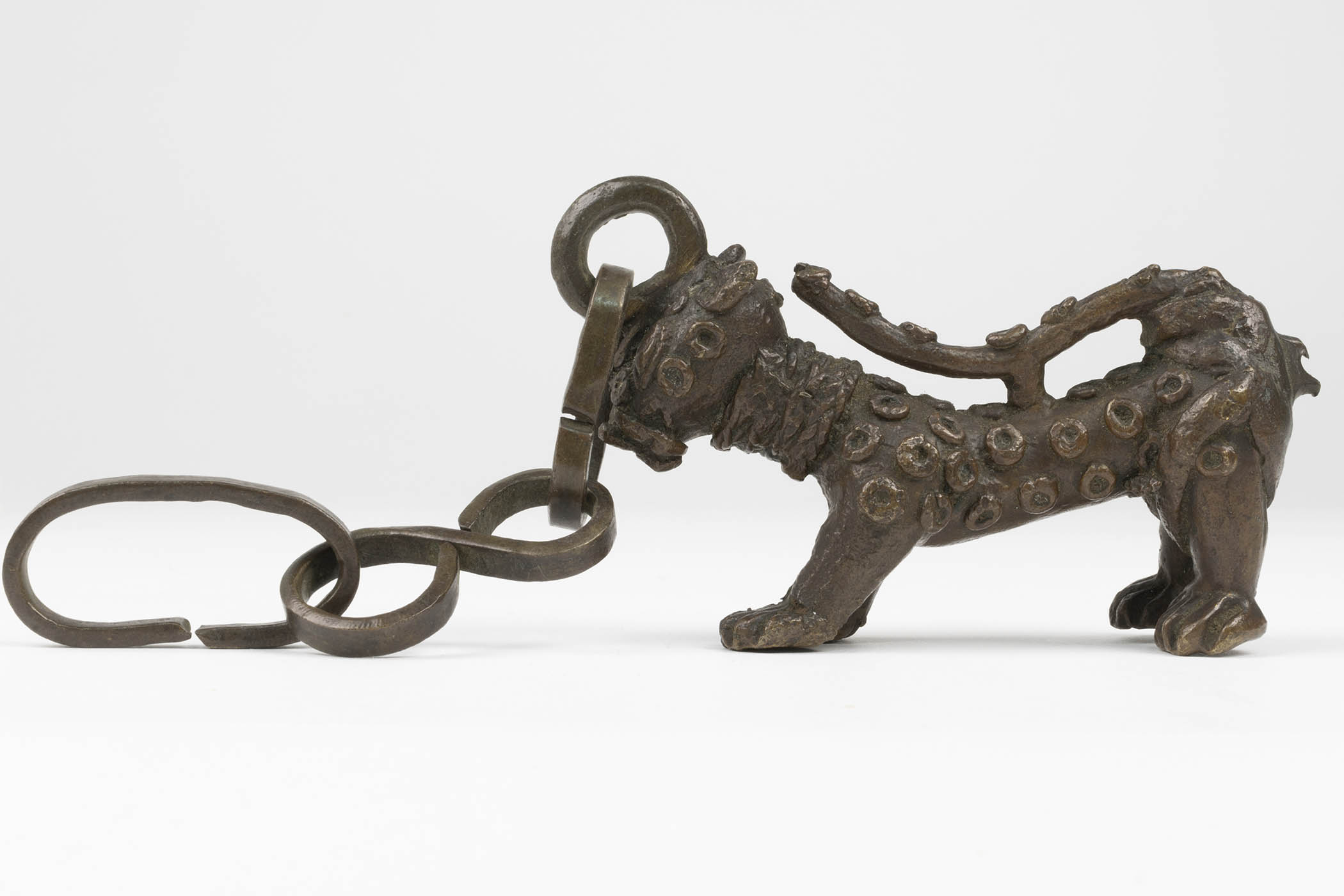
Cambridge University’s Museum of Archaeology and Anthropology is transferring ownership of 116 objects looted from Benin City in 1897
In 1897, in retaliation for the killing of seven British officials, a Royal Navy-led “punitive expedition” plundered the kingdom of Benin, in modern-day Nigeria, and sent its ruler into exile. British soldiers and sailors took more than 5,000 brass and bronze castings and ivory carvings – known collectively as the Benin bronzes. Many ended up in museums in Britain, Europe and the US.
The sophistication and beauty of the objects, made over centuries by metal-casting guilds working exclusively for Benin royalty, astonished Victorian Britain, confounding widespread assumptions that Africa was a place of barbarity.
‘The issue has come to the British Museum’s doorstep. We now expect a domino effect’
‘The issue has come to the British Museum’s doorstep. We now expect a domino effect’
Olugbile Holloway, NCMM
The bronzes increased in value over the 20th century and several were bought by collectors for millions of pounds apiece. But they also became symbols of colonial loot. In 2022, Germany transferred legal title of more than 1,000 bronzes to Nigeria, and in 2025 the Netherlands returned 119. But although London’s Horniman Museum transferred ownership of 72 bronzes in 2022 (six actually went back to Nigeria), other institutions have been slow to follow.
Political disputes in Nigeria have complicated the process, with the respective interests of the federal government’s NCMM, the state government in Benin City and the current oba, Ewuare II, great-great-grandson of Ovonramwen, the ruler toppled by the British, not always aligned.
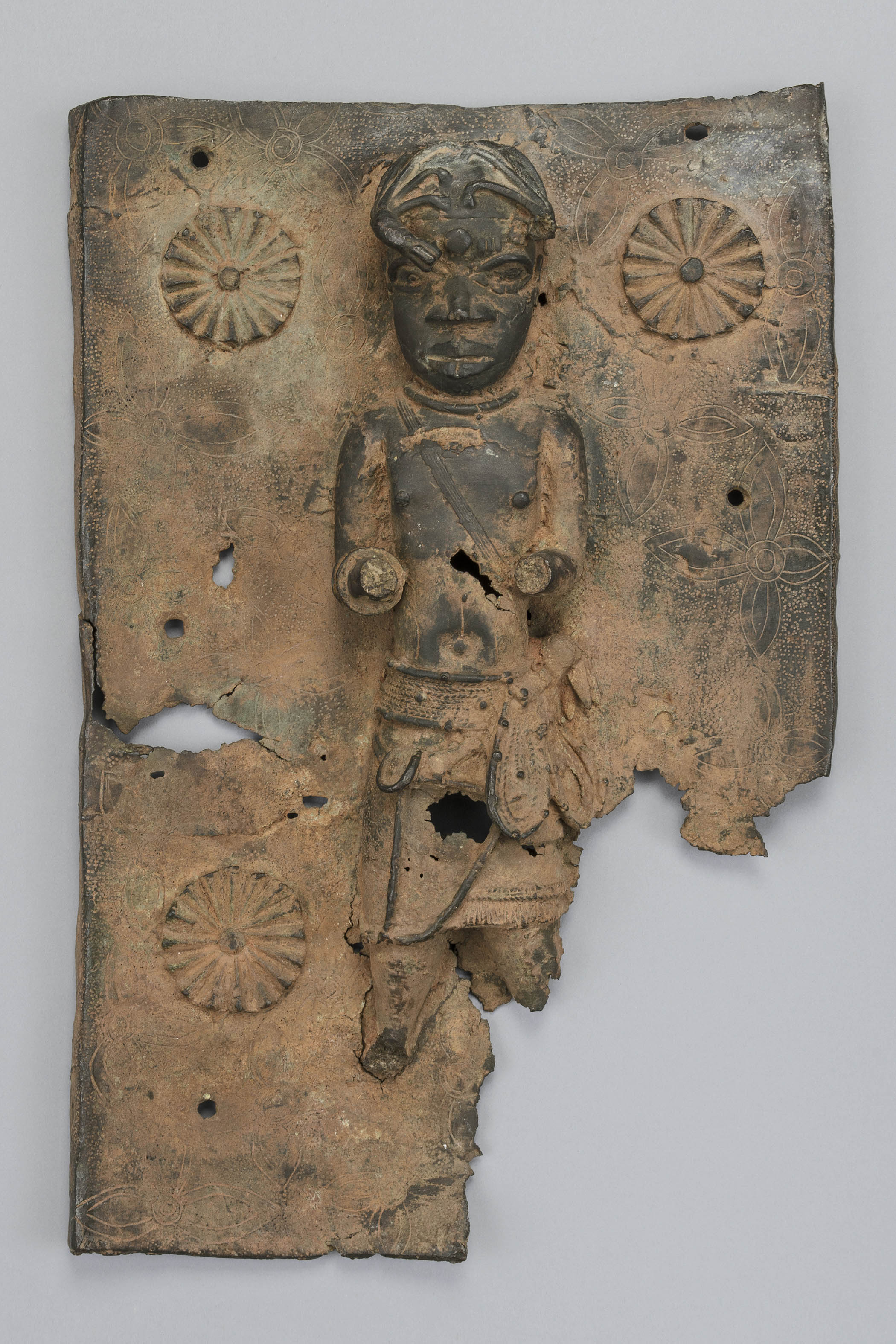
Primarily made of brass, they also include ivory and wooden sculptures stolen by British soldiers
Thomas admitted that a 2023 declaration by the Nigerian president at the time, Muhammadu Buhari, recognising the oba as owner of the bronzes had been “a challenge which led to confusion” and largely accounted for the gap between the 2022 decision to return the bronzes and transfer of ownership. “We had to wait for clarification from the Nigerian side about the legal position… We take no view of where they go afterwards, but we needed clarity of who we were dealing with.”
Further disagreements flared up, embarrassingly, at the inaugural exhibition of the Museum of West African Art (MOWAA) in Benin City, which the oba perceives as “an evil plan” to divert donor money. Protesters stormed the museum, beat up merchandise sellers and shouted abuse at foreign guests, who needed a police escort to their hotel. The British Museum’s director, Nicholas Cullinan, on his first trip to West Africa, was stranded with the protestors, and threatened by a man wielding a drill.
Nigeria’s government museums, which Holloway admits are “grossly underfunded”, have struggled to display the returned bronzes. They were shown for the first time late last year in the government museum in Benin City, in a widely criticised exhibition. Objects were crudely attached to walls and had incoherent labels. But Holloway said the privately funded renovation of Nigeria’s National Museum in Lagos – due to be finished in March, and where many of the bronzes from Cambridge will be displayed – will be “completely different… We want to use Lagos as a model, a proof of concept, and the pictures of it will speak for themselves”.
Newsletters
Choose the newsletters you want to receive
View more
For information about how The Observer protects your data, read our Privacy Policy
The focus in Britain is now likely to fall on Oxford’s Pitt Rivers Museum, where, also in 2022, the university supported a claim for the return of 97 bronzes. The National Museum of Scotland has also been in discussion with the NCMM over the return of its own collection. This leaves the British Museum increasingly isolated, not just in relation to the Benin bronzes, but on the wider issue of how it handles objects taken by force.
Under the terms of the 1963 British Museum Act, it is restricted from transferring ownership, or “deaccessioning”, objects within its collection. Cullinan has said he has no intention to press for changes to the act, but Holloway argues this “is being used as a cloak to prevent return There is subjectivity and wiggle room in the law if you look for it.”.
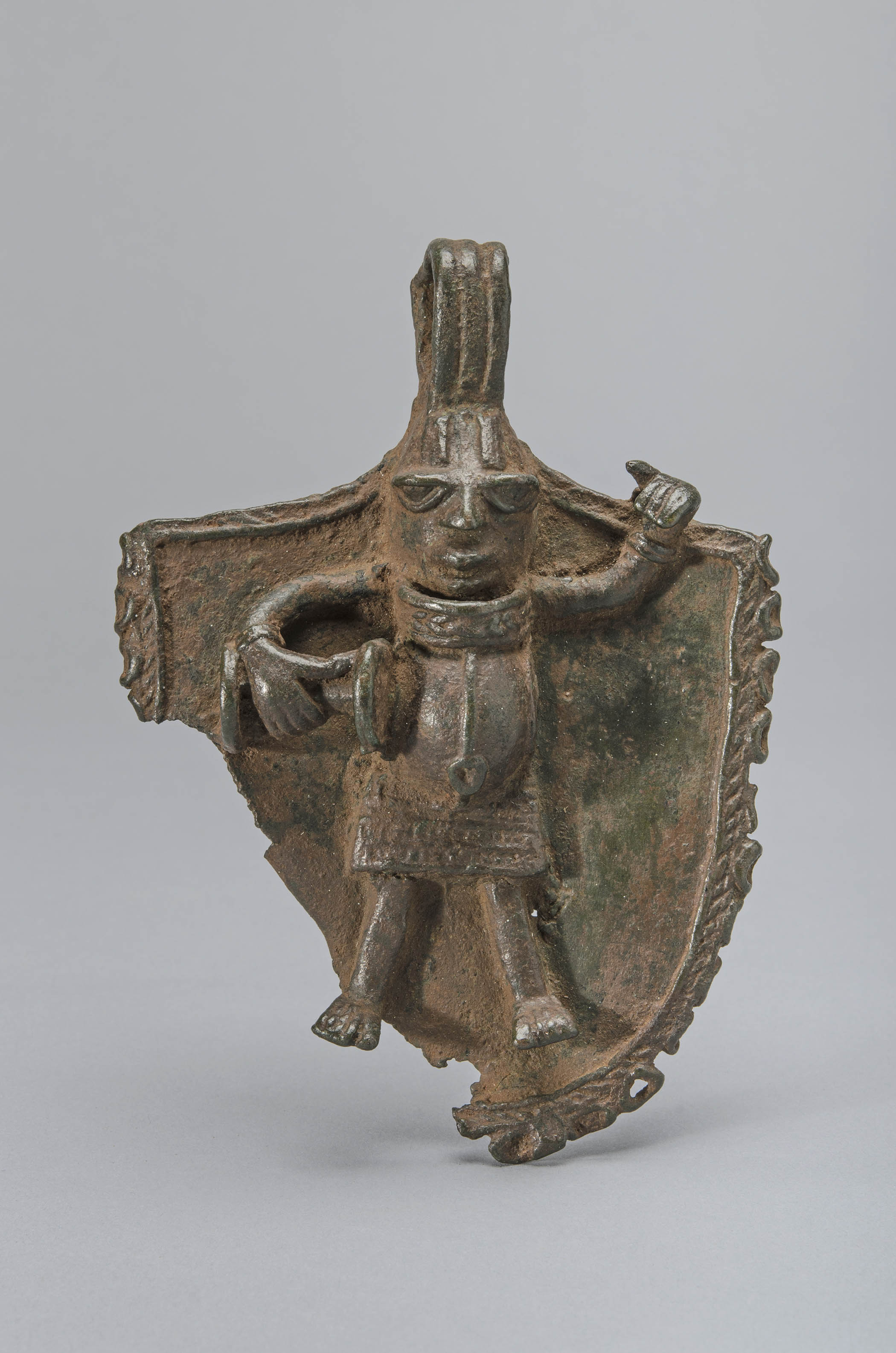
Thomas said the Labour government has “disappointed people across the cultural sector” by not trying to amend the British Museum Act, and similar laws. “These museums do brilliant work, but we’ve reached a stage where national institutions in Britain appear to be behind the curve and that is reputationally damaging,” he said.
Barnaby Phillips is the author of Loot: Britain and the Benin Bronzes. His new book, The African Kingdom of Gold: Britain and the Asante Treasure, is out in March
Photographs by Adam Eastland / Alamy, University of Cambridge
This article was amended on 8 February 2026. An earlier version said that six Britons were killed in 1897. The correct number is seven.