


The UK government has now approved highly controversial plans for a vast new Chinese embassy. So how do we square the frequent warnings offered by British spies about the dangers emanating from Beijing with the approval of this new building in the heart of London?
The answer is that while the challenges posed by Chinese espionage are all too real, the embassy is not the heart of the problem.
For all the diplomatic niceties and cocktail parties, everyone knows that one function of embassies is to act as a base for espionage. They provide cover for spies pretending to be diplomats but are also the hub for technical collection operations, with well-positioned receivers sucking up signals.
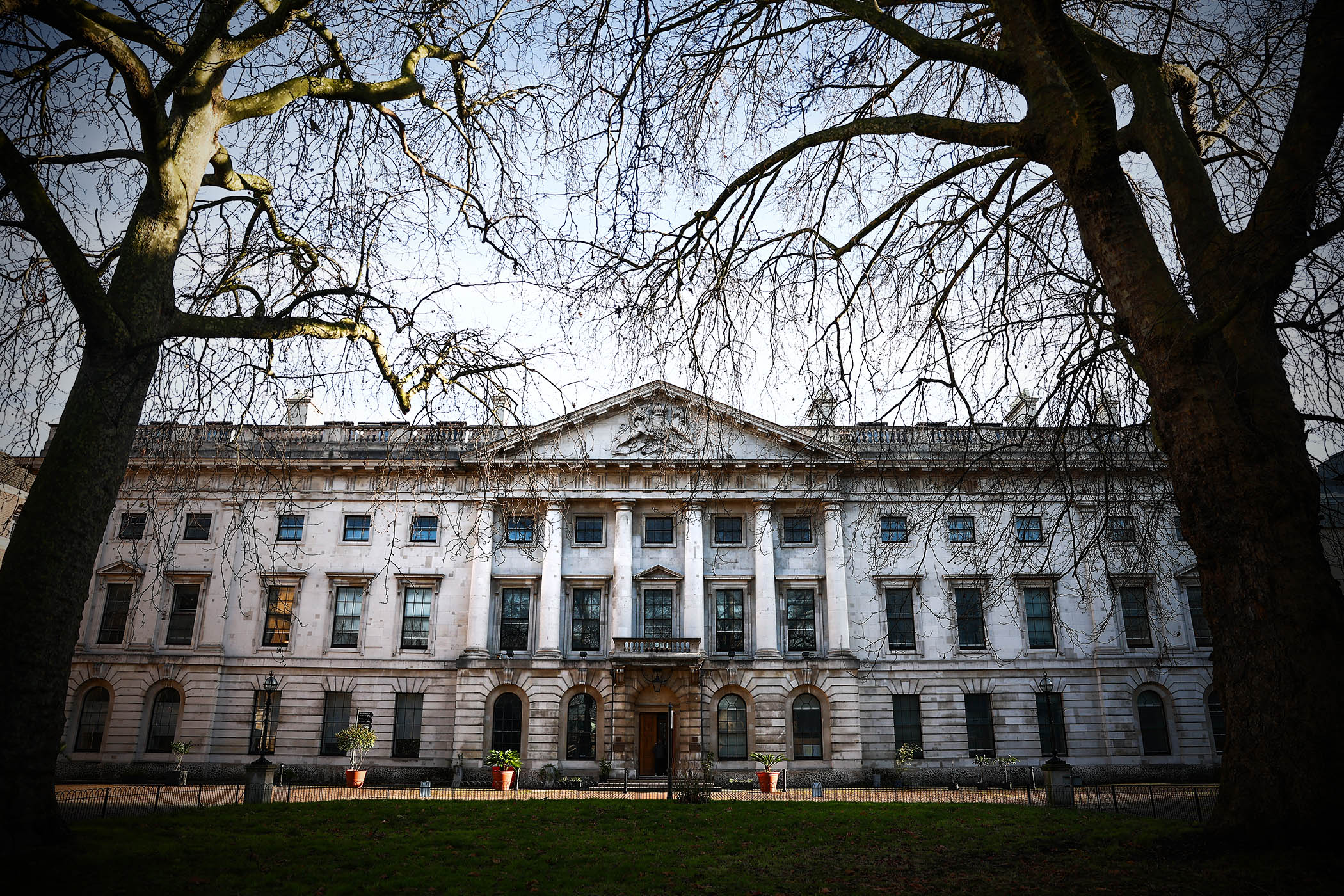
The fear that cables could be tapped from the building’s prime location in Royal Mint Court, near the City of London, has been the focus of political heat and attention. The claim has been that Chinese intelligence could install equipment in a basement room to gain access to fibre-optic cables running just outside its walls, stealing sensitive personal or financial data.
For spies, cable-tapping is as old as the hills. Early in the Cold War, British and American spies dug tunnels beneath Berlin and Vienna to tap communications in Soviet sectors. Listeners sat in dank cellars wearing headphones, switching on a wax recording disc when they heard something suspicious. In later years, the US went to great lengths to install a tap on a cable deep in ocean off the Soviet coast. And the vulnerability of cables is very much in the minds of security officials at the moment amid fears that Russia is both mapping undersea cables and, in some cases, sabotaging them by having vessels in the Baltic “accidentally” drag anchors across them.
So why does that not appear to be such a worry with the new embassy? British intelligence has perhaps more experience than any other country in the world in both tapping and protecting cables, having built the first global cable network during the days of empire. That means it well understands how it can be done and what mitigations can be put in place. The simplest way of dealing with the risk is the most obvious: if the problem is that cables run adjacent to the site then it is not exactly technically complex to simply dig them up and move them further away. Sensitive traffic should be encrypted, and there are also more advanced techniques involving technical monitoring devices that allow you to see if traffic is being diverted or a cable interfered with (in practice, modern fibre-optic cables are not tapped but the light inside them mirrored). And sabotage is unlikely unless we move towards a far more serious conflict with China (in which case there will plenty of other things to worry about). The delays in the planning decision reflect time spent working on exactly these kind of mitigations.
In letters released at the same time as the decision was made public, the heads of MI5 and GCHQ said that while it was not realistic to “wholly eliminate” any potential risk, a “package of national security mitigations” had been formulated that was “professional and proportionate”. A statement from the Commons intelligence and security committee said there had been a lack of clarity around the process, which had not been effectively coordinated and was not as robust as the committee would have expected, but it also said it believed the national security concerns could be “satisfactorily mitigated”.
There is also the reality that in the modern world there are plenty of other ways of stealing large amounts of data without requiring physical access provided by an embassy. China has proved highly adept at collecting vast amounts of personal data via cyber-espionage. This included the recent hack, codenamed Salt Typhoon, that hit western telecoms companies, including in the US and UK, and targeted sensitive communications. Beijing has also been accused of collecting other large-scale population-level data sets, including health and financial information, a charge it has always denied.
That underlines the fact that the espionage threat from China may be real but that an embassy is less important than it used to be. That is also the case when it comes to trying to recruit people to spy. A recent espionage alert to parliament warned that Chinese security was sending out invitations on LinkedIn to see who might be after some extra cash in return for consultancy as a means to lure them into a covert relationship. No longer does a Chinese spy from the embassy need to wander the bars of Westminster scouting out a target. Instead, they can run some fake profiles out of China allowing them to remotely operate at a vastly different scale and with less risk to themselves. China, of course, denies it carries out any of this type of espionage.
The job of MI5 is to keep tabs on foreign spies operating in the UK, including tracking suspicious individuals. And it may be that this is actually made easier rather than harder by the new embassy. At the moment, Chinese diplomats are based in multiple compounds across London. Consolidating their presence into one location may actually make monitoring easier.
Newsletters
Choose the newsletters you want to receive
View more
For information about how The Observer protects your data, read our Privacy Policy
None of this is to suggest worries about China are not legitimate. For some, the fears are particularly acute. Dissidents and activists from China who have found a home in the UK say they have been harassed and followed. China has offered “bounties” or rewards for information leading to the capture of some Hong Kong activists living in the UK, and alarm over Chinese security reaching out to diaspora communities has grown rapidly in recent years. Those who wish to protest about China worry that their ability may be restricted by the geography of the new site (back in 2022 there was a clash at the consulate in Manchester when diplomats tried to take down protesters’ signs).
The real importance of the embassy may not be so much to do with its role as a potential base for espionage as with its symbolic power. That, rather than the specifics of what goes on inside and any security risks, is why it has been the source of so much attention. A sensible policy on China requires balancing the need to engage with Beijing, especially economically, with managing the security risks. And there are still those who worry that allowing China to build its largest embassy in Europe in such a historic location in the centre of London sends a powerful signal about Beijing’s presence in the UK, and its growing influence.
Photograph by Henry Nicholls/AFP via Getty Images