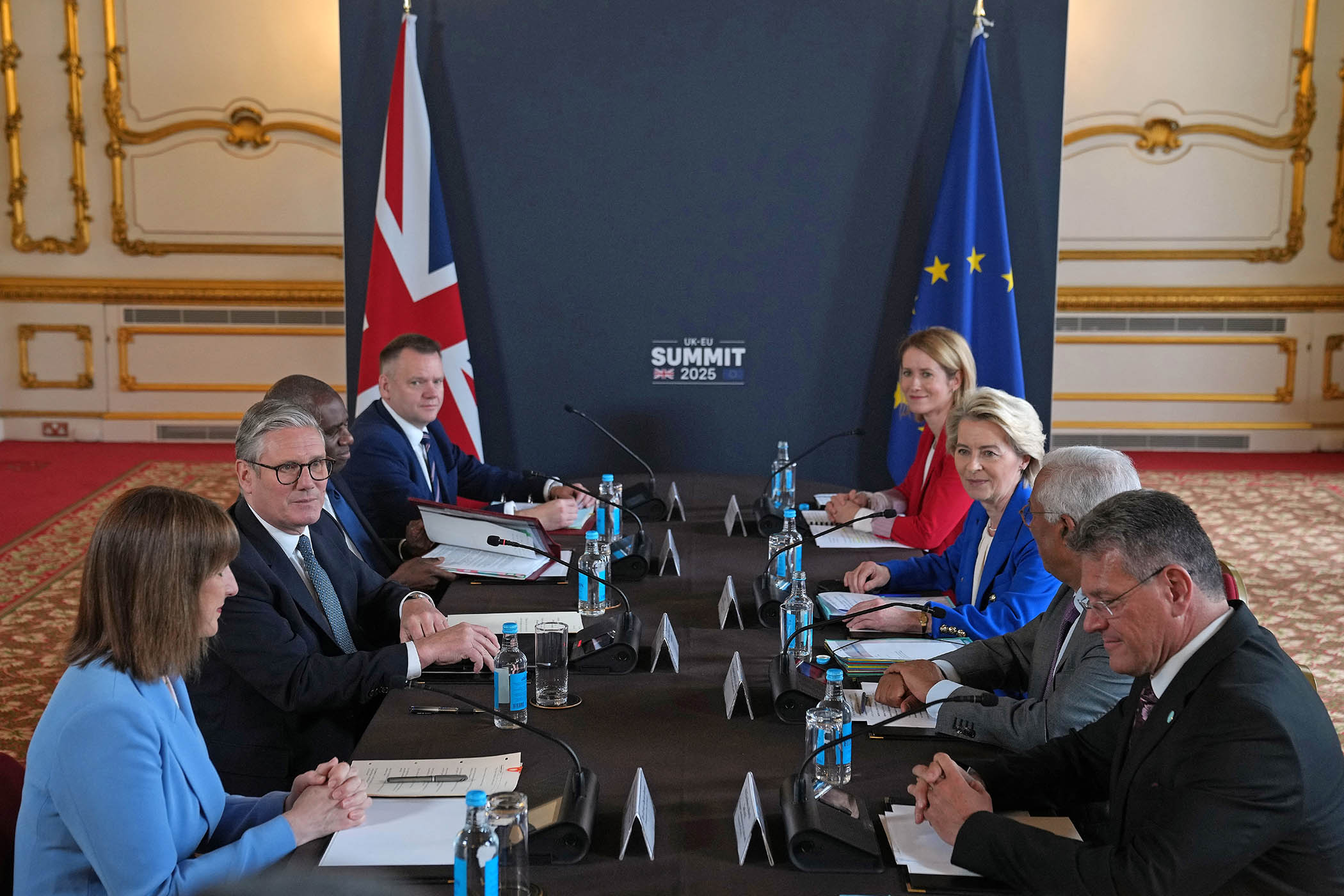


Oxford and Cambridge will be turned into “Europe’s Silicon Valley” in plans to be laid out by the government this week. A new development corporation for Greater Oxford will coordinate the initiative, cutting through bureaucracy to regenerate the area and boost jobs.
As Downing Street seeks to get back on the front foot after the release of the first tranche of documents relating to the appointment of Peter Mandelson as UK ambassador to Washington, the chancellor will put closer ties with the European Union at the heart of the government’s economic growth strategy.
In the Mais lecture in London on Tuesday, Rachel Reeves will stress that greater access to the single market is crucial to protect the UK economy against global shocks, including war in the Middle East. She will highlight the benefits of dynamic alignment with the EU.
The speech will be the latest attempt by Reeves to ratchet up the rhetoric on closer relations with the EU, which she has described as the “biggest prize” in terms of trade.
Reeves will highlight AI and regional growth as the key drivers of growth. She will return to the theme of “securinomics”, a term she coined in her previous Mais lecture in 2024, and say that her position has been vindicated by events since then, including the crisis in Iran.
The chancellor has also told colleagues that she wants to see an “ambitious” youth mobility scheme, a key demand of the EU in its talks with the UK. “There’s a rallying cry for closer European cooperation,” one Whitehall source said.
If you were setting up a new form of economic cooperation between all the European states in the modern context … it would be something around defence
If you were setting up a new form of economic cooperation between all the European states in the modern context … it would be something around defence
Whitehall source
The Cabinet Office has embarked on a sector-by-sector analysis of areas where deals could potentially be done, examining in detail how much the UK has already diverged from the EU since Brexit. Proposals are expected to be put to the EU in the next couple of months before a summit in the summer.
The areas under consideration include chemicals and the car industry, but financial services are unlikely to be on the table because in that area the UK has already moved significantly away from the EU.
However, some senior figures in other European capitals are sceptical about what they see as the UK’s attempt to “cherrypick” greater single market access.
The government believes that the deals already done, as part of last year’s “reset” with the EU, will add £9bn to the economy every year. This includes £5.1bn from the agreement to allow British food and agricultural products to cross freely into the EU without costly and time-consuming checks that have been a drag on exports since Brexit.
Newsletters
Choose the newsletters you want to receive
View more
For information about how The Observer protects your data, read our Privacy Policy
Ministers hope that an additional £3.9bn could potentially come from linking the UK and EU carbon emissions trading system. “That doesn’t include how much a youth mobility scheme would bring because we don’t know the detail of that yet,” one Whitehall source said.
Negotiations are expected to “go to the wire” on proposals for a youth mobility scheme. There is still no agreement within the government about the number of people who should be allowed into the UK. The Treasury and the Home Office disagree about the level at which the cap should be set.
Differences also remain between the UK and the EU about whether students from the EU should pay the domestic or foreign rate for university tuition fees.
Tomorrow Nick Thomas-Symonds, the minister for Europe, will meet Maroš Šefčovič, the EU’s trade commissioner, for talks in Brussels.
The prime minister has made clear that he wants to work collaboratively with other EU countries to increase defence spending and build up military capability. Talks for the UK to join the EU’s €150bn (£130bn) Security Action For Europe (Safe) fund collapsed last year, after the UK and the EU could not agree on a joining fee.
However, there is now greater appetite on both sides for a deal, including among the French. It is still unclear whether this will involve joining a second round of the Safe scheme or being involved in a new EU defence scheme.
One Whitehall source said: “If you were setting up a new form of economic cooperation between all the European states in the modern context, it would probably wouldn’t look like steel, coal and goods – all the things that the EU started off with – it would be something around defence, so I think we’re going to want some high-level movement on that.”
Photograph by Kin Cheung/AFP