When Channel 4 poached The Great British Bake Off from the BBC in 2016, the two presenters, Mel Giedroyc and Sue Perkins, announced they were quitting the show: “We made no secret of our desire for the show to remain where it was [on BBC One]... we're not going with the dough."
A decade later, the BBC is struggling to keep hold of its people, not just in the busy world of entertainment, but at the very heart of BBC News itself – on the Today programme.
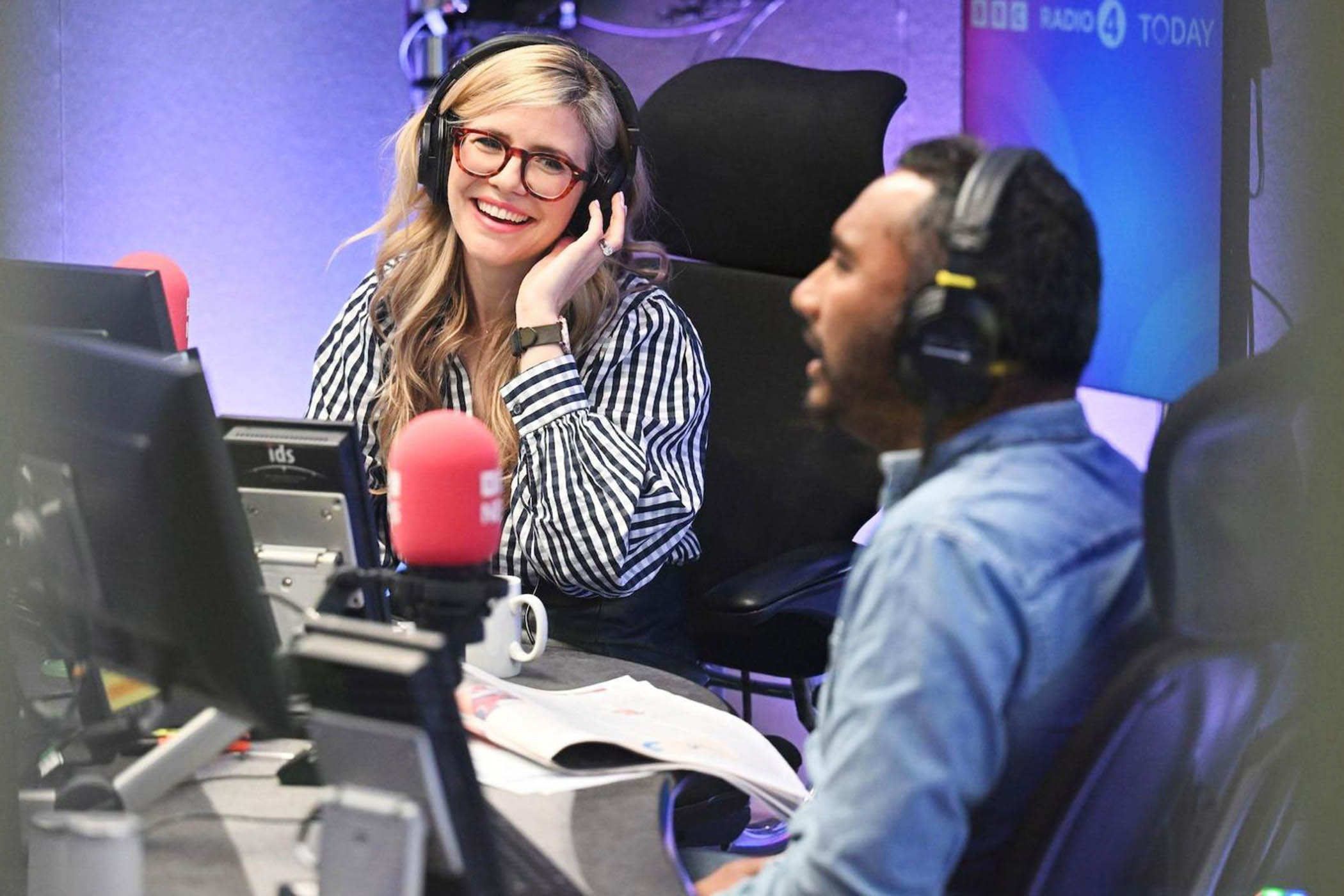
Amol Rajan announced last week that he will be leaving the BBC Today programme to set up his own production company. “Del Boy was my hero growing up, and it’s time to unleash my inner entrepreneur,” was his forthright line. Mishal Husain, who presented the programme for a decade, left just over a year ago and has launched The Mishal Husain Show on Bloomberg. Emma Barnett, who joined the programme not quite two years ago, is understood to have been discussing her next move with BBC executives. This morning, Owenna Griffiths, the editor of Today for more than five years, has announced that she is stepping down and leaving the BBC.
There was a time when a presenter’s chair in the Today studio was considered so interesting and influential that, even despite the buzzing of the alarm at 3am to get to work, no one wanted to give up the job. John Humphrys presented the programme for 32 years; James Naughtie for just over 20; Justin Webb is coming up for 17.
But technology has changed the marketplace of journalism. Established broadcasters have turned entrepreneurs – clearly a model for Rajan. Gary Lineker, the former BBC presenter, started the UK’s most successful podcast company, Goalhanger, which produces the wildly popular The Rest Is… shows; Piers Morgan left Rupert Murdoch’s NewsCorp to build his own franchise on YouTube; Emily Maitlis, Jon Sopel and Lewis Goodall all left the BBC to set up The News Agents podcast. A generation of self-starters, like Dylan Page and Alex O’Connor, have shown the way as podcasters and YouTubers, becoming their own valuable brands from scratch. The balance of power has shifted from the institution to the individual, from the curator to the creator.
All but one of the Today presenters have their own podcasts. Their own reputational interests and commercial potential are tied up as much, if not more, in their own shows than Today. A snippet of Emma Barnett’s interview with Yoni Finlay, who survived the attack on a synagogue in Manchester in October, appeared on Today; for the full interview listeners would have to turn to her podcast, Ready To Talk. Yet the BBC has been in two minds about how to make the most of their heavy hitters. They have their own shows – but they have not been allowed to distribute them on YouTube, now the biggest single platform for podcasting.
Today has remained the programme that defines the editorial values of the BBC – and the common ground of news
Today has remained the programme that defines the editorial values of the BBC – and the common ground of news
The departure of talented journalists in their 40s speaks to a generational problem, as much as a financial one. How can the Today programme serve lifelong listeners and still attract younger ones? The BBC hoped that Rajan and Barnett would help answer that problem, being both rigorous journalists and warmly informal on air. Older listeners, however, resist that informality. But if – or when – Barnett follows Rajan out of the studio, Today will be back to square one when it comes to recruiting the next generation of devotees.
Make no mistake, The Today programme on Radio 4 is still on top. It draws in 5.7m listeners a week: roughly five times that of LBC. The News at Ten on television, in contrast, has seen its audience sucked away online.
Today has remained the programme that defines the editorial values of the BBC and, with it, common ground in the news. And it can make a difference. Journalist Merope Mills’ daughter Martha fell off her bike on holiday in 2021; the accident left her with serious injuries to her pancreas. Transferred to a specialist treatment centre at King’s College Hospital in London, the concerns of her parents, as her condition deteriorated were ignored – and Martha, who was just 13, died. Mills says that Owenna Griffiths, Today’s editor, approached her, not only to give her airtime but to help campaign for change.
“There is surely no other single news programme which would get the attention of all the people in the country – and the people in the corridors of power, the people who can effect change. It felt to me like a no brainer, that if I wanted to get the ear of those people, there was no better place to do it.” She appeared on the programme in September, 2023; Martha’s Rule, a patient-safety initiative which makes it easier for parents in England to ask doctors for an urgent second opinion, began to be introduced in May 2024.
There is – in the wake of Covid, as the world seems more a maelstrom of the unendurable – a turning away from news as a whole.
The nation’s single biggest radio station is BBC Radio 2. Audiences are steadily rising, and its Breakfast Show, presented by Scott Mills, noses ahead of Today with 6.2m listeners.
Both Tim Davie, the director general, and Deborah Turness, who ran BBC News, resigned last year. Their successors will have to appoint a new editor and certainly one, possibly two presenters this year.
At stake is not just the future of Today and the careers of a few celebrity journalists, but, after the pips, a place for shared facts, powerful people held to account, where a community of listeners gather to hear wide differences of opinion.
The BBC was contacted and declined to comment.
Photograph by Jeff Overs/BBC
This article was originally published on Sunday 18 January 2025. It was updated on Monday 19 January 2025 to reflect Owenna Griffiths‘s resignation
Newsletters
Choose the newsletters you want to receive
View more
For information about how The Observer protects your data, read our Privacy Policy