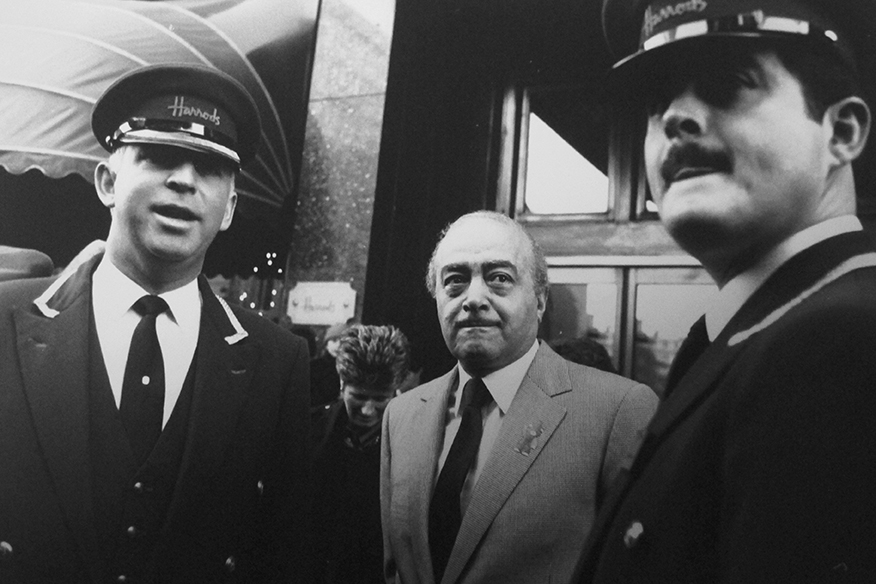

Three survivors of abuse by Mohamed Al Fayed and his alleged trafficking network have filed complaints with the police watchdog over the Metropolitan police’s handling of their cases. One more complaint is forthcoming.
The complaints, made to the Independent Office for Police Conduct (IOPC), relate to the Met’s failure to treat the women as alleged trafficking victims. All four have been identified by the Home Office as victims of modern slavery, the broad umbrella under which human trafficking sits.
More than 400 women have made allegations of sexual misconduct against the former boss of Harrods, his brother Salah and an alleged network of enablers – including claims of rape, being drugged, being transported across international borders, having their passports removed and being threatened into silence. At least 150 people reported these crimes directly to the Met.
The IOPC is already looking into one serving Met officer and four former officers over their handling of complaints relating to Fayed, who died in 2023, aged 94. Salah Fayed died in 2010. Neither man was charged with a crime relating to the allegations, which are said to have happened between 1977 and 2014.
The IOPC confirmed it had received three complaints last week that related to the Met’s handling of allegations against Fayed and his associates, and said: “We are currently assessing these complaints before deciding what further action we will be taking.”
Survivors have criticised the handling of the Met’s investigation into Fayed for failing to take seriously the allegations of trafficking . The women who spoke to The Observer said they missed out on specialised support for more than a year because police did not refer them to the relevant services, and that they no longer trust the Met to investigate the full extent of the Fayed network’s alleged crimes.
They are calling for independent oversight of Operation Cornpoppy, the taskforce investigating the case.
A Met spokesperson said: “We are assisting the [IOPC] as it carries out an independent investigation into our handling of reports of sexual offending by Mohamed Al Fayed. We are aware that further complaints are now being assessed by the IOPC. We will support these as required.”
One woman, who did not want to be identified publicly and has made an IOPC complaint, said she went to the police after the revelations about Fayed’s abuse in the 2024 BBC documentary Al Fayed: Predator at Harrods. Though she was initially asked to provide video testimony, she received an email from a generic police address months later informing her that “there is no additional information that we require from you”.
She contacted the Met again and, although they did take her case forward, she said they did not respond to her specific claim that she had been trafficked, despite raising the issue to multiple officers by email, as well as in formal testimony. She said she was instead treated as solely a victim of sexual abuse.
Newsletters
Choose the newsletters you want to receive
View more
For information about how The Observer protects your data, read our Privacy Policy
The survivor described her interactions with Operation Cornpoppy as “judgmental”, “minimising” and “like a smack in the face”.
Another survivor was one of 21 people who approached the Met about being abused by Fayed while he was still alive, but no action was taken at the time. It was only after speaking to fellow survivors that she began to realise she might have been trafficked.
Dissatisfied with how the Met was handling their cases, both women contacted an independent charity, which immediately referred their trafficking claims to the Home Office.
They were told there were conclusive grounds that they were victims of modern slavery in the category of sexual exploitation – a decision that allows victims to access a range of support, including specialised counselling.
The women The Observer spoke to said the support services they were offered by the Met were designed for rape and sexual assault survivors, and were inappropriate for their experiences of being recruited by alleged enablers and being moved between locations for the purposes of sexual exploitation.
“I felt shell-shocked [upon receiving the decision from the Home Office], but then, the next day, I felt that it had confirmed something I already knew,” the second woman said. “It is also a stark reminder of how the Metropolitan police have not taken care of me.”
Under the Modern Slavery Act (2015), first responders, including police, are required to refer anyone they suspect of being a victim of trafficking to the Home Office via the National Referral Mechanism (NRM). It is not necessary for police to be certain that trafficking has taken place – only that they believe it might have occurred.
This did not take place in the cases of any of the women The Observer spoke to for this story. “It wasn’t something I was aware of or was told about,” the second woman said.
In an email sent to survivors earlier this month responding to their criticism of the Met’s investigation into trafficking claims, Operation Cornpoppy said it had not made NRM referrals for the women who came forward because the existing legislation did not cover the period of offending.
But experts disagree with this explanation. The independent anti-slavery commissioner told The Observer that the relevant information regarding a trafficking referral was when a potential victim came forward, not when the offences took place.
Emma Jones of the law firm Leigh Day, which represents two of the survivors in their civil cases and is also working on the campaign for a public inquiry into Fayed’s crimes, said: “Whether or not they had to, that’s a moot point… They could and should have recognised the seriousness of the allegations and that should have triggered somebody in Operation Cornpoppy advising, suggesting and assisting the women to make the necessary applications.”
The first woman said: “To be told by the Met that your case is too old minimises the severity of the consequences on survivors. To hear that was like a slap in the face in light of the sheer numbers of women and children affected.”
It is understood that Operation Cornpoppy is now assisting other Fayed survivors with NRM referrals.
Survivors also criticised the Met’s reassurance in the email that “human trafficking has always been at the heart of this investigation”.
The four survivors who spoke to The Observer strongly dispute this characterisation. “It is so gaslighting because they have never been clear about that at all,” one said.
In correspondence from April seen by this newspaper, officers informed survivors that Operation Cornpoppy had “updated our guidance on human trafficking” and brought on new officers with modern slavery training to assist with inquiries.
Three women and one man have been questioned by the Met over alleged human trafficking offences related to Fayed since the beginning of this year, and a separate investigation by a specialist anti-trafficking force in France is under way.
Survivors raised their concerns about whether trafficking allegations are being fully investigated in a meeting with Keir Starmer this month. Now they say they want to make sure the next prime minister takes their cases seriously.
“I want somebody who’s going to be brave and who wants justice, transparency and accountability for all the survivors – who is going to use their power to expose the full scale of this entire trafficking network,” one woman said.
Photograph by Neil Libbert/Getty Images