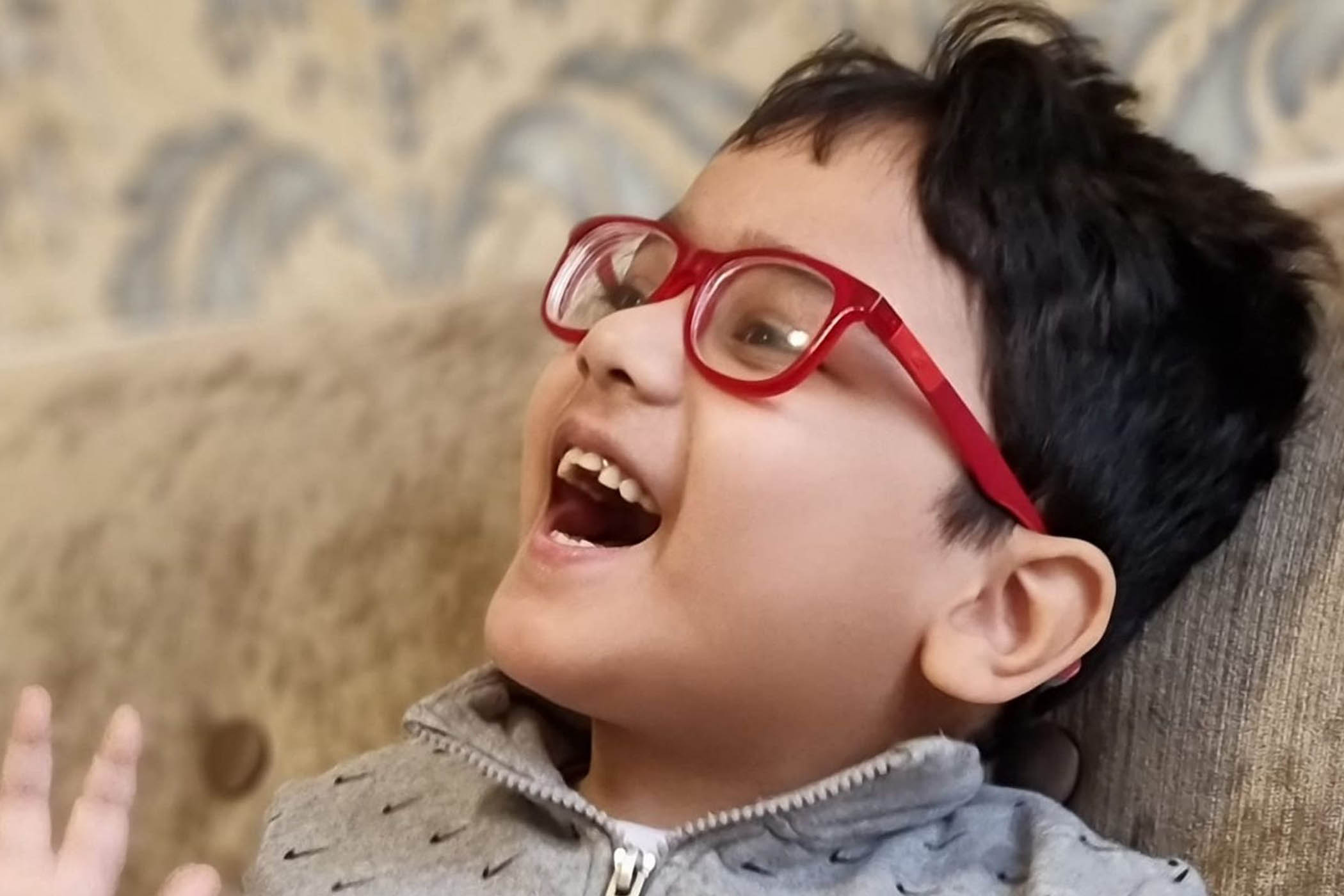

Haroon Rashid had spent four days in hospital with his five-year-old son, Ayaan, when staff in intensive care put the boy on a ventilator. “They said to me: ‘You have to go, sir, we need this space to be sterile.’ I was crying, asking him to open his eyes. He squeezed my hand. He opened his eyes and I could tell that he was trying to smile – as if he was trying to tell me everything is going to be OK. How was I supposed to know that was the last time he would ever open his eyes again?”
Ayaan had Hace1 disorder, a neurodevelopmental condition that slowed his growth and affected his motor functions. He was admitted to Sheffield children’s hospital in March 2023 with a respiratory infection. Eight days later he was dead. “I, personally, feel I didn’t do enough to save his life,” said Rashid, 44. “I regret that every single day, and I feel that I let him down, but I have led an immense fight, which has taken an immense toll on me and my health."
After Ayaan’s death, his father complained to the hospital, alleging hundreds of failings in the days before he died, and hundreds more about record-keeping and the way the family were treated.
A recently completed NHS trust-commissioned report by Niche Health and Social Care Consulting upheld 307 complaints and identified a series of clinical errors in Ayaan’s care, but concluded that, “on the balance of probabilities”, its recommendations would not have saved Ayaan’s life.
Rashid said the report had removed detail in an earlier draft, which he said wrongly linked the death to Ayaan’s Hace1 condition, and called the investigation a “whitewash”, demanding a review of its findings. Niche said it had always attributed the primary cause of death to respiratory adenovirus.
Despite this, taxi driver Rashid and his 16-year-old daughter, Aroob, who lives with the same condition Ayaan had, continued to fundraise for the hospital’s charity. “I had people saying: ‘Are you in the right frame of mind that you’re still supporting the hospital that failed your son so badly?’ But I’m still willing to support the executives in the hospital because it’s about saving other people's children.”
He alleged that some hospital staff had treated the family with “hatred” and subjected him to a “vicious witchhunt”. “The trust thinks they can deal with this through what we deem as PR stunts,” he said, accusing executives of prioritising PR. He added that, since the report was finalised, the chief executive had contacted him to personally apologise.
Rashid has complained about emails, obtained via a subject access request, that include a trust lawyer mentioning the potential of Rashid being sectioned under the Mental Health Act after he said his grief had left him with suicidal thoughts.
He said internal emails focused on “reputational risk” in discussions about staff contact with the family and raised concerns about the level of detail reported to trust lawyers concerning his activities, even going so far as reporting a snowflake that Rashid made for the charity Christmas celebrations and the fact he took photos with his daughter.
The report by Niche did not address these specific concerns, but said investigators found no evidence of discrimination, harassment or victimisation.
Newsletters
Choose the newsletters you want to receive
View more
For information about how The Observer protects your data, read our Privacy Policy
The family of Yusuf Mahmud Nazir, another five-year-old boy who died at the hospital in November 2022, accused Niche of a “coverup” after a report that made a series of recommendations but found that “these would not have changed the course of events” for Yusuf.
In 2024, then health secretary Wes Streeting said that Yusuf had been “failed in the most appalling and tragic way possible” in the care provided by his GP, Rotherham general hospital, which initially treated him before sending him home with antibiotics, and Sheffield children’s hospital, where he died eight days later.
One of the key complaints in Ayaan’s case was that, although Rashid and his wife, Fakhra, were trained to carry out physiotherapy and suctioning of Ayaan’s airways to help with his care at home, and had done so in hospital when his son had previously been admitted with infections, he said he was stopped from doing so by staff.
“I knew his chest wasn’t clear... and they wouldn’t listen. They said they wouldn’t do suctioning and they refused to give me the equipment. They said I wasn’t competent, but they were the ones who trained me.”
He added: “It felt like I was dismissed. They treated me like a nuisance – like I was speaking to a brick wall.”
The report found that there was no evidence Rashid was stopped from suctioning Ayaan’s airways, and said that his son’s low platelet count had been the reason staff were reluctant to carry it out, although hospital guidance was lacking on the matter.
Rashid is demanding a review of the report’s findings and a law to ensure families are consulted when consultancies are brought in to investigate NHS deaths.
Paying tribute to Ayaan, who he said loved Sheffield United, cricket, cars and theme parks, Rashid said: “He would always be smiling – even through pain, he would smile. If there was a way for me to sacrifice my life to save his – if there’d been any way to do that – I wouldn’t be here today.”
Niche said its investigation had found areas where Ayaan’s care could have been more expedient and that “some of those actions may have increased his chances of survival”, but that the expert clinical reviewer found that they were, on balance, “unlikely to have changed the outcome”.
A spokesman added that it was “important not to conflate” the cases of the two boys, and that on both occasions “Niche were chosen as the preferred supplier following evaluation on a public sector framework”.
The hospital trust did not respond to specific questions about Rashid’s treatment, but Dr Jeff Perring, the executive medical director, said: “We appreciate how difficult independent reports, such as this, are for the families affected. We understand the importance of working together to ensure that the lessons learned are implemented in our everyday care for children and young people.”
Photograph by PA