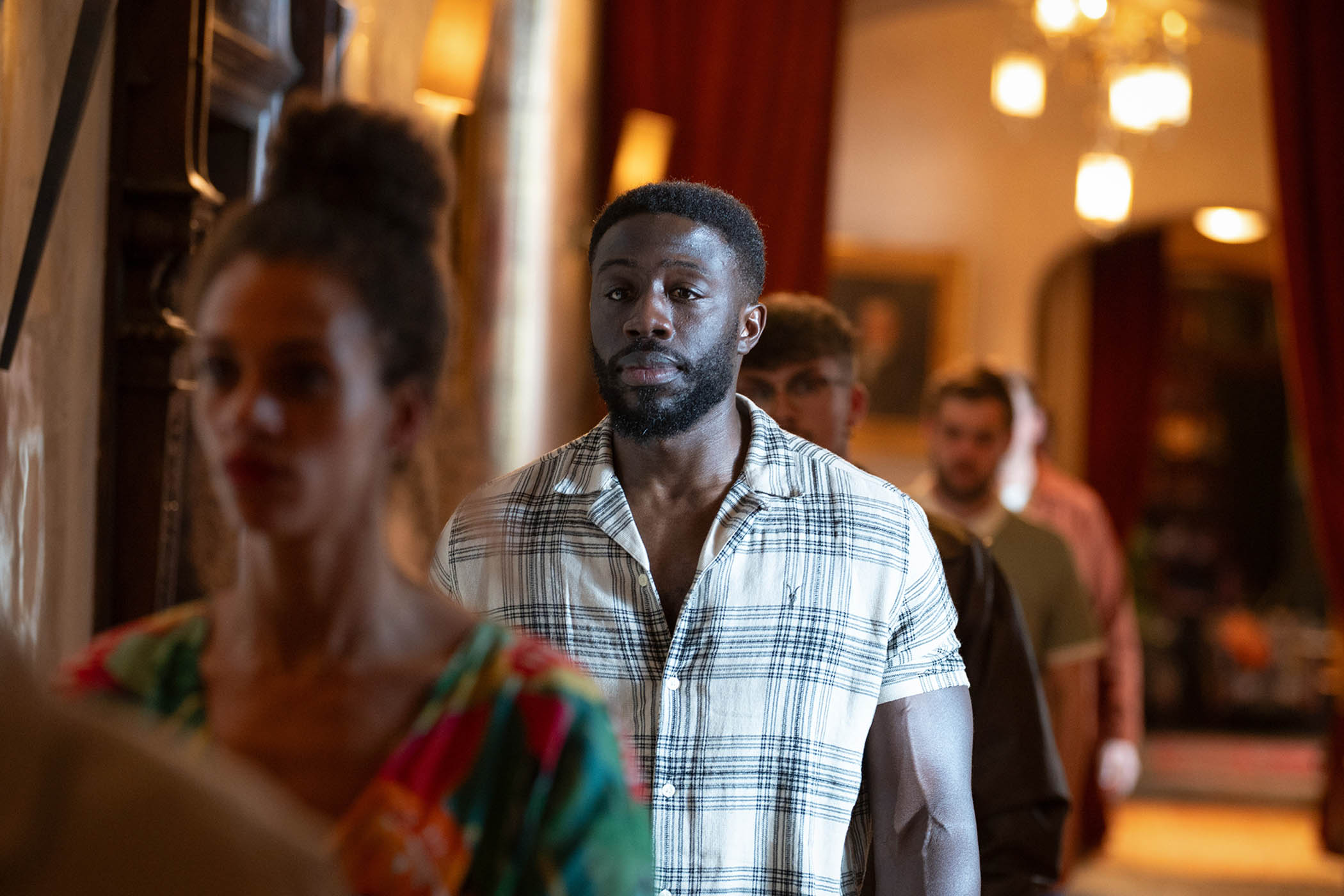

That loud bang you hear – spoilers incoming! – is series four of The Traitors taking off like a rocket. Fiona, the secret traitor, went rogue, attempting to topple fellow traitor Rachel, eventually culminating in Fiona’s banishment. Another twist saw some of the faithful winning the chance to ask the traitors questions. One used it to suggest they should be recruited as a traitor and to approve the murder of a fellow faithful.
Jaw-dropping scenes. But had this series, which first aired on New Year’s Day with an audience of 6.4m, previously run into difficulties? Was there a whiff of the dreaded format fatigue?
The global success of The Traitors is undisputed. It was originally a Dutch concept, now run by the UK production company Studio Lambert, and there are versions all over the world – including the US, Australia, France, and Sweden. In November, 15m people in the UK tuned in to watch Alan Carr win The Celebrity Traitors final. It wouldn’t be too wild to suggest that Britain as a nation had succumbed to a kind of “Traitors derangement syndrome”.
But keeping such a long-running format fresh is a challenge.
The Traitors has some long-standing issues, not least the dull tasks. Though necessary to build the prize pot, these are the Achilles heel of the format – only made bearable by the scheming of contestants in car rides to and from sites. The Celebrity Traitors has created a new problem for the tasks in this series. We might be prepared to watch the famous faff about interminably in lakes and woodland, but regular contestants?
Then there’s the vulnerability of the reality TV genre itself. Even successful formats have a built-in obsolescence. Tweaks can backfire. Just last week, ITV1’s Who Wants To Be A Millionaire? introduced a new quickie format, Millionaire Hot Seat, comprising just questions without the “boring” bits – pausing, mulling, talking to contestants. Thus far, the new show feels rushed and underbaked.
The makers of The Traitors do seem to be listening about the boring tasks, more of which now contain a divisive element to add spice. The introduction of a “secret traitor” in this series was an exciting game-changer, but the secret only lasted a few episodes.
Plus, viewers are changing – becoming more demanding, critical, even unreasonable. (However tedious some of the tasks on The Traitors, the hour-long programme must be filled somehow.)
Contestant-awareness (cameras, viewers, careers) is another major reality show problem. Love Island suffered hugely for becoming “Instagram central”. Indeed, casting is king – nay, everything – in reality TV, as fundamental an element as in a regular drama.
Which may partly explain why The Traitors has rallied so powerfully after its brief energy dip.
Newsletters
Choose the newsletters you want to receive
View more
For information about how The Observer protects your data, read our Privacy Policy
There are strong signs that the sharper players are evolving alongside the series. The recent twists – traitor on traitor public attack and self-recruitment – are thrilling, but they are also unprecedented and led by the players.
This phenomenon of clued-up, format-literate players using knowledge gathered from past series to play a harder and more complex, individualistic and renegade game is being viewed with interest not just by observers, but also, one hears, by Studio Lambert.
As things stand, TV formats are not permanent structures. They are mere sandcastles to be washed out by incoming tides. The latest Traitors developments would appear to open up a new dimension to the all-important reality casting process – players who have agency and who not only know the game but are also prepared to “game” the game.
Perhaps the secret to refreshing a world-beating format is for every single element, including the mindset of the players, to be ripe for evolution? We shall see. For now, the cloaks still reign.
Photograph by BBC/Studio Lambert/Euan Cherry