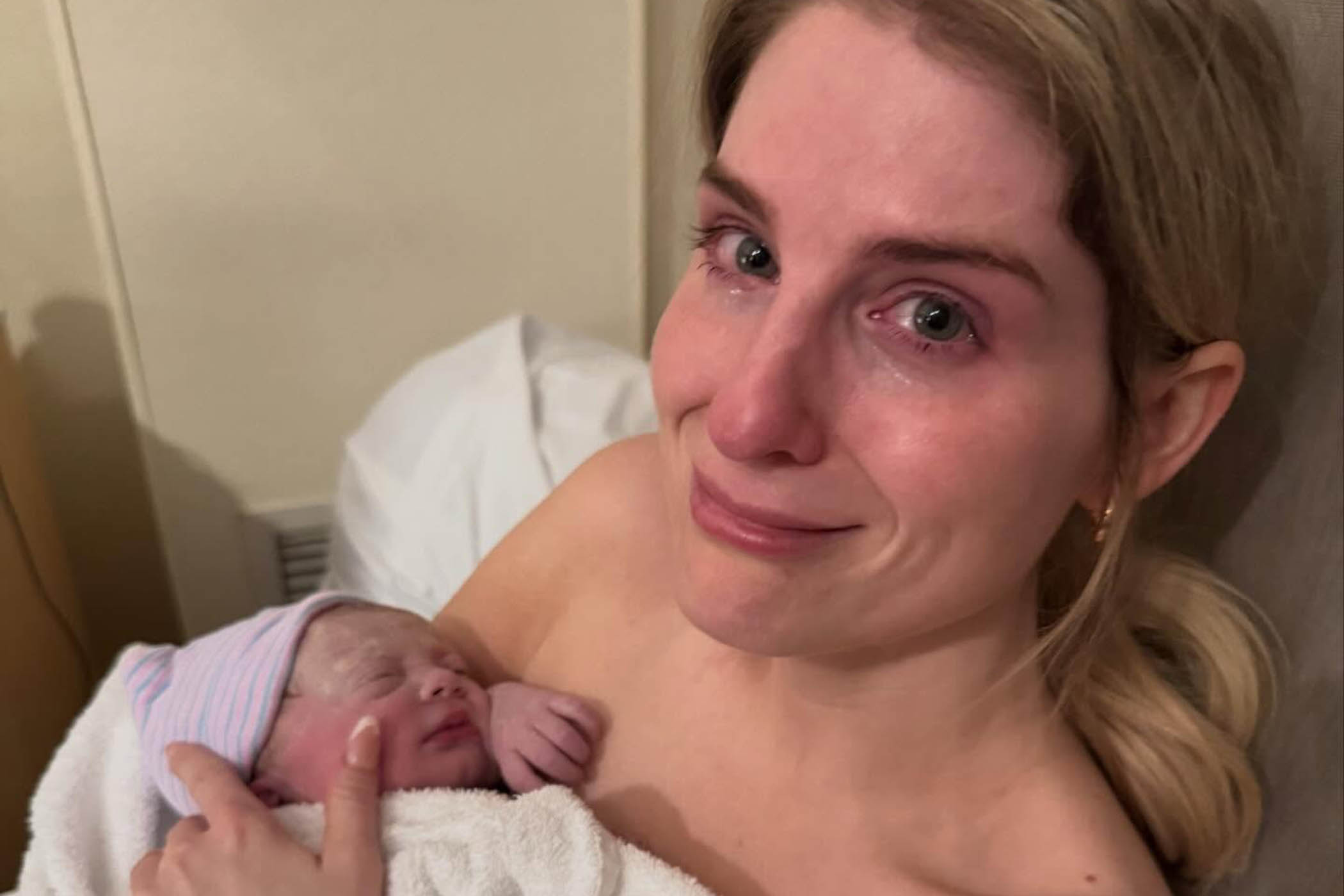



Is public opinion turning against surrogacy? Last week Meghan Trainor faced a fierce backlash after the singer posted a picture with her newborn, praising her “superwoman surrogate”. When Lily Collins announced her “surrogacy journey” last year it sparked a similar outcry.
These reactions mirror a wider shift: in the past few years laws have tightened up to restrict surrogacy in Greece, Spain, India, Thailand, Russia and Slovakia. In 2024 Italy made it a “universal crime” – wording that puts it on a par with their laws against genocide. But Britain, strangely, is heading the other way. Here it is ever more popular. Recently ministers even considered loosening our laws, although that idea has stalled. Before 2008 just 50 children a year were born through surrogacy to British parents. That number is now closer to 500.
Why the rise? “Social acceptability has increased among young people,” says Helen Gibson, the founder of Surrogacy Concern, a charity. The demographics of surrogate parents are widening too. In 2019 the law changed to open this option up to single people, and would-be parents are drawn from increasingly older cohorts. Between 2020 and 2025 the number of men in their 50s applying for parental orders, which transfer legal parentage from the surrogate, rose from 44 to 95l. In that period there were even applications from men aged over 70 and women aged over 80 – something that worries campaigners.
In Britain, surrogacy is strictly altruistic, meaning surrogates may only be paid expenses. That has limited the pool. But now more than half of commissioning parents go abroad to countries where commercial surrogacy is legal, which accounts for another part of the rise. Many go to the US – these make up 642 of the 1,500 applications made between 2018 and 2024 – but Georgia is another popular destination, as is Mexico.
The pull abroad is obvious. In the UK, surrogates are the legal parents until after birth, but in many other places, Mexico and California for example, a surrogate loses those rights while they are still pregnant, meaning the outcome is more certain for those paying the bill. Outside California, surrogates can be relatively cheap. In Ukraine, where Brits are still using surrogates despite the ongoing war, women receive between £11,700 and £14,200 per pregnancy – similar to the recommended expenses in “non-commercial” arrangements in the UK.
Social media has spread and normalised surrogacy, as have celebrities such as Tom Daley and Robbie Williams. An increasing number of UK employers have written surrogacy into their policies: paid leave is given to intended parents, and employees who want to act as surrogates are supported.
It’s getting easier to find foreign surrogates too. Many UK agencies, set up to deal with local arrangements, now have branches elsewhere. One British firm, My Surrogacy Journey, matches clients with surrogates in Mexico. Brilliant Beginnings, a non-profit based in the UK, partners with commercial agencies in the US, as does the British Surrogacy Centre. Circle Surrogacy, an American commercial agency, has an office in Britain.
A fall in adoption rates may have driven demand yet higher. Rules are strict in the UK – many local authorities insist each child must have their own bedroom, for example – and the cost of living crisis puts adoption out of reach for many. Children waiting to be adopted are typically older, too, which puts some would-be parents off.
In one case, parents asked a surrogate to abort a baby because she’d drunk tequila
In one case, parents asked a surrogate to abort a baby because she’d drunk tequila
But the rise in surrogacy is cause for serious concern. First, it comes with many risks to the women involved. Studies suggest that surrogate mothers have an increased risk of pre-eclampsia and severe haemorrhages after birth – perhaps because of an immune response to the genetically unrelated foetus. Last year a large-scale study in Canada found that the risk of developing a new mental illness was much higher in surrogates: researchers thought it may be to do with the grief of giving up the newborn.
The risks are not just medical. Commissioning parents are not subject to the same stringent checks as those looking to adopt, who must go through laborious tests at the discretion of social workers. That can lead to horror stories.
Newsletters
Choose the newsletters you want to receive
View more
For information about how The Observer protects your data, read our Privacy Policy
A cautionary tale comes from Pennsylvania, where last year a registered sex offender and his husband were found documenting their “surrogacy journey” online, having brought home a baby boy. When Brits travel to the US, Ukraine or Mexico, laws often give them a great deal of control over the pregnant women and their bodies. In one recent case in California, would-be parents asked a surrogate to abort a baby because she’d posted herself doing a shot of tequila on social media. In another, a couple threatened a surrogate with legal action because she had cancer, and wanted to give birth early. They preferred her to abort because they did not want a premature baby who may have health problems.
Britain does not allow commercial surrogacy, because of the risk of coercion. However, Gibson fears we are ushering it in “by the back door” by permitting people to use surrogates abroad – and by allowing considerable expenses here. UK surrogates are paid between £12,000 and £35,000 in expenses, even though pregnancy is not typically that costly. That would be an incentive for some. “Rich women do not become surrogate mothers,” says Gibson.
Some want to prevent any Brit paying for the service. But getting rid of the money does not eliminate the risk of arm-twisting. “Some of the worst coercion we have seen is in families,” says Gibson. “On sisters, on cousins. One surrogate mother who had a baby for her cousin has never seen that baby again, despite being told she would.”
After the outcry last week, Trainor defended herself, saying surrogacy is “not something to whisper about or judge”. That is precisely the well-meaning attitude by which Britain has allowed it to continue. But no arrangement can guarantee relations stay sweet between surrogate and clients, and no set of checks can ensure women are not being pushed into pregnancy whether by poverty, a controlling partner or coercive relations.
Newborns rarely come up for adoption – we now think they should stay with their birth mothers for as long as possible. But on surrogacy, Britain has been moving against the tide, and in the wrong direction. It’s time to ban this harmful practice altogether.
Photograph by Megan Trainor/Instagram