

Illustration by Michelle Thompson
Two years ago, I discovered that a family court judge had found – as fact – that a serving soldier had severely abused his wife. The couple were battling over custody of their child, and the man, I soon learned, was a member of the UK’s most elite, secretive and protected military unit – the special forces. He had terrorised his wife for eight years and, according to the judge, had “almost destroyed her”. But despite the findings of abuse, the judge awarded him extensive unsupervised contact with their young daughter.
Matters in the family courts are usually secret. Journalists must apply for special permission to make any details public. But given the seriousness of the findings and the unsupervised contact order, coupled with the man’s role in the military, I applied to the family court to report on the case. I had no idea I would soon be battling not just the father, but the government too, as the Ministry of Defence (MoD) attempted to ban me from reporting a crucial detail: the father was in the special forces.
So this investigation became two stories. The first is the wife’s, who I am calling Jenny, and how a family court judge failed to protect her and her daughter, despite acknowledging they had been seriously abused. The second is how the MoD tried to hide from the public that a special forces serviceman – whose abuse was known at a senior level within the military – was able to continue his employment with impunity, and then enjoy the active, and legally expensive, protection of the state when a journalist sought to expose it.
Because of legal restrictions barring me from identifying the special forces serviceman, I cannot tell you where in the country this couple lived, or their names, or anything that would identify them. But I can tell you that Jenny first met Rob – not his real name – in 2012 on a night out with friends. “He quite confidently danced over towards us and joined in. We danced all night till the lights came on,” she told me. Soon she had fallen in love.
Very early in their relationship, however, Jenny said Rob showed signs of abusive behaviour. “He’d call me names [...] he’d get angry and jealous if I didn’t reply to his messages fast enough. Especially when drunk, he’d become enraged over the smallest things.”
At the time, Jenny viewed him as someone with a lot of emotional problems, “rather than an abuser”. Her friends tried to warn her, “but I believed his stories and always defended him or made excuses when he behaved towards me in an awful way”.
Every time Jenny got close to breaking up with Rob, “he would transform and be lovely, tell me he just wanted to protect me, [and] would show me the vulnerable side that I fell in love with. He could be kind when he wanted to.”
They married in 2015, in their mid-20s, and set up home together on Rob’s military base. But after the wedding, the abuse got worse. “He became more critical of me, and the anger I’d experienced escalated, getting more frightening and physical, like spitting, shoving, kicking, putting me in holds he learned at work, throwing things at me, hitting me with things, threatening me and telling me the ways he wanted me to die.”
‘I packed up the car under the cover of darkness. It was the scariest moment of my life as I drove off’
‘I packed up the car under the cover of darkness. It was the scariest moment of my life as I drove off’
Jenny
Jenny first made contact with the military welfare service, which provides confidential support for service families, in October 2016. At a meeting the following March, she asked for marriage counselling, and anger management sessions for Rob. “The welfare worker told me at this meeting [...] that physical abuse was taken very seriously and he [Rob] would possibly lose his job if I disclosed [he had done] anything physical.”
Newsletters
Choose the newsletters you want to receive
View more
For information about how The Observer protects your data, read our Privacy Policy
In light of this warning, Jenny deliberately did not mention the physical abuse, bar a few occasions on which, as the family court judge later stated, an incident would be “blurted out”.
But emotional and psychological abuse appeared to be seen as less serious by the welfare service; Jenny was not told that this type of abuse would lead to disciplinary measures. As noted by the judge, “hundreds of pages” of Jenny’s disclosures detail incidents ranging from explosive anger to extreme verbal denigration to physical assaults over the next three years.
It was a close-knit culture on the base. Wives living in military accommodation struck up friendships and servicemen socialised with their commanding officers; Jenny has photos of Rob partying with his superiors. Jenny asked the welfare worker to keep their interactions confidential, as she was “very scared” that senior officers – some of them her husband’s friends – would find out.
On 4 July 2017, a case conference was held. Attendees included the two most senior officers on the camp, the regimental sergeant major, and the captain who was the overall commanding officer. A psychiatric nurse and military police also attended, as well as Jenny’s case worker. It was held because, in addition to what Jenny had told them, “another report came in from a dog walker [that Rob had] lost his temper and got aggressive; a neighbour reported hearing him abusing me: and his commanding officer had concerns about his drinking and angry behaviour at work functions and on deployment”, said Jenny. The documentation shows that Rob’s squadron sergeant major was also told in a phone call that she had disclosed physical abuse.
The result of that first case conference was, Jenny said, that Rob was given an informal warning regarding the dog walker, told to meet the psychiatric nurse in relation to his anger and drinking, and was given a leaflet on alcohol misuse. “No further action was taken, and he wasn’t ordered to do any other work on his anger or drinking issues,” she said.
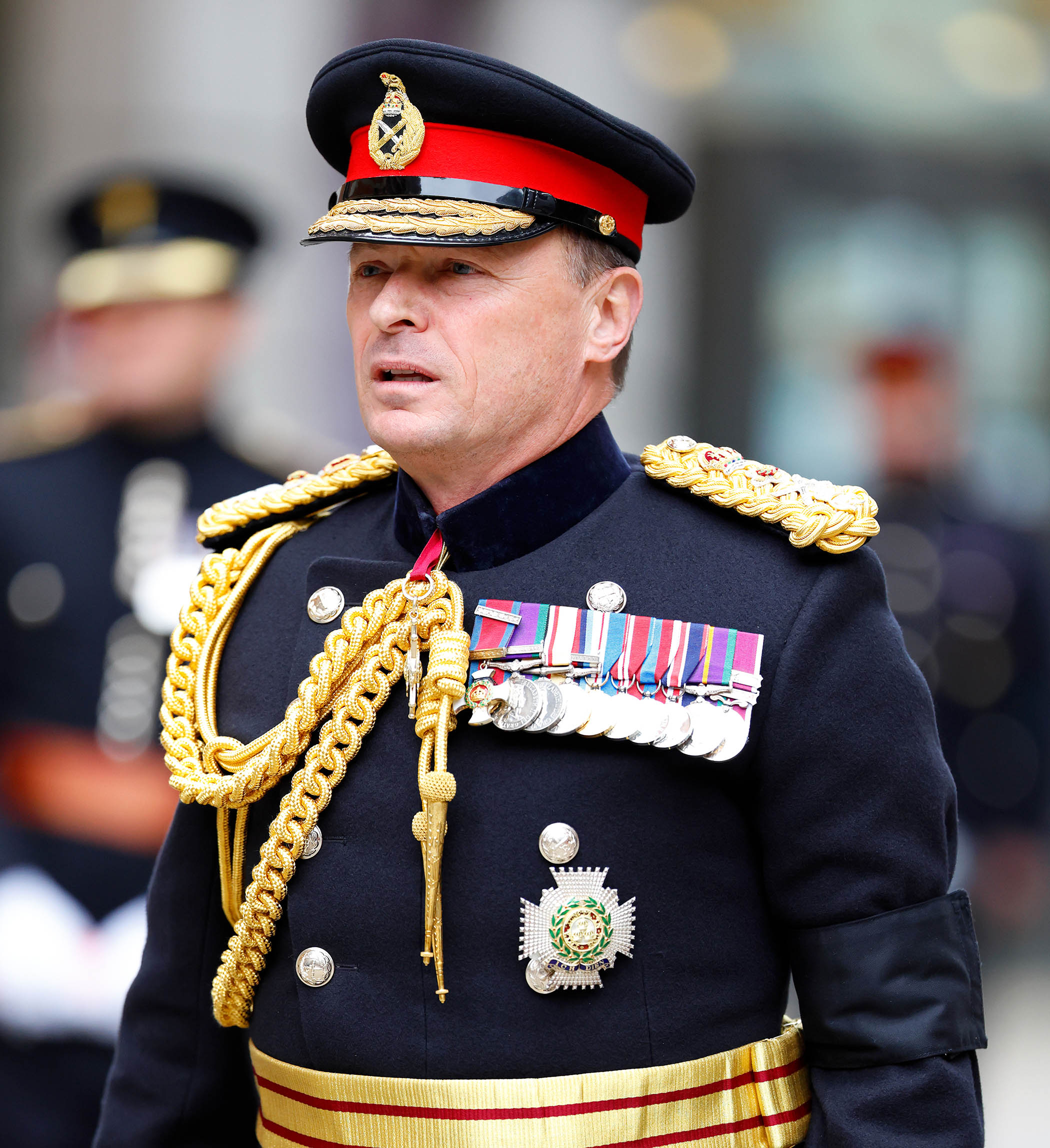
Gen Roly Walker has ordered military leaders to stamp out abuse in the British armed forces.
More case conferences were held with senior officers as the disclosures of abuse escalated, to the point that Jenny, at times, feared for her life. It is clear from the documentation that Rob’s superiors felt stuck, because Jenny was too scared to allow them to talk to Rob. However, in a meeting on 16 November 2017, the regimental sergeant major is recorded saying that she “was safer when Rob was away”. However, he could not “remove somebody from post on the strength of allegations” alone. Jenny told me that during this period, despite his superiors’ concerns about his anger issues, Rob was promoted and given access to ammunition and firearms.
The moment “everything changed” was an incident in 2019, very late in her pregnancy with a much-wanted baby. Jenny said they had an argument and Rob “grabbed my throat and kneed me in the stomach”. Because Jenny did not report this till six months later, it was not found proved in family court, but she had reached her breaking point. She spent the nine months after their daughter’s birth carefully planning their escape. When it came to making the jump to leave, “it was harder than I can describe”, Jenny said. “I packed up the car under the cover of darkness. It was the scariest moment of my life. As I drove off the camp, my heart was racing, my hands were shaking and I was sobbing. I was heartbroken at the end of my marriage.”
Away from the base and her husband, Jenny tried to build a new life as a single parent. Initially she moved in with her mother, where she had to squeeze in all her belongings and shared a bed with her daughter, before eventually finding her own place.But Rob wanted access to their baby daughter. This meant hearings were held at the local family court to decide how often and under what conditions he could see the baby. “He denied all my allegations of abuse and made counter-allegations against me, so a finding-of-facts hearing was ordered,” Jenny told me, meaning a judge would hear evidence and decide what was proven on the balance of probabilities.
Reading the judgment, a litany of misery had unfolded in their relationship. The judge’s view was clear. “The father’s evidence really does show his true colours… His orchestrated and continuous controlling and coercive behaviour has already exposed this child to domestic abuse… the father’s anger is a physical and emotional risk to the child. In addition, all of the father’s abuse of the mother is an emotional and psychological risk to the child… The mother was not the aggressor. She was responding to the aggression that was being put on her by the father.”
But despite this, at the final hearing, the judge assessed evidence from a domestic abuse perpetrator programme, which helps abusers address their behaviours, and felt that Rob had changed. She ordered that he should have frequent, unsupervised contact with his daughter after a number of sessions overseen by a professional “contact supervisor”.
When she saw the order, Jenny felt crushed and appalled. The judge had even acknowledged Rob’s abuse of her had often taken place with their daughter present in the room. “All of the emotional, verbal and physical abuse directed towards the mother will have affected [the child],” the judge had stated. Jenny thought she had protected her daughter. But the whole traumatic process of being cross-examined on her evidence had, it seemed, been for nothing.
In fact, the order for unsupervised contact was viewed as so dangerous that the case officer for the Children and Family Court Advisory and Support Service, the organisation that advises on safety risk and children’s welfare, sent a formal warning to the court. The officer wrote: “It is my professional opinion that this order is not safe for [the child] and I have made a referral to children’s services to raise concerns.” She also stated that the findings of the case were “among the most serious I had seen”.
In more than a decade specialising in reporting on family courts, I have never heard of this happening. Children’s contact with their abusive parents is, however, rising higher up the political agenda. Last year, the government pledged to do away with the assumption that a child’s best interests are always served by involvement with both parents, unless proven otherwise. In Jenny’s case, it would have made no difference: the judge was convinced that Rob was safe to spend time with his daughter. Jenny’s solicitor, Claudie Paddick, told me: “It was the worst domestic abuse case I’d seen in my whole career, and one of the most dangerous orders I’d ever encountered, given the seriousness of the abuse and the impact on the mother.”
‘Leaving the most precious thing in the world to me with a dangerous man is a kind of torture’
‘Leaving the most precious thing in the world to me with a dangerous man is a kind of torture’
Jenny
Lucy Reed KC, who represented me pro bono throughout the many high court hearings, said that the father’s position in the armed forces made him more powerful – and the mother more vulnerable – in the abusive relationship. “And this was mirrored in his attempt to stop any reporting, as his role enabled him to use not only the typical child welfare and privacy arguments in an attempt to shield himself from unwanted media interest and scrutiny, but also to use his military role and the flag of national security to the same end.”
Jenny was subsequently contacted by child protection social workers and asked how she intended to protect her child from Rob. “What could I tell them?” she said hopelessly. She had no option but to obey the contact order and let Rob spend time with their daughter. She tried to challenge it, but a circuit judge refused her application for permission to appeal.
Taking her daughter to weekly contact sessions with Rob has been “traumatising”, Jenny told me. “It has inhibited my recovery and exposed me to further abuse. It has consumed my thoughts daily with worry and anxiety.” She has never, she said, been able to switch off and enjoy just being a mum.
“Knowing that I’m being forced to leave the most precious thing in the world to me with a highly dangerous, abusive man is the kind of torture I cannot put into words.”
While Rob and Jenny’s story was playing out in private, in public, the military was crafting a new narrative. In a letter sent in February last year, Gen Sir Roly Walker, head of the UK’s armed forces, commanded senior military leaders to stamp out abuse wherever they saw it, after the abuse-related suicide of a young servicewoman, Gunner Jaysley Beck. In the letter, Walker expressed his disgust at “numerous allegations of appalling and shameful abuse still going on in our ranks… Step up and play your part as a leader, visibly and confidently, to stop this.” In a handwritten line, he emphasised: “I’m counting on you. I don’t want to write to you again about this.” It was a public declaration that the culture inside the armed forces was going to change. But privately, over the past year, the MoD has gone to great lengths to protect Rob. From the documentation I gained access to, it is clear Rob’s superiors on the camp had their own concerns about his uncontrolled anger issues, and were aware of Jenny’s multiple allegations of escalating abuse.
The MoD centrally has known about it since at least 17 July last year, when , in a witness statement by a senior member of MoD staff, the ministry confirmed the family court judgment had been received and read. But it is Jenny’s understanding that Rob continues to be employed in the special forces – and has been promoted.
The MoD also fought hard to restrict me from reporting that a member of the special forces had been involved in this abuse case at all. It argued that reporting that Rob was in the special forces would be a national security risk, but it asked that the evidence to support this claim be given in secret hearings that I could not attend. My interests as a journalist – arguing for free speech and public interest – were represented instead by a special advocate. Her arguments were so convincing that the MoD finally caved, and on 27 January, I received an email from a government solicitor saying the MoD would “no longer pursue its application for a reporting restriction order”.
Sixteen months after my initial application, the high court decided last week that all the restricted family court documentation I had requested should be provided, enabling me to write this story.
Jenny’s trust in the family courts has been extinguished. But it is the MoD that draws her most searing fury. She said: “The MoD pays lip service to doing better by publishing documents saying how they will tackle abuse, but then don’t follow these policies on the ground.”
Victims, Jenny believes, should not have to find themselves set against the MoD when they try to highlight systemic failures. “I think a part of the obstruction from the MoD was the fact that my abuser, like so many others, has faced no consequences for his behaviour. The way it aligned with and protected him has made a mockery of the abuse we suffered. It’s been a slap in the face for all victims.”
Gen Walker was approached for an interview about the MoD’s approach to the abuse, but refused.
The MoD refused to confirm or deny whether Rob is or was a special forces soldier, has undergone any disciplinary action or received any promotion. A spokesperson said: “We take all allegations of domestic abuse extremely seriously and we encourage anyone who has experienced domestic abuse to report it to the defence serious crime command or a civilian police force.”
Rob declined an interview.
Photograph by Max Mumby/Indigo/Getty Images