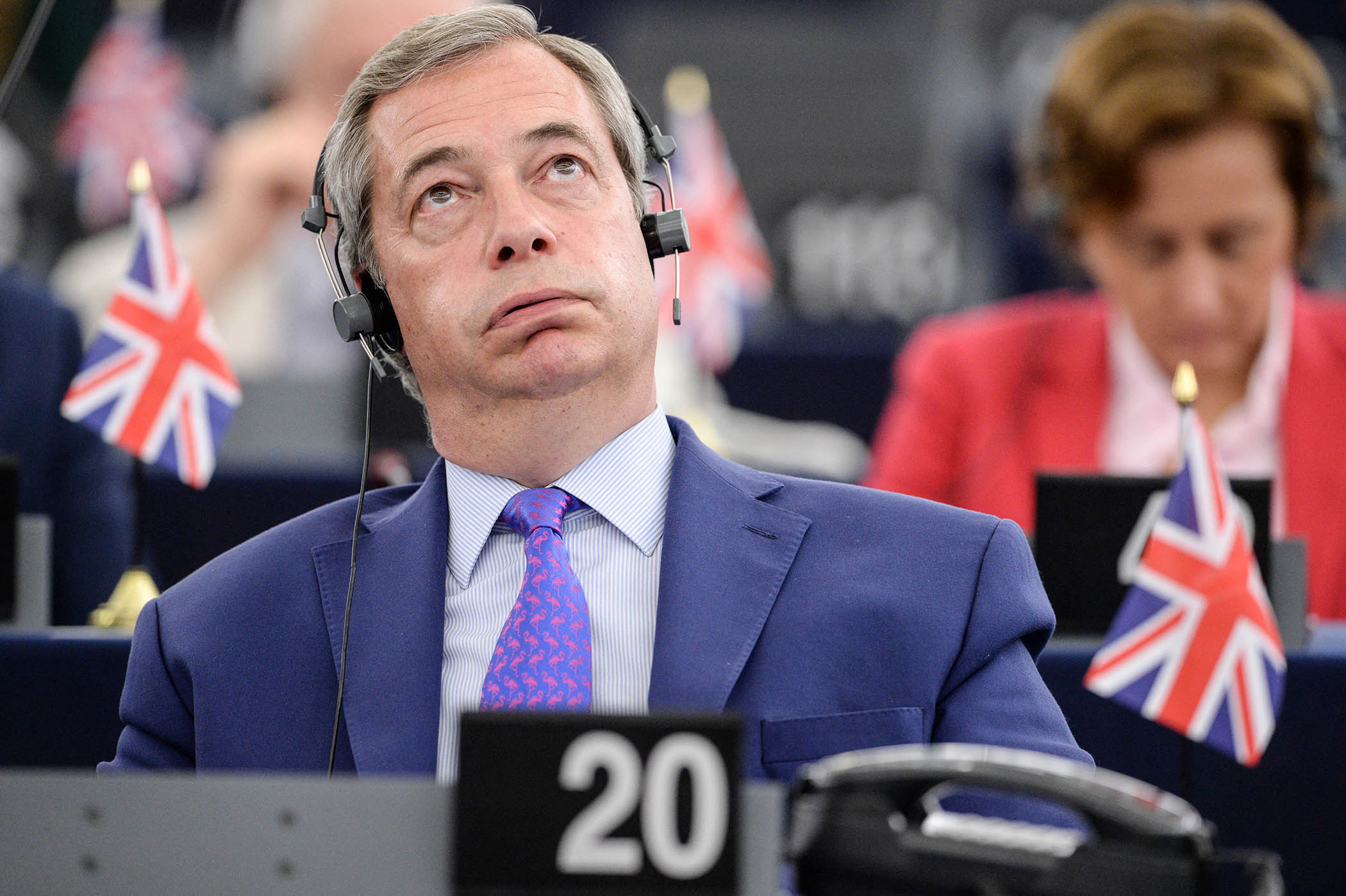
Nigel Farage’s schooldays have been a source of fascination since 2013, when the journalist Michael Crick first uncovered a teacher’s letter saying that Farage had expressed “racist and neo-fascist views” as a teenager. Now at least 28 former pupils of at Dulwich College have come forward to make new allegations or back up claims of racism and bullying at the hands of the future Reform UK leader.
The party has denied the allegations and Farage has said he “would never, ever [racially abuse someone] in a hurtful or insulting way”. But sources who have spoken to The Observer, as well as those who spoke initially to the Guardian as part of the paper’s reporting published in November, argue he demonstrated a pattern of behaviour with that intent behind it.
Peter Ettedgui, a Jewish Bafta and Emmy-winning director and producer who has accused Farage of saying “Hitler was right” and “to the gas chambers”, said the comments left an emotional scar. “I never encountered that kind of cruel, personal antisemitism, either before or since,” he said.
Fellow ex-pupil Jean-Pierre Lihou, who has recently revealed he was behind an anonymous letter published in 2019 alleging that Farage used to sing “gas ’em all”, recalls other incidents. “He used to write ‘NF’ all over his books,” Lihou said. “He was loving that his initials were the same as the National Front’s. He thought that it was a thing of pride.”
And now Lihou has confirmed a claim made by fellow student Graham Noble, that a bus owned by Dulwich College, in south London, where pupils including Farage used to smoke, had “Belsen Bus” written on the window. “[It] was known as the Belsen Bus,” Lihou said. “I think they wrote it on the bus in the grime.”
In a statement to The Observer, Farage said he did not recall writing those words on the bus window or seeing the words himself.
Farage and Reform have made a range of responses to the allegations. The Guardian says that, in a right of reply prior to publication of new allegations in November, the party’s lawyers initially said the claims were “wholly inaccurate”. Richard Tice, the party’s deputy leader, said the stories were “made-up twaddle”. But Farage has been more circumspect, saying he had “never directly racially abused anybody”.
In a later press conference, an increasingly rattled Farage demanded an apology from the BBC “for virtually everything you did throughout the 1970s and 80s” and accused it of double standards.
Farage also claims to have received a letter from an unnamed Jewish former pupil saying that the comments were “banter” and that he was not racist. Some of Farage’s natural base are likely to agree. Still, the antisemitism claims could seriously undermine the party’s efforts to stand with the Jewish community over Gaza.
‘He was loving that his initials were the same as the National Front’s. He thought it was a thing of pride’
‘He was loving that his initials were the same as the National Front’s. He thought it was a thing of pride’
Jean-Pierre Lihou, former Dulwich College pupil
The scale of the cut-through is as yet unclear. According to a recent survey by public policy consultancy Public First in a Reform-leaning East Midlands town, none of the participants appeared to have heard about the story. When prompted, they overwhelmingly thought it was unimportant. However, new polling by Opinium for The Observer suggests that may be changing.
Newsletters
Choose the newsletters you want to receive
View more
For information about how The Observer protects your data, read our Privacy Policy
In late November, 60% of respondents were aware of the row. By this week, that had risen to 66%. Polling by the same firm found that 55% of people think Farage is racist – a higher number than those who think his party is (53%).
Farage has repeatedly distanced himself from Tommy Robinson, the far-right activist, who he has said is not welcome in Reform. It’s a red line that has kept him respectable and electable in the eyes of some disaffected voters. But the red line may not hold.
For Ettedgui, who has yet to receive an apology from Farage, it is the politician’s mishandling of the story that has kept it running – and prompted fellow ex-pupils to come forward. The day after the press conference another former pupil, Yinka Bankole, came forward with fresh claims.
“Yes, people can of course change,” he said. “But has Farage the man today really changed? Because from my perspective, his repeated denials, his evasions, his attempts to smear those of us who have spoken up merely compound and inflame the original offence. His failure to show contrition to those he deeply hurt is striking, as is his utter inability to condemn the kind of appalling racism and antisemitism he once expressed so openly.”
This article has been amended since publication
Photograph by Sebastien Bozon/ AFP via Getty Images