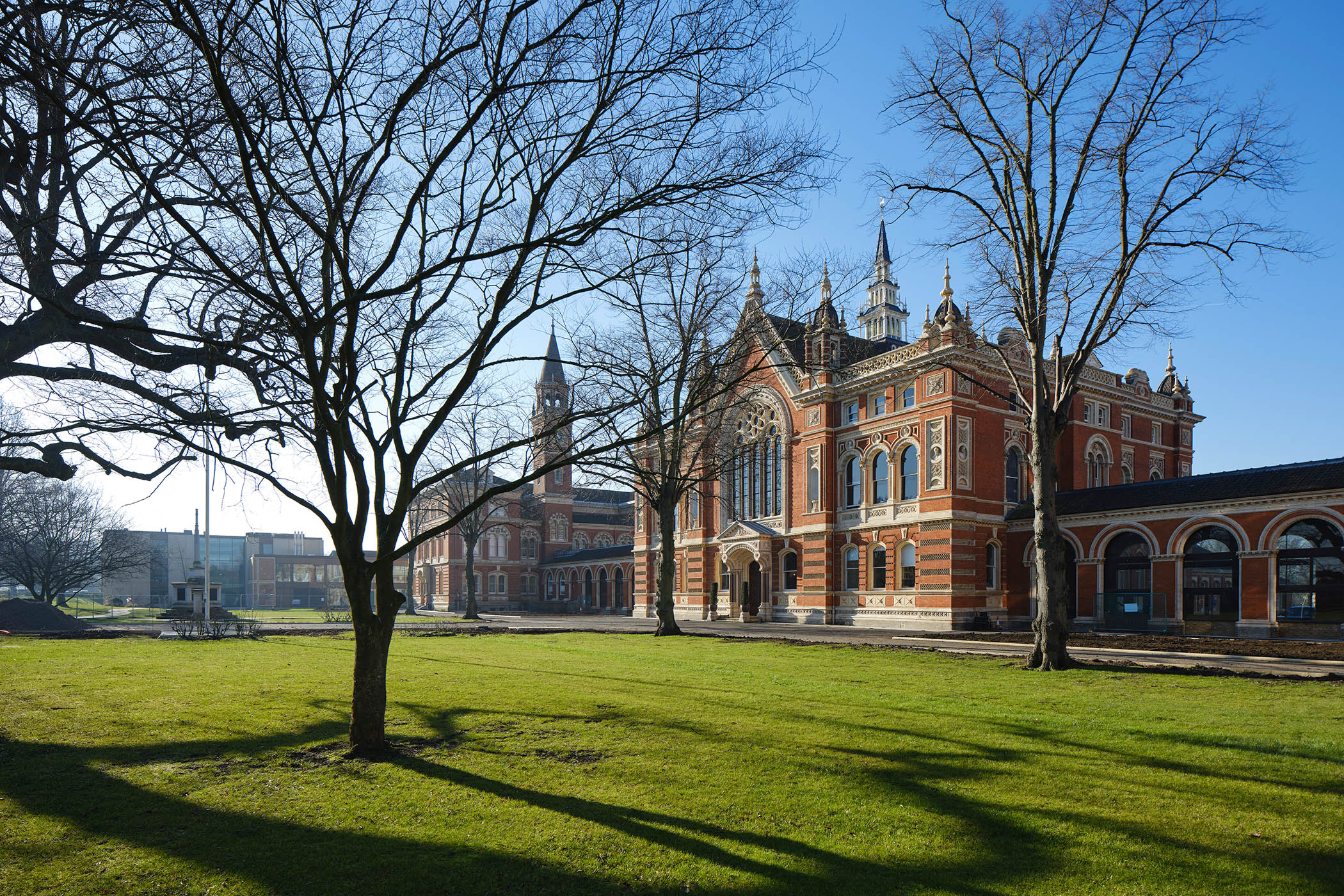


In the 1970s and 1980s, many boys passed through Dulwich College in south London fairly anonymously. Outside their own classes and circles of close friends, only the particularly brilliant, sporty or musical were well known, but, from an early age, Nigel Farage bucked this trend.
Everyone had heard of Nigel. He was a scruffy non-academic with a minor talent for cricket, but he had one quality that set him apart: a gift for getting into trouble, and he clearly relished the notoriety that it brought him.
His attention-seeking continued into the sixth form, between September 1980 and July 1982, which is when I got to know him well. We did exactly the same A-levels – history, geography and economics – and were in the same tutor group: our tutor was the former English Test cricketer John Dewes. By this time, Nigel had transformed himself into something of a dandy. His obsessively maintained mirror-shine shoes, rolled umbrella, smart blazer and military strut set him apart from the rest of us.
In most schools, a model railway society would not have attracted the attention of such an image-conscious student, but Nigel was a regular attendee. Every lunchtime he would descend into the basement of the Barry Buildings, past the model trains, and creep into a network of pitch-black tunnels, where he and a few others would sit and smoke.
Nigel had little time for academic work and was utterly dismissive of university education. His imagined future lay in the stock exchange, which he referred to, for a reason I did not follow, as the “cancer exchange”. He looked forward to a lifetime of making easy money, drinking and smoking.
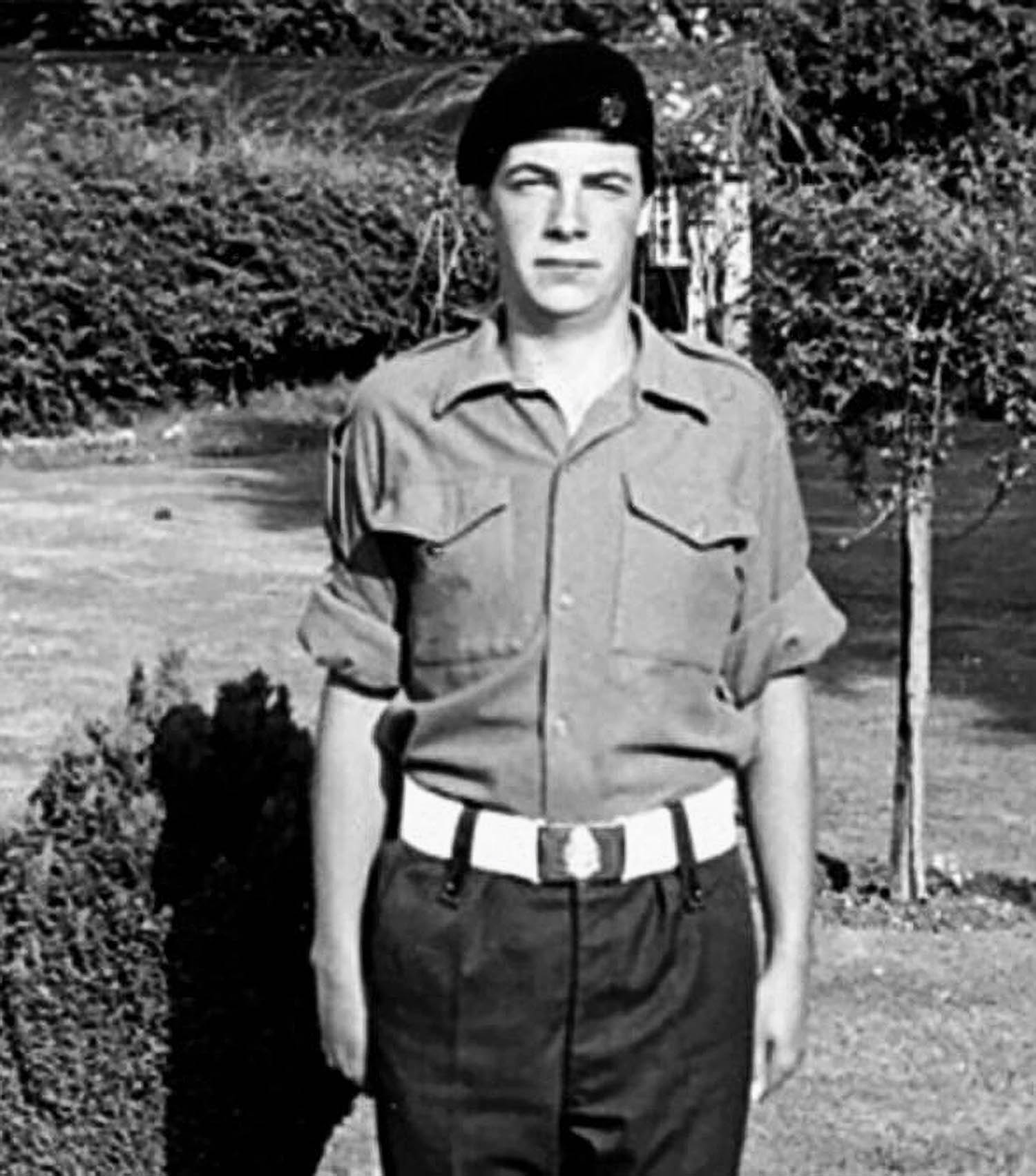
Nigel Farage in his cadet uniform
It’s hard to judge how far Nigel’s racism was part of this pose, or whether it represented his real views. Much of what he said was clearly performative. Whenever a black person appeared on a video shown to our geography class, he would loudly exclaim, “Are you English?” He enjoyed repeating the racist chants of the National Front: “The National Front is the white man’s front”, and “There ain’t no black in the union jack”. I heard him sing the “gas ’em all” song on more than one occasion, which celebrates the Holocaust and suggests other racial groups that might also be gassed.
On an A-level field trip to Exeter, geography students occupied two minibuses, one for smokers and the other for non-smokers. Smoking was clearly against the school rules but, outside term time, it was deemed OK for some reason. Farage was part of the smokers’ bus, of course, and I remember hearing him joke about being in a gas chamber. I saw the words “Belsen Bus” written with a finger on the grimy bus window, in joking reference to the concentration camp where tens of thousands of Nazi victims were killed. Poisoned gas was never used there but the meaning of the comment was clear enough.
Although I never saw who wrote the words, many of us at the time had our suspicions. In a statement to The Observer, Farage said he did not recall writing those words on the window or seeing the words.
I was never a direct target of Nigel’s invective and, much of the time, I wasn’t aware that individuals were being victimised at all. Despite the forebodings expressed by an English teacher, Chloe Deakin, Nigel was made a prefect in his final year and he evidently used this position of authority to direct his attention to younger pupils with an African, Asian or Jewish background. The stories, published in the Guardian, of the racially motivated bullying of boys seven or eight years younger than himself are appalling.
The Reform party has dismissed stories such as mine as “a naked attempt to discredit Reform and Nigel Farage. Instead of debating on the substance of our ideas and policies, the left-wing media and deeply unpopular Labour party are now using 50-year-old smears. The British public see right through this witch-hunt.”
Newsletters
Choose the newsletters you want to receive
View more
For information about how The Observer protects your data, read our Privacy Policy
In retrospect, I didn’t take Nigel Farage seriously enough. It wasn’t just banter between mates; it wasn’t the common currency of the day, and it certainly hasn’t been misremembered by those who witnessed it. I should have thought more carefully about the cruelty lying beneath the surface of his jokes.
Photographs by Dennis Gilbert/View Pictures via Getty Images, Flying Free