Related articles:
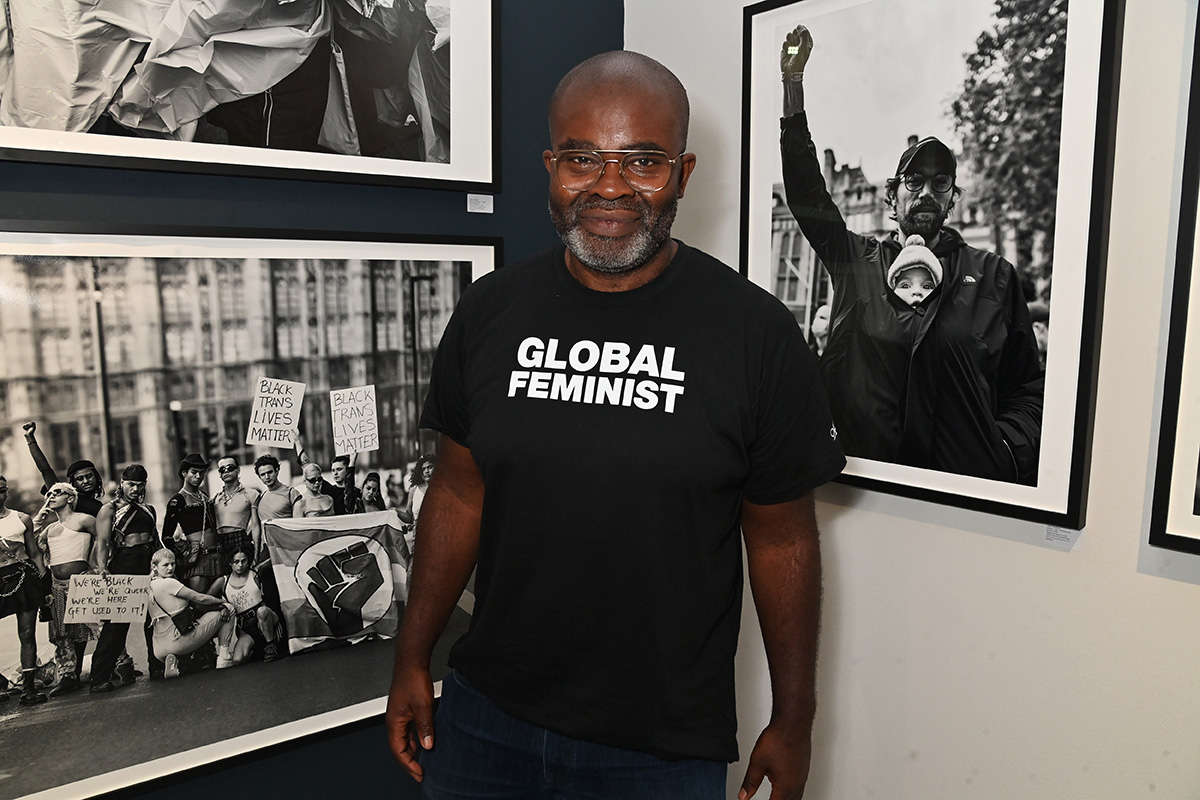
Over the past couple of weeks, Misan Harriman, chair of London’s Southbank arts complex, has been the subject of a very contemporary form of controversy. It’s not just that he has divided opinion, but that his critics and supporters alike believe they represent what is true and decent, and that their opponents embody what is wrong and immoral.
A series of savage articles in the Daily Telegraph and the Times have demanded his exit. Sixty-four MPs and peers have written to Lisa Nandy, the culture secretary, demanding that Harriman be investigated. And in a letter to the Times several senior cultural figures, among them former BBC1 head Danny Cohen and the historian Andrew Roberts, said that it was “time for him to go”. In return an online campaign of support for Harriman, organised by the Good Law Project, has been backed by many thousands, including celebrities like Gary Lineker, Tracey Emin and Mark Ruffalo.
To his detractors, Harriman, appointed in July 2021, is unqualified for the job. To his advocates he is a celebrated photographer and the maker of an Oscar-nominated short film.
He’s been criticised for downplaying antisemitism and for comparing Reform voters to Nazi supporters. And he’s been hailed as a courageous victim of a smear campaign by “a small group of rightwing white men” determined to oust Black people from prominent positions in public life.
To get to the truth of the matter is not simple, not least because Harriman, apparently in consultation with the Southbank, decided not to speak to The Observer. But what is clear, from his earlier posts, is that he believes himself to be a voice of truth. “I will never let truth slip away,” he promised his 550,000 followers on Instagram.
At the heart of the dispute are a number of Harriman’s social media posts, but two – one on X , the other on Instagram – have been the particular focus of complaints. The first concerned his response to the attack in Golders Green last month, when two Jews were grievously stabbed.
Harriman posted his solidarity with the Jewish community, then shared a post by Ayoub Khan, the independent MP for Birmingham Perry Barr, who claimed the attack was also “Islamophobic” because the suspect is alleged to have stabbed a friend and fellow Muslim earlier that day, and this aspect of the story, said Khan, had been ignored by the media. “Wait,” wrote Harriman, “so there was a third victim on the same day who was Muslim? And our press isn’t reporting it?” It’s hard to see how this is a sacking offence, but was it a wise or insightful comment?
Without going into details about a case that is now sub judice, it seems highly likely that the two Jewish people were targeted because they were identifiably Jewish, and highly unlikely that the Muslim was attacked because he was a Muslim.
Related articles:
Following a number of attacks on the Jewish community and growing expressions of antisemitism, many Jews in this country feel under threat. Khan’s claim of Islamophobia was a distraction at best and arguably a form of gaslighting. Either way, it should have been ignored rather than amplified.
Harriman, whose Oscar-nominated short film The After deals with the traumatic aftermath of a stabbing, is smart and sensitive enough to have understood this.
Newsletters
Choose the newsletters you want to receive
View more
For information about how The Observer protects your data, read our Privacy Policy
Yet no one coming to Harriman’s defence adds that caveat, because in these kinds of debates, waged in the approval-seeking social media trenches, every nuance is viewed as a concession to the enemy.
The complicating factor, as so often nowadays, is Gaza. Harriman’s consistent criticism of Israel raises suspicion among many Jews and equally earns him the applause of the pro-Palestinian camp.
It’s also been said that Harriman has shared videos that suggest Palestinian land is being advertised for sale in British synagogues. Appalled by any accusation of antisemitism, Harriman has pointed out that he has photographed victims of the Hamas attack of October 7 in a supportive and sympathetic light. He also expressed his admiration for Jews, such as the 88-year-old Holocaust-survivor Stephen Kapos, whom he has called a “global treasure” for supporting the Palestinian cause.
But as Kapos maintains that the 2023 Hamas attack of October 7 was “vastly exaggerated” and that the IDF was responsible for half of the 1,200 Israeli deaths, he has been described as fig-leaf for his supporters’ antisemitism. In other words, beneath the binary headlines in this battle lie layers of historical complexity that require more thought than it takes to put a signature on a petition.
The second post that riled a number of commentators was a five-minute video on Instagram. Harriman is a prolific contributor to the platform, and occasionally posts videos in which he speaks direct to camera on the issue of the day, rather like a personalised party political broadcast.
A couple of days after the local elections Harriman reflected on the significance of Reform’s dominant performance at the polls. The first thing that came to his mind, he said, was Susan Sontag’s observation, regarding the Holocaust, that 10% of people are cruel and 10% are merciful, and the rest can be encouraged to go in either direction.
His critics immediately concluded that Harriman was comparing Reform voters with Nazis. As they noted, a publicly funded institution can ill afford to alienate 25% of its funders.
Harriman insists that he was not drawing a comparison but making a plea for discussion. If you study his words, he is indeed arguing for engagement and persuasion.
But it’s also no great stretch to see how Reform voters might see themselves cast as Nazis, particularly as Harriman rightly called out a vile racist statement written previously by one of Reform’s winning candidates (since suspended).
By contrast, in the same post Harriman lauded the Green party – something his critics feel is inappropriate for someone in his public position – though it isn’t without its own ugly baggage. One Green candidate had spoken of “Jewish cockroaches”, a phrase that reeks of Goebbels-like propaganda.
Going on the evidence of the two posts that have been most cited, neither warrants a resignation. One was ill-considered, and the other indelicately phrased. These are the pitfalls of rapid responses on social media.
Harriman believes his critics are guilty of what he calls “extreme anti-Black racism”. Many of his supporters agree. Our public institutions have only recently begun to address the lack of minority representation in boardrooms, so it’s dispiriting to see a prominent Black figure under pressure to lower that still small number by one. And certainly the media hounding looks suspiciously like a blood sport.
But is racism what’s felt or what’s intended? If it’s the former, then Jewish people who see antisemitism in Harriman’s posts can’t easily be dismissed. And if it’s the latter, then no doubt Harriman’s opponents will claim they’re attacking his opinions, not his identity.
What makes him stand out is what makes him an inviting target. The privately educated son of a Nigerian billionaire, he wears Che Guevara T-shirts and quotes on his website an Evening Standard claim that he is “the most talked-about photographer of our time”.
The Che image is a regrettable cliche – the revolutionary hero was a ruthless killer, homophobic, and not above making racist comments – but would Harriman be more acceptable if he was indifferent to inequality?
The desire to remove those we disagree with has been ramped up by our online-led blame and shame culture. It’s possible to object to Harriman’s point of view without having to close him down.
The justification for cancelling others is frequently rooted in the belief that we are ourselves among Sontag’s merciful 10%, those that would have resisted the Nazis, the right-thinking people. The humility to recognise that we may not be as good as we think, and our opponents not as cruel as we imagine, is a quality from which nearly all political arguments could benefit.
Thanks for reading. You can tell us what you think by writing to letters@observer.co.uk
Photograph by Dave Benett/Getty Images