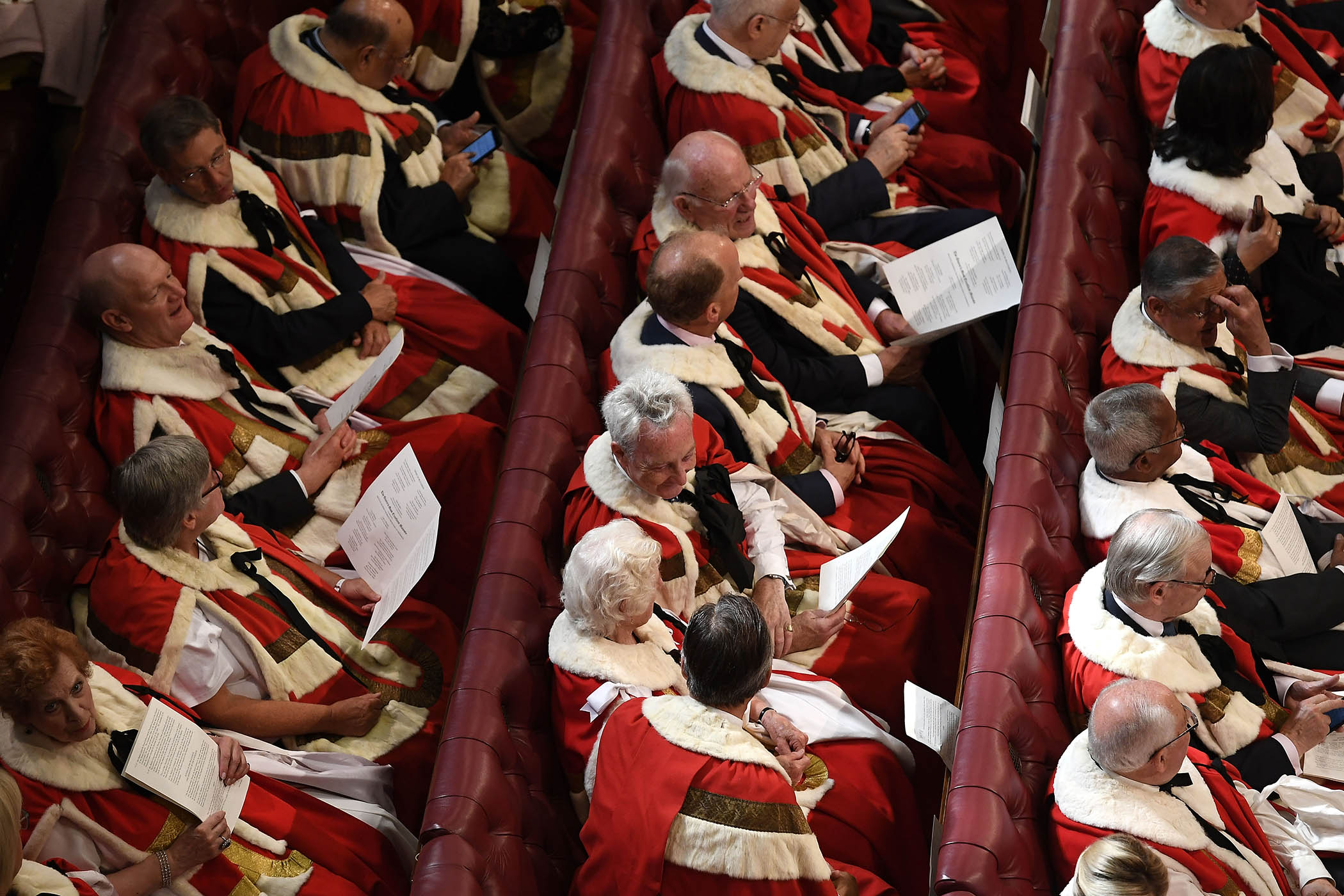



The House of Lords has voted to remove a proposed government power to mandate where defined contribution pension schemes invest, with 217 in favour and 113 against.
It is a blow to pension minister Torsten Bell’s plan to encourage pension providers to invest into the UK and private assets, and will force MPs to reconsider the question of “mandation”.
The pensions bill is of particular importance as the UK faces a looming retirement crisis and needs to make future pensioners’ money work harder. Small, risk-averse pension schemes have tended to avoid investing in early-stage firms and initial public offerings, leaving them starved of capital.
Mobilising and consolidating the £3.2tn sitting in Britain’s fragmented pension pots is the obvious way to fix the UK’s growth challenge.
Since its progression to the Lords, several peers have voiced strong opposition to aspects of the bill. Baroness Altmann, a former pensions minister, has described the government’s reserve “mandation” powers as “Henry VIII-style” and a “diktat” that allows it to put “unlimited amounts” into “chosen pet projects”. She tabled an amendment requiring the government to consult on a £25bn threshold that multi-employer schemes must meet in order to qualify to receive automatic enrolment contributions.
The latter is notable, given that Baroness Altmann sits on the advisory board of NatWest’s Cushon, a workplace pension provider that manages about £4bn in assets – a fraction of the £25bn threshold. Without an exemption or significant consolidation, it faces losing its ability to accept auto-enrolment contributions. Baroness Altmann has said that smaller providers would “struggle to survive” under the proposed scale provisions.
In response to questions from The Observer, Baroness Altmann said she had declared her interests and that her work was “conducted with the best interests of members and the pensions system in mind”.
She said the pending sale of Cushon to WTW would “resolve the scale issues”. According to research via Tortoise Media’s peer review tool, Altmann has made no fewer than 67 contributions to debates on the bill.
“Lords employed by the sector should take particular care not to confuse their roles as industry advisers with their positions as legislators,” says Steve Goodrich at Transparency International. “Failing to do so risks further undermining the legitimacy of the second chamber.”
Under the Mansion House Accord, 17 of the largest workplace pension providers have committed – voluntarily – to invest at least 10% of their defined contribution funds into private markets by 2030, with 5% of the total allocated to the UK.
Newsletters
Choose the newsletters you want to receive
View more
For information about how The Observer protects your data, read our Privacy Policy
While trade bodies have welcomed reform of a complex system, they have chafed at mandation. Bell has sought to assure them, saying that the only purpose is “to backstop the accord goals”, and that he is not in the “business of taking fiduciary decisions”.
However, the view from insiders is mixed. “What it actually is, is not unduly concerning,” said a source at a top 10 pension provider. “We volunteered to do this. We think it’s good for customers. Forcing us to do it is not ideal, but it’s not the end of the world. The bigger issue is the precedent it sets.”
The concept of “superfunds” is a tried and tested recipe for growth. Since 1999 Canada’s CPP Fund, which is five times the size of Britain’s largest, has generated almost $500bn (CAD) in net income from investing, not contributions.
That, in turn, has helped the country to dramatically bring down its debt. The UK should take note.
Photograph by Carl Court - WPA Pool/Getty Images