
MI5 tried to prevent the criminal investigation into the notorious British double agent known as Stakeknife from disclosing details of his role in a total of 28 “executions” and abductions carried out by the IRA.
The head of Operation Kenova, Sir Iain Livingstone, refused, insisting it was untenable for a £40m investigation not to publish its findings about the extreme levels of criminality the state tolerated during the Northern Ireland conflict to ensure Stakeknife maintained his cover.
The investigation’s final 160-page report was published last week.
But on the specific question of confirming Stakeknife’s identity as the Belfast builder Freddie Scappaticci, Livingstone had no choice but to continue to neither confirm nor deny (NCND) the link.
At MI5’s behest, the Cabinet Office’s NCND protocol to “protect sensitive information” remains strict government policy, even for someone as murderous as Scappaticci, even though the “dogs on Belfast’s streets” have known Stakeknife’s identity for 22 years and even though Scappaticci himself has been dead since 2023.
The IRA was heavily infiltrated by British agents at the height of the Troubles but Scappaticci’s seniority made him a particularly precious asset, and raised the most pointed questions about the crimes British intelligence was willing to ignore to protect agents’ cover.
Kenova spent eight years investigating whether the British turned a blind eye to crimes as serious as murder to allow Stakeknife to continue operating.
Livingstone and Jon Boutcher, who headed Kenova before he became chief constable of Northern Ireland’s police service in 2023, say NCND has too often been applied by MI5 in a blanket fashion to cases of state wrongdoing during the covert phase of the counterinsurgency.
“The government has got to stand up to MI5 and change their approach to disclosure,” Boutcher said last week, sitting beside Livingstone at the publication of Kenova’s final report. “Neither Jon nor I are constitutional vandals,” added Livingstone. “We are part of the infrastructure.”
However, MI5 insists that officially confirming Stakeknife's identity would discourage recruitment and retention of agents, thereby posing a threat to national security.
Newsletters
Choose the newsletters you want to receive
View more
For information about how The Observer protects your data, read our Privacy Policy
In a series of tables in his report, Livingstone sets out Stakeknife’s role in each of the 28 murders and abductions in which he was involved. He lists them as case numbers rather than naming them – but The Observer names the murder victims here.
MI5 is understood to have told Livingstone that linking Stakeknife’s specific actions to named victims would have amounted to a breach of NCND by, in effect, confirming Stakeknife’s identity as Scappaticci. The tables do include a handful of references to Scappaticci by name where witnesses identified him.
However, under NCND, Livingstone was again required to preface the tables with a warning that this “should not be construed as an indication that he was or was not Stakeknife” – even though that is exactly who he was.
Boutcher said that NCND – the “implacable dogma”that MI5 still applies to episodes of the conflict going back more than half a century – is “untenable and bordering on farce”. It has become a “pantomime”, he said.
As a senior member of the IRA’s internal security unit (ISU), known as the “nutting squad”, Scappaticci's IRA role was to protect it from being penetrated by agents such as himself.
Yet “time and again”, says the Kenova report, the intelligence services prioritised protecting Stakeknife's cover over the lives of the ISU’s victims – not all of whom were agents.
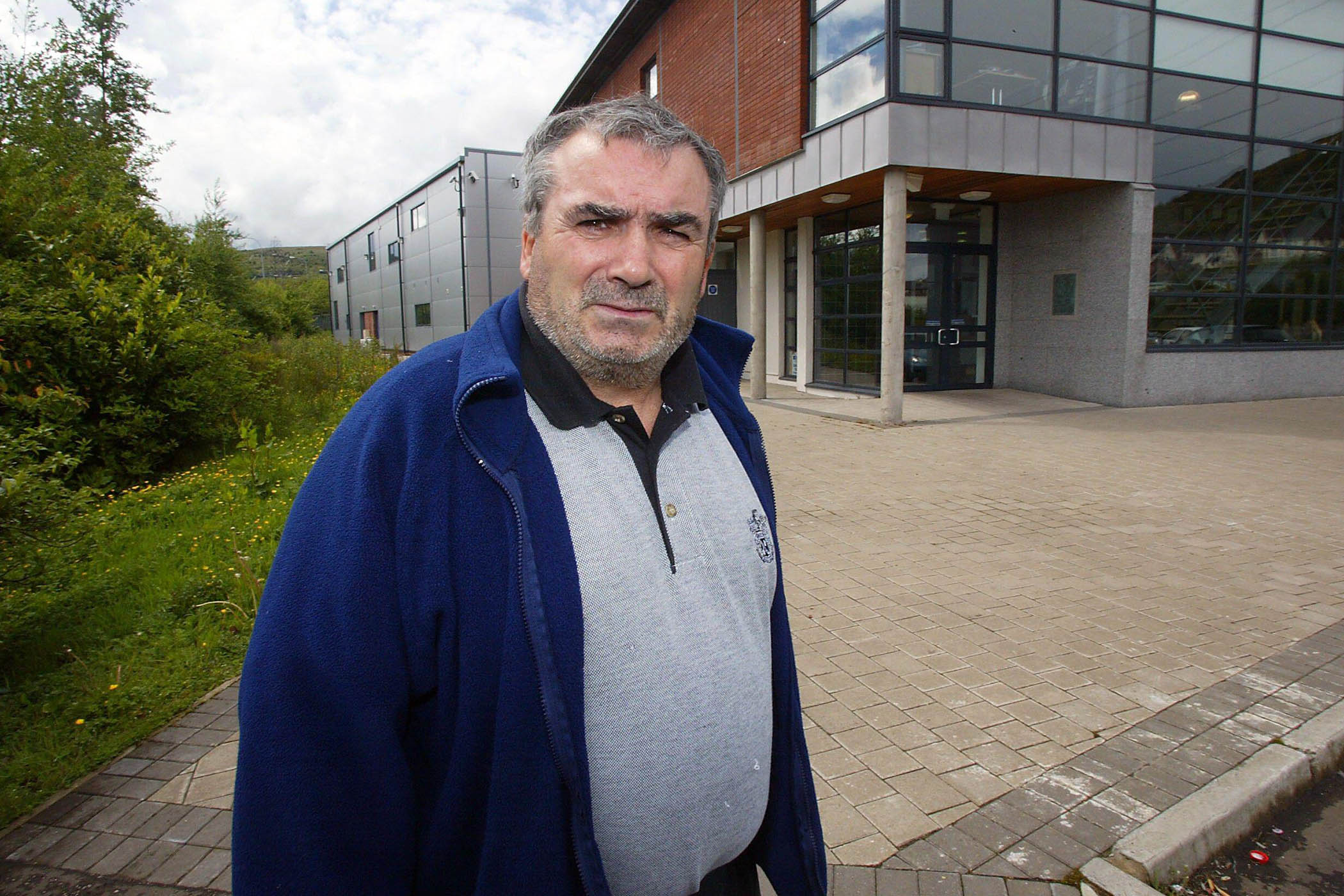
Freddie Scappaticci in 2003
Protecting Scappaticci also meant ensuring that the details of what he and his fellow ISU members did were not passed to the CID, with the result that none of the perpetrators was ever charged, while his cover remained intact.
It is because source protection was at a premium – especially when Scappaticci himself fell under IRA suspicion, as he sometimes did – that both he and his army handlers were able to be so cold-blooded in demonstrating his fealty to the IRA.
One of the most chilling examples was Scappaticci's intimate role in the murder of a family friend, Anthony McKiernan. His and Scappaticci’s children sometimes had sleepovers.
In January 1988, Scappaticci dispatched one of his sons to tell one of McKiernan’s sons: “My da says could he meet your da.”
The location was an IRA haunt called the Pound Loney club. The pretext was that McKiernan – a revered IRA bomb maker in the 1970s – was to be invited to join a new IRA intelligence cell.
When McKiernan arrived, he was bundled into a car and taken for interrogation by Scappaticci, who was renowned for his psychological menace. After two and a half hours, McKiernan broke, Scappaticci later told his handlers. McKiernan was driven to an alleyway, where he was shot four times in the head.
When McKiernan’s son – also Anthony – sought out Scappaticci at Sinn Féin headquarters, he was shown into a room where two masked men entered, one with a gun.
When the unarmed man began talking, Anthony, who was married to Scappaticci’s niece, realised it was him. “Freddie, I know it’s you,” he said, whereupon Scappaticci took off his mask and threatened Anthony, telling him that his “da was a tout” – an informer – and that if he did not stop asking questions, he would end up “with a bullet in his head, same as his da”.
In February 1989, Scappaticci again felt vulnerable after the arrest of two IRA men for the murder of a police officer. The perpetrators’ names were known only to a tight circle including Scappaticci.
Suspicion fell on an estate agent, Joe Fenton. To ensure Fenton’s interrogation and murder went ahead unimpeded by uniformed army and police patrols, a bogus “out of bounds” order was issued in the area where the interrogation was due to take place on the basis of a suspected bomb.
Scappaticci extracted a confession from Fenton and handed him over to his “execution detail”, who shot Fenton minutes later after he had tried to run away. Shortly afterwards, the bomb “threat” was lifted.
In general, Scappaticci did as he was ordered, providing timely intelligence in a pre-digital era when it was difficult to communicate covertly.
While recognising the logistical difficulties, Kenova nonetheless found that the mechanisms in place to “action exploitable or life-saving intelligence” were sometimes overlooked because of the priority given to source protection.
Of course, all democracies have to make moral and legal compromises in fighting terrorism. The Scappaticci case shows just how far the British state went – and how resistant MI5 still seems to be about the public knowing this.
Photograph by Robert White. Other pictures by PA Images
Stakeknife’s known victims
Michael Kearney
Age 20. Killed 12 July 1979
Scappaticci warned his handlers Kearney was in danger but the intelligence was not acted upon.
Eugene Simons
Age 26. Killed January 1981
Special Branch knew that Simons’s life was in danger. Scappaticci was involved in the court martial before his murder.
Patrick Trainor
Age 28. Killed 22 February 1981
Scappaticci reportedly shot the blindfolded Trainor in the head while reassuring him he was leading him home.
Anthony Braniff
Age 27. Killed 27 September 1981
Scappaticci suspended him from the IRA, causing his abduction, interrogation and murder. He passed details to his handlers.
Seamus Morgan
Age 24. Killed 6 March 1982
Scappaticci told his handlers Morgan had been abducted. He played a role in extracting his confession and in the court martial which sentenced him to death.
Vincent Robinson
Age 29. Killed 26 June 1982
A former neighbour and friend of Scappaticci, who gave handlers a detailed account of his abduction, interrogation and murder.
James Young
Age 41. Killed 13 February 1984
Scappaticci told his handlers of a plan to lure Young to the Irish republic for interrogation. Intelligence was passed on to RUC Special Branch, which made no attempt to warn him.
Patrick Murray
Age 30. Killed 15 August 1986
Despite having been informed by Scappaticci of the location, date and time of Murray’s interrogation, Special Branch made no attempt to warn him.
David McVeigh
Age 41. Killed 10 September 1986
Scappaticci had been with McVeigh on IRA operations and was involved in the early stages of his interrogation.
Charles McIlmurray
Age 32. Killed 12 April 1987
Scappaticci was involved in the investigation into McIlmurray, telling handlers he was a suspected agent and details of his abduction plan.
Emmanuel Wilson
Age 35. Killed 24 June 1987
Scappaticci was involved in investigations into Wilson. He gave handlers a detailed account of his abduction and interrogation, and shot the victim in the ankles, knees and elbows.
Anthony McKiernan
Age 44. Killed 19 January 1988
McKiernan was a family friend. Scappaticci gave his handlers information about who was holding him and where. He played an active role in his interrogation, and sought approval for his murder.
Joe Fenton
Age 35. Killed 26 February 1989
Scappaticci told his handlers Fenton was a suspected agent. British intelligence issued a bogus “out of bounds” warning of a bomb in the location of his interrogation to ensure it would be free of security forces. Scappaticci handed Fenton over to his “execution detail”. The “out of bounds” order was lifted shortly afterwards.