
Meta was warned repeatedly about the harmful effects of addictive algorithms and failed to act, according to documents disclosed as part of legal action against the social media giant in the United States.
Memos sent to senior executives at the tech company raised concerns about the “wide range of harms” being promoted on its platforms and urged it to embed “ethical decision-making” into its processes to safeguard users.
They also cautioned about the “issues of fairness and discrimination” and warned about Facebook being used by “bad actors” to promote division and undermine democracy.
The documents, which were written by Josh Simons, the former digital government minister who worked at Meta as an adviser on artificial intelligence (AI) between 2018 and 2022, have been obtained by the lawyers of families suing the company in the United States as part of evidence discovery.
Simons has given sworn oral testimony about his time working at the company in a formal deposition recorded in London with lawyers and court officials present.
“People have died because Meta have not done what they needed to do to change how they build AI systems and be open about the harms and the risks and then address those things,” he told The Observer.
“The memos that I wrote, the decisions that got sent up to the very top of the company, the decisions that were actually made as opposed to the ones we recommended, all show that Facebook did not want to know and address the harms that its products were causing to kids.”
‘They are refusing to hold themselves accountable to the people who use their products’
‘They are refusing to hold themselves accountable to the people who use their products’
Josh Simons MP, former adviser on AI at Meta
Last week’s ruling that Meta and Google were liable for a woman’s social media addiction is seen as a bellwether decision that will inform hundreds more cases against social media companies.
Simons’s deposition and the memos he wrote are expected to form part of the case against Meta in Washington DC, where a trial is expected in the summer.
“The purpose of my evidence was to show that Facebook knew that its products were designed to optimise engagement and that engagement was a set of behaviours that people who are addicted to the product show.
Newsletters
Choose the newsletters you want to receive
View more
For information about how The Observer protects your data, read our Privacy Policy
“The story of the work I did was a story of Facebook knowing and refusing to address the addiction that its products caused in lots of its users, including children.”
He added: “My team was not just about a particular chatbot that then caused a particular form of harm, it was about a core thing. They are refusing to hold themselves accountable to the people who use their products for the harms that they cause. They are refusing to address that harm.”
Simons said he had been hired as a visiting research scientist by Facebook, now Meta, to consider what needed to change to deal with the risks of “polarisation, addiction, hate” but his advice was ignored.
“It’s a bit like closing your eyes and holding your nose and keeping doing what you’re doing even though someone says ‘open your eyes, open your eyes, open your eyes’,” he said.
“My papers and recommendations were all about the company acknowledging that it has responsibility for the harms that the systems can cause and changing how it builds them, and during my time they never did that in a meaningful way.”
He concluded that Meta was driven by “profit and growth regardless of the harm”.
The MP for Wigan called for a ban on mobile phones in schools and social media for under-16s, saying: “It’s what most parents and schools that I’ve spoken to in my constituency think.”
Simons resigned as a Cabinet Office minister last month after it emerged that, when he was a director of Labour Together, he hired a public relations company which then investigated journalists who had revealed undeclared donations to the thinktank.
The prime minister’s independent ethics adviser, Laurie Magnus, concluded that Simons had not breached the minister code but warned of “potential reputational damage” to the government.
Simons said he had never intended the firm APCO Worldwide to investigate reporters but admitted: “It’s nonetheless the case that a bad thing happened and, even if it wasn’t what I intended, it was important for me to take responsibility. That’s why I resigned.”
He insisted, however, that the controversy did not invalidate his criticisms of Meta. “There are big things happening in the world that I care about a lot,” he said. “I think it’s important I can contribute whatever I can to those public debates but do so with humility.”
A Meta spokesperson said: “We strongly disagree with the allegations [in the youth legal cases] and are confident the evidence will show our commitment to supporting young people. Reducing something as complex as teen mental health to a single cause risks leaving the many, broader issues teens face today unaddressed and overlooks the fact that many teens rely on digital communities to connect and find belonging.
“We remain committed to building safe, supportive environments for young people and will defend our record vigorously.”
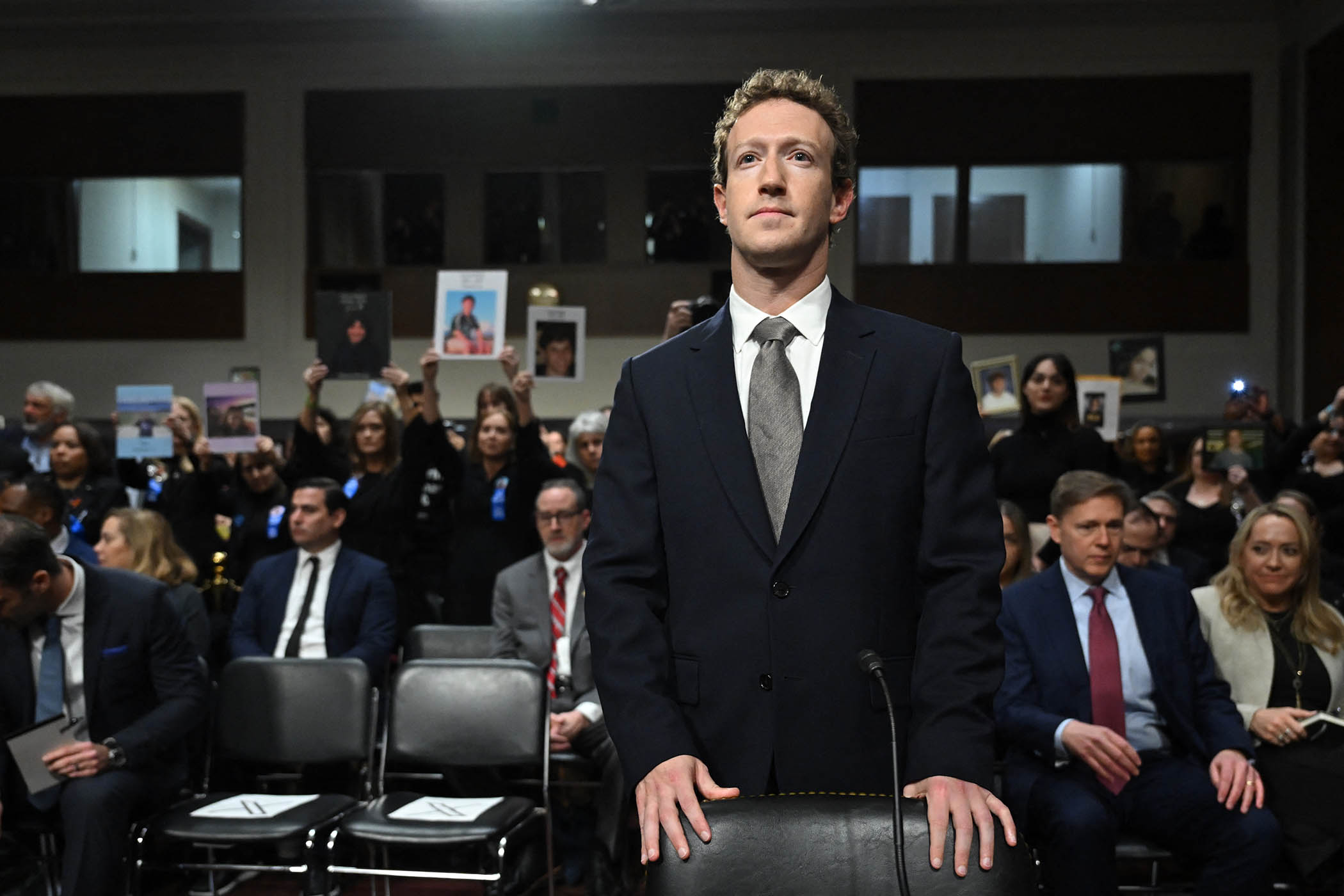
Photograph by Andrew Caballero-Reynolds/AFP via Getty Images