
For more from the journalist behind our Salt Path investigation, listen to We call her Emma, a new investigation into the former first lady of Syria, the British-born Asma al-Assad
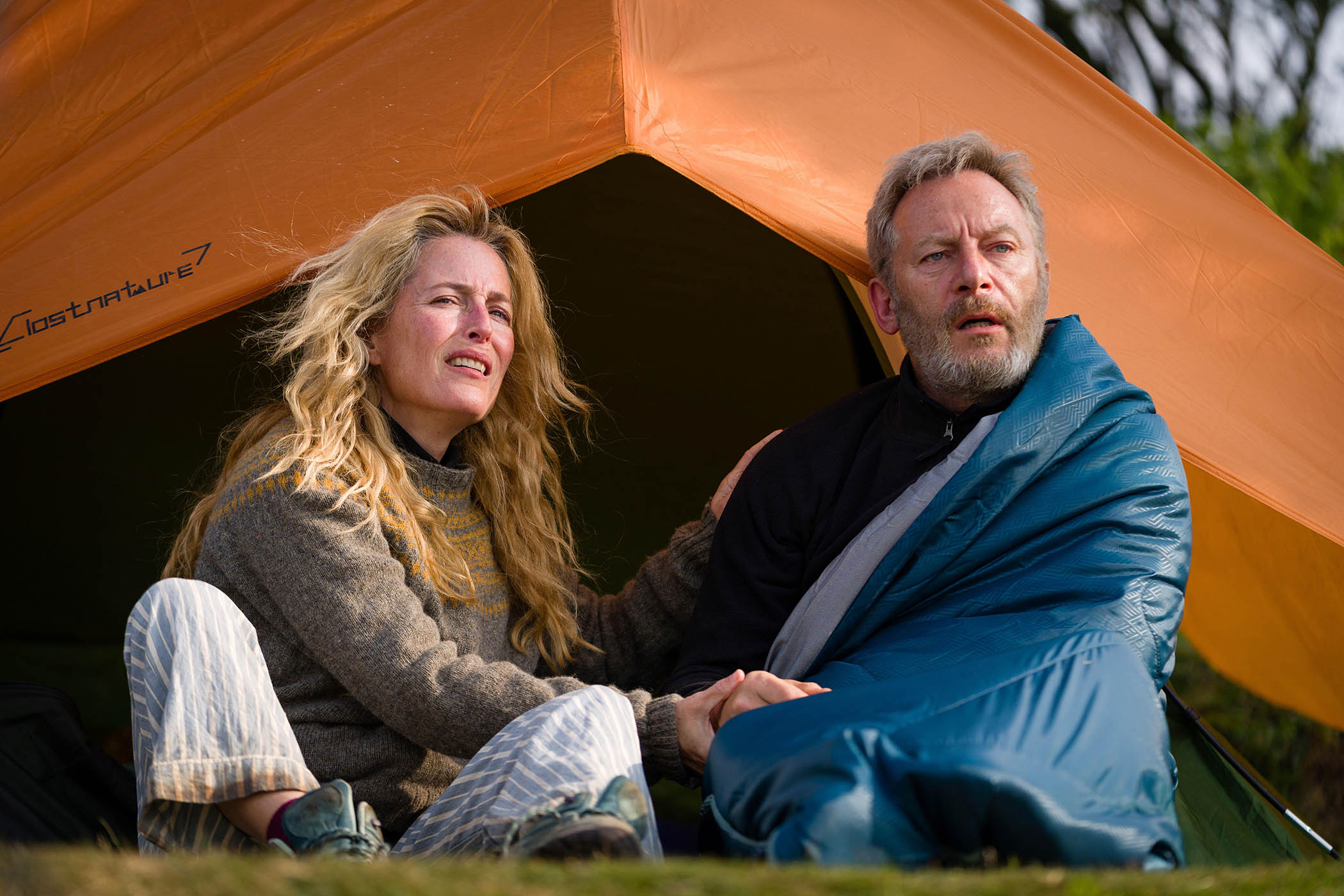
Philip Jones, editor of the Bookseller, the publishing industry’s trade organ, is blunt. “Raynor Winn has had a very good year,” he says. Since The Salt Path’s publication in 2018, the author’s next books — The Wild Silence and Landlines – have sold more than 2m copies. Sales were stoked by the release of the film starring Gillian Anderson and Jason Isaacs shortly before The Observer published Chloe Hadjimatheou’s revelations. But then sales continued to rocket. “Clearly, the bad publicity will have helped,” Jones says. As Oscar Wilde opined, the only thing worse than being talked about is not being talked about.
To cut to the chase: no, the publishing business has not undergone a sea change since July, when The Observer first revealed its findings. “The problem for publishers,” Jones says, “is that they will always have authors who fall below the standards you expect. Yet they can’t afford, in many circumstances, to drop them or their backlist. Winn’s books are just one case.”
The most recent high-profile example is David Walliams, who is no longer being published by HarperCollins. The Telegraph has reported that this is the result of allegations of “inappropriate” behaviour towards young women, which Walliams denies. There will be no future releases, though it is still possible to buy his already published books.
Finally, publishing – like any other business, or indeed human interaction – is based on trust; it’s impossible to completely protect against bad actors who work to take advantage of the system. (Think Elizabeth Holmes of Theranos or Sam Bankman-Fried of FTX.) It is also a highly personal industry, based on relationships between agent and author, editor and author. Telling stories is a subtle business; there can’t be the same guardrails as there are when it comes to, say, putting structures in place to make sure aircraft get off the ground and land safely.
Yet everyone I spoke to knew a line had been crossed in the case of The Salt Path. “We can’t mislead readers,” one publisher said. Blake Morrison, author of the influential memoir And When Did You Last See Your Father?, whose new book, On Memoir: An A-Z of Life Writing, is out in the spring, accepts there are grey areas when it comes to telling personal stories. “My feeling is that there was a betrayal of trust; that with memoir and nonfiction there’s an understanding between the writer and the reader that this is what happened, this is true,” he says. “You allow for comic exaggeration, for the unreliability of memory. But this is different.”
It’s a thorny issue: why should publishers turn away from a money-spinner? “Publishing is a commercial business, not a moral one,” Jones says, and yet in a world full of “fake news” publishers have, to a certain extent, set themselves above the wild west of online “truthiness” .
“When publishers do their review of the year, they will tend to mention that trustworthiness in their role is a really important facet of what they believe they're doing,” Jones adds. “So if that’s the case, maybe we need as an industry to look a little bit inwards and firm up how we resolve some of these issues.”
A year ago the Bookseller asked publishers to predict what would be important in the industry in the next 12 months. Nigel Newton, founder and chief executive of Bloomsbury, noted: “Culture wars are certain to continue to be waged in 2025 with people making accusations of each other which are simply not true. Book publishers will have to have courage in dealing with this as it is only likely to intensify under a Trump presidency changing the world balance of power and AI spreading false information.” This remains as true as ever.
Back in July, Amelia Fairney, who worked in publishing for 30 years, wrote in The Observer of the enormous pressures editors are under to produce successful books at speed. She has since been contacted by someone inside the industry who was startled at the way editors waved away concerns about health claims made in a book due to the be published: an author surprised to find their publisher did no fact-checking.
Newsletters
Choose the newsletters you want to receive
View more
For information about how The Observer protects your data, read our Privacy Policy
Raynor Winn is, of course, not the first author to have played with verifiable facts (it must be said again that she rebuts The Observer’s reporting). Writing last year in the New Yorker, Rachel Aviv revealed that the great Oliver Sacks must fall from his pedestal after the author of The Man Who Mistook His Wife for a Hat and Awakenings lamented in a journal his “pure fabrications”. Aviv wrote that “a sense of hideous criminality remains (psychologically) attached” to his work. This was shocking stuff: yet it is undeniable, at least to me, that his work had and has a positive influence in raising awareness of hitherto little-discussed conditions, in opening up the closed world of medicine and medical treatment.
Truman Capote’s In Cold Blood, published in 1965 and a riveting account of the murder in 1959 of a family in Kansas, pretty much single-handedly invented “narrative non-fiction”, yet it has become clear that the book is, to say the least, not as “immaculately factual” as its author claimed. It remains, however, a classic, and deservedly so.
The issues that surround publishing non-fiction and memoir are not simple: one can only hope that publishers strive to avoid active deceit as they attend – as they must – to the bottom line.
Photograph by FlixPix / Alamy