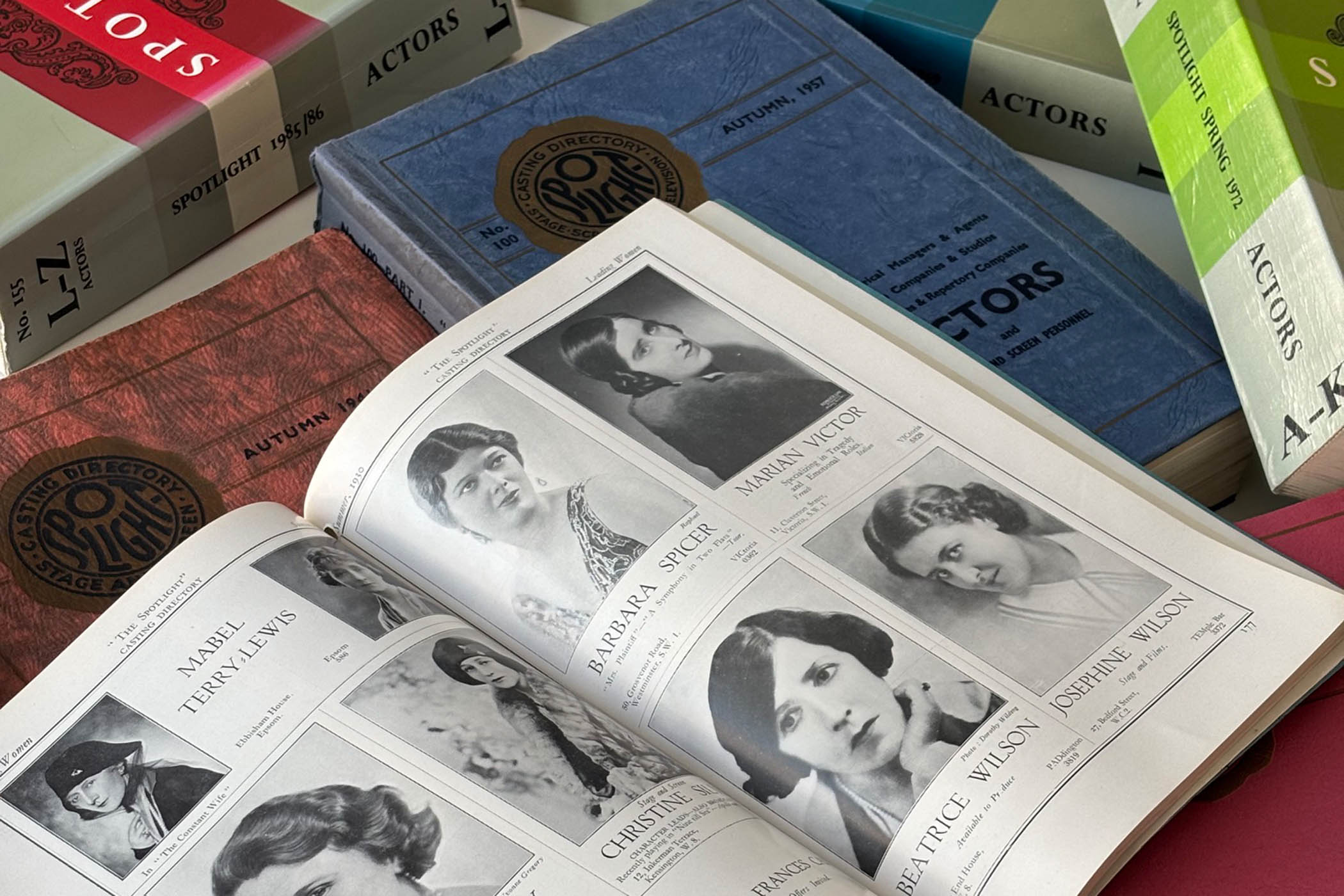



Alfred Hitchcock once said: “The Spotlight is as essential to the artist as makeup.” But the great director of suspense was not offering advice on throwing an ominous shadow across the face of a leading lady. He was endorsing an early edition of a publication that, for almost 100 years, has laid out the contact details and photographs of all the talent in British showbusiness. “The Spotlight’s most comprehensive information – and the useful arrangement of its supplements and cross-index – make it really indispensable,” the film-maker went on to explain in his formal testimonial.
The famed directory, based near Covent Garden, in central London, is still bringing together casting directors and agents, and will mark its centenary next year with a travelling “roadshow” destined for regional theatre foyers. It will also hold public open days. Only one thing stands in the way of the plans: the first two editions of Spotlight – from spring and autumn 1927 – are missing.
Spotlight’s managing director Matt Hood and his colleagues are now asking the public to search for surviving copies. They might be inside a forgotten cardboard box in someone’s cellar or loft, Hood suspects. “It is likely they are stored in the home of descendants of an agent rather than an actor,” he said. “Actors often just sent in a portrait picture, along with their fee. It was the agents who actually kept an edition of Spotlight close by, so their families may still have them.”
A copy of each missing edition is held by the British Library, but unfortunately they are water-damaged and hard to read.
“Sadly, the pages are stuck together,” said Pippa Harrison, industry adviser and ambassador at Spotlight. “The editions we are looking for have a simple brown cover with a round Spotlight logo and will be marked ‘edition 1’ or ‘edition 2’. It looks like a plain directory, but inside will be the pictures of some of the earliest stars of talking pictures.
“This was 1927, the year of the ground-breaking film The Jazz Singer, and sound had just come in.”
The earliest edition kept in the magazine’s own archive, edition 3, suggests just what treasures are missing. Images of glamorous “Marcel-waved” ingenues adorn page after page. Then there are the “character” actors, including the imposing French-born star Mathilde Comont, who later appeared on screen with the Hollywood child star Shirley Temple, as well as in the disturbing 1932 circus film Freaks. Also listed as available for work beside his dashing photograph is Promise, a large St Bernard dog. He appears in the animal section, introduced in 1928, and he was contactable through his owner, one Dorene Blair, of Soho’s Frith Street.
A stage manager, Keith Moss, first had the idea of putting together a compendium of British acting talent. His first edition featured only 236 performers, including two dogs. There are now 100,000 entries in total, including 20,000 young performers. By the second world war, Spotlight was a key tool for stage impresarios and film directors alike. It even secured an exemption from paper rationing because of the acknowledged morale-boosting function of the entertainment industry.
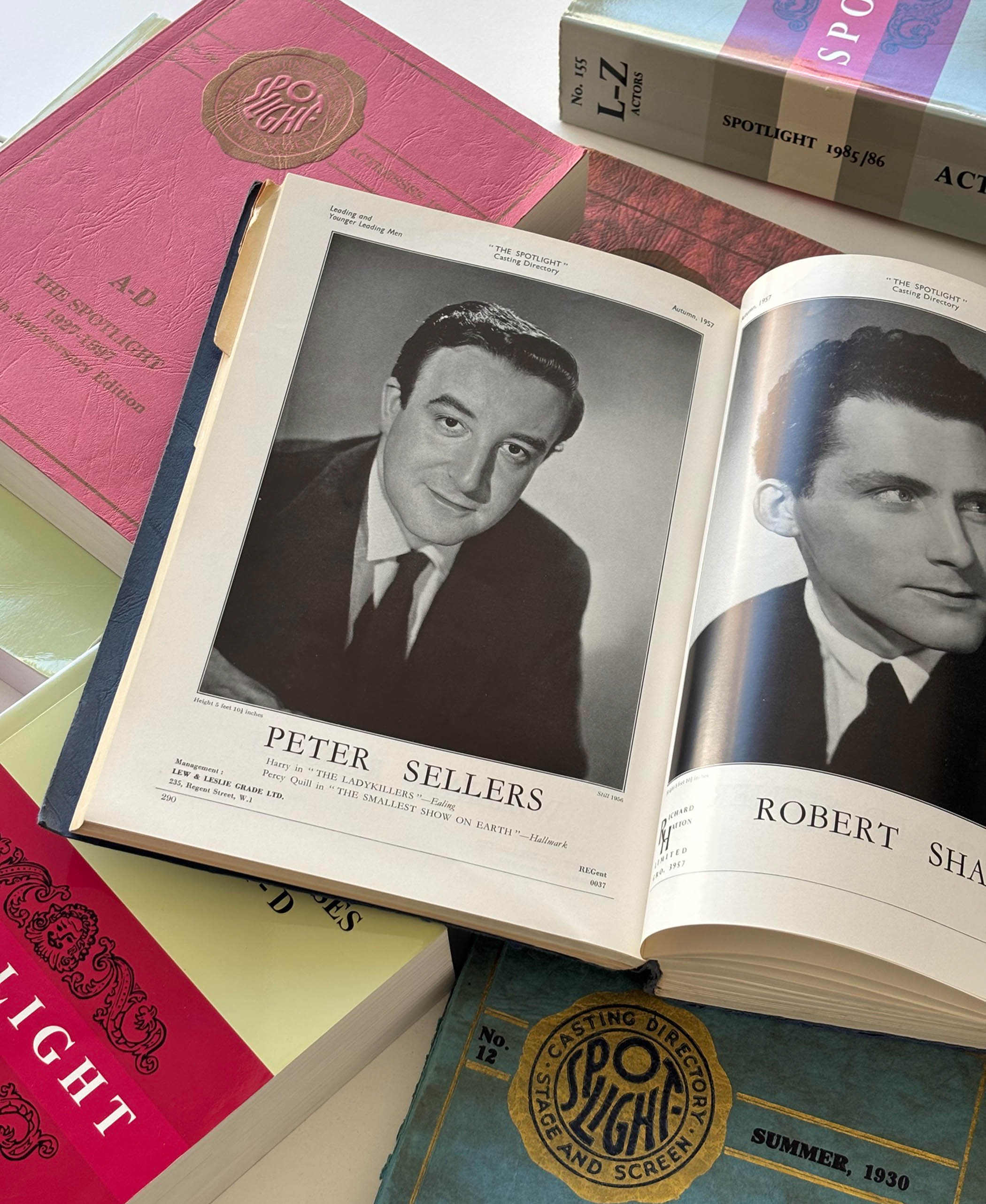
After the war, the Seale family took over the publication from its long-time steward,Rodney Millington, and it stayed with them for three generations, until it was acquired by Talent Systems in 2021. The last print edition came out in 2017, when production moved entirely online. Browsing through print editions of Spotlight is addictive – rather like looking at snapshots from a history of your own imagination. The faces within its pages have entertained the public for 10 decades.
“The trouble is,” admits Hood, “you start looking at one thing and then you go, ‘Oh my gosh, there’s so and so’ – and it’s hard to stop.”
Newsletters
Choose the newsletters you want to receive
View more
For information about how The Observer protects your data, read our Privacy Policy
An edition from the 1970s falls open on a page that features not only Joanna Lumley but also portraits of the singer Lulu and the stage and screen actor Cherie Lunghi.
A more recent volume places a moody Idris Elba opposite the comic actor Kevin Eldon.
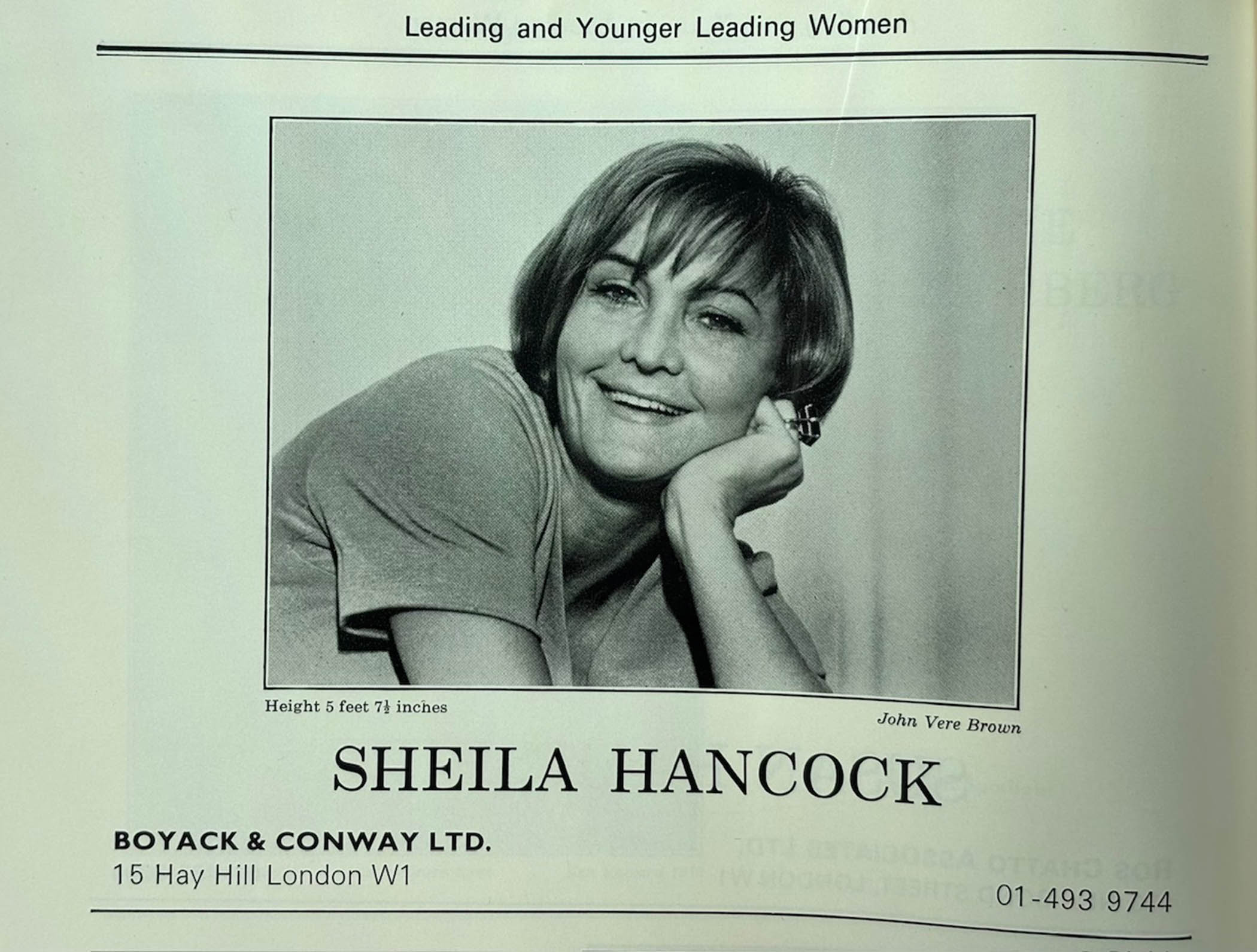
An edition from the late 1950s features a gamine Judi Dench, and another from a few years later a tousled Ian McKellen. Sheila Hancock is there too, looking almost the same as she does in this weekend’s Observer Magazine.
Further back in time, a page advertises the talents of a shiny young John Gielgud, along with his four-digit Kensington telephone number.
Some of the remarkable names that leap out are no longer famous. There’s Picot Schooling, who appeared in the 1933 film Love’s Sweet Song, and Chili Bouchier, once styled as Britain's answer to Clara Bow, the Hollywood star of silent movies.
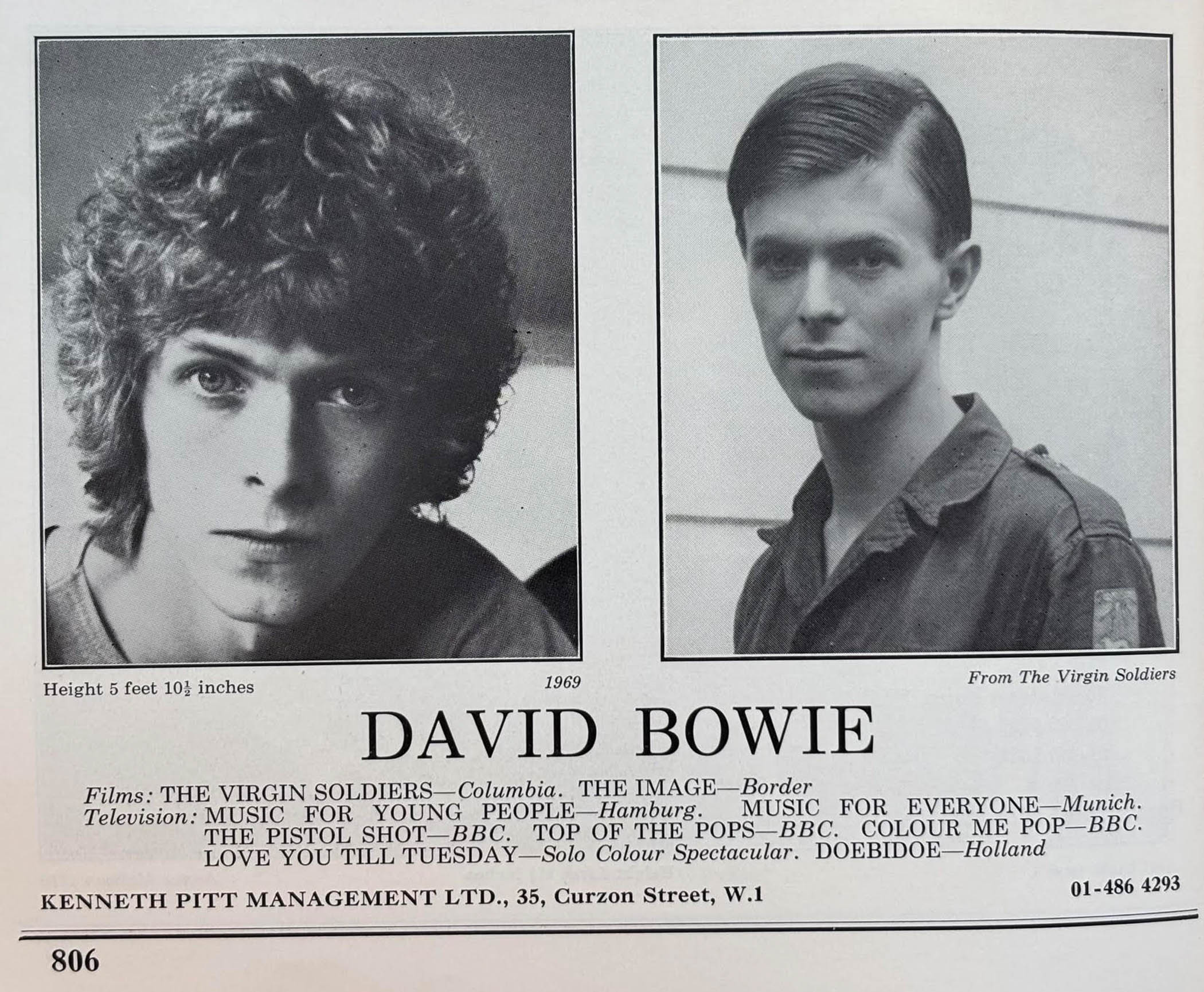
In a 1970s edition, the comparatively plain name of Timothy Carlton tells the other side of the story. His real surname was Cumberbatch. As he later told his son, Benedict, he thought it would be an impediment to success. Comparing portrait shots across a series of editions reveals the development of many an actor’s image. A curly-headed young David Bowie touts his blossoming skills just after the release of his hit song Love You Till Tuesday in the 1960s. Daniel Day-Lewis was streetwise at the time of his casting in My Beautiful Laundrette and yet a fully fledged long-haired matinee idol by The Last of the Mohicans. Famous comics made their mark in Spotlight slightly differently. John Cleese appears in an animal costume, while Peter Cook asked for only his name to be printed in bold, with no details or accompanying image.
Perhaps the most instructive discovery in the archive, though, is a paragraph that has just proved useful in the high court case Spotlight fought last year over its legal status as a directory rather than an employment agency. The mission statement set out in one of the earliest editions reads: “We are not agents, nor are we connected in any way with any other agency or other organisation. Our enquiry service is entirely gratuitous and is available to everybody concerned in theatrical or film production.” It is as if the founders of Spotlight knew trouble lay ahead.
In September the court ruled in favour of the directory and against Equity, the actors’ union, which had claimed Spotlight was operating as a jobs broker and should not be allowed to increase its subscription charges under the terms of the Employment Agencies Act 1973. Equity has been granted permission to appeal.
Are the missing editions of Spotlight languishing in your loft? If you find them, contact vanessa.thorpe@observer.co.uk