
For nearly 50 years, Fiona* kept a devastating secret from her family. As a teenager in the 1960s she was raped, became pregnant, then forced by her parents and doctors to give up her baby, who was just a few weeks old.
Buried under decades of guilt and shame, it all came tumbling out during a row with her daughter, Mary*.
“She told me she would have gone to her grave not telling anybody because of the shame that she’d been forced to feel,” Mary says. “I only found out then that I have a half-sister, hopefully alive somewhere.”
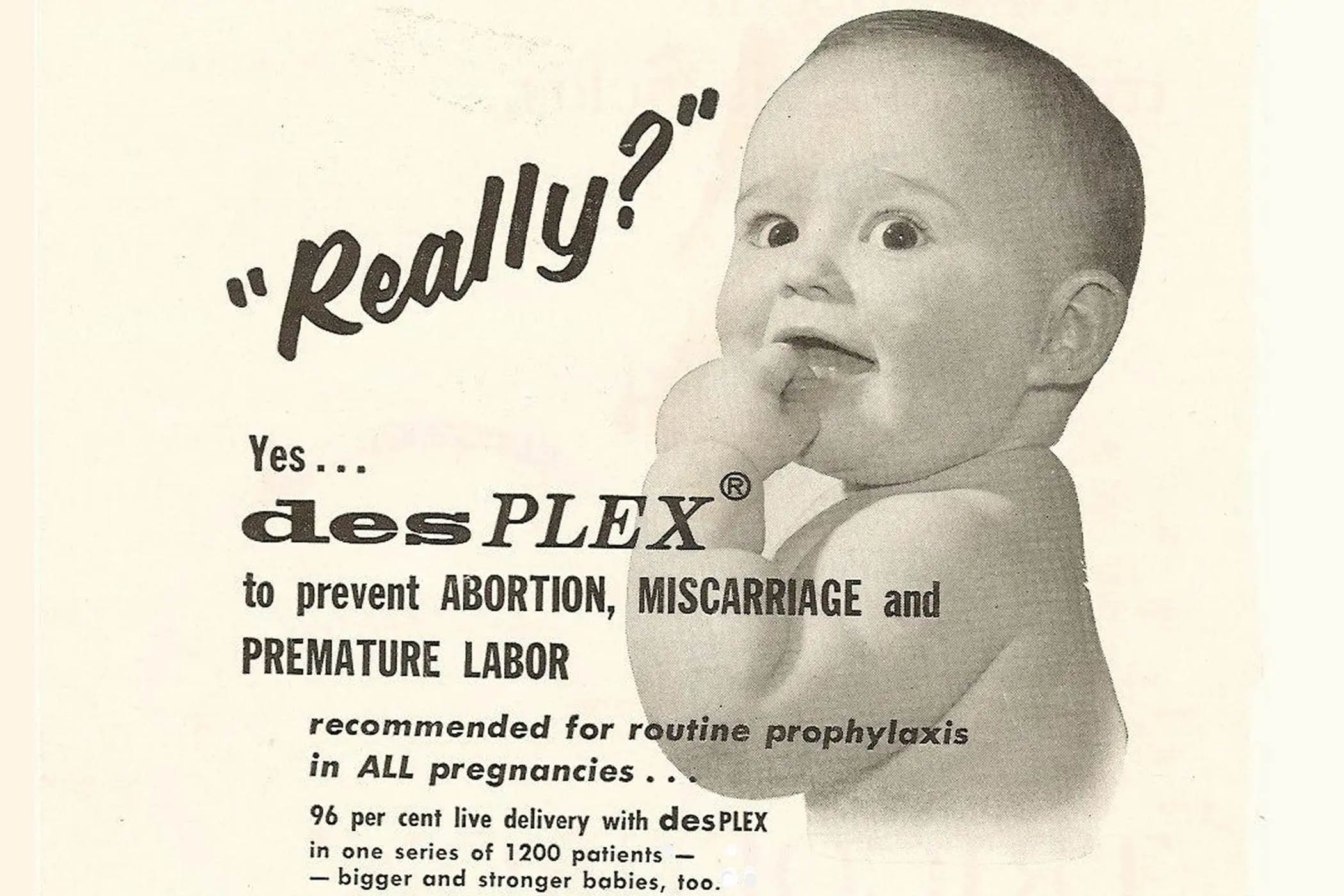
But that revelation was only part of the trauma affecting their family. Fiona was given a drug to help dry up her milk, which she believes was diethylstilbestrol (DES).
Authorities were raising concerns about DES, a synthetic form of the hormone oestrogen, as far back as the 1930s, fearing that it was linked with higher-than-usual rates of cancer, according to archive material seen by The Observer and BBC Radio 4’s The Naked Week.
Although it was banned for its original use – bulking up chickens – in the 1950s, DES was not withdrawn from use in women in the UK until the early 1980s.
Multiple studies have suggested that children who were exposed to DES in the womb have a heightened risk of abnormalities in their reproductive system, causing infertility and pregnancy complications. But the drug’s possible impact on a woman’s subsequent children – who were not exposed to it in the womb but who appear to be suffering similar health consequences – has had less scrutiny.
Mary believes she may have been indirectly exposed to DES. She was born with a bicornuate uterus and was told she had a 95% chance of miscarriage.
‘It is hard to follow the breadcrumbs [of DES’s impact] because they are so scant and widely scattered’
‘It is hard to follow the breadcrumbs [of DES’s impact] because they are so scant and widely scattered’
Diana Defries, Movement for an Adoption Apology
Both she and her mother are not entirely sure whether Fiona took DES, because of the lack of publicly available records relating to forced adoptions. Medical records and adoption paperwork were not routinely kept and in some cases have been deleted or remain locked away by the government. Some children will never know that they might have been exposed to DES because of the shame and stigma many women still feel about giving up their babies. It makes it hard to quantify the scale of the problem.
Diana Defries, chair of the Movement for an Adoption Apology, who at 16 was also forced to give up her baby, said the lack of records is hindering research. “It is hard to follow the breadcrumbs [of DES’s impact] because they are so scant and widely scattered,” she says.
Newsletters
Choose the newsletters you want to receive
View more
For information about how The Observer protects your data, read our Privacy Policy
Leading those efforts is Lancaster University’s Michael Lambert, who has uncovered archive material relating to forced adoptions and the use of DES. Lambert has discovered the existence of a government file that he believes may yield answers – including identifying further women who were given DES – but it is sealed until 2038. Despite applying to the Department of Health and Social Care as an accredited academic, he has been denied access.
“There is a legitimate interest for this file and others relevant to the administration of DES in mother and baby homes to be opened or made available, but this simply hasn’t happened,” Lambert says.
Campaigners and the women affected are hoping that that a recent report by the education select committee may help. It says forced adoption has caused “devastating suffering and lifelong consequences” and concludes that an urgent apology is warranted: “The government must act now.”
Responding last month, prime minister Keir Starmer said it was his “instinct” to offer a formal apology, following those in Scotland and Wales. This week, it emerged that the Church of England is preparing to do the same.
Alongside a formal apology, campaigners are hoping for a public inquiry, proper screening and treatment pathways for all children who may have been exposed to DES.
Clare Fletcher, a lawyer supporting the campaign group DES Justice UK, says: “This began in Westminster, and that is where it should end.”
The government did not respond to questions about the use of DES in forced adoptions, but said in a statement: “This abhorrent practice should never have taken place and our deepest sympathies are with all those affected. This government has gripped the issue by alerting cancer alliances to ensure NHS clinicians are aware of the impacts of DES and NHS screening guidance
“Ministers have also met DES campaigners to discuss what more we can do to support women exposed – including the need for further clinical guidance so we can provide the best support possible for those impacted and working with researchers to understand more about the long-term harms of the drug.”
* Names have been changed
This is the latest in a series of investigations by The Observer and The Naked Week. To hear the investigation in full, tune in to The Naked Week, on air every Friday from 6.30pm on BBC Radio 4 and on BBC Sounds in the Friday Night Comedy podcast feed.