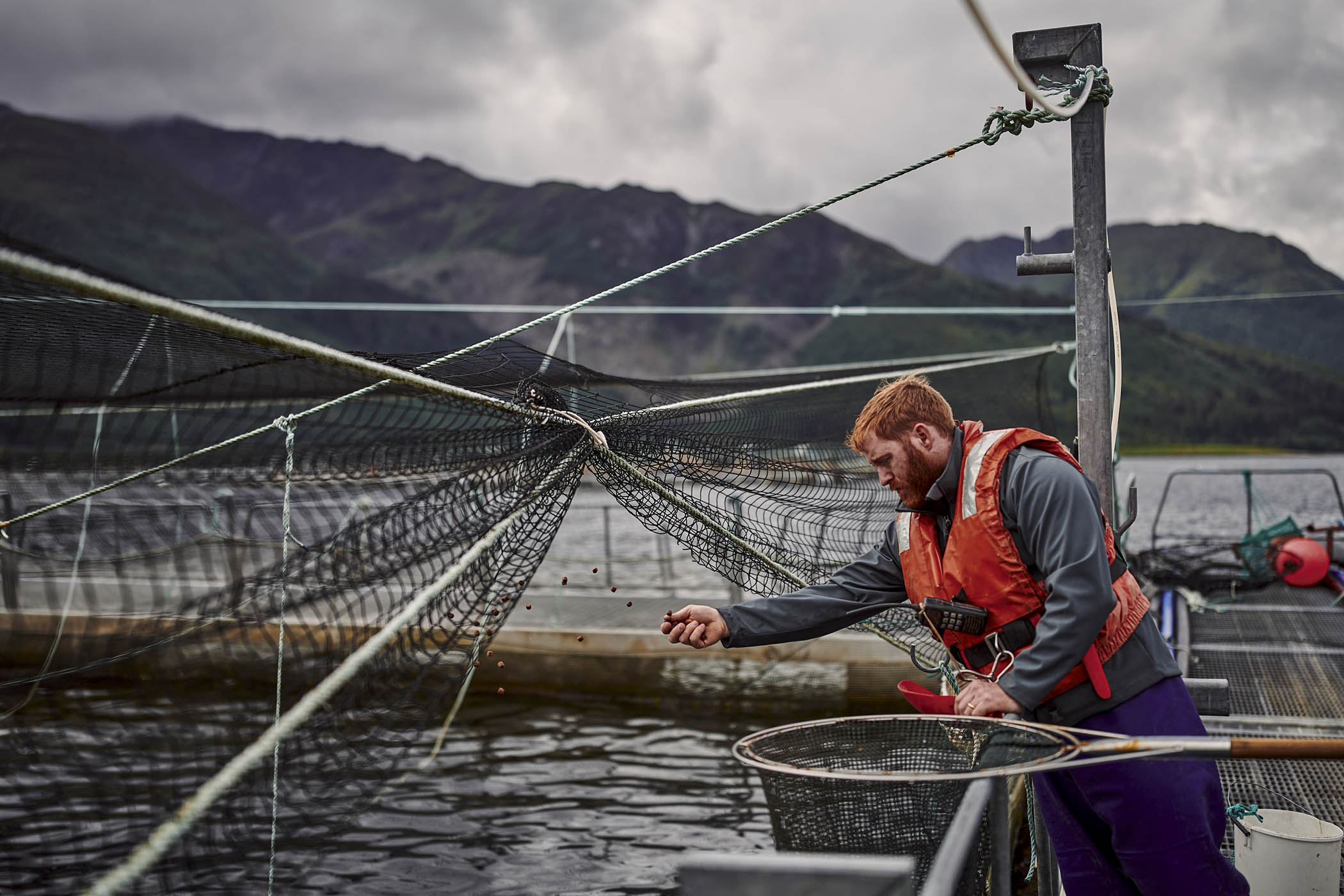



A government agency overseeing the welfare of farmed fish in England and Wales appears to have conducted just two inspections over the past five years, it can be revealed.
The global production of farmed seafood is predicted to overtake that of wild fish by 2030. In England and Wales rainbow trout is now one of most intensely farmed species, with about 7,000 tonnes produced each year.
Animal welfare groups have called for tougher laws for aquatic farm production and there is growing scientific evidence suggesting that fish can feel pain. In a welfare strategy published in December, ministers said new laws would be introduced for the humane slaughter of farmed fish.
But according to a freedom of information request by the charity Animal Equality UK, the government agency responsible for enforcing animal welfare, the Animal and Plant Health Agency (APHA), conducted just two inspections at fish farms in England and Wales between 2021 and 2025. Both were conducted in January 2021.
In Scotland, where the farming industry has been repeatedly challenged over fish welfare, the APHA inspects production sites with the marine directorate. During the same 2021-2025 period it conducted 19 site visits in Scotland and sent two warning letters relating to salmon farms, according to information disclosed to the Ferret, an investigative website. Scottish salmon is estimated to add £1bn a year to the country’s economy.
Abigail Penny, executive director of Animal Equality UK, said: “According to their own records, inspectors have knocked on just two fish farm doors over the past five years. I am in disbelief that any regulator could consider this acceptable.”
Penny said APHA should be required to publish details of sites visited as well as the inspection reports. She said she was concerned over the accuracy of information compiled by APHA because of the lack of transparency and public scrutiny.
The APHA said that commercial sensitivity and confidentiality requirements can, in some cases, prevent it from disclosing details of its inspections.
In November the Information Commissioner’s Office ruled there was no valid reason to withhold the inspection reports of fish farms in Scotland. The ruling led to the release of some of APHA’s inspection reports, including one that detailed a case where more than 100,000 fish suffocated at an on-land salmon farm after a worker left them unattended. At the time Salmon Scotland, which represents the sector, said that its members’ farms operate to world-leading welfare standards.
An APHA spokesperson said: “We treat all reports of suspected cases of poor welfare very seriously and we will not hesitate to take further action if we find evidence of cruelty or neglect.”
Newsletters
Choose the newsletters you want to receive
View more
For information about how The Observer protects your data, read our Privacy Policy
The British Trout Association said the Fish Health Inspectorate conducted annual fish farm inspections. These inspections, however, focus on disease surveillance, while the APHA has oversight of welfare issues. The association said it was working with the government to review health and welfare guidance concerning fish slaughter.
Photograph by Matthew Lloyd/Bloomberg via Getty Images