

Britain’s Muslims are being “othered” and treated like “ghouls” in an increasingly volatile political environment, the former attorney general who helped create the new definition of anti-Muslim hostility has said.
A climate of fear stoked by the far right and social media “cesspits” has fuelled a view of Muslims as “spooky and incomprehensible", Dominic Grieve KC told The Observer.
Earlier this month, the government adopted a working definition of anti-Muslim hostility based on the recommendations of a working group led by Grieve.
The definition, which abandoned the word “Islamophobia” for fear of confusing hatred of Muslims with criticism of Islam, had been promised by successive governments but the process was dogged for years by divisions over free speech.
“So, you've got rising levels of fear about Muslims,” Grieve said, adding: “They are then being, to use that word, ‘othered’; they are beyond the pale, they are ghouls, they are sort of spooky and incomprehensible and so something has got to be done to stop their existence.”
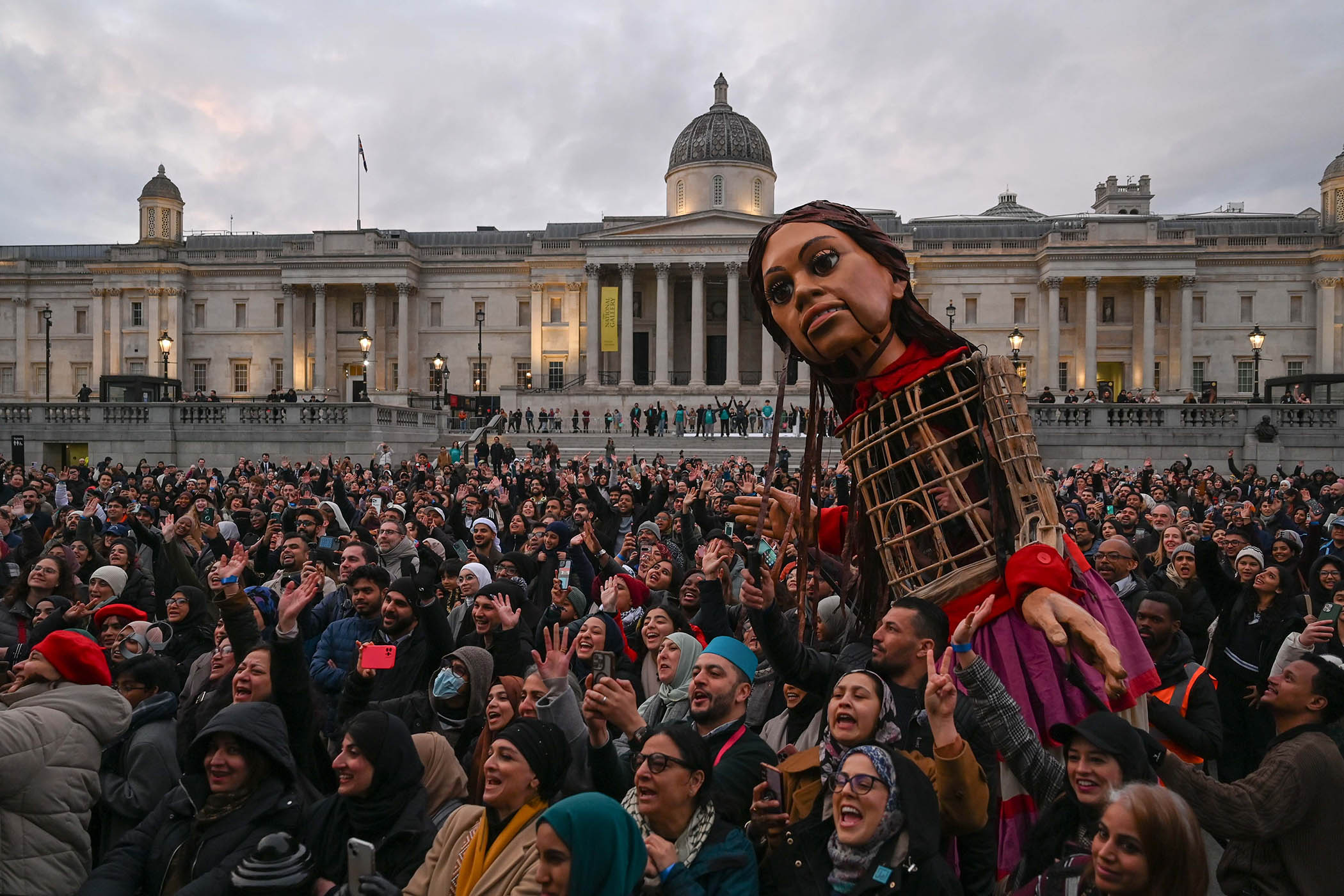
Grieve said that the furore last week over Nick Timothy, a frontbench Tory MP, describing an annual Iftar event in Trafalgar Square as “an act of domination” was in line with the venom found on social media.
“This attack on the Iftar on the basis it was ‘dominating’ and a ‘power expression’ of Muslims being directed against everybody else is, I’m afraid, very much of a piece with a lot of the stuff you will see on social media.”
Describing an “absolute torrent of abuse on social media” and “the cesspit of X today”, he said the message was often “essentially that these are people who cannot live beside you and that they wish to take the world over, that they’re coming here in large numbers and that something’s got to be done about it and, above all, they should be prevented from ultimately expressing themselves”.
He added that there was an “echo chamber” of “sentiments which, frankly, one wouldn’t have heard since the Nazis expressed their views about Jews in the mid-1930s”.
Grieve said that, not long ago, Timothy’s statements in his Telegraph column would have led to him being sacked. “They [Muslims] are as entitled to hold an Iftar in Trafalgar Square as Hindus are to hold Diwali, Sikhs to hold Vaisakhi and Christians to sing carols at Christmas,” he added.
Newsletters
Choose the newsletters you want to receive
View more
For information about how The Observer protects your data, read our Privacy Policy
Grieve was the only non-Muslim who served on the working group and said he was proud of the constructive effort to come to an agreement on the definition of anti-Muslim hostility.
The definition, which is not a law or statute, is designed as a guide for individuals and institutions to understand the difference between legitimate criticism of Islam as a religion and opinions based on prejudice. A definition of antisemitism put forward by the International Holocaust Remembrance Alliance was adopted in 2016, despite concerns over conflations between Judaism and the state of Israel.
Speaking of the decision to abandon the word Islamophobia for anti-Muslim hostility, Grieve said: “Logically, it isn’t racism because it’s an attack on belief systems, but in many cases, it is very similar to racism because people don’t really know anything about the belief systems. It’s just that the person looks different.”
The definition, which has taken a decade to agree, has repeatedly been opposed by groups who claimed it would lead to a blasphemy law by the backdoor and by a reluctance to use the more common term Islamophobia.
Baroness Sayeeda Warsi, the Muslim former foreign minister, said she was pleased that the definition had finally been agreed, but that the process had been stifled for years by “bad faith actors” in government and that the treatment of Muslims should be considered a form of racism.
“The evidence that every single piece of work on Islamophobia and anti-Muslim racism has heard is that, actually, this has less to do with religiosity – this is the racialisation of a community and, like antisemitism, this is stereotyping and demonising of a community and using tropes to describe a whole community, and that is racism.”
Grieve said that the definition’s credibility had hinged on protecting freedom of expression and the right to criticise religions.
He acknowledged “the existence of extreme views within the Islamic world with violent consequence is such a well-established feature of the world” but said the public’s “troubled and fearful views” have generalised all Muslims.
Grieve said he remained “fundamentally an optimist” and that Britain had integrated minorities better than most countries in Europe, but added: “One of the things we said to the government when we sent our definition in was that, on its own, it doesn't solve anything. You’ve got to have a really big campaign to improve social cohesion.”
Photography by Rasid Necati Aslim/Anadolu via Getty Images