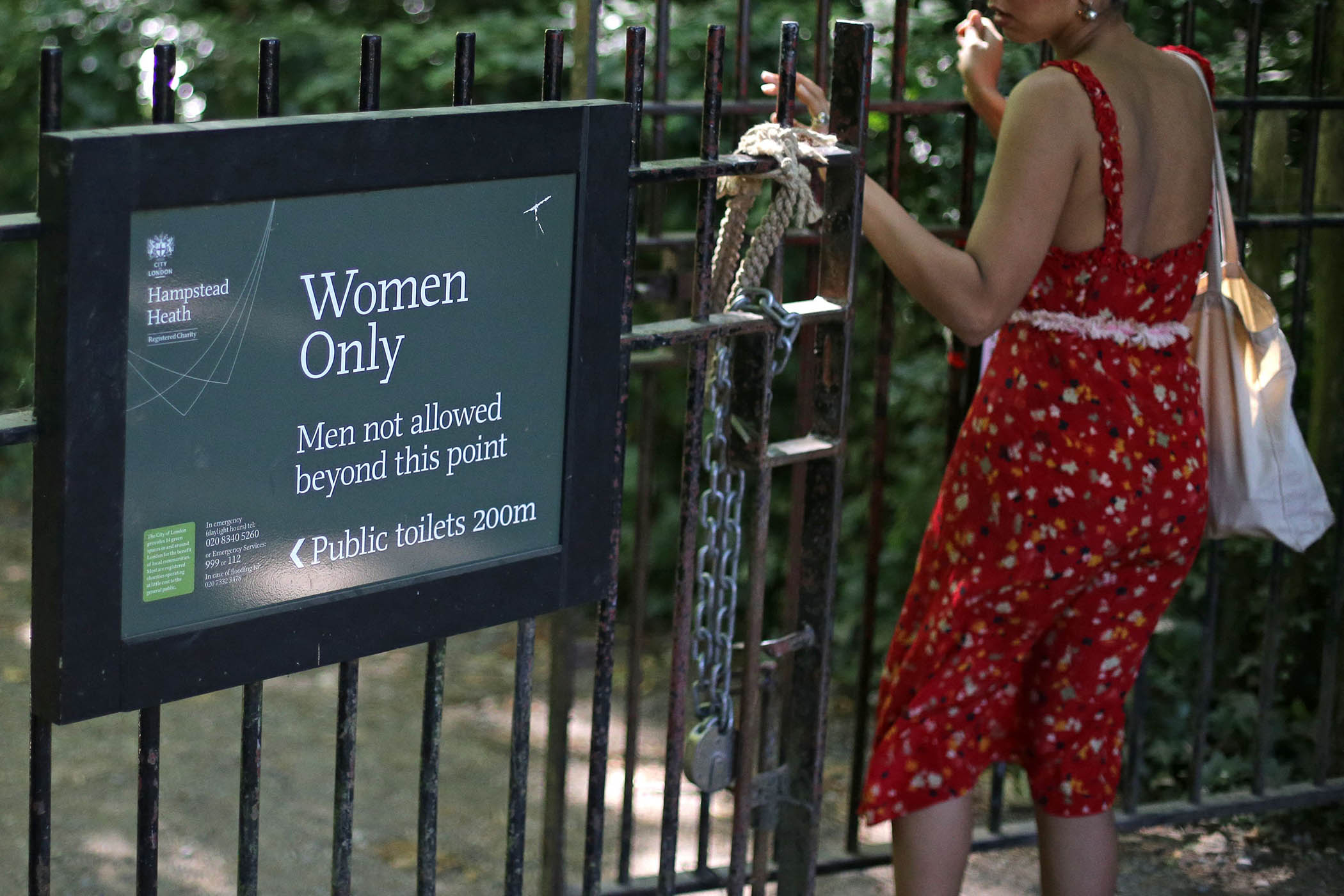

For nearly a century, women and girls have gathered in a secluded clearing on the edge of Hampstead Heath to swim in the Ladies’ Pond.
Opened in 1926, the pond is the UK’s sole women-only freshwater swimming spot – beloved by local artists, politicians and celebrities. Regulars are known as “pondies”.
But over the past decade, the pond has become a flashpoint in the national debate over biological sex and transgender rights.
Earlier this month that debate reached the high court, where the charity Sex Matters sought permission to bring a judicial review against the City of London Corporation, which operates the bathing ponds on the heath. The charity, which advocates for sex-based rights, argued that the City’s policy of allowing trans women to swim at the Ladies’ Pond is unlawful.
Tom Cross KC, for Sex Matters, said the April 2025 UK supreme court ruling – which found that the legal definition of a woman under the Equality Act 2010 is based on biological sex – means the City must now exclude trans women.
Sex Matters, which made submissions as part of the supreme court case, says the ruling “made clear” that continued trans-inclusive access to the ponds is “based on a misunderstanding of the law”.
Soon after the supreme court decision, the City of London told swimmers that its trans-inclusive policies would remain in place while committees reviewed the ruling and consulted on future access.
‘It’s testing the principle of, if there is a space that’s designated for women, can that truly be just for women?’
‘It’s testing the principle of, if there is a space that’s designated for women, can that truly be just for women?’
Fiona McAnena, Sex Matters
Daniel Stilitz KC, for the City, said in the high court that Sex Matters had “jumped the gun” by bringing its Ladies’ Pond case while that process was ongoing. He also said the corporation had received more than 38,000 responses to its consultation, which is due to report next month.
For Fiona McAnena, head of campaigns at Sex Matters, the question of why the rest of the country should care about who swims in a pond in north London goes to the heart of the case: “It matters because it’s testing the principle of, if there is a space that’s designated for women, can that truly be just for women with no one male, no matter how they identify?
“The supreme court said that if something is single sex, it’s based on what you’re born as, not how you identify,” McAnena said. “We’re trying to establish that principle, and then if we can establish that, that should apply everywhere.”
Newsletters
Choose the newsletters you want to receive
View more
For information about how The Observer protects your data, read our Privacy Policy
The Ladies’ Pond is an interesting test case. Nearby is the Men’s Pond, which allows trans men entry, and a mixed pond open to the general public in summer. Gender-critical activists argue that trans people should only use the mixed facilities.
Steph Richards, a 73-year-old trans woman, said trans people having access to the “single sex” ponds is important because “it sets a precedent”.
“We have rights under the Equality Act to use those [the ponds’] facilities. There are exceptions, but we would argue they don’t apply here,” she said.
Richards’ organisation Translucent, which advocates for trans rights, has said it would request to intervene in the judicial review process if permission is granted by the court for it to proceed.
In an article published in The Observer in May, novelist and “pondie” Esther Freud wrote that she was “thrilled Hampstead Ladies Pond will remain open to all”.
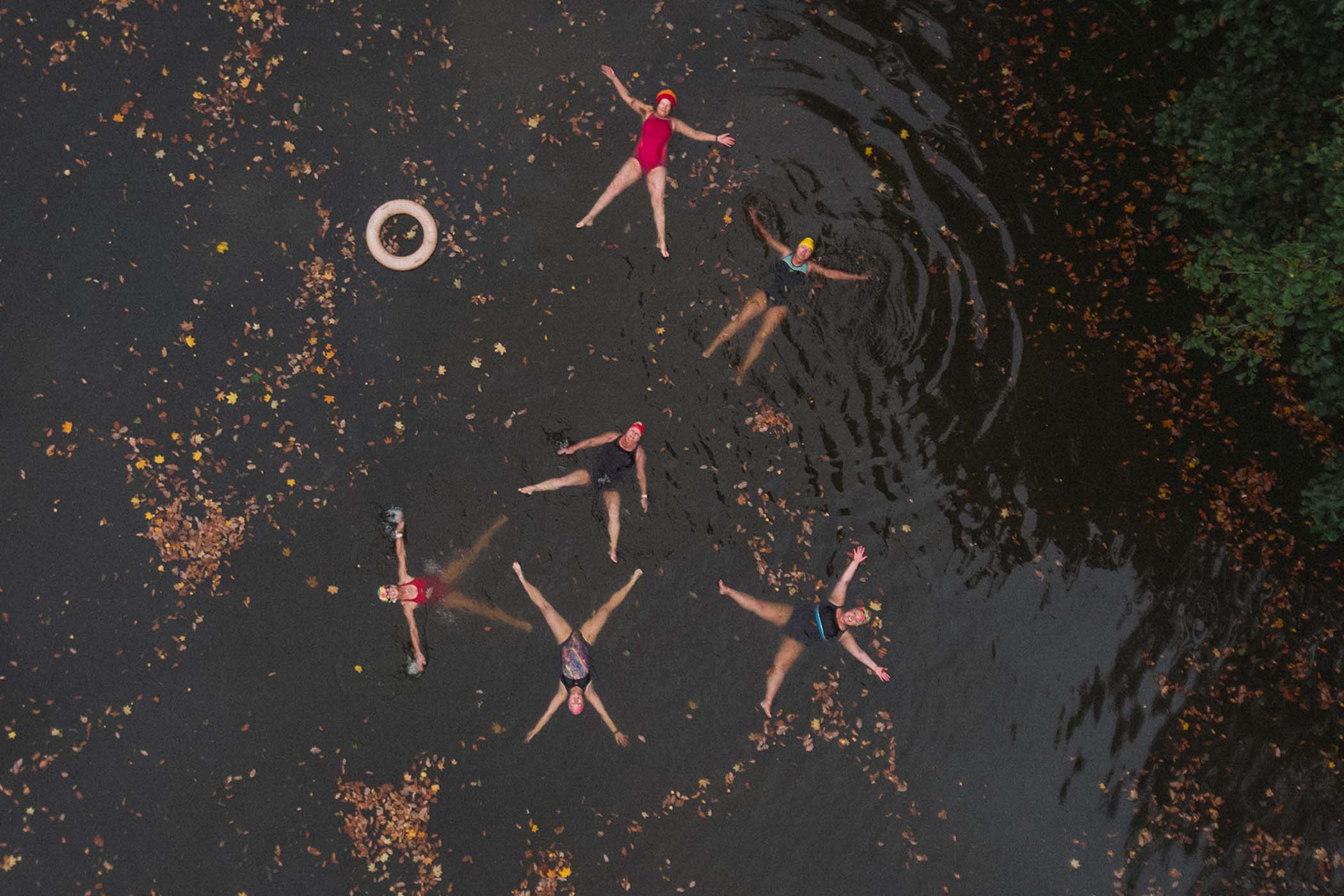
A wild swimming women's group takes an autumnal swim at Hampstead Ponds.
For many of the women who regularly swim in the pond, including members of the Kenwood Ladies’ Pond Association (the KLPA) who spoke to The Observer, the furore over trans women has disturbed the usual tranquillity of their “haven”.
According to the KLPA, a voluntary organisation, trans women have been swimming there for “many years” without issue. That changed in December 2017 after the Mail on Sunday reported on women’s “outrage” that trans women were being allowed to swim and use the changing rooms. The paper quoted feminist writer Julie Bindel, who said it was “totally unacceptable” for “men who identify as women" to be in a women-only space.
The article prompted a meeting of about 100 KLPA members, after which the group reaffirmed its commitment to an inclusive environment for “all women, including transgender women”, while acknowledging that a minority of members felt “uneasy”.
Then in May 2018, a group of women organised by Mumsnet held a protest at the Men’s Pond, wearing beards and mankinis to highlight concerns that proposed Gender Recognition Act reforms could allow predatory men to pose as trans women. Those reforms were not implemented, but the flint had been struck.
Maya Forstater, CEO of Sex Matters, said posts about that protest first drew her attention to the ponds’ trans-inclusive policies. In a witness statement to support the charity’s high court challenge, Forstater described accounts she had received from women since 2018 who said they felt uncomfortable sharing changing spaces with trans women, including allegations of inappropriate behaviour – though The Observer understands some of these claims are contested.
In 2018 the City launched a consultation before formalising trans people’s access to the ponds in 2019. After a lull during the pandemic, campaigners returned in 2022 with the “Let Women Swim” protest, and Forstater vowed to restore the Ladies’ Pond as a “female-only oasis” by 2025.
‘It’s a very generous space. So what if trans women aren’t biologically women?’
‘It’s a very generous space. So what if trans women aren’t biologically women?’
Carol, a Hampstead Ponds regular
One battleground became the KLPA itself. In 2023, Janice Williams, 69, a gender-critical activist, joined its committee with the aim of changing its stance. A few months later, she tabled a motion to exclude trans women from membership, leading to a “lively” AGM in March 2024 at which the membership voted to keep the organisation trans-inclusive by an overwhelming majority.
Venice Allan, 50, who helped organise the 2022 Let Women Swim protests, stood on a chair to give a furious speech to the 200 women in the room.
“When the inevitable happens as a result of your trans inclusive policy… and one of these men that you are so inclusive of attack or rape a woman or girl, I want you to remember that you voted for that,” Allan shouted.
In a video of the speech posted to social media, multiple women can be heard telling Allan to “shut up”.
Allan told The Observer the KLPA was “all nice middle-class Hampstead ladies, Highgate ladies, who’ve probably got people who are all into this [gender/trans] ideology, in their families and their social circle at work”.
Having failed to change KLPA policy, there was little gender critical campaigners could do beyond protest – until the UK supreme court ruled on biological sex in April. This opened the door to Sex Matters bringing a potential case against the City of London.
A City of London spokesperson said it recognised the “sensitivity and complexity” of the issue. “We await the outcome and will continue to contest this case vigorously,” they said.
If Sex Matters is refused permission for a judicial review, The Observer understands the charity has already prepared alternative options to challenge the inclusion policies.
After six hours of submissions last week, during which Mrs Justice Lieven had to urge both barristers to “lower the temperature”, a judgment on whether the case can proceed to a judicial review was deferred to the new year.
At the pond, Carol (not her real name), a 65-year-old regular swimmer who was still shivering from a winter dip, said the idea of excluding trans women felt “cruel and unthinking”.
“It’s a very generous space,” she said. “So what if trans women aren’t biologically women? So what?”
Photograph by Daniel Leal/AFP