
Photographs by Judith Jockel for The Observer
Elliot Hefty says he decided it was time to leave the US when he was assaulted while walking down the street in his home of Louisville, Kentucky. He was shoved to the ground as he crossed the road, his assailant screaming that he was a “dirty tranny”. It was the Friday after Donald Trump won the 2024 election.
Since beginning his transition during Trump’s first term in 2019, Hefty had been threatened with a gun while working at a grocery store and sexually assaulted while using a men’s toilet there because, he says, of his gender identity.
He says he was fired because he took a day off to go to a medical appointment related to his transition. Six weeks later he was evicted from his home after a neighbour complained to his landlord that he had a bumper sticker of the transgenderflag on his car.
“I had lost my job because I was transgender, and I was losing my housing because I was transgender,” he said.
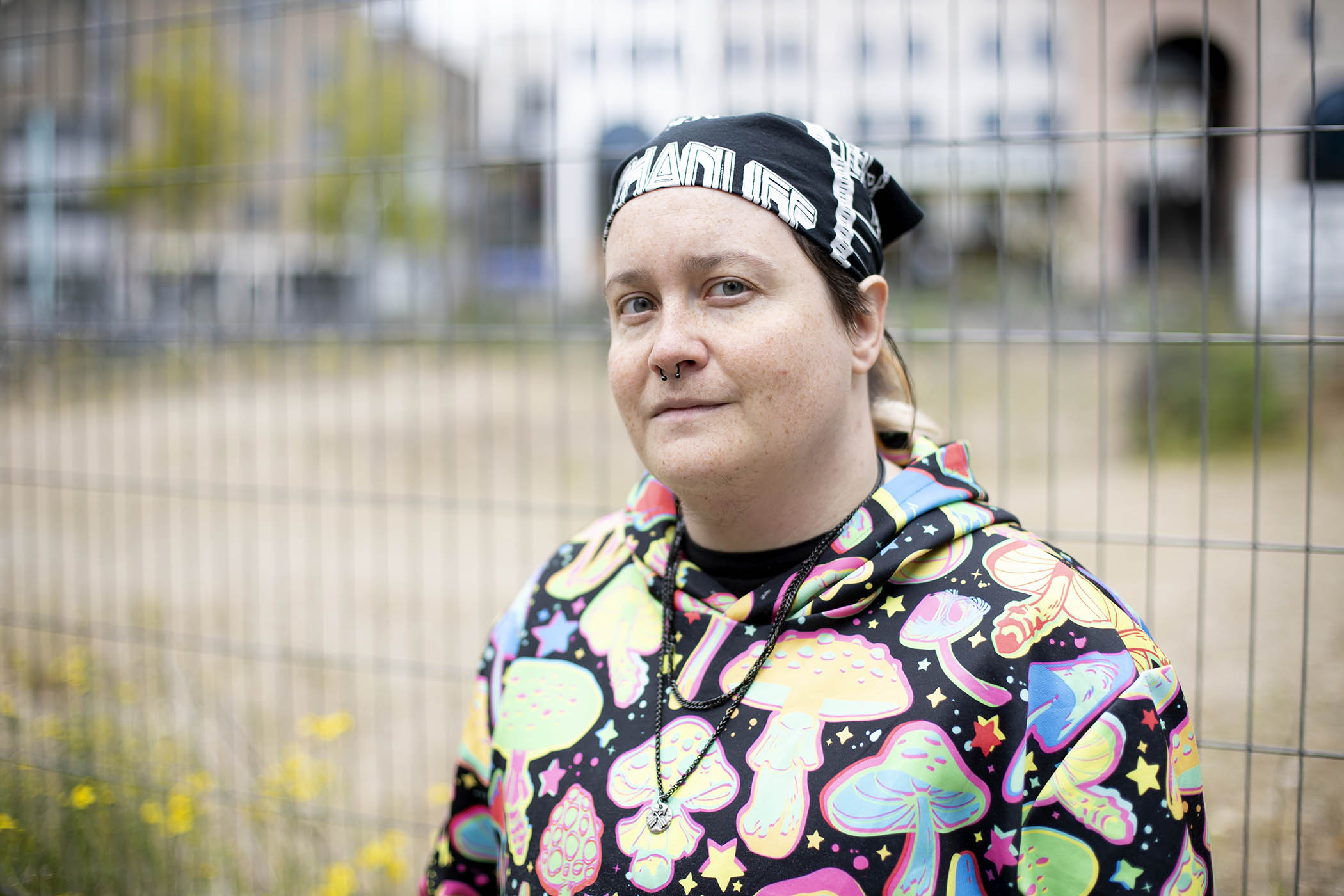
Hefty eventually found a job with Medicaid, providing people with food stamps, where he says he thrived. “And then Trump started campaigning again. All of a sudden, I was having people not wanting me to help them because I was transgender,” Hefty said, sitting on the terrace of a cafe in Heerlen, a small city in the south of the Netherlands.
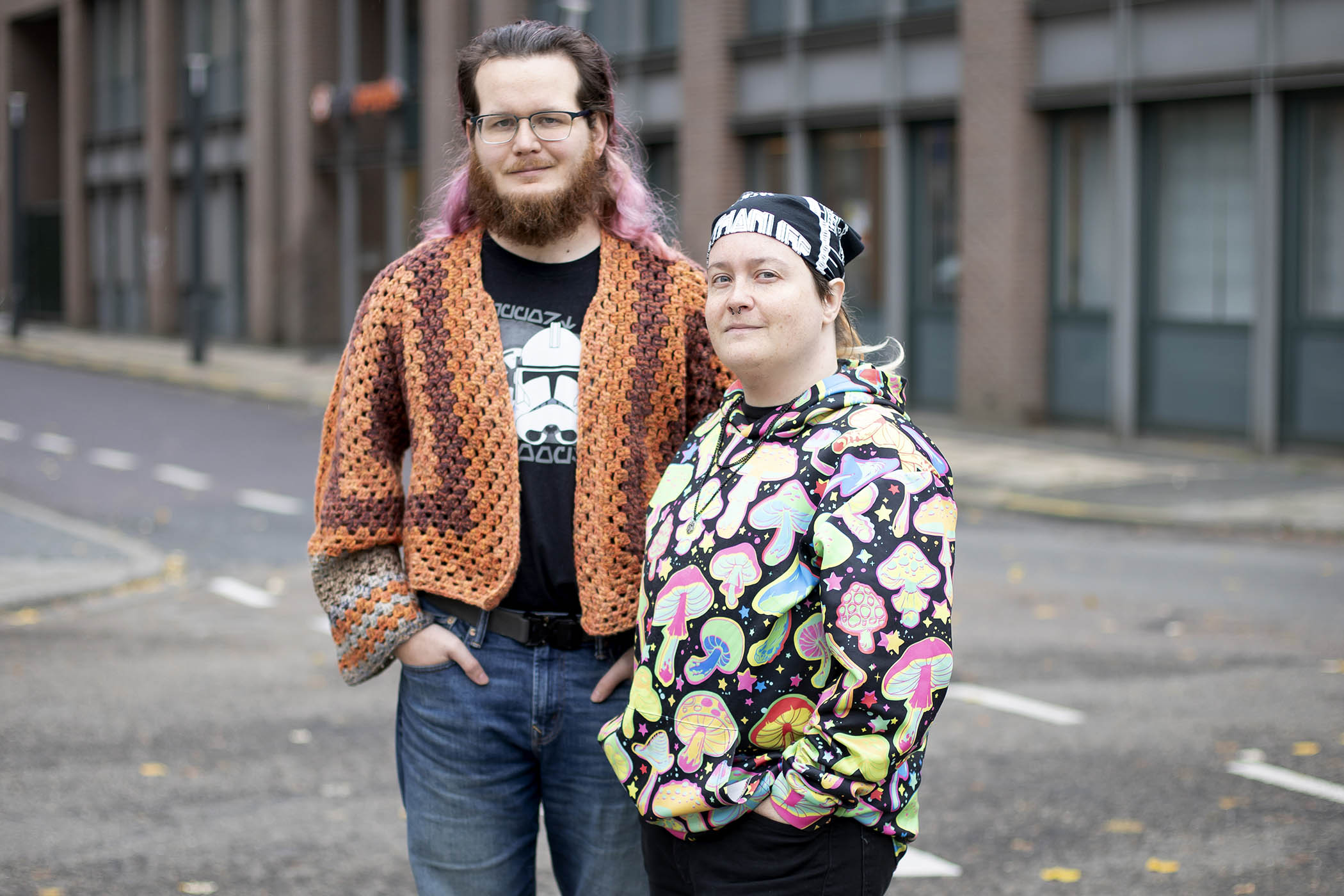
Elliot Hefty and his brother, Koda
Then Trump won. “That was my moment. I was like: ‘I’ve got to get out of here.’”
He flew to the Netherlands and became part of a tiny group of Americans who are now seeking asylum in the nation with arguably the world’s most trans-friendly policies. Their decision to flee highlights how the US – more commonly thought of as a place a desperate person might flee to – has changed under Trump. But it has also posed a challenge for the Netherlands, a country that despite its liberal reputation is becoming less favourable to gender-diverse people and more hostile to immigrants.
On his first day in office, Trump signed an executive order stating that the government agencies should only recognise two sexes that are “not changeable”. A week later, he put in motion a ban on trans people from serving in the military. At the state level, the American Civil Liberties Union is tracking nearly 400 anti-LGBTQ+ bills at various stages of the legislative process across the US. Last year 74 were passed into law, including “bathroom bills”, which restrict access to toilets; restrictions or bans on gender-affirming care; and legislation that prevents trans athletes from taking part in sport.
“When talking about trans people coming from the US, the types of violence and marginalisation and violations of their fundamental rights that they’re experiencing should often mean that they meet the requirement to apply for asylum,” said Cianán Russell from ILGA-Europe, an LGBTQ+ rights organisation based in Belgium.
Newsletters
Choose the newsletters you want to receive
View more
For information about how The Observer protects your data, read our Privacy Policy
‘A part of my whole asylum process is the [Dutch] government having to admit [the US] is not safe’
‘A part of my whole asylum process is the [Dutch] government having to admit [the US] is not safe’
Veronica Clifford-Carlos, asylum seeker
Veronica Clifford-Carlos is living alongside Hefty at an asylum facility in Heerlen as they await the outcome of their asylum claims. An actor and theatre director from San Francisco, she began thinking about leaving the US in the lead-up to the 2024 election after reading about Project 2025, the radical conservative blueprint for government written by the Heritage Foundation, much of which is now being implemented by the Trump administration.
She decided it was time to go when the passport she had applied to renew under the Biden administration was returned in May last year with a male gender marker on it. On 6 November last year, the Supreme Court validated the Trump administration’s policy to refuse to issue passports that match a person’s gender identity, even if they have officially transitioned.
Her asylum claim is based on her fear for her safety in the US. She was left afraid to leave her home after a man threatened to kill her while she was walking down the street. However, Clifford-Carlos said her case was also an attempt to force a political reckoning with what the US has become under Trump.
“A part of my whole asylum process is the [Dutch] government having to admit it’s not safe,” she said, acknowledging that it will be an uphill battle. “Even before I left for the Netherlands, I recognised that it was going to be my word versus the entire United States government.”
Hefty, Clifford-Carlos and others originally had their claims rejected on the basis that the US was classified as a “safe country” by immigration authorities. But in September, the Netherlands had to stop using its safe country list following a directive from the European court of justice. This means that the Dutch immigration and naturalisation service (IND) will instead assess the Americans’ claims on their individual merits, a move LGBTQ+ advocates welcome.
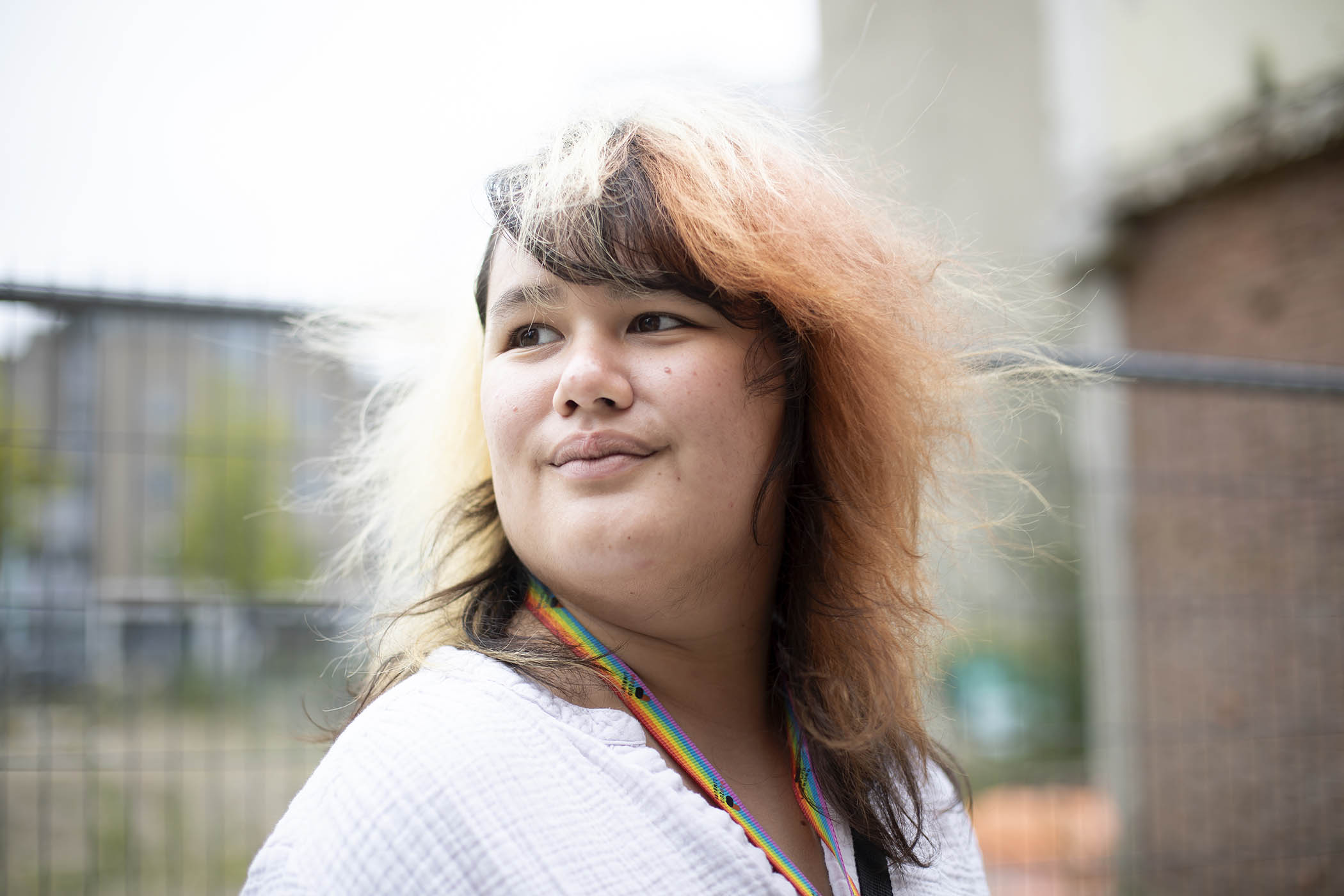
Veronica Clifford-Carlos
Mark Klaassen, an immigration law specialist at the Leiden University, said he thought it was “very unlikely” Americans would be considered eligible, despite the deteriorating conditions they face in the US.
“These are human rights issues. This is discrimination, and this is on purpose. But the question is whether that is sufficient to say this is actually persecution in the sense of the refugee convention,” he said.
Klaassen said applicants will also have to demonstrate that they do not have an “internal flight alternative” within the US – say, moving from a red state with anti-LGBTQ+ laws on the books to a blue state that offers more protections for trans people.
The Americans seeking asylum in the Netherlands represent a tiny proportion of a population of which the vast majority are staying in the US, either out of choice or necessity. Kris Tassone, a trans rights activist in the US, said leaving wasn’t an option for some due to caring responsibilities, while others did not have the financial means to do so. Others were joining the fight against the rollback of LGBTQ+ rights.
“Some people are sticking it out because they have loved ones here, they love being American, they love being in the US and what that could and should mean,” Tassone said. Still, a poll from December 2024 found 45% of trans Americans surveyed wanted to leave the country.
‘I’m in a massive number of conversations with people who are trying to figure out how to get out. I think we’re seeing the beginning of the wave, not the end of the wave’
‘I’m in a massive number of conversations with people who are trying to figure out how to get out. I think we’re seeing the beginning of the wave, not the end of the wave’
Cianán Russell, ILGA-Europe
A spokesperson for the IND said that of the 76 Americans who sought asylum in 2025, none had been approved and 40 had been rejected. Many, like Hefty and Clifford-Carlos, are appealing those rejections. A spokesperson for the Ministry of Asylum and Migration told The Observer that 20 Americans were “returned forcibly” to their country of origin last year, and 15 had returned voluntarily, but said they could not confirm how many of those 35 had come to the Netherlands as asylum seekers.
None of the Americans The Observer spoke to said they had considered giving up their claims and returning to the US. Whether they are accepted as refugees or denied, they are unlikely to be the last to try.
“I’m a trans person from the US, so I’m in a massive number of conversations with people who are trying to figure out how to get out,” Russell said. “Personally, I think we’re seeing the beginning of the wave, not the end of the wave.”
Asylum seekers in the Heerlen facility are able to come and go from the centre, visiting cafes like the one we sit in for our interview. Clifford-Carlos has been able to take part in the local theatre scene while she awaits the outcome of her claim.
However, life in the Netherlands’ asylum reception centres is not easy and conditions are repeatedly condemned by human rights groups for overcrowding and the risk of violence. Both Hefty and Clifford-Carlos spent time in Ter Apel, the largest processing centre in the country, before being transferred to Heerlen and many American asylum seekers are still there. The Ter Apel centre is a dank and lonely place, sitting by the side of a motorway far from a town that is itself far from any major centres in the Netherlands. Hefty described it as “like being in prison”.
When I check in with Hefty and Clifford-Carlos a few weeks after meeting them in Heerlen, they are in a sombre mood.
Clifford-Carlos had received a mixed decision on her most recent appeal – it was upheld on technical grounds, but authorities also said that the information she provided in her first interview was not sufficient to constitute grounds for asylum in the Netherlands. Her lawyer is appealing.
“To be brutally honest, I haven’t been in the safest mental head space,” Clifford-Carlos said. Hefty is still waiting to be reinterviewed following the suspension of the safe country list. He says he is experiencing “pretty extreme health challenges” for which he is struggling to get adequate care in the asylum centre.
Both were in mourning, after their neighbour killed himself in October. He was from Algeria, a country that was removed from the immigration authorities’ safe country list in 2021. Hefty and Clifford-Carlos claim he had recently been assaulted in a homophobic attack just outside the queer-friendly section of the centre.
“He was a kind and gentle soul,” Clifford-Carlos said.
A spokesperson for the Dutch immigration service said they could not confirm or deny the alleged suicide, citing “privacy legislation”.
Eventually, Hefty, Clifford-Carlos and the rest of the Americans will work their way through each stage of the Dutch asylum system’s long claims and appeals process. If they are ultimately rejected, they will have to leave the Netherlands one way or the other. If they are forcibly deported, it will be back to the US – an eventuality neither wants to think too much about. Instead, they are trying to hold on to the now.
Shortly after their friend’s funeral, the Americans were able to gather a group of neighbours together to celebrate a holiday that has surely gone unmarked in past years at the centre: Thanksgiving.
Without an oven, Hefty – the designated cook of the American group in Heerlen – had to make do with rotisserie chicken for the main. The rest of the menu he whipped together on the stove top.
He reels off the diverse roster of nationalities of the guests who gathered for the meal: Saudi Arabia, Nicaragua, Ecuador, Peru, Sierra Leone, Azerbaijan, Russia, Ukraine.
‘There’s no truer representation of what Thanksgiving is than that,” he said. He hopes the celebration was the first of many he will host in the Netherlands.
“Next year, I’ll have an oven, and there will be a turkey.”