

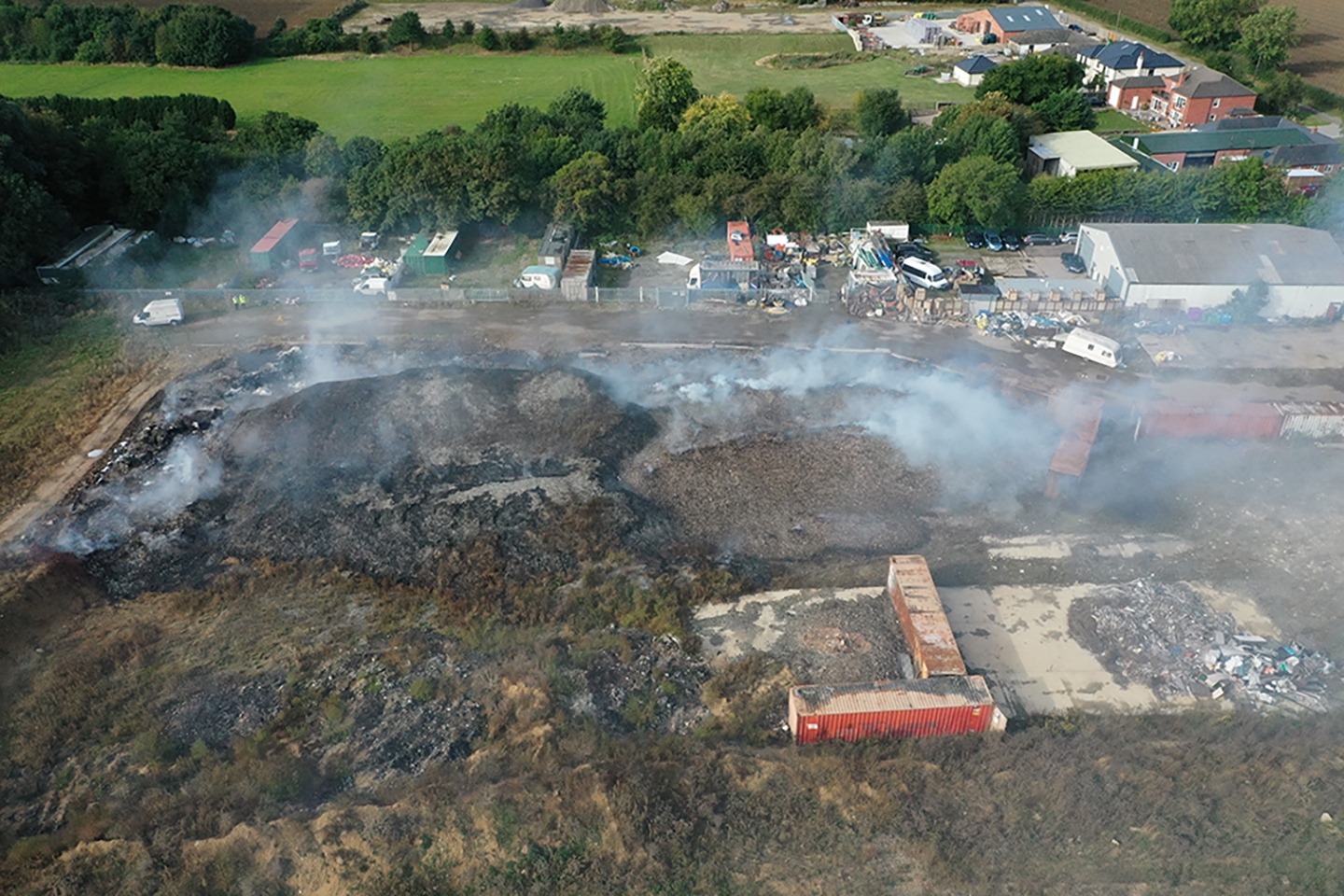

Illustration by Oscar Ingham
Thirteen years ago, one of the oldest retailers in West Yorkshire – founded in the year of Queen Victoria’s diamond jubilee – announced it was closing its doors for the last time. Fowler & Oldfield jewellers on Kirkgate, a short stroll from the historic Wool Exchange, enjoyed a prime location in Bradford city centre. It had been given a £30,000 refurbishment the previous year in the hope it would boost business.
The owner, Jeff Frankel, now 77, a well-liked businessman who had championed high street retailers, blamed rising rates and lamented the closure of one of the city’s best-known independent stores.
But there was one potential lifeline left for the family firm – championed by Frankel’s son, Gregory. He proposed moving the business away from the high street to the wholesale trade, offering bespoke jewellery designs and tools for jewellery workshops.
Gregory set up a new business under the name Fowler Oldfield in an unassuming two-storey industrial unit next to a railway track about a mile away from the city centre. It appeared to be a masterstroke. The firm rapidly acquired a roster of new clients, with revenues soon reaching millions of pounds a year. By 2014, the reimagined jewellery firm was NatWest’s “single most lucrative” client in the Bradford region.
But it was not so much jewellery that Gregory was interested in. It was gold bullion. It is now claimed that the new Fowler Oldfield was an apex for “dirty” money, used by criminal gangs across the UK to launder the proceeds of crime. The money was converted into untraceable gold that would then flow back into the economy without triggering the attention of police or regulators.
(Fowler & Oldfield, run by Jeff Frankel, is not implicated in any wrongdoing. Jeff is not connected to, and is not alleged to be connected to, the later gold‑trading operation under the name Fowler Oldfield, which is linked to the criminal case. “They wanted a company name, so they called it Fowler Oldfield,” he told The Observer.)
In March, Gregory, 48, and three other associates were sentenced to a total of more than 42 years imprisonment.
At the time, the Crown Prosecution Service hailed the conclusion of the case with a press release stating four people had been jailed and that nobody was “beyond the reach of the law”. But The Observer has established that three of the defendants convicted in March, including Gregory, are not in fact behind bars. They are on the run. One of the defendants has fled to South America.

Clockwise from top left: Gregory Frankel, Daniel Rawson, Haroon Rashid and Arjun Babber
The case has highlighted how, despite multiple regulations to prevent money laundering, dirty money continues to flow through Britain’s financial networks, and those responsible can be extraordinarily hard to catch. An estimated £100bn is laundered in the UK each year, and it is believed about £12bn of this is in cash.
Newsletters
Choose the newsletters you want to receive
View more
For information about how The Observer protects your data, read our Privacy Policy
There are ongoing proceedings involving the case but, in Bradford, many still question how a high-street jeweller became embroiled in one of the country’s biggest money-laundering scandals – and whether those who have fled the UK will ever face justice.
Gregory had military training and had worked as a bodyguard for high-profile figures, including top footballers. He described himself as a security consultant, and drove across the country trading in gold in a Hummer, a four-wheel drive civilian version of the US military vehicle. A promotional brochure for the new venture he set up in 2012 described the firm’s founding directors in the 19th century as visionaries who were “always one step ahead of the requirements of their customers”. It said Gregory had made “the brave decision to move the business in a new direction”.
When The Observer visited the premises in the industrial unit at Hall Lane, Bradford, it appeared a modest setting for what prosecutors described as one of the UK’s biggest money-laundering cases. But the site is secure – and discreet.
The unit was fitted with iron bars across the windows. Closed-circuit television cameras were installed across the site, and an entrance with a large metal gate with spikes provided the only access.
“It’s quite out of the way. This must have been an ideal set-up,” said Matthew Betts, 49, who works at a car repair business at the site of the former gold business.
Fowler Oldfield offered a nationwide cash-for-gold service, but it was initially a small-scale operation. The firm only had about £50,000 in assets, according to its 2012 accounts. But by late 2013, business was booming.
From December 2013 to September 2016, more than £266m was paid into the Fowler Oldfield bank accounts. On some days, more than £1.7m in cash was delivered to the industrial unit, the court was told during the trial into the money-laundering operation.
Prosecutors alleged that couriers would arrive from around the country with suitcases, holdalls and bags full of cash.
The money-counting operation was all captured by security cameras. In offices in the unit, three or four workers would electronically record the bundles of cash. The police also found money hidden away in gift-wrapped toy boxes and takeaway cartons.
It was alleged that Fowler Oldfield was operating as a “laundromat”, converting the cash proceeds of crime into untraceable gold.
In adjacent workshops, there were vats, small furnaces and specialised moulds for smelting gold. The firm would buy gold bullion bars, which are marked with serial numbers, and melt them at the unit into untraceable smaller pellets, known as gold grain. It would have allowed criminal gangs to convert illicit cash into gold.
The operation, prosecutors said, made no commercial sense for a legitimate business, because grain is taxable and subject to VAT, while gold bullion bars are exempt.
The advantage of laundering bullion bars into grain is that it can be easily stored, is untraceable and can be sold when required. Police believed the cash pipeline was flowing from drug gangs across the country, keen to camouflage their gains.
The businessman James Stunt, former son-in-law of Formula 1 tycoon Bernie Ecclestone, was acquitted in the case. It was alleged that his Mayfair offices had been used as “a hub for money laundering”, but he denied any knowledge of the alleged scheme.
It was alleged by prosecutors that a firm in Hatton Garden, London, as well as the gold bullion firm Stunt & Co, run by Stunt, were also used for receiving cash. Stunt said he had allowed his business to be used for cash deposits for Fowler Oldfield, but never suspected it was a criminal enterprise.
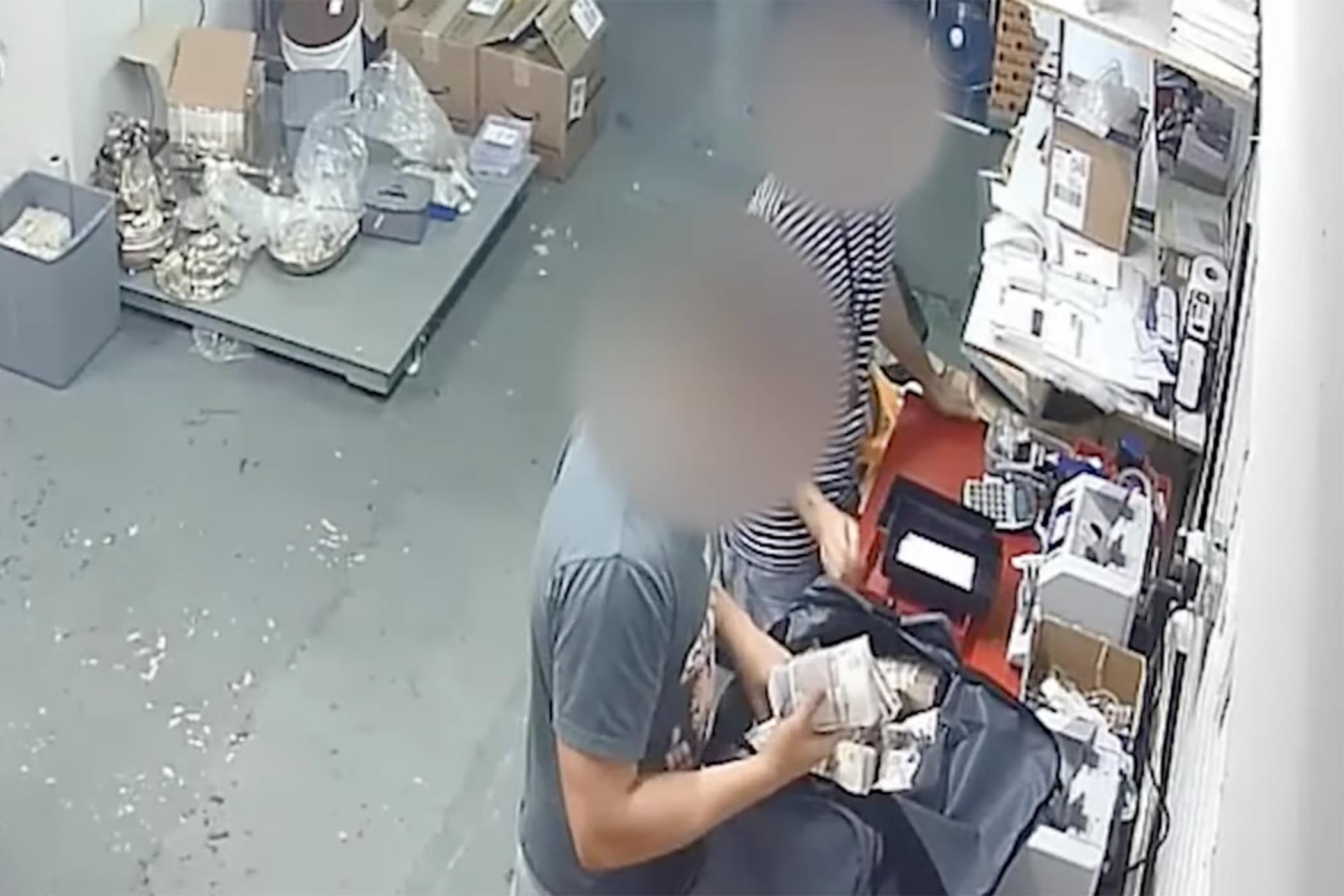
Footage released by police shows how the men stored cash
Some of the gold was shipped to Dubai. These shipments may have offered a means of integrating “dirty money” into the global financial system, avoiding scrutiny from the UK regulatory authorities.
Gregory was extremely careful about his personal security. His home in a narrow cul-de-sac in Leeds had a security gate, alarms and CCTV. Residents living near him contacted the police about the source of his wealth after becoming suspicious about the string of expensive cars he was driving, including a Lamborghini. One of the cash collection firms also alerted police to the vast amounts of money that were flowing through the business.
According to nearby businesses, police set up a surveillance operation on the top floor of a former textiles mill overlooking the site. The firm was raided on 8 September 2016. Gregory was arrested two weeks later.
The documents and banking records uncovered during the investigation revealed the money trail leading to two of the country’s biggest banks. Fowler Oldfield was a client of NatWest and, from late 2013, numerous branches started to accept millions of pounds in cash deposits.
NatWest received nearly £500,000 in fees from Fowler Oldfield between 2012 and 2016. At the peak of its operations, the firm generated the most fees for the bank of any business in Bradford – and more than double the revenues of the second most lucrative client in the region.
A NatWest cash centre in Washington in Tyne and Wear was the first to receive significant deposits, with staff struggling to process the high volume of Scottish bank notes. Staff claimed that they repeatedly raised concerns about the cash, including claims it often had a “musty” smell as if it had been stored under floorboards.
Another cash centre in Maidstone, Kent, received about £43m in cash from the Bradford firm during a 10-month period between 2015 and 2016, with no red flags raised.
Staff at a branch in Walsall in the West Midlands reported bundles of cash being delivered in black bin liners. The bags would sometimes split and the money would be moved by cashiers into stronger hessian sacks to prevent the uncounted notes from spilling out.
One member of staff later told investigators that on some occasions Fowler Oldfield cash filled the bank’s floor-to-ceiling safes. Excess cash was stored behind metal grilles in the bank’s vault.
Cash centre staff and other employees raised internal money laundering suspicion alerts, while an automated system flagged alerts over the Fowler Oldfield account, but the Financial Conduct Authority (FCA) found NatWest had failed to properly investigate the concerns. It was found that the bank had failed to adequately analyse the firm’s account behaviour or to identify that the firm was erroneously rated as low or medium risk for most of the relationship.
NatWest was convicted in December 2021 of three offences of failing to comply with money-laundering regulations and fined £264.8m. Mrs Justice Cockerill, the sentencing judge, said the bank had not been complicit with money laundering, but the cash could not have been effectively laundered without the bank’s failures. NatWest has said there was “deep regret” at the failures to adequately monitor Fowler Oldfield between 2012 and 2016.
In July this year, Barclays was fined £39.3m for failing to adequately manage money-laundering risks associated with providing banking services to James Stunt’s firm Stunt & Co. The firm had received £46.8m in electronic transfers into its Barclays accounts from Fowler Oldfield between July 2015 and August 2016. The bank has said it is committed to the fight against financial crime and the FCA made no findings that it had breached money laundering regulations.
In March, Frankel and three other defendants, Daniel Rawson, 48, Haroon Rashid, 55, and Arjun Babber, 33, were convicted of money laundering and sentenced to jail. Frankel was sentenced to 11 years and eight months. Police said the men had profited from “the misery caused by drugs and gangs”.
Only Rawson was in court for the sentencing. Frankel, Rashid and Babber failed to appear in court at various stages of the proceedings and were sentenced in their absence. A further 12 people were convicted in earlier proceedings for their roles as couriers responsible for delivering the money.
West Yorkshire Police said arrest warrants had been issued by the court for Frankel, Rashid and Babber. A police spokesperson said: “We are in the process of seeking the location and extradition of Haroon Rashid, Gregory Frankel and Arjun Babber and will seek their return to serve their prison sentences. Proceeds of Crime Act proceedings have commenced in respect of all four men.”
The Observer has been told Gregory is now believed to be living in Israel, once again working in security.
Rashid fled to Colombia where he married a local woman in 2018. According to local press reports, Rashid is said to have presented himself as a successful jewellery entrepreneur to his now estranged wife, showing pictures of the fabulous wealth he enjoyed in Europe, with fine apartments, Ferraris and nights out at exclusive restaurants. Babber’s whereabouts are unknown.
Police have not to date reported any progress in tracking down the fugitives, but ultimately bringing them to justice may prove easier than recovering the criminal profits and laundered assets.
To recover the proceeds of crime, police will need to follow a long and complicated trail of cash and gold stretching from Bradford to London, from Dubai to South America.
It is a money trail that was designed from the outset to be untraceable.
Photographs by CPS