Alzheimer’s disease and other dementias are the leading cause of death in the UK, but delays in diagnosis can stop patients receiving timely treatment and hinder research.
Now two papers being unveiled at the Alzheimer’s Association International Conference (AAIC) in London today could help solve those problems. They are part of “tremendous global progress” against dementia diseases, according to Maria Carrillo, chief science officer for the association.
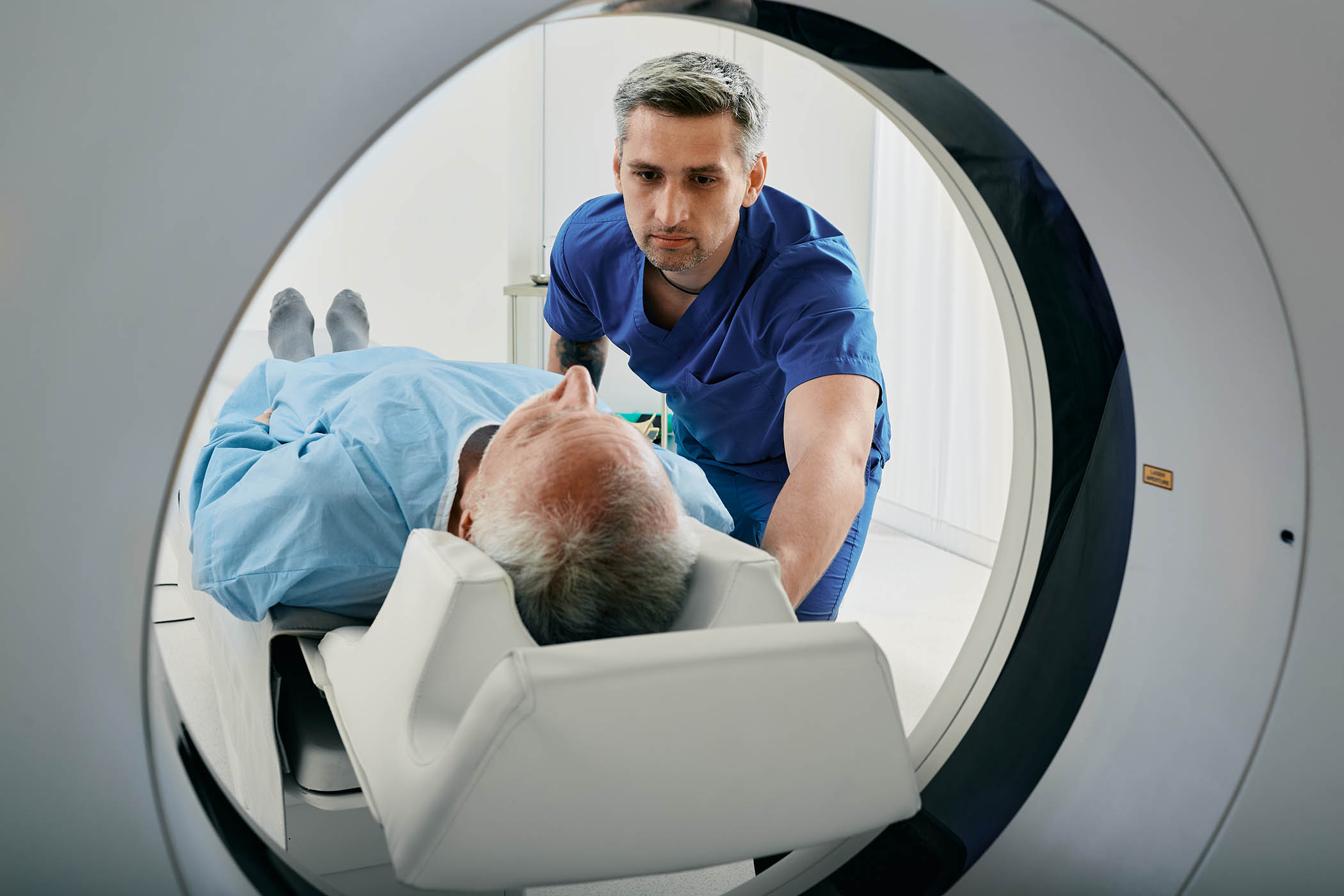
A research team from University College London (UCL) has established how the NHS could double the number of patients it diagnoses with dementia by using faster brain scans.
Nearly a million people live with dementia and more than 200,000 are diagnosed each year by GPs and memory clinics. But fewer than 40,000 get an MRI scan to confirm the diagnosis and establish which form of the disease a patient has – a prerequisite for emerging treatments.
MRI scans typically take between 20 and 40 minutes in NHS hospitals. The UCL team managed to cut this to just over six minutes and their research, unveiled at AAIC, shows that by combining the fast scan with a blood test, clinicians can identify the type of dementia a patient has with the same level of accuracy.
The study examined scans of 85 patients, with some having standard MRI scans and others undergoing the fast scan. It reduced the scan time by 69% on average.
“We showed that very rapid scan was just as good for diagnosis as the conventional longer scan,” said Geoff Parker, professor of healthcare engineering at UCL. “A crude calculation suggests that we should be able to double the throughput.” The UCL team has applied for funding to translate their findings into concrete advice for NHS clinicians.
Dementia is believed to be caused by amyloids and other proteins, including tau, which build up in the brain and slow or cut off blood supply to neurons, ultimately killing them.
Some dementias may be avoidable if people quit smoking or drinking alcohol, lead a healthier lifestyle, wear hearing aids and have an active social life. Early diagnosis could identify who is most at risk when proteins build up in people in their 30s and 40s, but there are no practical tests for doing so.
Researchers from Queen’s University Belfast and Ulster University decided to look at the most visible part of the brain – our retinas, which are made up of neurons. They scanned the retinas of 45 adults aged 50 to 80 using adaptive optics, a high-resolution scan originally employed in astronomy that has been applied to medicine and is used already by some opticians.
Newsletters
Choose the newsletters you want to receive
View more
For information about how The Observer protects your data, read our Privacy Policy
The images can be used to track which neurons are dying due to lack of blood supply.
Imre Lengyel, a professor at the Queen’s school of medicine, and his colleague Julie-Anne Little, professor of optometry at Ulster University, discovered that patients who had high levels of dementia-related proteins also had lost a greater proportion of their fovea, a tiny area at the back of the eye responsible for our sharpest vision.
They detected the changes in people with normal memory and thinking abilities, suggesting changes in the eye may happen before people develop symptoms.
“Visual impairment is an independent risk factor for dementia,” Little said. “When you lose that sensory ability, it accelerates your potential for cognitive decline.”
The research team needs to validate its findings by checking whether people they predicted were at risk of dementia actually experience a cognitive decline, which they hope to do with a follow-up study within the next three years.
Michelle Dyson, chief executive of Alzheimer’s Society, said that people would not expect to face years of uncertainty about whether they had cancer. “We shouldn’t accept it for dementia either.” Ministers should “treat dementia like the national priority it needs to be”, she added, by introducing “clear national targets for early and accurate diagnosis and diagnosis waiting times”.
What are your thoughts on this? Send us a letter to letters@observer.co.uk
Photograph by Getty Images