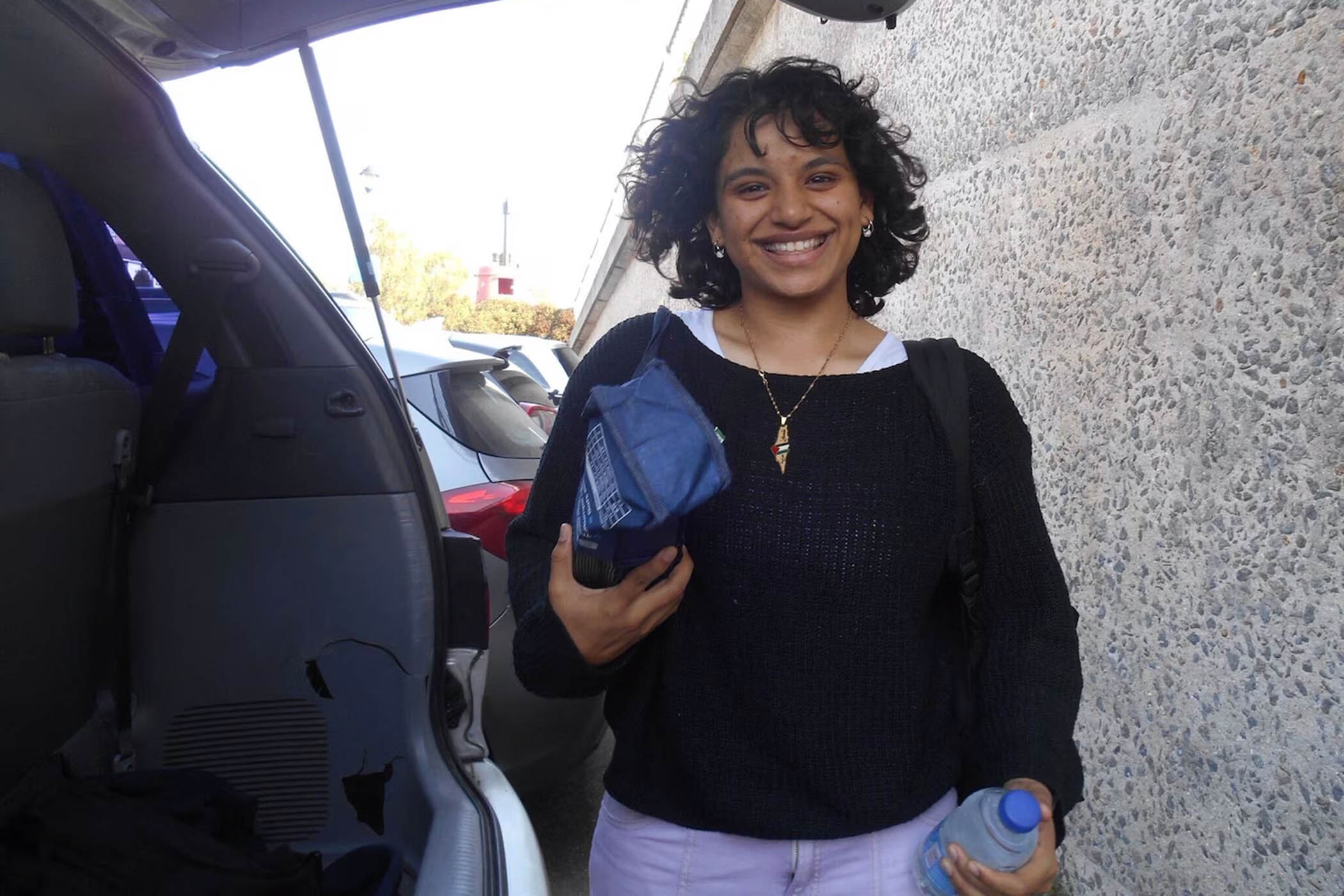


Today is day 50 of Qesser Zuhrah’s hunger strike, following more than a year at HMP Bronzefield in Surrey, where she has been awaiting trial.
In a note written from a hospital bed after being transferred by ambulance, she said the guards had asked why she was refusing food. “Perhaps they were shamefully reflecting on what the chain on my right arm and the IV drip on my left meant,” she wrote.
“All we want is to be able to go home to safety, to freedom and to dignity. Home for us and home for the Palestinian people.”
Counterterrorism police arrested Zuhrah in November last year on suspicion of aggravated burglary, criminal damage and violent disorder as part of a Palestine Action raid on a UK research centre owned by Israel’s largest arms manufacturer, Elbit Systems.
To some she is a political prisoner taking a stand against the UK government’s alleged complicity in a genocide. To others, she is a misguided youth suspected of terrorism, risking her life in an act of gesture politics.
There is now an imminent risk that Zuhrah, who turned 20 in custody in January, will become the youngest person to die while on hunger strike in a UK prison, and the first to do so without a trial or conviction.
“We’ve had conversations about all the possible outcomes – and about death – many times, with the prison table between us and both of us scared,” said Ella Moulsdale, Zuhrah’s best friend and fellow student at University College London.
“There’s always the risk of death,” Moulsdale added, saying her friend’s resting heart rate had reached 127 beats per minute (a normal rate is 60 to 100 bpm). “You’re starving your body to a point that it should never go, and it is not meant to, a point where the body starts eating itself.”
Zuhrah, a second-year social sciences student, has four younger brothers, one of whom, Salaam Mahmood, 19, is being held at HMP Belmarsh on allegations of involvement in a Palestine Action raid. She has not spoken publicly about her parents.
Moulsdale, 21, is acting as next of kin. She said that when the pair met “she just had this infectious energy – a bubbly and fun 19-year-old [who] just changed the energy in a room.
Newsletters
Choose the newsletters you want to receive
View more
For information about how The Observer protects your data, read our Privacy Policy
“Everybody knows her as a brave person, which she is, but she will phone me from her prison cell and be like: ‘Hello, there is a spider. What do I do? Help me get it out’.”
Zuhrah is one of five hunger strikers aged between 20 and 31 awaiting trial for alleged offences linked to Palestine Action campaigns. All have refused food for at least 42 days and are experiencing increasingly serious health complications. Among them is Teuta Hoxha, 29, who is on day 43 of her second hunger strike in recent months. Amu Gib, 30, is on day 50 and Heba Muraisi is on her 49th day.
The government has refused to engage with the prisoners or their lawyers over a list of demands which includes release on bail, an end to what they describe as censorship of their communications, the reversal of the decision made to proscribe Palestine Action as a terrorist organisation and the shutting down of Elbit’s various operations in the UK.
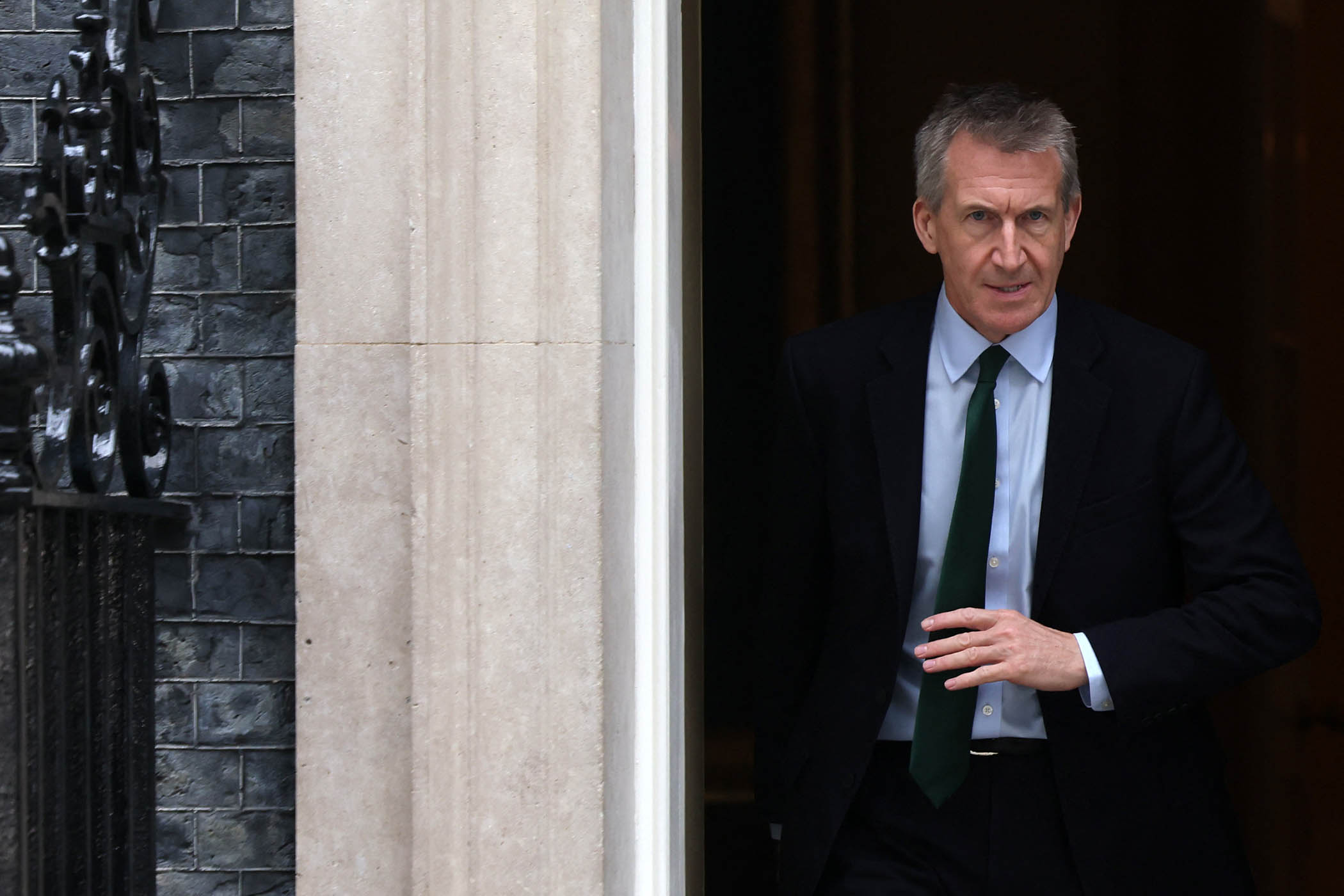
Lawyers for the prisoners are considering legal action, arguing that Ministry of Justice (MoJ) guidelines for hunger strike procedures mean that a government representative – a senior civil servant or a superior – must meet with them or agree to work through a mediator to resolve the situation. James Timpson, the prisons minister, has sought to brush off pressure from the campaign, which erupted last week when the hunger strikers’ families held a press conference detailing their declining states.
Timpson said the prison service was “very experienced at dealing with hunger strikes” and that there were an average of more than 200 a year in UK prisons. This figure is understood to be based on data for “refusals to eat”, which covers all prisoners who have refused food for 48 hours, or fluid and food for 24 hours.
Eight men died in prison between 1999 and 2022 after refusing food, according to government figures. No women died during that time.
An MoJ source said that the prisoners had been remanded in custody by a judge and that it was not for the department to interfere.
One senior source in the prison system said: “They are over 40 days in. They could be doing themselves irreparable damage. I’m really worried that quite a lot of people are encouraging some really young people to do some stupid things. They’ve painted themselves into a corner, these kids,” he added, saying that the government was taking the matter seriously but showing no signs of blinking first.
It is not clear whether a woman has ever died in a UK prison while on hunger strike as an act of protest, but Mary Jane Clarke, a suffragette, died on Christmas Day in 1910, two days after spending a month in prison for smashing a window. She went on hunger strike and was force fed, which is thought to be linked to her death from a brain haemorrhage. Forced feeding of prisoners who are capable of rationally refusing food has been considered an act of torture since the 1970s.
Kerry Moscogiuri, of Amnesty International UK, called on the government to “do everything in its power to bring an end to this terrible situation”. Moulsdale, who is in almost daily contact with Zuhrah, said she believed her friend was committed to continuing the hunger strike, but added: “I want her to live. I really want her to live. And I know she wants to live.”