

Is the recent rise in UK unemployment cyclical or structural? Or, in non-economist speak, will higher joblessness prove temporary, or will it persist even as the economy improves? Were it not for recent events in the Middle East, this may have been the main economic debate of the month.
On one side of the debate sits the Office for Budget Responsibility (OBR), the government’s official forecaster. Its latest forecast, published last week, has the unemployment rate rising to 5.3% – the highest level in more than a decade. But, importantly, it doesn’t expect this to last. The OBR thinks it will fall back towards 4.1% by 2030. Under this view of the world, the uptick in unemployment largely reflects temporary (or “cyclical”) weakness in the economy, and something that should fully unwind as demand in the economy grows.
This view is not universally held. Other economists think that at least some of the rise in unemployment is due to structural changes in the labour market. This boils down to a view that the equilibrium rate (sometimes called the “natural” rate) of unemployment has increased, due to a hangover from the pandemic, government policy, or something else. In this world, we should expect unemployment to settle at a higher rate in the medium term. This is the view of the Bank of England, which doesn’t expect unemployment to drop far below 5% over the next few years. Forecasters at the National Institute of Economic and Social Research (NIESR) think something similar.
Economists, as is so often the case, can’t agree. It doesn’t help that the main data source in this area – the labour force survey – has become painfully unreliable since the pandemic. But it matters who’s right. For one, the difference between the scenarios could be as much as £20bn a year of extra government borrowing. For another, there’s the direct impact of unemployment on those who’d like a job but can’t find one.
We may worry in particular about young people, given the lasting impacts an extended spell of unemployment could have on their career and earning prospects. And the available evidence suggests that young people are indeed being hardest hit. The employment rate of 21- to 24-year-olds fell by 2.5 percentage points between 2023 and 2025, compared with just 0.2 points for 50- to 64-year-olds. You could read this as supporting the OBR’s cyclical view.
In a downturn, when demand is weak, companies often choose to stop hiring rather than lay off existing staff. This means that higher unemployment (or lower employment) often shows up first among younger groups, who are more likely to be starting out in the labour market. Or you could read this asconsistent with government policy having structurally changed the labour market. After all, recent changes to employer national insurance contributions and the minimum wage have disproportionately increased the cost of hiring young people. It wouldn’t be a big shock if companies responded by employing fewer of them. Or you could take my approach: nod sagely, bemoan the lack of conclusive evidence and avoid taking a firm view either way.
If I were the chancellor, Rachel Reeves, I may worry a that, in a recent survey of economists conducted by NIESR and the Centre for Macroeconomics, not one respondent was as optimistic as the OBR about the UK’s unemployment prospects. For now, the debate will rumble on. Come the autumn, the OBR’s forecast – and therefore the fiscal numbers – could look rather less benign.
Ben Zaranko is associate director of the Institute for Fiscal Studies
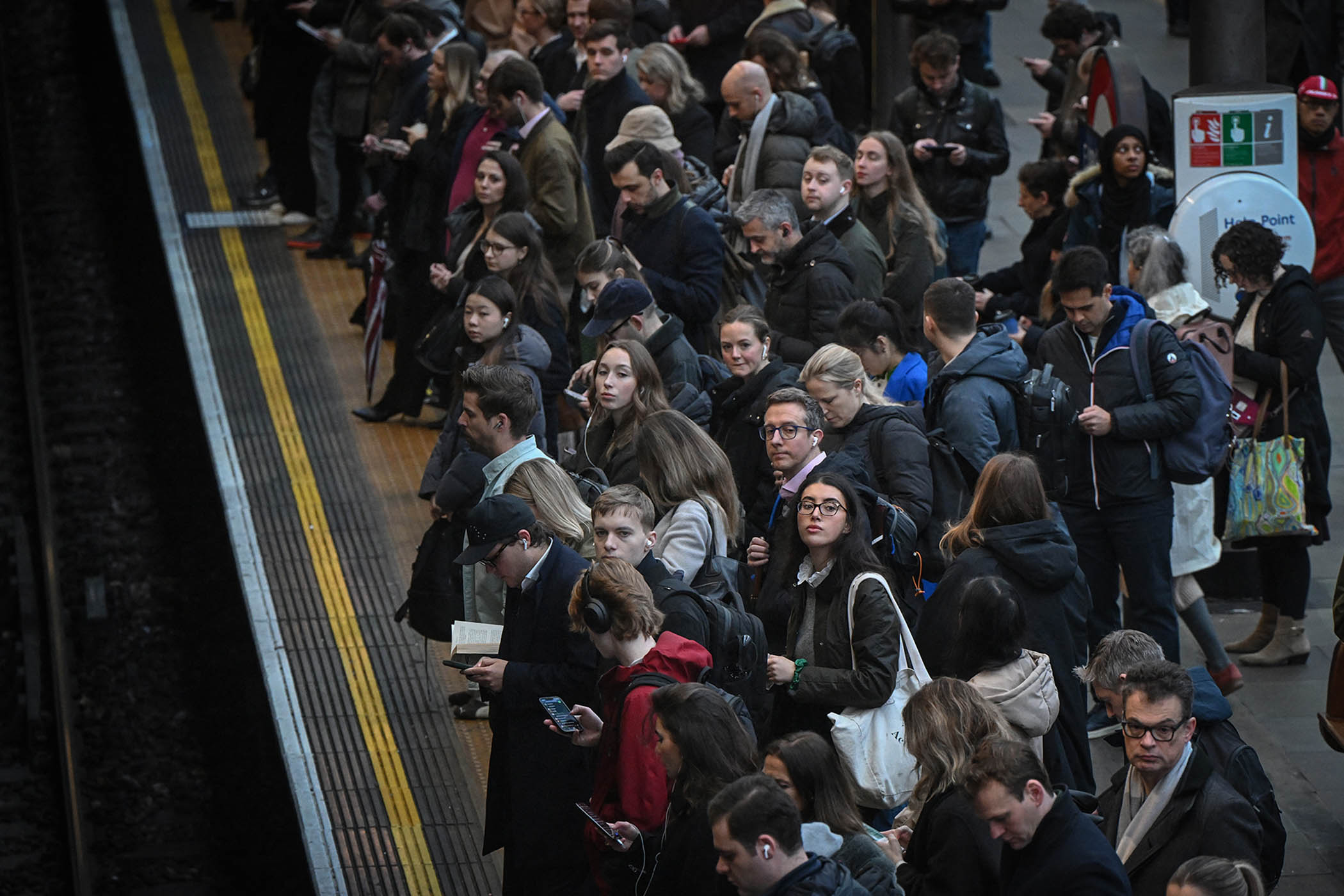
Photograph by Justing Tallis/ AFP via Getty Images
Newsletters
Choose the newsletters you want to receive
View more
For information about how The Observer protects your data, read our Privacy Policy