


Photographs by Andy Hall and Richard Saker for The Observer
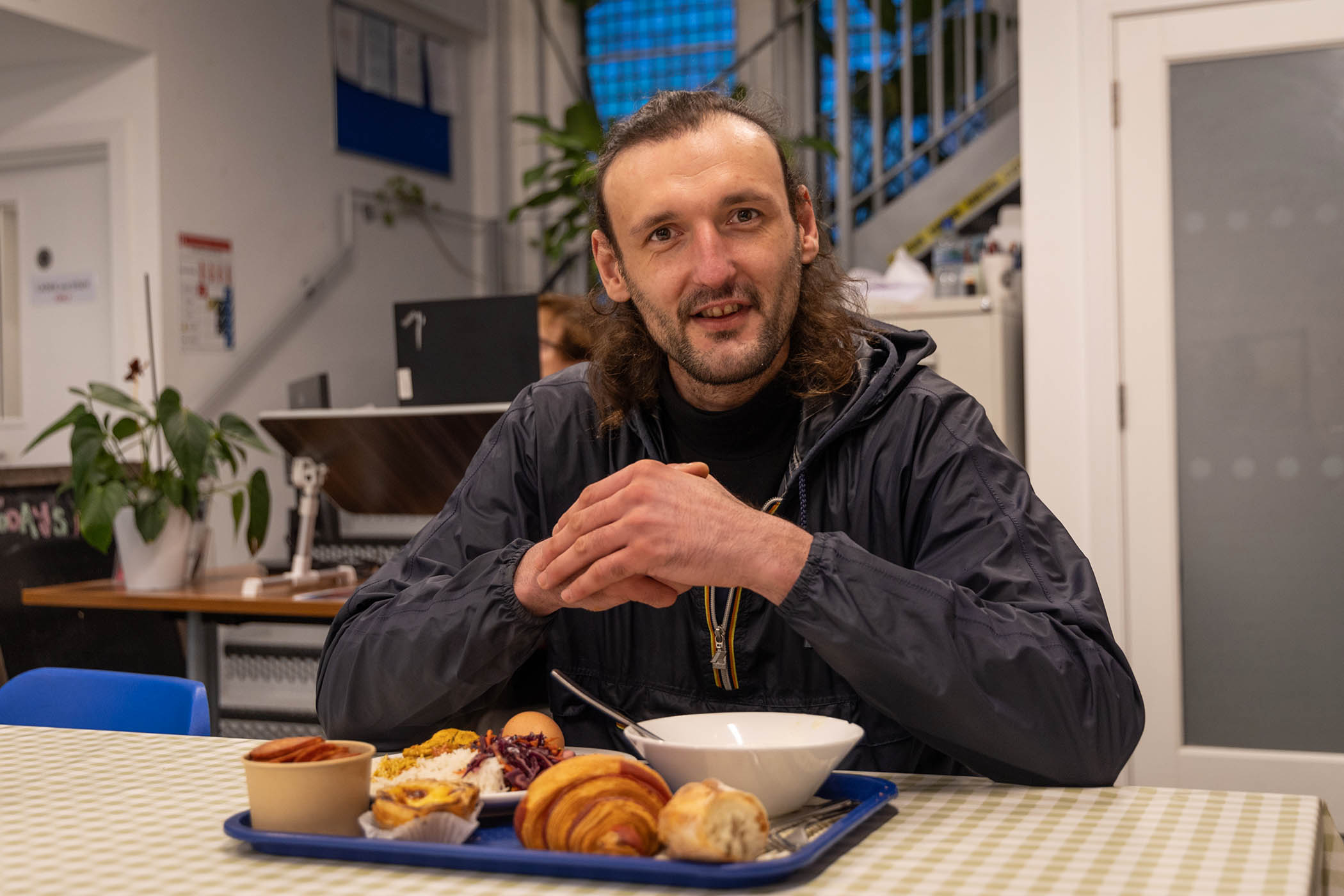
Kamil Szarek gets his morning coffee from Frank Lampard and at Christmas shared a dinner with other Chelsea players at Stamford Bridge. The 39-year-old played basketball for Poland as a teenager so being around elite sportsmen is no novelty.
Except that for the past five years, Szarek has been homeless. The coffees from Lampard were a gesture of kindness from the ex-footballer to a man he found sleeping rough; the dinner was organised by the Chelsea Foundation for people in the local community; and Szarek’s basketball is now limited to shooting hoops on his own at a park in Hammersmith.
Szarek is one of hundreds of regulars who come to the Upper Room at meal times, a Chiswick-based charity on the frontline of homelessness, and things are getting worse, according to manager Ashley Robinson.
When temperatures dropped at night to -7C in London early this month, the team could see the impact on people lining up outside the church where the Upper Room is based. “There’s fear in the air. A fear of not being able to cope with how bad it’s getting,” Robinson says.
At the start of the Covid pandemic in 2020, the government almost ended street homelessness overnight in England when it asked councils to house 37,000 people under the Everyone In scheme. Now, due to the mental health crisis, refugee evictions and a crackdown on rogue landlords, record numbers of people are living in temporary accommodation. Research from Crisis, the national homelessness charity, found that nearly 300,000 people and families and individuals are sofa surfing, living in hostels or refuges, or rough sleeping, like Szarek.
For nearly a year, he says, he has been squatting in an empty house. There’s no electricity or heat and the windows are broken, but there is a toilet and running water. “I don’t have a carpet. I sleep in the kitchen,” Szarek says. “It’s much better than the outside.”
If someone had helped Szarek deal with his problems earlier, he may have had a different path to take. That’s what Crisis is trying to do, teaming up with local authorities with an approach called Built for Zero – a data-driven framework that helps communities attend to the needs of their homeless population.
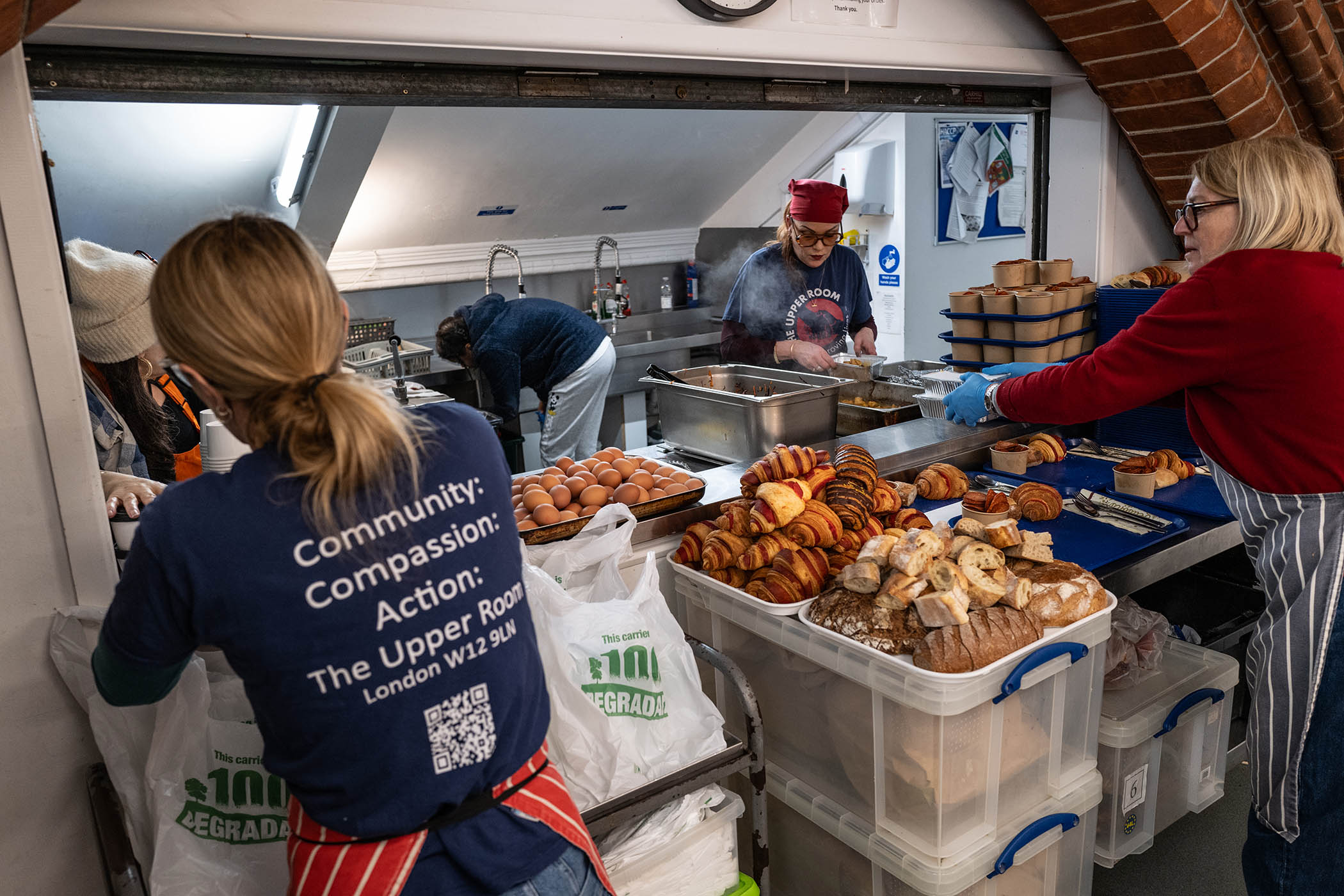
Volunteers at the charity the Upper Room prepare evening meals at its HQ in west London
A pilot project in Halifax has already seen impressive results. Calderdale council has reduced the number of people in temporary accommodation by a quarter, while neighbouring areas have all seen numbers rise. It’s the first time the project has been tried in the UK, although it has already been successful in the US, Australia, Denmark and France.
Since Calderdale council began working with Crisis on Built for Zero in July 2024, there has been a 34% drop in the number of households in temporary accommodation, including a 37% decrease in the number of children.
Newsletters
Choose the newsletters you want to receive
View more
For information about how The Observer protects your data, read our Privacy Policy
Across Yorkshire, the number of households in temporary accommodation has been rising, up overall by 8% – with jumps of 69% in Leeds and 25% in Bradford, from April-June 2024 to the same period in 2025. The figure in Calderdale was down 24%.
Is it expensive? Quite the reverse: by September last year, Calderdale had reduced spending on B&B accommodation by £2.18m – a 79% drop.
Every Monday morning, the Built for Zero team meets at Calderdale’s sandstone customer centre. They have a “by name” list of everyone experiencing homelessness, and try to gather as much data as they can on each person to understand the problems they face.
“We have a focus list now of about 10 people, 10 households,” says Heidi Waters, housing lead at Calderdale council. They focus on 10 people at a time and then move on to the next group. “And we have a discussion – what are we going to do this week? How are we going to help this family or this individual?”

The number of those in temporary accommodation in Halifax has been cut by a quarter
The intense focus on a small cohort is supported by work with the NHS, other council departments, and the Department for Work and Pensions.
“The problem is not always about housing,” Waters says. “It could be about mental health, it could be about addiction, it could be a benefits issue.”
Approaches such as this have reduced homelessness in Bakersfield in California and in Medicine Hat in Alberta, which in 2021 managed to achieve “functional zero”, where three or fewer people were experiencing homelessness.
Another method Calderdale uses is prevention. Waters mentions the case of a family with eight children who had been served with an eviction notice by their private landlord. It would have cost £43,000 to house them in a bed and breakfast, but the council paid the landlord £500 to allow the family to stay another three months, until their social housing was ready.
“It sounds like common sense, but sometimes systems don’t allow us to [take action],” says Lisa Naylor, head of Built for Zero at Crisis.
“How do we remove blocks within systems? Things like sharing budgets or being able to draw down on other pots of money.
“If the NHS, adult social care and homelessness can share budgets, that would remove loads of barriers. It’s a long-term approach. If it was simple, somebody would have done it already.”
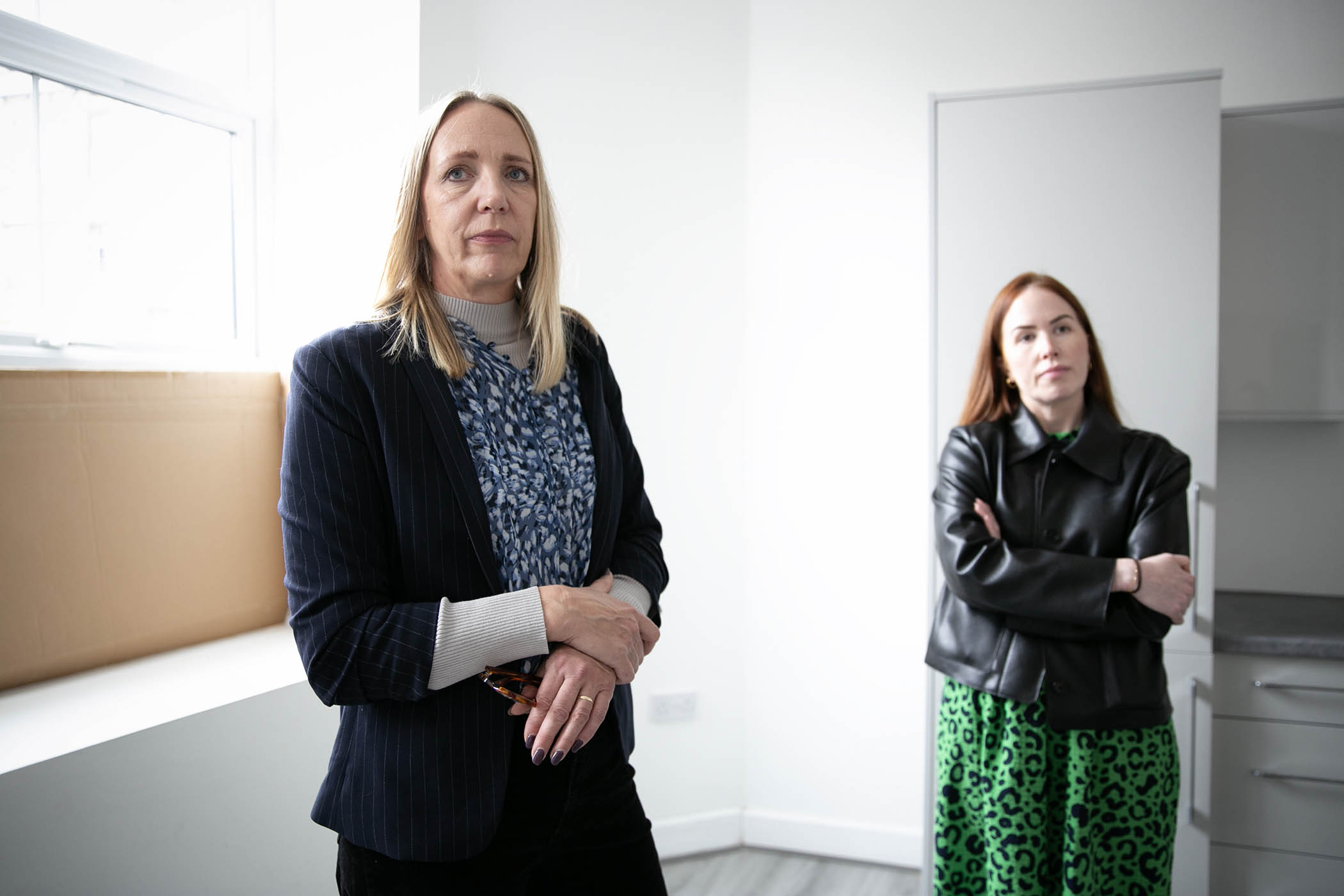
Lisa Naylor, left, head of Built for Zero at Crisis, and Danielle Wilson, homelessness operations manager
Built for Zero may not work for every local authority. Waters and the Calderdale team say that their task is made easier by having deep local knowledge of the relatively small community of about 400 people, something that would be harder in London.
The surge in homelessness has been caused by systemic and ongoing problems. Asylum seekers are evicted from Home Office accommodation after gaining refugee status and, since mid-January, that notice period has been returned to 28 days after a temporary extension to 56 days.
The government has also tightened the laws around supported exempt accommodation (SEA) in England and Wales, which is exempt from the housing benefit cap, after evidence showed that rogue landlords were exploiting it. But young rough sleepers have been evicted from SEA rooms after councils withdrew funding, and even legitimate providers have left the sector. New Horizon Youth Centre, the only London day centre helping under-25s, now has barely a fifth of the accommodation options it used to refer young people to, according to Polly Stephens, its head of policy.
She believes Built for Zero is an important method for addressing homelessness, alongside others. “There’s lots of models that fix stuff and they all need to exist,” Stephens says. “You probably need all of them.”
Could the Built for Zero approach have helped someone like Szarek? He says he fell into homelessness after experiencing depression. “I had problems from gambling, alcohol and drugs,” he says. “I am younger. I am a party guy.” He slept in parks because he didn’t care what happened to him.
But when Szarek did eventually ask for help, his big problem was that despite having lived in the UK since 2014, he had never applied for settled status – the right of EU citizens to remain after Brexit. The agency helping him did not feel it was appropriate for them to help him apply, and he fell out of the system. Had a team like Calderdale’s existed, he might have been off the streets.