


Janine Wiedel first came across the squat on St Agnes Place when she was searching for a part for her Volkswagen in an adjacent scrapyard. It was the early 1980s, and the two rows of Victorian terraced houses down a side street in Kennington, south London, had already been occupied by squatters for more than a decade. “Each time I passed, I’d keep saying, ‘Ooh, I’ve got to stop and find out more about it,’” Wiedel recalls. “It was alternative, it was gritty, it was edgy. Sometimes it felt a bit threatening, I guess, but it always fascinated me.”
Wiedel has spent her whole career focusing on protest movements and alternative ways of living. In the early 1970s, after moving to London from California, she spent several years photographing Irish Travellers. In later decades, she documented Greenham Common and the refugee camps in Calais.
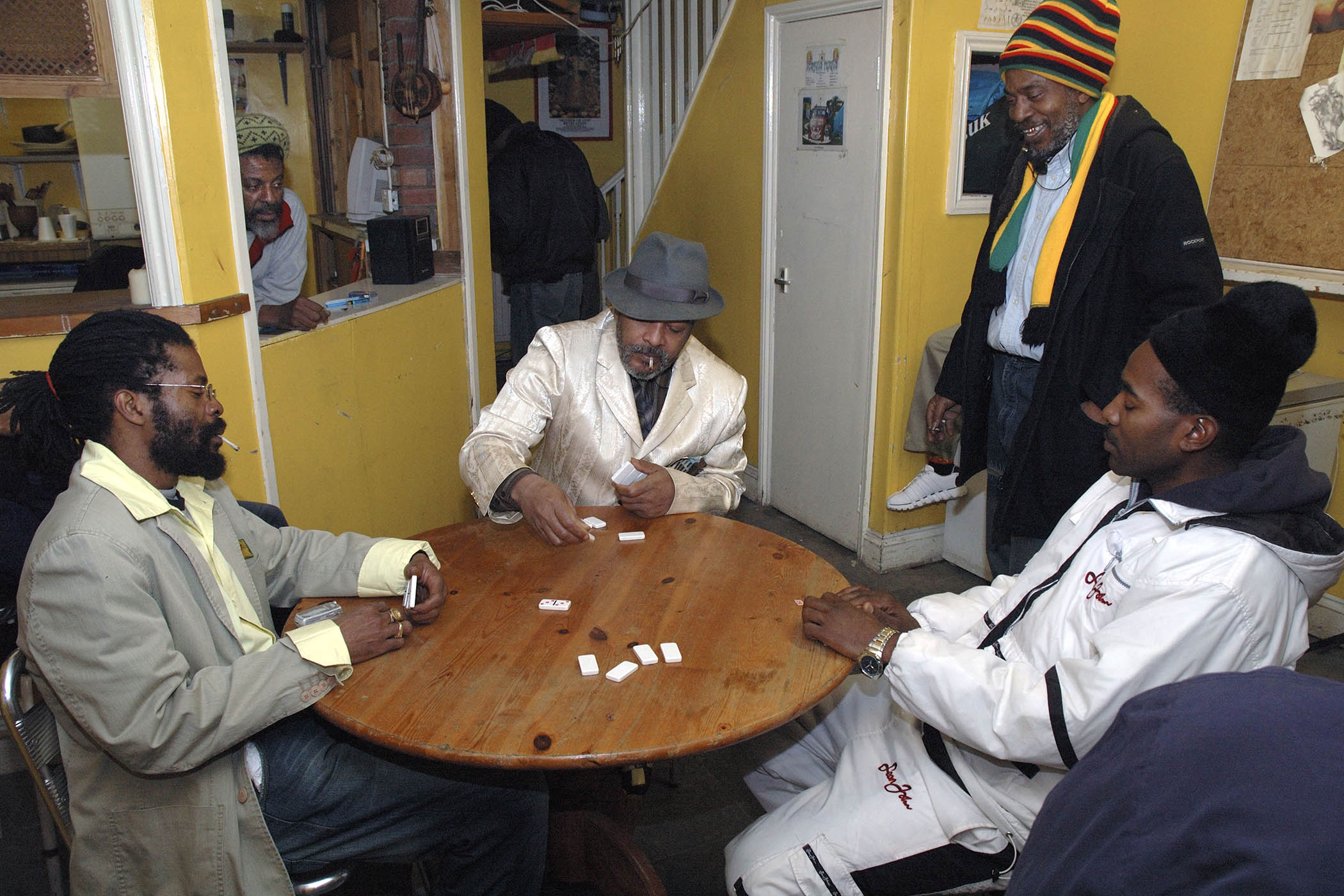
Dominos at the Rastfarian community
“The main thing I’ve always been interested in is communities struggling to retain a way of life despite society’s pressures,” she says. “I’m trying to show the strength of people against the odds.”
In that sense, St Agnes Place seemed like an ideal subject for the award-winning photographer. In 2003, she read a news report that the squatters were under renewed threat of eviction, after several previous attempts by Lambeth council to raze the 22-building terrace for redevelopment. “That’s when I thought, I can’t delay any more. I’ve got to find out about it.”
The first thing about the squat that struck her was its diversity. “Many of the squats in London at that point were quite white, middle class, leftwing,” she says. Some of the residents had lived there for decades. Other households were more transient, providing refuge for people in difficult situations. “It was like a community of communities.”
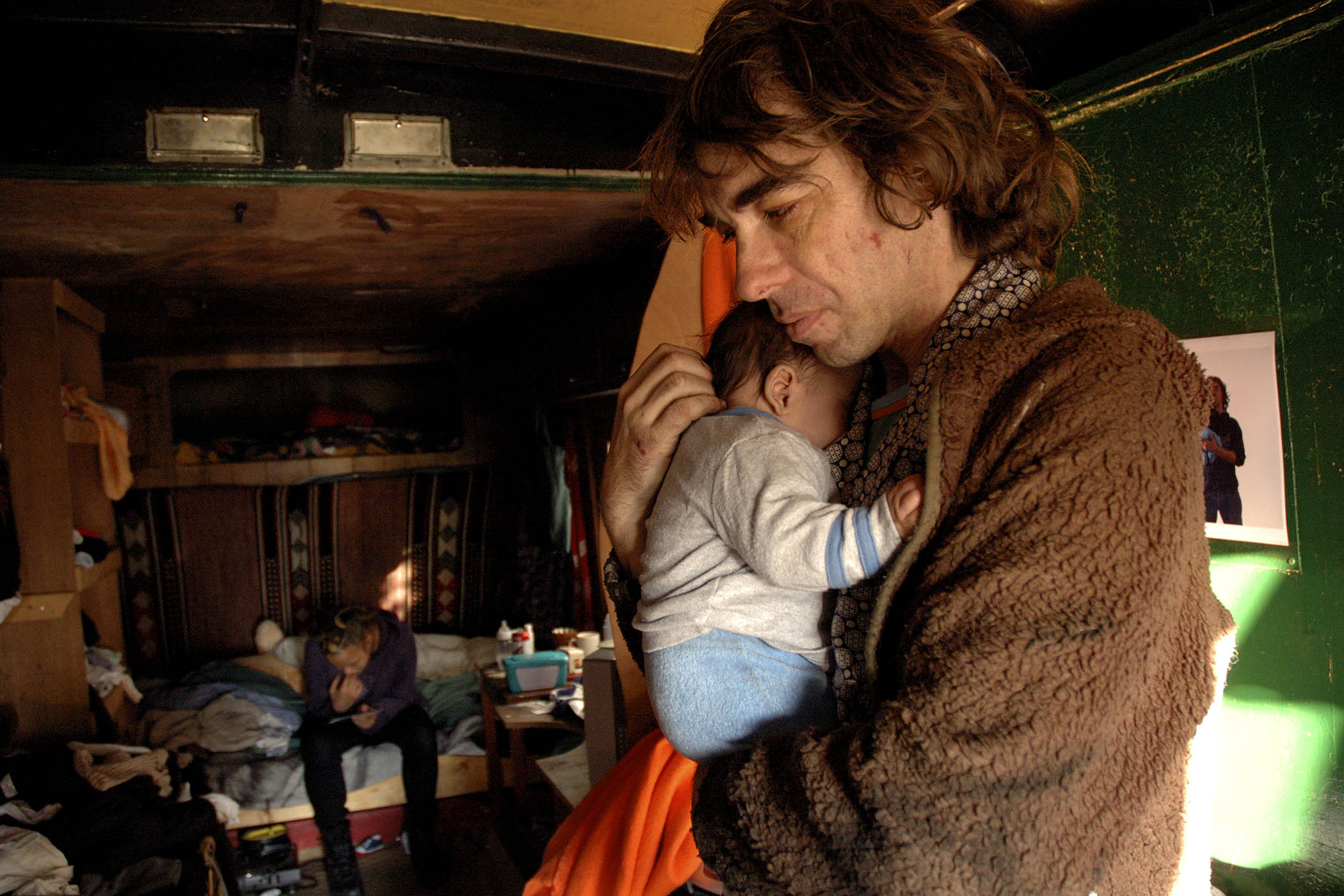
A baby born in a converted horse lorry on St Agnes Place
Initially, Wiedel was met with wariness. Given the threat hanging over the street, a stranger with a camera was treated with suspicion. “I know they sussed me out very heavily,” she says. But as the community opened up to her, Wiedel got the impression that it was “totally unjudgmental”.
Wiedel’s new book St Agnes Place Squat, covers a four-year stretch, through the mass evictions in November 2005 up to the eventual demolition of the houses in 2007.
Some of the residents were existing quite happily on the margins of society, scraping together enough money to meet basic needs. Others were more integrated. One woman born and raised in the squat was studying law at Guildhall while her siblings worked as engineers or accountants. A few spoke of tensions, but the overall impression was of a supportive community. Bruno, a juggler who was estranged from his family back in Portugal, had found an alternative source of kinship at St Agnes. “My friends are now my family,” he said.
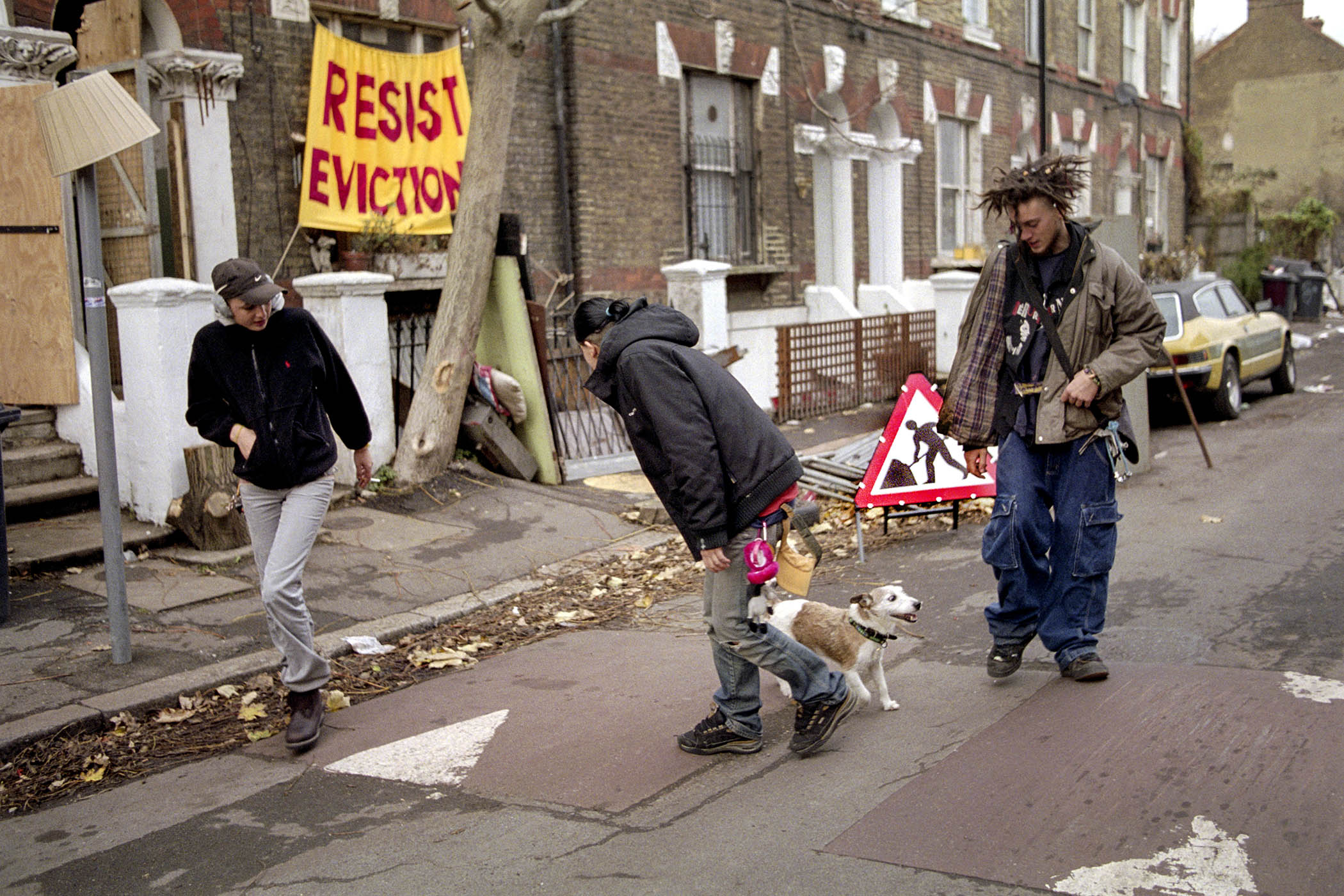
The squatters resisted the council’s attempts to evict them
It was also a creative and politically engaged environment, home over the decades to artists, musicians, writers and anarchists. Two radio stations operated from the squats, and for a period in the late 1970s Bob Marley lived at the Rastafarian temple at one end of the block while recording Exodus.
Before the evictions in 2005, a local Lib Dem councillor described the residents of St Agnes Place as “parasites”. In reality, the squatters had fixed up the buildings – handsome Victorian houses, originally built for servants of Buckingham Palace, which had been left to decay by Lambeth council and earmarked for demolition.
The squatters pushed back hard against the council’s advances. By the time Wiedel turned up in 2003, however, eviction seemed inevitable. And so it came to pass. On 30 November 2005, 200 bailiffs and police officers in riot gear descended on St Agnes Place and kicked the residents out, leaving 150 people homeless. According to Wiedel, many of them are still dealing with the trauma 20 years on.
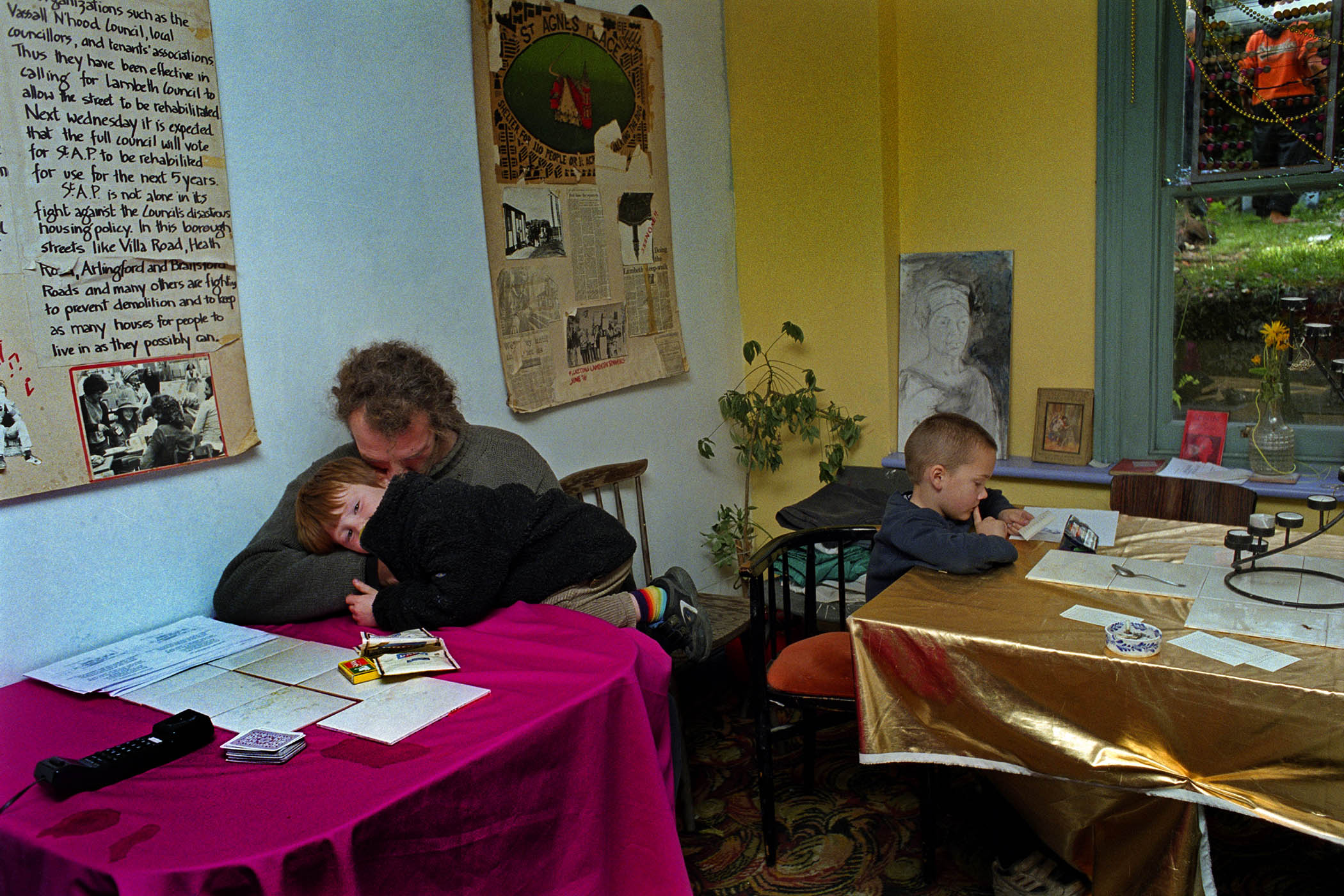
The basement cafe
The Rastafarian community centre persisted a little longer, but after a court battle and an arson attack, it too was shut down. By July 2007 the entire block of 22 houses – by then the longest-running squat in London – was demolished.
The fate of St Agnes Place is, sadly, a familiar story in a city that’s increasingly hostile to alternative ways of living. For decades after the second world war, squatting was a vital part of London’s creative life, sustaining artists such as Annie Lennox and Joe Strummer. In 2012, squatting in residential properties became a criminal offence.
Wiedel laments how the clampdown has affected the capital. “It is a lost London. That redistribution of unused spaces, independent of institutions and organisations, was very important.”
Today, the stretch of street that held the St Agnes squat is unrecognisable. “I actually tried to photograph it,” Wiedel tells me, “but it’s so bland and ugly, it’s unphotographable. The social housing is pretty dinky. The private housing is pretty awful. It’s nothing like the beautiful Victorian houses that were there before.”
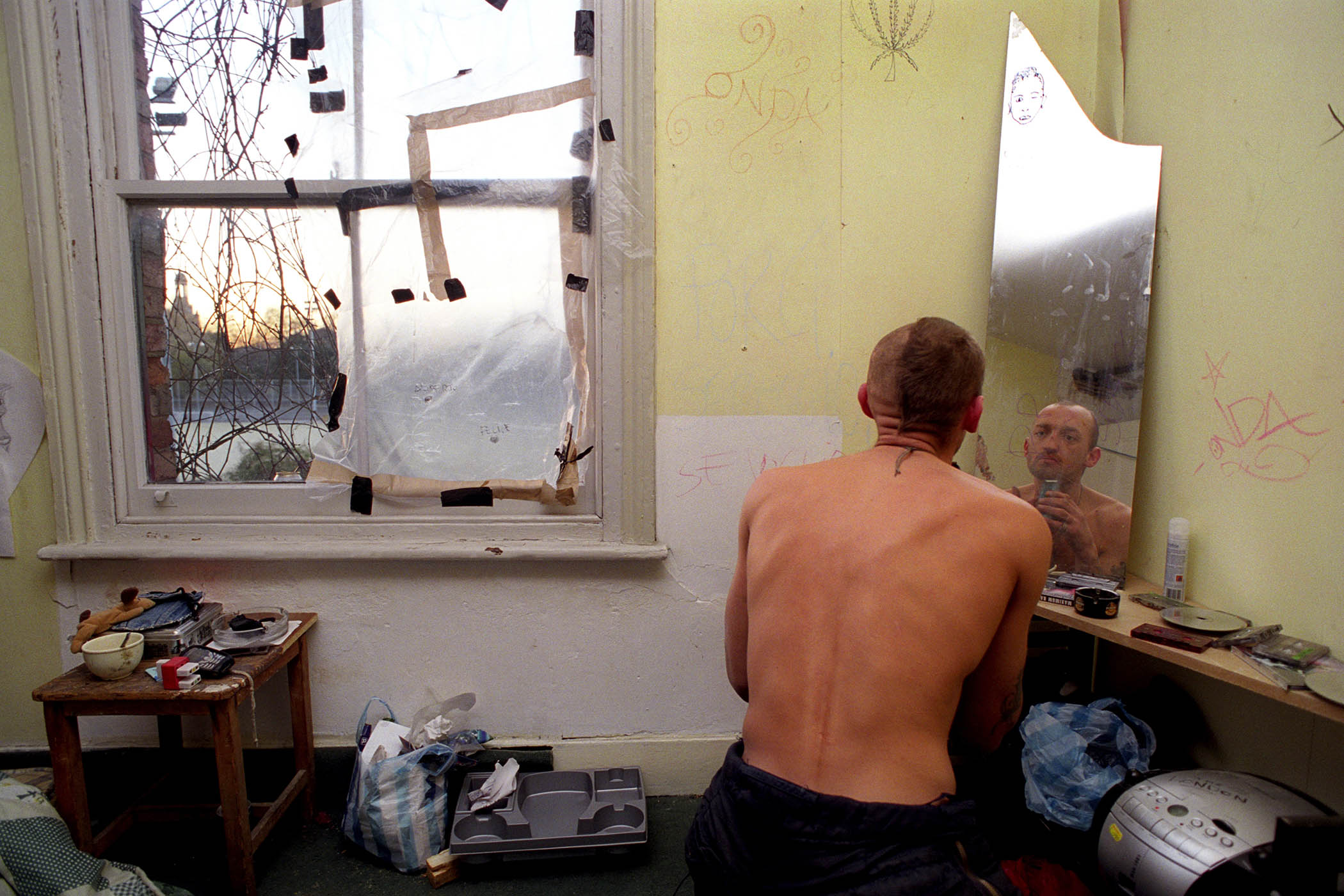
Inside one of the 22 houses
St Agnes Place Squat by Janine Wiedel is published by RRB Photobooks on 13 March (£28)