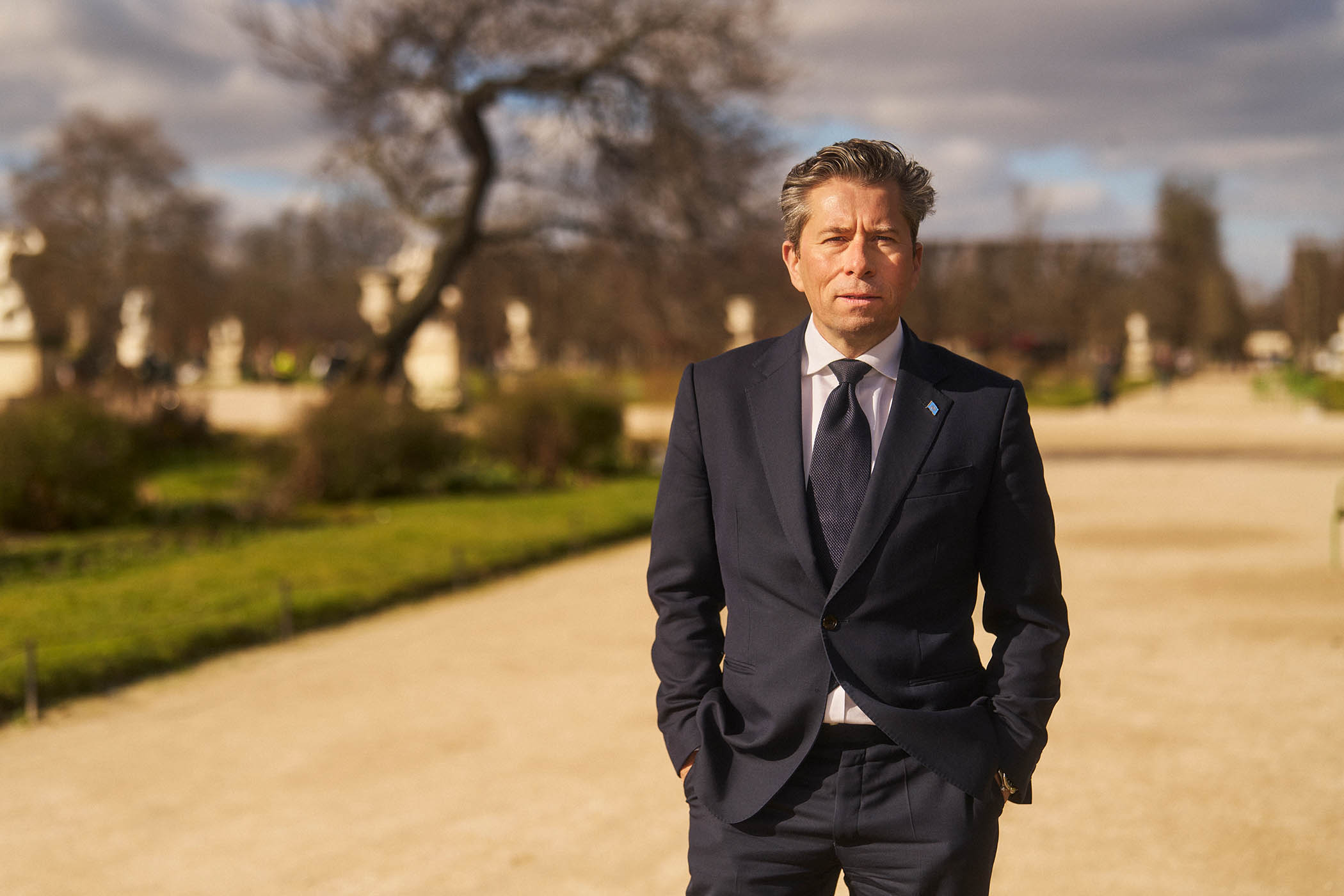
Portrait by Manuel Braun for The Observer
Tom Fletcher has a battered suitcase, packed and ready to go, that travels everywhere with him. “In the last year it’s been to Gaza twice, Darfur, twice. It's been across Myanmar, Syria, Lebanon, Haiti, it’s been to Goma in DRC,” says the UN humanitarian chief. “Half of the suitcase is full of navy suits and white shirts. The other half is packed with desert boots, insect repellent, mosquito nets, bite cream, electrolytes and protein bars. It’s one of the many weird things about my life.”
Fletcher, the former British ambassador to Lebanon and foreign policy adviser to three prime ministers – Tony Blair, Gordon Brown and David Cameron – is now both envoy and aid worker. Although he spends his time flying between the world’s most dangerous places, trying to bring relief to those who need it most, there is no body armour in his bag. “They normally give me the flak jacket when I get there, but I try not to wear it because it’s a terrible look if you’re wandering in with all that kit on.”
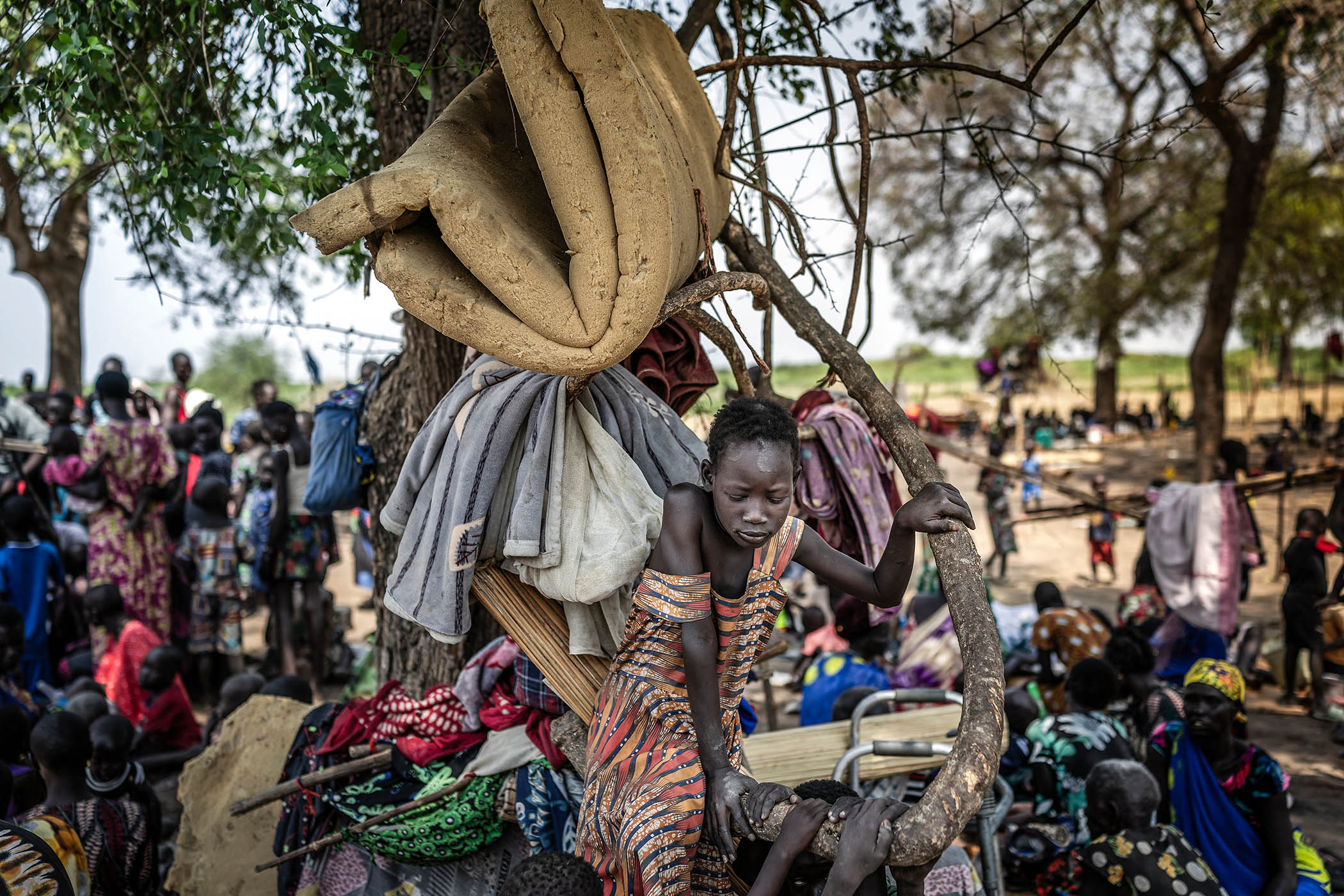
Two days after we meet, Fletcher is heading to South Sudan, where a brutal civil war has left millions displaced and starving. But the route he has chosen for our walk is in Paris, where he was posted as a young diplomat. It was, he says, “a transition point” in his life after four years of “adventures” in Nairobi. “I was living with my girlfriend [Louise], who is now my wife. We got married while we were here. We had our 30th birthdays here. Our first son Charlie was born in Paris. Compared to my life right now, it was a carefree time.”
The sun is streaming across the square when we meet outside L’Hôtel de Ville where Fletcher has been trying to persuade the mayor of Paris to help him raise $23bn to save 87 million lives globally. We wander through the Marais to his old flat on Rue des Archives. “Number 32,” he says, pointing up to the first floor. “How could anyone not be happy living there?” He leads me to the local caviste where he used to buy wine for dinner parties. The owner recognises him instantly and even remembers the type of Bourgogne he liked to drink.
As we continue down the street, Fletcher admits there are many “dislocating contrasts” in his job. He goes to swanky dinners to discuss how to stop famine and ricochets between grand ministerial offices and grim war zones. He does not want to be some kind of “white saviour” but nor is he afraid to call for more “moral courage” from the west. His official title is UN under-secretary-general for humanitarian affairs and emergency relief coordinator, but he sees his main role as “bearing witness” to the traumas and tragedies around the world. “My job isn’t to decide how many sacks of grain we put on a lorry on a certain day or whether we do immunisation or shelter, it’s to tell a story,” he says.
In Gaza, he was confronted by “apocalyptic” scenes. “It is desolate, absolutely smashed to bits, like when you’re watching a film from the second world war, and people are driving through cities that have been destroyed. Everything is just rubble. Our staff are using GPS to find their homes because there are no landmarks.” The first time he went last year, Fletcher says: “I asked the guy next to me – ‘why are the people so thin and the dogs so fat?’ And he said, ‘because the dogs are eating the corpses’.”
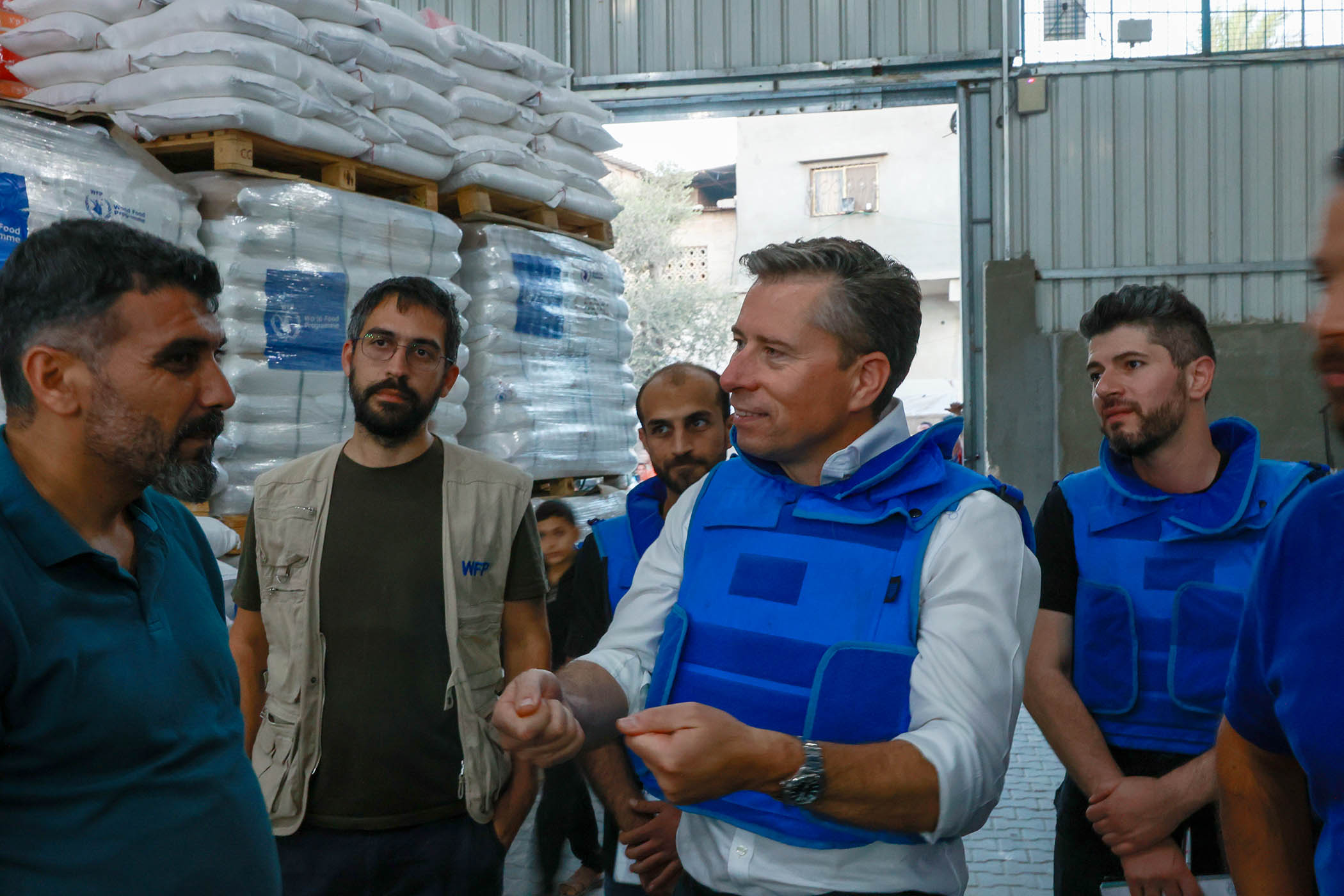
Fletcher at the Castle Bakery in Deir al Balah, Gaza, at the start of the ceasefire last October
The ceasefire has helped, although hundreds of people have been killed since it came into effect last October and people are still living in “just appalling conditions”, he says. “We’re doing 1.6m hot meals a day, we’re getting kids back into school. We just finished a big immunisation programme for polio. We’re starting to clear the lakes of sewage that had developed because the sanitation had all been destroyed.” But it’s not enough. “The challenge now is how to literally rebuild, and then to rebuild hope.”
We walk past the Pompidou Centre, Richard Rogers’ iconic postmodern building, which is closed for reconstruction. The contrast with the scale of the task in Gaza, both physical and emotional, is stark. There are so many “horrifying” stories, Fletcher says. “I met a grandmother who had gone for her cancer treatment to the hospital. Her son who had taken her was hit by a sniper. Over three or four days he bled out on the road in front of her, because every time the doctors came to help, they were then also hit by snipers or drones.”
But he has also encountered astonishing human courage and kindness. “I had been in Nir Oz [the kibbutz targeted by Hamas on 7 October] the day before. A grandmother there had given me a bracelet and said, ‘find a grandmother, give it to her and say ‘we share a humanity’.” So he gave it to the Palestinian grandmother who had lost her son. The next time he returned to Gaza he visited the same woman, who was carrying bread still hot from a bakery opened by the UN. “She sniffed the bread then gave it back to me and said ‘take it to Nir Oz to the other grandmother’. So you see all this inhumanity but you also see humanity.”
Newsletters
Choose the newsletters you want to receive
View more
For information about how The Observer protects your data, read our Privacy Policy
The real humanitarian frontline is, Fletcher suggests, not the aid workers but “the people who are responding to these crises every day, looking after their neighbours”. He describes a woman he met in Tawila, a town in Darfur, a few weeks ago. “She’d escaped from El Fasher. She’d seen all her family killed in front of her. She’d then gone next door. Everyone was dead apart from a tiny, malnourished kid and she had picked up that child and had gone down the most dangerous road in the world. She’d been gang raped on the road. She’d had her leg broken by the militia, but people had scooped her and the baby up from the side of the road and brought them to us. I was able to hold that child – just two months-old – and know that it would live because of what she’d done.”
Throughout history, Fletcher says, there have been two “basic competing instincts” at work. “One is to compete for resource and one is to work together for it. The former turns up in the history books and in politics but it’s that sense of solidarity and coexistence which is actually the stronger instinct.” Now though, “it’s a world where people are getting more transactional, and where the autocracies and the strong men are shouting much louder”.
US president Donald Trump treats foreign policy like a property deal and despises international organisations, he says. “There is a difference between statecraft and ‘real estate craft’,” Fletcher adds. “In statecraft, we’re all about institutions. ‘Real estate craft’ is about personalities. They love the cliffhanger, the sense of disorder, the unpredictability. Whereas we in statecraft are all about being consistent and calm.”
What does he think about the president’s Board of Peace, which met for the first time in Washington last week? He distinguishes between the organisation set up to oversee the reconstruction of Gaza, which he supports, and the evolving “big strategic-level” body which is seen as a rival to the UN. “I’m completely zen about the idea of people trying to bring more peace to the world. We badly need it, but we’re a bit unsure about where that’s going,” he says. “The UN is the UN.”
Fletcher was an early advocate for social media during the Arab Spring, “but at the moment, it’s been weaponised against us. It’s dividing people. It’s making the lives of the people I serve much worse, because they’re the ones who lose out in a world that’s becoming more selfish, cruel and brutal.” Around the globe, including Britain, governments are slashing aid budgets to spend on defence. He insists that is incredibly short-sighted. “Unless you deal with these problems over there, they’re coming in your direction. You can’t put a tariff on a pandemic. You can’t build a wall big enough to keep out the billions of people who are going to flee climate change in the next decade.”
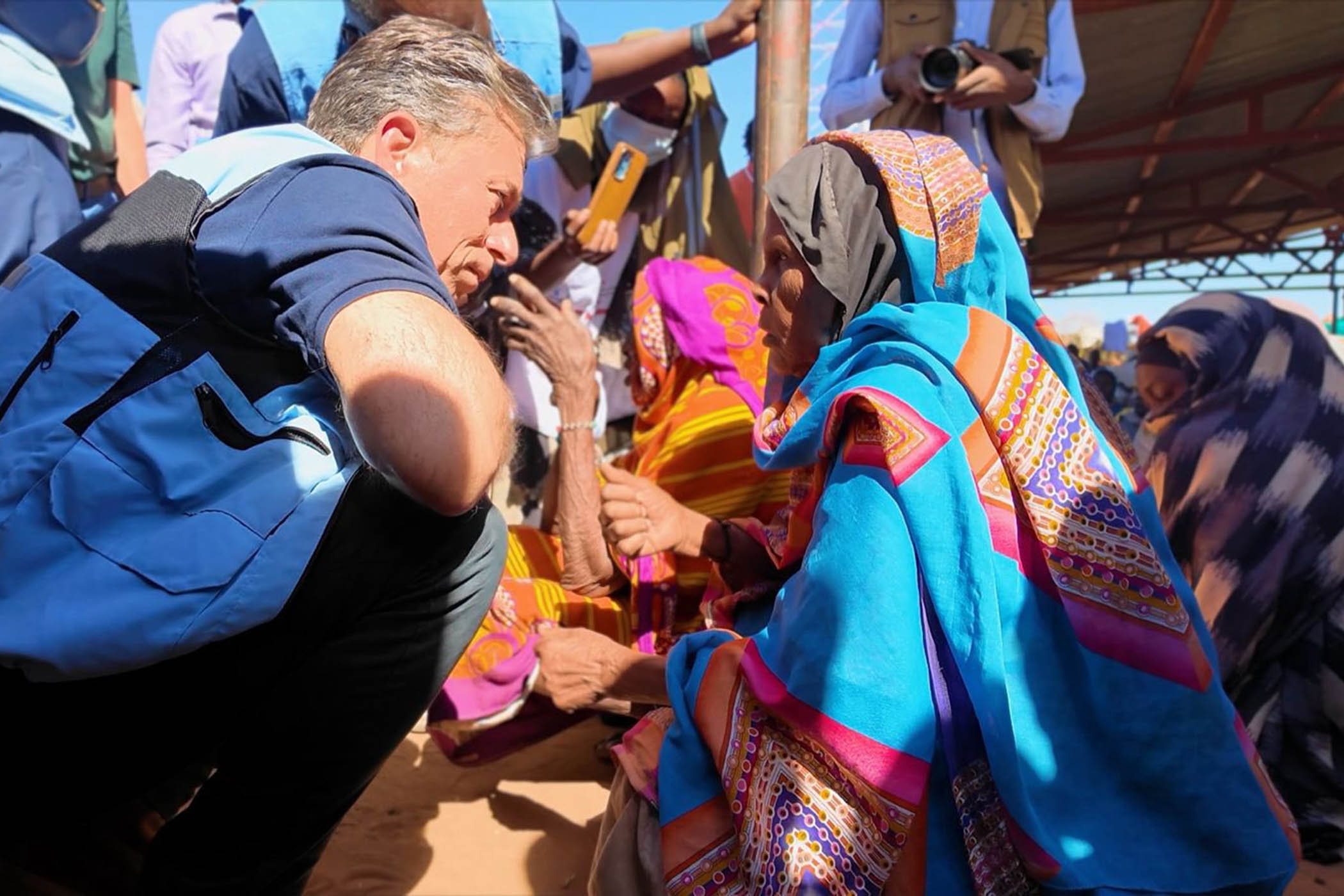
Fletcher in Darfur talks to women displaced by the Sudan conflict in November 2024
He pauses for a moment to point out the balcony near the Louvre where he once saw a naked man talking on the phone. “This is Paris,” he says laughing. Fletcher must suffer from constant emotional whiplash. He has been in the UN job for 16 months and admits he has “no idea” how he is going to survive the five-year term. “Even saying it makes me feel a bit stressed. But somehow you try and break it down into week by week, month by month, life by life. You know that story about the kid on the beach who is putting the starfish back in the sea. There are thousands of them and an old man comes by and says ‘you're never going to be able to help them all’. He says ‘but I helped that one’.”
The personal strain is as huge as the professional pressure. The UN headquarters are in New York but his wife and sons Charlie, 19, and Theo, 14, are in London, so even when he is not on the road his life is divided. “I go on a cycle where I’m away for three weeks, then I get to go home and see Louise and the boys for a long weekend and then head off again. That’s the hardest bit of the job, when I book my Uber for 5.30 in the morning and get into the back of the car, thinking it’s going to be another three weeks. That’s the time when I cry the most.”
‘I feel shame that this is the reality we are living in. I do feel guilty about it’
‘I feel shame that this is the reality we are living in. I do feel guilty about it’
Fletcher says he weeps a lot, although not any more when he is visiting disaster zones. “I’ve become much tougher in this job. To protect the idealist that’s still there on the inside I have to be much more thick-skinned and not get angry, but I do cry on the plane.” He has started therapy. “My wife’s a psychologist. She didn’t want me walking back through the door saying ‘I need to talk about Darfur’. She was rightly insistent on it.”
He has developed a routine to help him cope after particularly traumatic trips. “I watch the last 20 minutes of the film Bohemian Rhapsody on the plane.” It is the moment when Freddie Mercury goes home to his family and, together with the soundtrack, it is guaranteed to reduce him to tears. “I’ve also got my Spotify playlist and there’s a Shostakovich piano piece that gets me every time,” he says. “I’m trying to process the emotions. I often come out of these places saying – how can we tolerate this? Anger is part of the grieving.”
Fletcher says he is “always surrounded by death”. He meets constantly with those who have lost loved ones in the most appalling circumstances, and he is also having to make choices about which programmes to cut. “With the stroke of a pen – will 1,000 people die here or here?” he says. “I feel shame that that’s the reality we’re living in. I do feel guilty over it. I feel massively angry. But I come back to the Palestinian doctor in Gaza who wrote on the hospital wall – ‘tell them we did what we could’.”
We walk past the British embassy on Rue du Faubourg Saint Honoré. Fletcher says his 2022 novel, The Ambassador, which involves a murder in the historic building, is now being made into a TV series. He is still only 50 but has become much more aware of his own mortality as well as that of others. “It’s just a reality of this existence.” In Lebanon he received so many credible death threats that he planned his own funeral. “Now and again I look at my funeral playlist. There are currently 79 songs on the list. They change all the time. One is a Willie Nelson cover of Always On My Mind, which is about all the relationships that you neglect and don’t put enough time into and I feel that obviously now.”
As we cross La Place de La Concorde, and look down the Champs Élysées towards the Arc de Triomphe, Fletcher points out the hospital in the distance where Charlie was born. When he was working in Downing Street, he carried around a book in which he asked world leaders to write a message for his son. Everyone from Nelson Mandela to the Dalai Lama contributed. “Barack Obama said he'll either be very clever or very rich, depending whether he reads the book or sells the book,” he says. “Bill Clinton wrote his out in draft form first. George Bush took it away, and it was gone for six weeks. Mikhail Gorbachev wrote a long message all about thinking of the world you’re leaving behind. Gordon Brown said ‘exercise every day’.”
Fletcher believes the most important advice in the book comes from his grandfather. “He wrote ‘be kind, be curious, be brave.’” Even after seeing the most hopeless situations, the UN humanitarian chief still retains a fundamental optimism about the world. “In fact, this job is increasing it. I believe in humans and in my experience for every bastard there are a lot of incredibly kind, extraordinary people risking their lives to help others,” he says. “My optimism is surrounded by a much thicker suit of armour, but it’s still intact.”
Additional photographs by Ziad Taleb/UNOCHA, Mohamed Galal/UNOCHA