
The invitation from Donald Trump was delivered by the US president’s son-in-law late last year. In a phone call, Jared Kushner asked Keir Starmer whether he would be interested in becoming a member of the “board of peace” established to oversee the rehabilitation of Gaza.
Details did not materialise until the UK and other countries received the charter earlier this month – less than a week before a signing ceremony in Switzerland. Diplomats had known its remit would be wider than Gaza, but the scope of its mandate still took them by surprise. “It seems to be designed as an alternative, or if you’re being charitable, a complement to the UN,” said a senior diplomat. “It looks like a Trump alternative to the UN.”
If Starmer and other European leaders might once have considered joining the board, Trump’s renewed threats to annex Greenland precluded that.
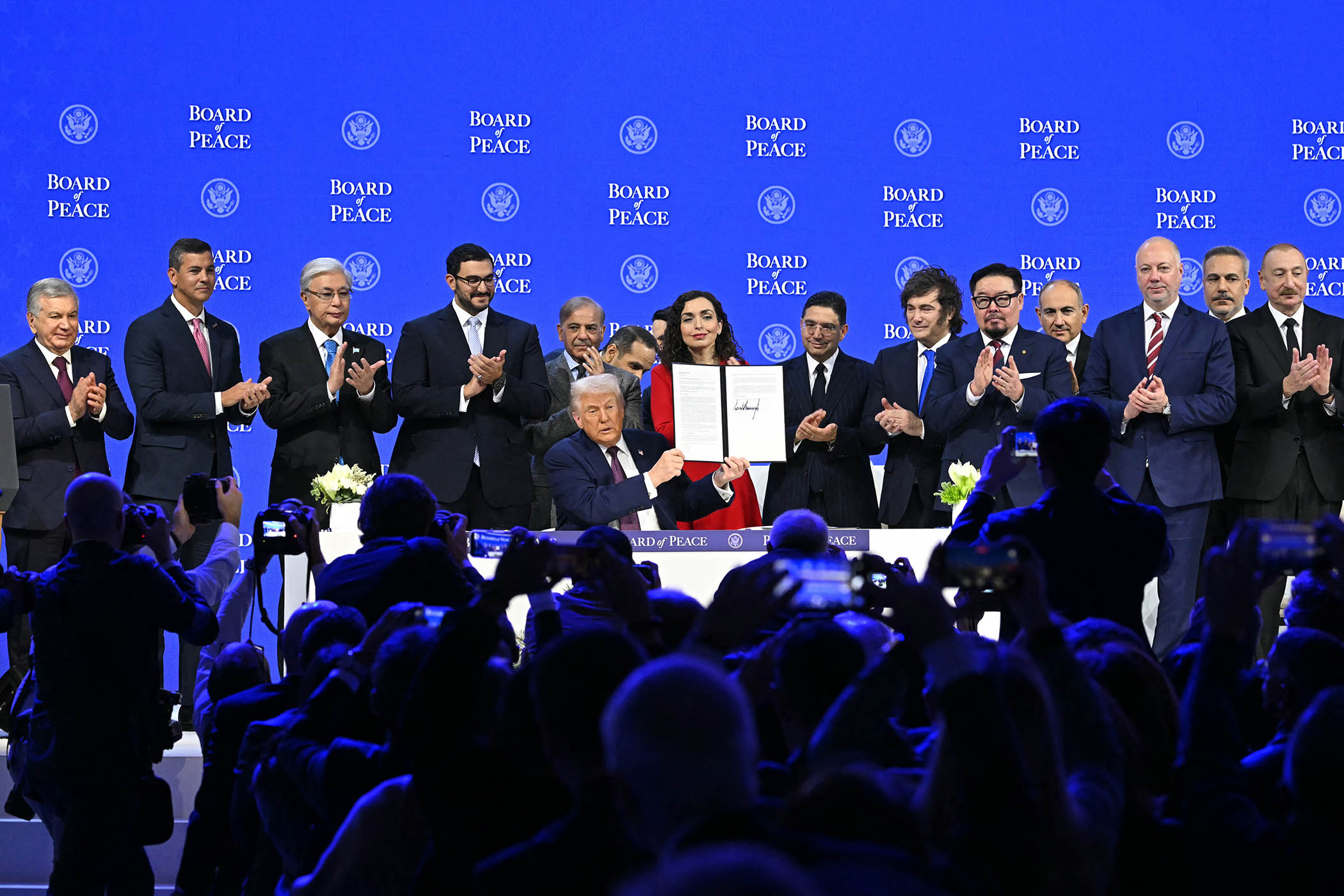
At Davos last week, a roll call of autocrats, monarchs and leaders of military-backed regimes took to the stage with Trump in a lineup revealing the contours of an emerging world order revolving around him.
Leaders from Belarus, Argentina, Turkey, Azerbaijan, Pakistan and Paraguay took turns to sign the charter beside a beaming Trump. The Israeli prime minister, Benjamin Netanyahu, might have participated were it not for the international criminal court warrant hanging over him.
The only EU leader to accept an invitation was the Hungarian prime minister, Viktor Orbán, whose brand of illiberal democracy has made him a darling of the Trump administration. Russia and China have yet to confirm whether they will join the 35 countries now onboard, according to the White House. “Maybe Trump will build a model of the UN building in Mar-a-Lago, where they can all meet,” said Richard Gowan, programme director for global issues and institutions at the International Crisis Group. “It’s more likely this just turns into a rather narcissistic talking shop where leaders can cosplay being in the security council.”
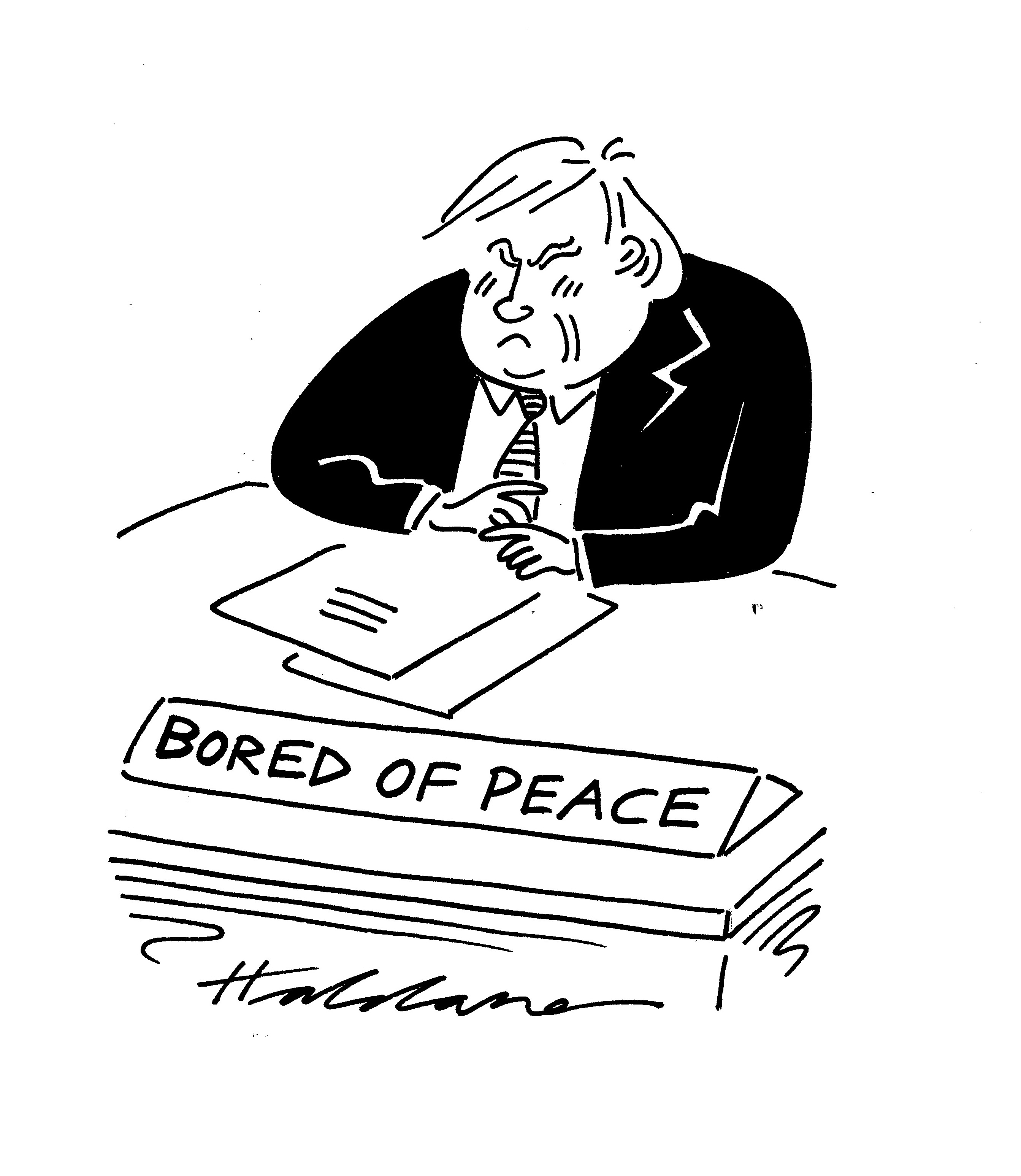
Still, the implications could be serious. The board of peace will enable the Trump administration to circumvent and further undermine established international bodies that are already struggling to adapt to the changing world role of the US. It recently withdrew from 66 international organisations and has slashed funding to the UN over the past year. Trump himself has said the board “might” supplant the UN, while adding that the organisation, now in its 81st year, should be allowed to continue “because the potential is so great”. He has since said the board will work with the UN.The UN security council itself authorised the creation of the board to oversee the US-brokered ceasefire in Gaza last year, despite reservations it could be a Trojan horse.
‘It’s likely this turns into a narcissistic talking shop where leaders cosplay being in the security council’
‘It’s likely this turns into a narcissistic talking shop where leaders cosplay being in the security council’
Richard Gowan, International Crisis Group
Trump unveiled a founding executive board earlier this month, including former UK prime minister Tony Blair, alongside Kushner and the US secretary of state, Marco Rubio. Blair has faced criticism for joining the body, but his spokesperson said he was “honoured” to be invited. Membership will allow him to play a part in the Gaza peace plan, as well as the resolution of other conflicts in which the board of peace involves itself, Blair’s spokesperson said.
It has already popped up in negotiations to end the war in Ukraine. The country’s president, Volodymyr Zelensky, said the board would be involved in monitoring a ceasefire as part of a 20-point peace plan agreed with the US. He has excused himself from joining the board until the war is over because of Belarus’s involvement.
“Belarus is an ally of Russia. We cannot be there with them,” he said after meeting Trump in Davos.
Newsletters
Choose the newsletters you want to receive
View more
For information about how The Observer protects your data, read our Privacy Policy
Some of the governments joining the board recognise that this is simply the new price of doing business in the Trump era. “We take this guy one day at a time, one year at a time. But for the next three years, we’d like to keep him as happy as possible,” said Abdulkhaleq Abdulla, a political commentator in the United Arab Emirates. “Unpredictable as he is… he is the president of the United States.”
For Arab states, membership of the board secures access to Trump and a voice in discussions over shaping the future of Gaza. The board will preside over an executive body and a Palestinian-led committee handling day-to-day governance in the territory. “This has to do with Gaza. It is nothing to do with replacing the UN or international organisations,” said Abdulla.
To some in Washington, the board of peace appears designed to satisfy Trump’s desire for an even more exalted global stature, unshackled from the conventional alliances that have underpinned the postwar order.
“This is the new Nato. He is interested in power and in exercising power,” said one source close to Trump’s foreign policy team. “He considers himself an overlord. He doesn’t want to negotiate for a year and ratify treaties. He wants to make deals.”
Kushner and Trump’s special envoy, Steve Witkoff, already operate outside traditional diplomatic channels. The pair have forged their own ties with the authoritarian leaders who Trump appears to respect, who wield sovereign power and wealth on impulse and with ease, as he has sought to do in his second term.
“He sees autocracies as the states with the most substantive power that can actually be deployed, where the leader actually wields the instruments of the state much more closely,” said Taufiq Rahim, geopolitical strategist and author of Trump 2.5: A Primer. The board’s charter gives Trump the power to select members, veto decisions and set the agenda. Each country will serve a term of three years, though a permanent spot can be secured for $1bn. It is unclear who would receive those funds or what they would be used for.
“He’ll continue to be in this CEO role till death do us part,” said Theodore Karasik, non-resident fellow at the US-based Jamestown Foundation. “The question becomes: will the US stop supporting that corporate entity when Trump leaves office? Does it run counter to US interests?” In Washington, there is scepticism over what influence Trump could wield over international affairs without the powers of the presidency. Even in office, Vladimir Putin and Xi Jinping have calculated that they can outmanoeuvre Trump through flattery or, in the case of Xi, economic might.
With Trump stripped of executive power, US friends and adversaries alike will turn their attention to the new occupant of the White House.
“He carries no weight of executive authority, no command of the military, no influence on US diplomacy,” said Clayton Allen at the Eurasia Institute in Washington. “There’s no legal avenue for him to maintain the type of authority you would need to make this work.” But for the next three years, it the board of peace will be hard to ignore. “You now have a Trump-centric international organisation that is primarily non-European,” said Gowan. “Power and influence in the world order is shifting away, and Europe has to think about how to respond to that.”
Photograph by Fabrice Coffrini/AFP via Getty Images