

If we could visit the parallel universe in which Remain won in 2016, we could be certain about the economic consequences of Brexit. Since that’s impossible, we must make do with inherently uncertain estimates.
Brexit has been a slow drag on growth rather than causing a sharp recession – which the Treasury wrongly predicted during the referendum campaign – and that muddies the waters further.
Some estimates are better than others, though. Brexit supporters often point out that Germany’s growth has been weaker than the UK since 2016, despite being an EU member, and say Brexit has made no difference. But Germany has had its own economic problems to deal with; the biggest being Chinese imports of German machinery and cars falling rapidly since 2018. So we need to look more widely.
One possibility is to take the average growth of the G7 – big, advanced economies that didn’t leave the EU. The UK has underperformed the G7 average by 2.5%. But the G7 includes rapidly ageing, slow-growing Japan and Italy. Between 1997 and 2016 – bar the big crash in 2008-9 – Britain tended to grow faster than the G7 average.
Bloomberg Economics used another approach, based on the World Trade Organization’s model of the impact of higher trade barriers, and also concluded that Brexit had a 2.5% long-term hit – equivalent to an annual loss of about £1,000 a person.
Another way is to make a control out of other advanced economies, combined into a “doppelganger” that matches the UK’s pre-2016 trend as closely as possible. The US, Germany, New Zealand, Norway and Australia make up most of the control in my version of this model at the Centre for European Reform (CER). By mid-2022, the UK economy was 5% smaller than the doppelganger. Stanford University’s Nicholas Bloom and his colleagues used a similar approach and found the gap had grown to 8% by the end of 2025.
But this isn’t perfect either. A lot of things happened in other countries that had nothing to do with Brexit: the US tech boom, Germany’s stagnation and Norway’s huge profits from the 2022-3 energy crisis, for example. Therefore, Bloom’s group zoomed in on British companies, comparing those that trade a lot with the EU with those that do not. It found that the sales of EU-facing companies grew more slowly, and adding up all that forgone output, it estimates that UK gross domestic product was 6% smaller at the end of 2024. That’s an annual loss of about £2,500 a person.
While it is difficult to be precise, the crosscountry and cross-company evidence tells us Brexit has made us significantly poorer. That’s borne out by other evidence too; stagnating business investment, which had been recovering between 2009 and 2016; goods exports that slumped after Brexit and are still lower than they were in 2016; and weaker services trade with the EU. The CER’s latest modelling shows that Brexit has reduced financial services exports to the EU by about 25%.
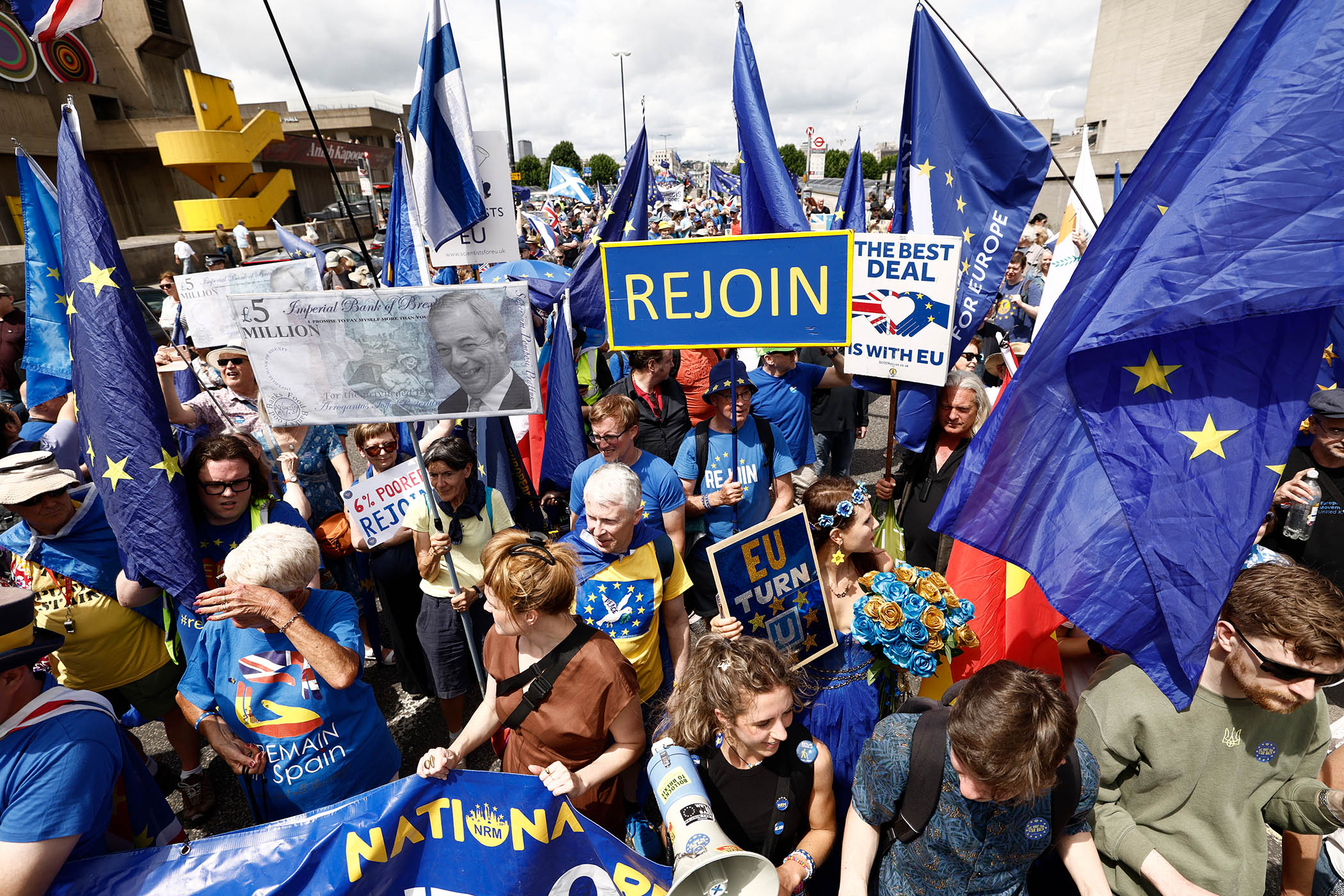
Reversing that damage is only possible by reintegrating with the EU – either by rejoining the single market, accepting freedom of movement and financial contributions to the EU, but having no say on the rules – or rejoining. Given the costs, it’s not surprising the Brexit debate hasn’t faded.
Winners and losers from Brexit
Newsletters
Choose the newsletters you want to receive
View more
For information about how The Observer protects your data, read our Privacy Policy
The evidence is overwhelming that Brexit has hurt the economy – even if reasonable people can disagree on the size of the loss. But behind every average are some winners and losers, and Brexit is no different.
The big losers
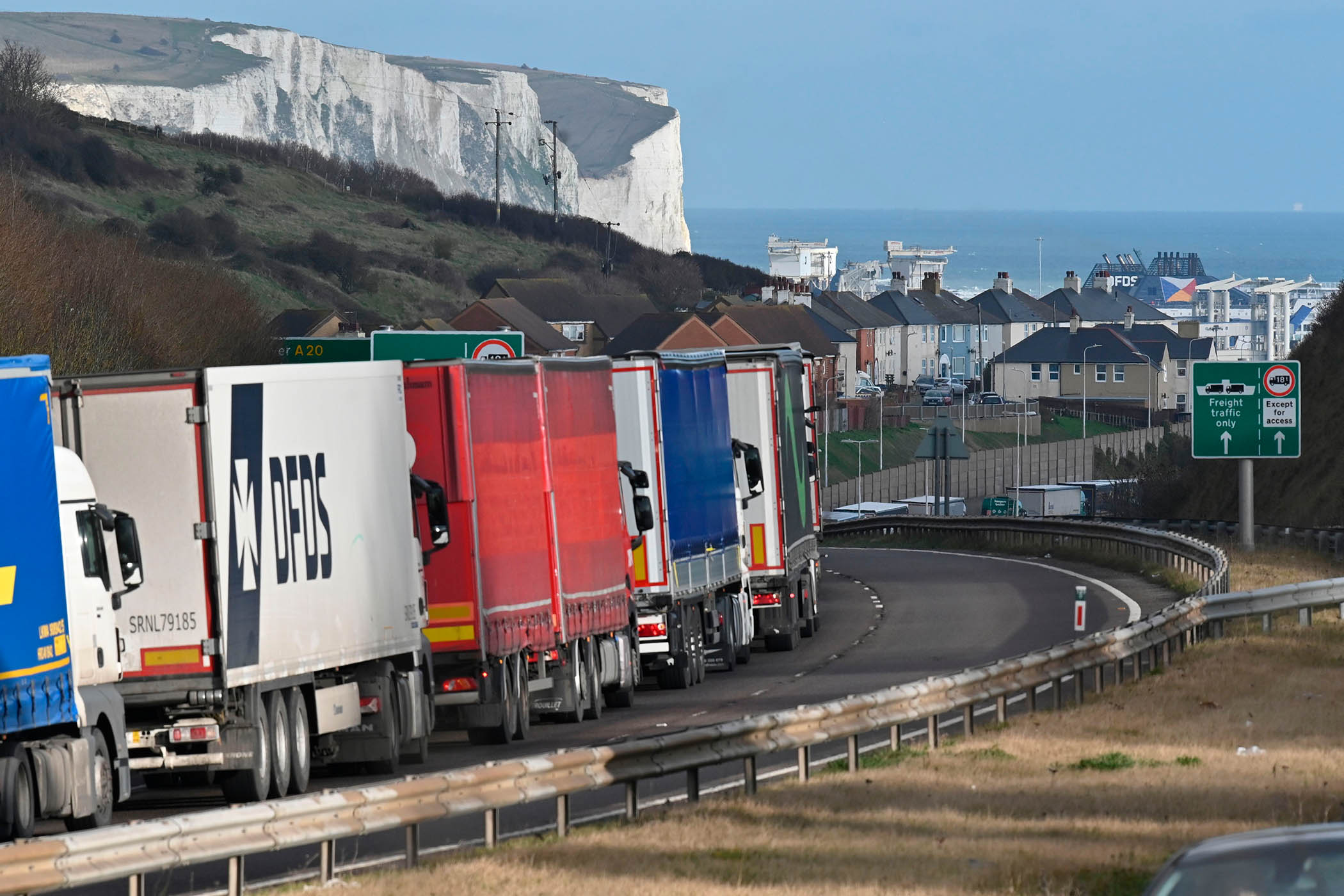
The UK’s farmers, fishers and food manufacturers. By far the biggest losers, they’ve seen exports to the EU fall by about 30%, because there are many checks on the EU border to ensure imported food is safe to eat. And, unlike British carmakers and chemicals companies, they haven’t benefited from falling competition from EU imports: successive governments have kept border checks on EU food imports to a minimum to curb price rises.
London, Scotland and the West Midlands. According to a study by Bath University’s Eleonora Alabrese and her colleagues that uses the doppelganger method, London’s economy is about a 10th smaller than it would have been if Remain had prevailed. Bankers moving to the EU or being replaced by Irish, French and German colleagues is a part of that, but so is lower foreign investment. Scotland (because of finance and agriculture) and the West Midlands (because of cars and other manufacturing) are the next worst off.
Taxpayers. If we take the Office for Budget Responsibility’s (OBR) working assumption that Brexit will reduce the size of the economy by 4% by 2030, that entails about a £40bn hit to tax revenues. That compares with tax rises between 2019 and 2030 of about £150bn. If the OBR is right, a fair chunk of those tax rises would not have been needed.
EU citizens with itchy feet. The UK was the biggest destination for EU citizens taking up their free movement rights. Since Brexit, more EU citizens have left the UK than arrived. And there are now 35,000 fewer EU students than before Brexit, with many balking at having to pay high international fees.
Danish sand eel fishers. The UK has banned sand eel fishing in its waters, in part to protect puffins. The Danish fishing fleet tried and failed to overturn the decision.
The indifferent
Northern Ireland. The Bath University study finds that Northern Ireland’s output has been unaffected, probably because it has remained de facto in the single market for goods and the customs union. Northern Ireland has a big manufacturing sector that’s benefiting from frictionless trade with the EU.
Some exporters. There are a number of companies for which Brexit hasn’t made much difference (apart from all of us having less income to spend on their wares). Law, accounting and consultancy exports have been growing strongly – including to the EU – but they were not much affected by EU membership in the first place. Britain’s machinery exporters are doing fine too, perhaps because their products are so niche that EU buyers will swallow the cost of trade barriers.
The winners
Customs agents and trade consultants. They have been coining it in, profiting from increased trade barriers and bureaucracy.
Innovative food producers. Those who use genetically modified crops to reduce pesticide use or adapt to the climate crisis have been helped by better UK regulation.
The tech sector. This has grown rapidly in the UK in recent years, thanks to homegrown skills and US investment, and it’s possible that Britain’s less complicated approach to regulating AI is bearing fruit.
British wildlife. The new post-Brexit system of agricultural subsidies rewards farmers for ecological improvements – and much more so than the wasteful common agricultural policy. Insects and birds have gained while farmers have lost out.
John Springford is an associate fellow at the Centre for European Reform
Photograph by Justin Tallis/AFP via Getty Images