
Ten years ago, almost to the day, Britain’s decision to leave the EU became clear at the Sunderland vote count on the European referendum, held at the Stadium of Light. Looking back, a Brexit supporter who was there but doesn’t want to be named is filled with a mix of nostalgia and despair.
“Our sin was being happy that we’d broken away from some European politicians,” he says, but he’s not happy with British ones either. “They’re all dodgy… Boris Johnson told a lot of lies. Look left or right, we don’t like [any] of them. It leaves a bit of a taste in our mouths, and I think about 30 million people think the same way.”
Just over 60 years before that vote, Jean Monnet, the “father of the EU”, offered a deeply pragmatic argument for closer European union: “Our countries have become too small for today’s world, on the scale of modern technology, on the scale of America and Russia today, China and India tomorrow.”
In 2026, it’s hard not to feel some sympathy for the Brexiter, and admiration for Monnet’s prescience.
It’s hard, too, to know where to start when listing the ways Brexit has failed, but they can be summarised under five headings: the hit from new trade barriers to the UK’s gross domestic product of anything from 2% to 8%, equivalent to hundreds of billions of pounds forgone and thousands for every family; the loss of opportunity for anyone who might have lived or worked in any of the 27 remaining EU member states but is now barred from doing so; the glee in Moscow, Beijing and Magaworld at the spectacle of European democracy hobbled by the loss of a powerhouse of freethinking, fair play and the financial markets; the labour shortages, from construction and hospitality to the NHS and social care; and the rise of an ugly insularity as a political force.
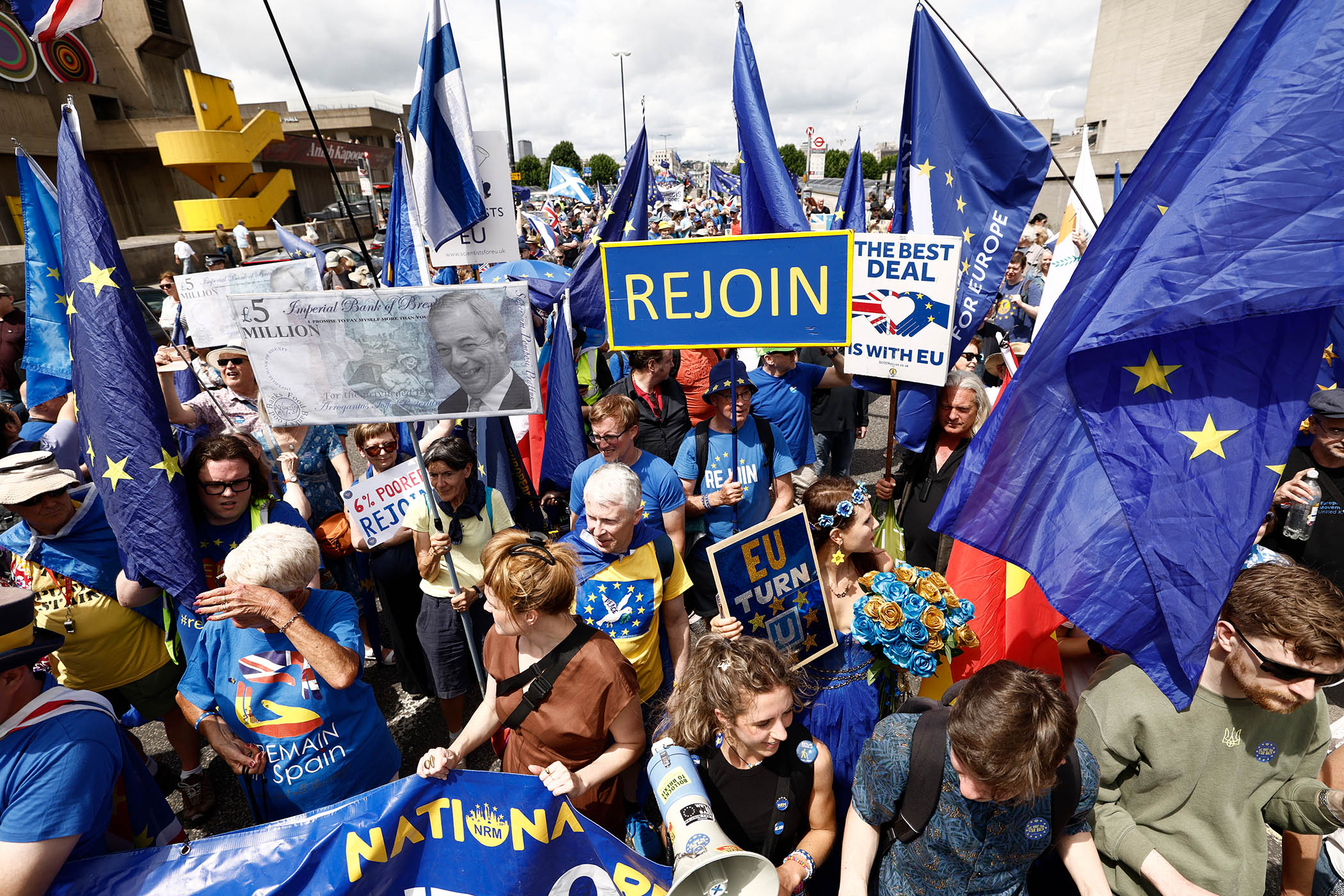
We know all this – former leavers and remainers alike – and that’s the point. On Britain’s relationship with Europe, new polling shows that voters have shed old labels and left politicians behind (see News, pages 12-13). These voters are more impatient to fix the problems created by Brexit, more enthusiastic about closer EU-UK ties and less anxious about free movement of people within the bloc.
Two-thirds of UK voters, including a clear majority of Conservatives, back a return to freedom of movement across the EU “even if it means EU citizens can do the same here”. Even more striking, the same proportion of EU voters would welcome Britain back, despite their leaders’ misgivings about dealing with a country that could soon be led by Nigel Farage.
Europhiles should be honest, not least with themselves. There is not yet an overwhelming majority for rejoining. Even though this is, by far, the single most popular option available to politicians assessing the relationship, only 52% of voters would choose to go back in if a fresh referendum were held tomorrow. But that number is rising inexorably as young people gain the vote: 70% of them want to join, and only two-thirds of those who voted leave want to stay out. In short, the leave vote has shrunk in 10 years by about 10 million.
Heading south from Makerfield, Andy Burnham will be more aware than most of his constituents’ fondness for Brexit. It is no longer widely shared. It is still concentrated geographically in communities that felt left behind in 2016 – and still do. But as most Brexiters now admit, it was sold on false pretences and it brought home to businesses, students, jobseekers, parents and retirees Britain’s closeness to Europe, and their interdependence.
Dreams of pure sovereignty and prosperity somehow reinforcing each other were just that. In the 10 years since the Brexit vote, the world has changed in ways that make it clearer than ever that Britain’s place is not on the edge of Europe, but within it.
Newsletters
Choose the newsletters you want to receive
View more
For information about how The Observer protects your data, read our Privacy Policy
Photograph by Brook Mitchell/Getty Images