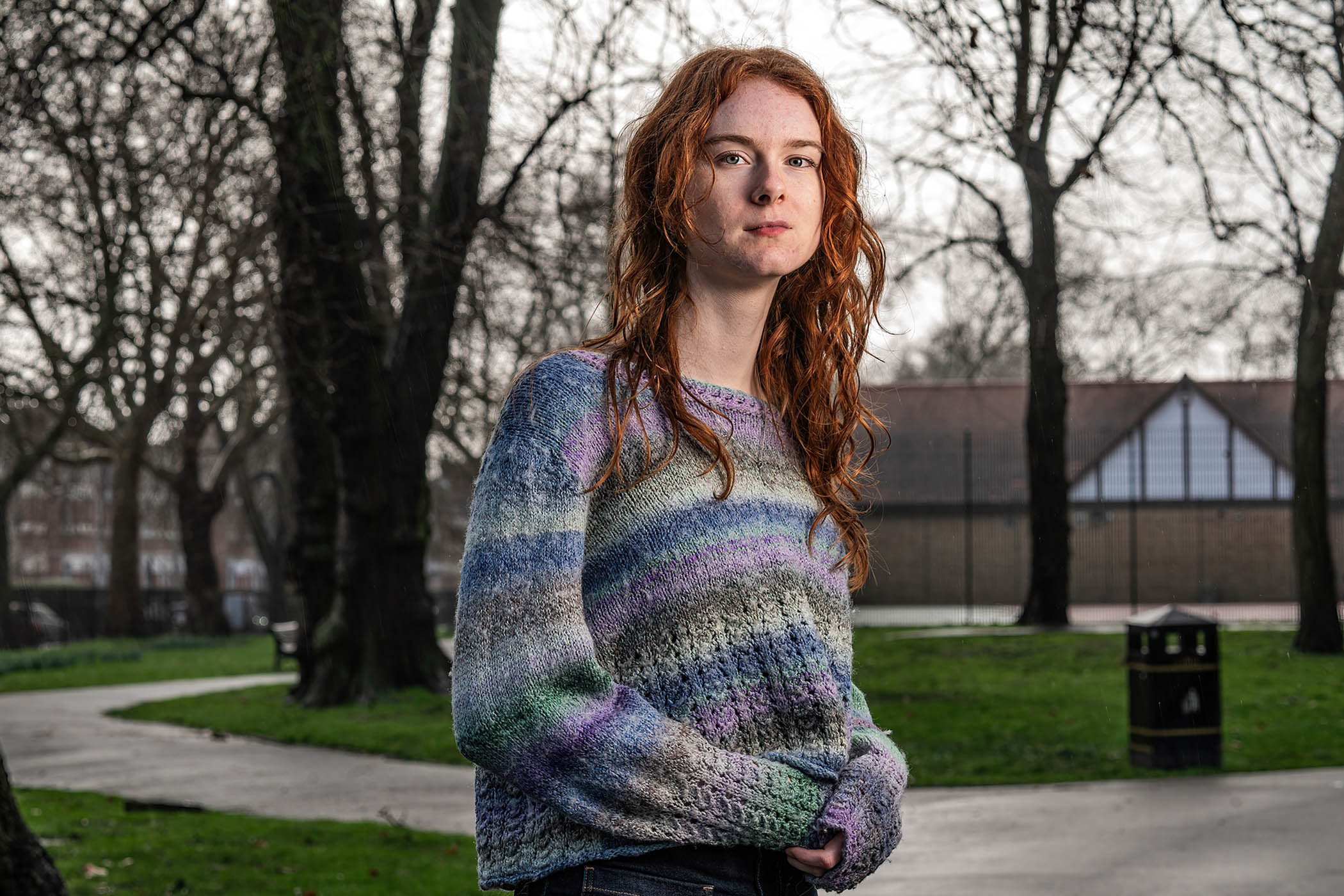

Zoe Rogers has grown familiar with the back of prison vans. Her first trip was in a decommissioned prisoner transport that smashed through through fences and breached the door of a loading bay at a UK factory for Israel’s largest weapons manufacturer in August 2024.
“I was less prepared than I should have been and I wasn’t in crash position when we went through the shutter, so my glasses flew off and I was quite disorientated,” Rogers, 21, said, speaking from her family home in east London on Friday.
“There were six people inside. After a couple of minutes an alarm went off, so that was constant, and obviously the sounds of smashing and people screaming as they came across security guards and not knowing what to do.”
After 18 months in jail awaiting trial, posssibly her last such journey was on Wednesday morning, when she arrived at Woolwich Crown Court to hear a jury find her not guilty on all but one charge for raiding the Elbit Systems site that day.
She walked out of court that afternoon after being released on bail. “It was overwhelming,” she said, adding: “I got to hug my mum without a prison officer watching all the time.”
Rogers turned 22 in October – her second birthday spent on remand at HMP Bronzefield after counter-terrorism police arrested her on charges of aggravated burglary, violent disorder and criminal damage. In a massive blow for the government’s decision last July to proscribe Palestine Action using terrorism legislation, jurors last week either acquitted or failed to reach a verdict on every charge against Rogers and her five co-defendants from the Elbit Systems raid.
The 12-week trial heard that the six protesters, wearing red boiler suits and carrying sledgehammers, crowbars and flares, allegedly damaged or destroyed property to the value of £1m, including quadcopters and drones.
Prosecutors said a police officer struck with a sledgehammer had suffered a fractured spine, while barristers for the defence said guards used tools to hit protesters.
“I will never regret trying to do the right thing,” Rogers said, less than 48 hours after her release on bail. “There are specific things that I wish had gone differently, of course,but I will always want to do what is right.”
Yesterday, the Crown Prosecution Service confirmed their intention to seek a retrial on the remaining charges after pressure from Tory MPs. Rogers now faces the prospect of a retrial for the remaining charge of criminal damage.
Newsletters
Choose the newsletters you want to receive
View more
For information about how The Observer protects your data, read our Privacy Policy
Prior to joining the group, she saw footage on social media of the Israeli military killing tens of thousands of Palestinians in Gaza in the wake of the Hamas attack on 7 October 2023 that killed nearly 1,200 people. “I’d been watching a genocide unfold on my phone,” she said. “I felt like I had to do something about it and so I protested, I made stickers, I went to fundraisers, I emailed my MP, I went to an arms picket.
“Essentially, I did everything that was available to me in terms of democratic means and it didn’t work. Democracy had failed, international law had failed, and the only effective means left to me was to take direct action. So that’s what I did,”
During the trial, judge Jeremy Johnson had told the jury that Gaza and the proscription of Palestine Action, were irrelevant to the trial and that they must consider the case “on the evidence, not on the basis of what you or anyone else thinks about Palestine Action or the war in Gaza”.
‘There are specific things that I wish had gone differently, of course, but I will always want to do what is right ’
‘There are specific things that I wish had gone differently, of course, but I will always want to do what is right ’
Zoe Rogers
Rogers said she believed the proscription was evidence that direct action was effective, adding: “Lies about our case have been used to justify the proscription of Palestine Action. It was quite horrific being in prison, being completely powerless and voiceless, watching people like Yvette Cooper going on TV and being able to say anything prejudicing the jury pool, deliberately, about my case and not being able to respond with the truth.”
During deliberations, one juror asked the judge whether, if defendants believed they were “morally compelled to destroy weapons they believed were going to be used to kill civilians in what they believe to be an illegal genocide, would that amount to a lawful excuse?” The judge said there was no evidence of any lawful excuse in the case.
After posters went up at bus stops stating that jurors have a right to return verdicts in accordance with their consciences, the judge reminded jurors to “return true verdicts”. In his closing speech during the trial, Rajiv Menon KC, for co-defendant Charlotte Head, reminded jurors of a sign at the Old Bailey that says the same.
The acquittals prompted outrage from pro-Israel groups including the influential Board of Deputies of British Jews, which said it was concerned by “the troubling verdicts acquitting members of Palestine Action”.
Much of the public anger centred on footage from a police officer’s body-worn camera which the prosecution alleged showed one of her co-defendant s Samuel Corner, 23, swinging a sledgehammer down towards police sergeant Kate Evans, who suffered a fractured spine.
The court heard Corner, who told the court he had been defending a fellow activist, had been sprayed with Pava, an incapacitant chemical. Jurors failed to agree a verdict on GBH with intent against him. Prosecutors are seeking a retrial on that charge and one of violent disorder.
The defence argued that the guards had used excessive force and raised concerns about missing CCTV footage.
Repeating the evidence she gave from the witness box, Rogers said one Elbit guard had “swung a sledgehammer at me, shoved me against a wall and dragged me across the floor and I witnessed him repeatedly hitting a fellow activist with a sledgehammer and kicking him. It was pretty scary.”
Asked what the most difficult moments of her time in prison had been, she said: “I remember the day I found out that I was going to spend 15 months in prison without trial. It was probably one of the worst days. It was difficult. But what I have experienced pales in comparison completely with what Palestinian prisoners go through.
“The only way I could cope with that was to allow my brain to catastrophise. I just got to the point where I prepared to spend the rest of my life there, basically. It might seem ridiculous now, but at the time I was facing a charge of aggravated burglary, which, worst case, leads to life.”
She said that her relationship with her mother, who visited her every week and was in court every day of the trial, was “more of an adult relationship” now, adding: “I think, we kind of timed our mental breakdowns well, so they didn’t happen at the same time.”
Asked about the potential retrial, she said: “If there’s no retrial, I will go to university, which I’ve been waiting to do for a long time, and I will go climbing again, which I’m gonna be awful at because for some reason they weren’t too keen on me doing it in prison.”
Photograph by Sonja Horsman/The Observer