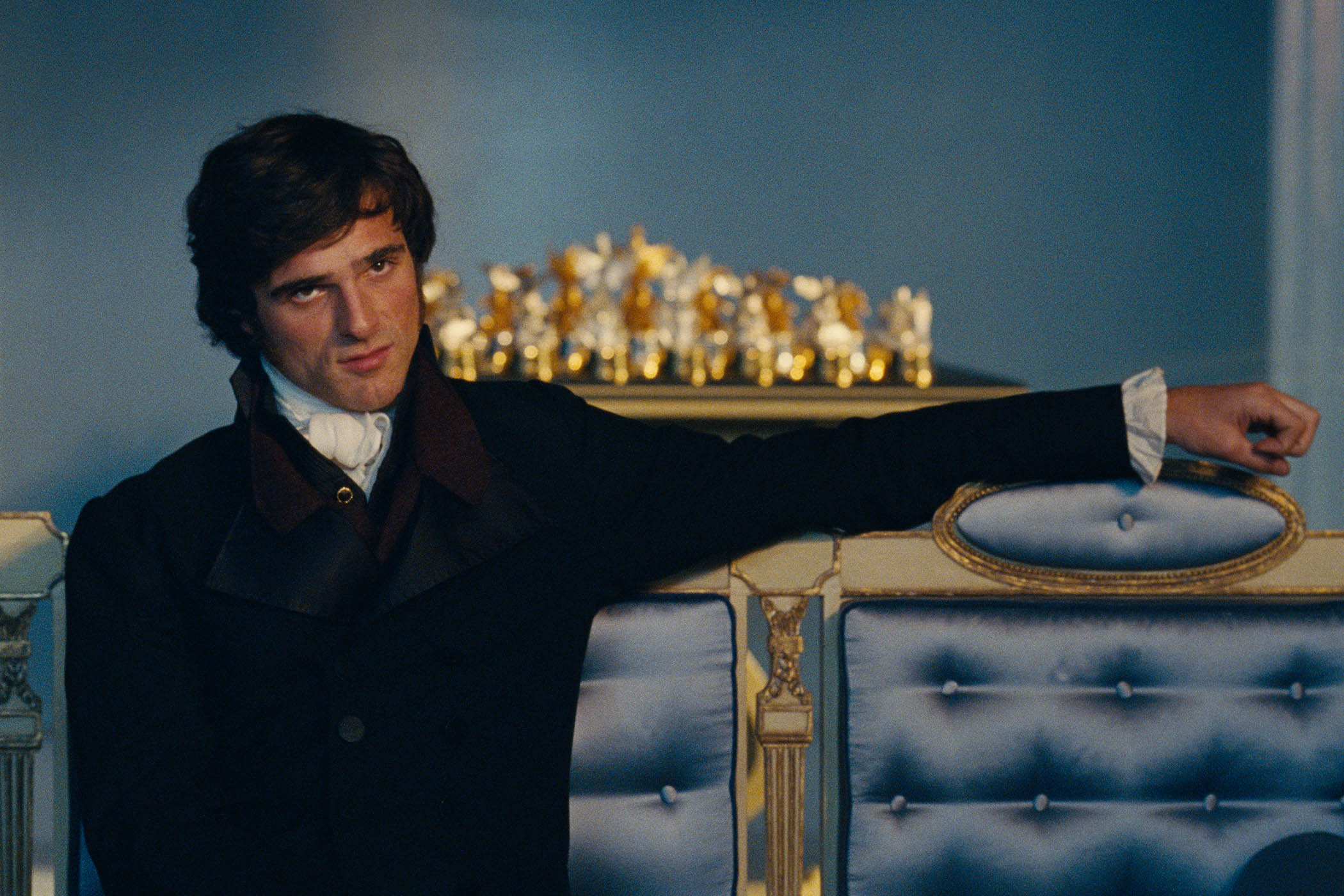

It was Lovesong by Ted Hughes that helped the Australian actor Jacob Elordi perfect his Yorkshire accent. The poem in question is not an account of soft affection: this love is all-consuming, violent, dysfunctional.
“Her love-tricks were the grinding of locks / And their deep cries crawled over the floors / Like an animal dragging a great trap,” wrote Hughes, who was from West Yorkshire. “His promises were the surgeon’s gag / Her promises took the top off his skull.”
It is a sentiment that feels apposite for Elordi’s Heathcliff in the new Wuthering Heights film, 136 minutes of unbridled horniness.
A movie rarely generates as much discourse as Wuthering Heights has over the past few months. Then again, it is not an adaptation of just any book. Its source material, a dark gothic romance, has polarised readers since the day it was released in 1847. It disturbs those who expect a novel of manners, and continues to spook seasoned fans who wrap themselves in every moment of desolation and exhumation.
The film’s director, Emerald Fennell, can only hope that her latest feature elicits half of this response. Even before it was released, there was internet chatter about the liberties it had taken with Emily Brontë’s work, including the fact that its two Yorkshire lead characters are played by Australians.
There is a touchiness about casting when it comes to Wuthering Heights, and no exception is made for established actors. In the 1992 version, Ralph Fiennes was too plummy as the unrefined Heathcliff, while Juliette Binoche was unable to hide her Frenchness as Cathy.
Similar concerns have been raised about Elordi and Margot Robbie in Fennell’s adaptation. But questions about the pair’s accents are more complicated than they seem.
Haworth is a pilgrimage site for lovers of Brontë, its moors now largely bereft of industrial life. But back in the 18th century it was filthy and stank of death. The house where the Brontë sisters were raised, the village parsonage, looks over the parish church.

Mark Ward, a poet who used to work as tour guide in Haworth
“Forty-thousand people were buried in that church. It’s a staggering amount of people for a small village,” said Mark Ward, a poet and lock-keeper, before leading the way to a tomb. Above a stone cherub is a faded list of children taken in the flower of youth. “The monumental mason was at the side of the parsonage. All day he’s making gravestones, putting names on gravestones, so the Brontës were living surrounded by death.”
Ward became a tour guide in Haworth in the 1990s after falling in love with Wuthering Heights. “I got a copy of the book, went walking on the moors and camped below Top Withens,” he said. “The light started moving across the ruins. I wondered what the hell it was and I think it was the will-o’-the-wisp – marsh gas that ignites when it’s very stormy.”
Newsletters
Choose the newsletters you want to receive
View more
For information about how The Observer protects your data, read our Privacy Policy
Ever since that wild night on the moors, at the foot of the farmhouse that inspired Wuthering Heights, Ward has steeped himself in the Brontës. He has a titbit of information about every corner of Haworth and the hills beyond, driving over from Blackburn just to retread his old paths.
But he is not a purist and is sanguine about the new film’s creative choices: 35-year-old Robbie, who is from Queensland, playing a teenage Cathy, and Brisbane-born Elordi, 28, who is white, playing her lover Heathcliff, described in the book as a “dark-skinned gypsy”.
“If the essence of the story is about passion unabated,” said Ward, “then it’s an accurate depiction.”
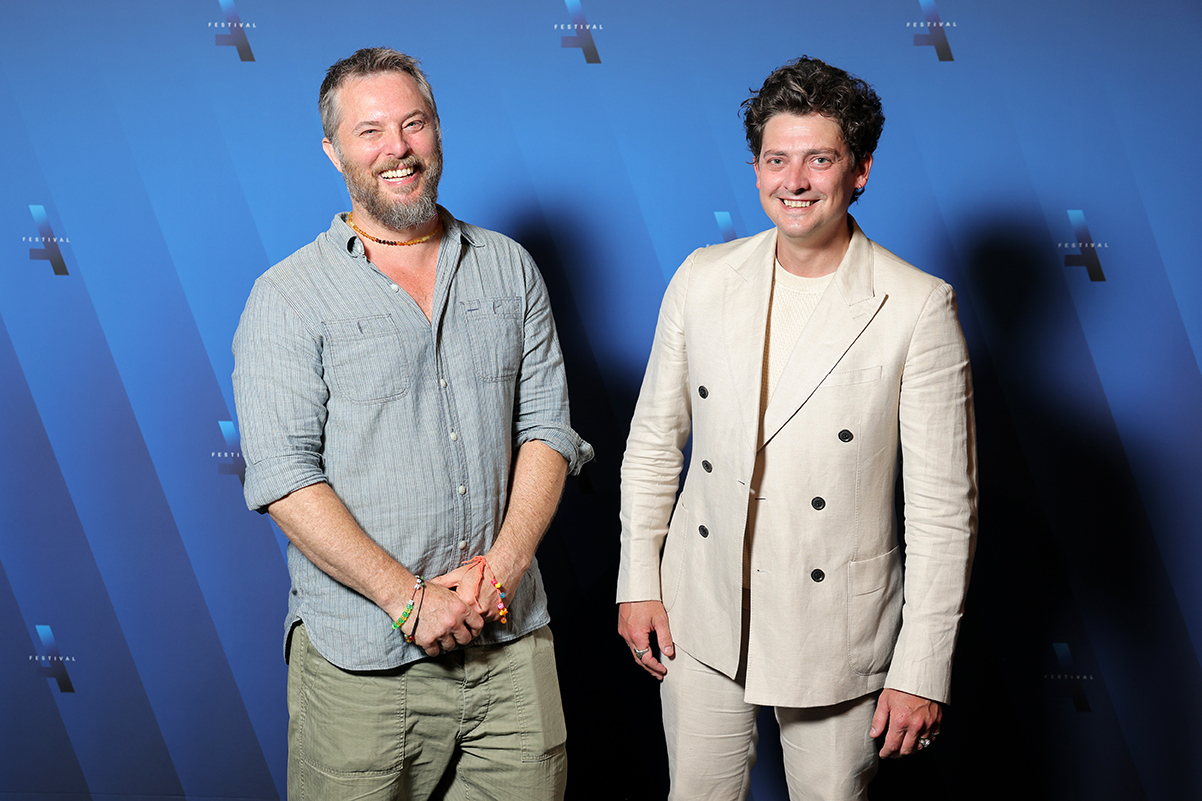
One thing the film has thought carefully about is its accents. Elordi said that he practised in the bath. But it was not all soapy solitude. The actor teamed up with William Conacher, an in-demand dialect coach who has worked on pictures such as Oppenheimer and Nosferatu.
“The first thing you start with is finding an authentic thing to listen to that you and the actor both like,” said Conacher. “Every actor’s process is different, but Jacob and I were very aligned in that we both like to use poetry.” They treated the Hughes poem Lovesong as their bible.
It is possible that Hughes, a devoted Brontë fan, was inspired to write the poem Lovesong by Wuthering Heights. He hiked up to Top Withens shortly after marrying Sylvia Plath.
“You don’t want the dialogue from the script to become dull by repetition, so you try to avoid getting too much into it. We went through the poem a lot, and there are patterns that you work out and there are rules,” said Conacher. “It’s easy to fall into the trap of doing a general wash of northernness… I think I pushed it in a direction that was stronger than Jacob was originally intending.”
Elordi does not try to reflect how people spoke on the moors at the turn of the 18th century, which is impossible to know precisely and, in any case, might not have served the film’s audiences well.
“The broad dialect would be quite inaccessible,” said Simon Roper, 27, a YouTuber who reconstructs historical accents. “If they’d done that in Wuthering Heights, they would have needed subtitles.”
Geographic mobility, mass media and the creep of received pronunciation have flattened modern dialects, but you do notice them when you are in Haworth. On the eve of the film’s release, the village has all the pregnant atmosphere of Wuthering Heights and only a smattering of tourists.
There is plenty for them when they visit, beyond the parsonage turned museum. They can get a chicken bhuna from the Bronte Balti House and drink a local ale named after the sisters. Visitors to the church, where the organist plays Whitney Houston, can come out with a couple of postcards.
People have capitalised on the Brontës since a local stationer called John Greenwood, who was close to the family, released a line of merchandise after the runaway success of Charlotte Brontë’s Jane Eyre.
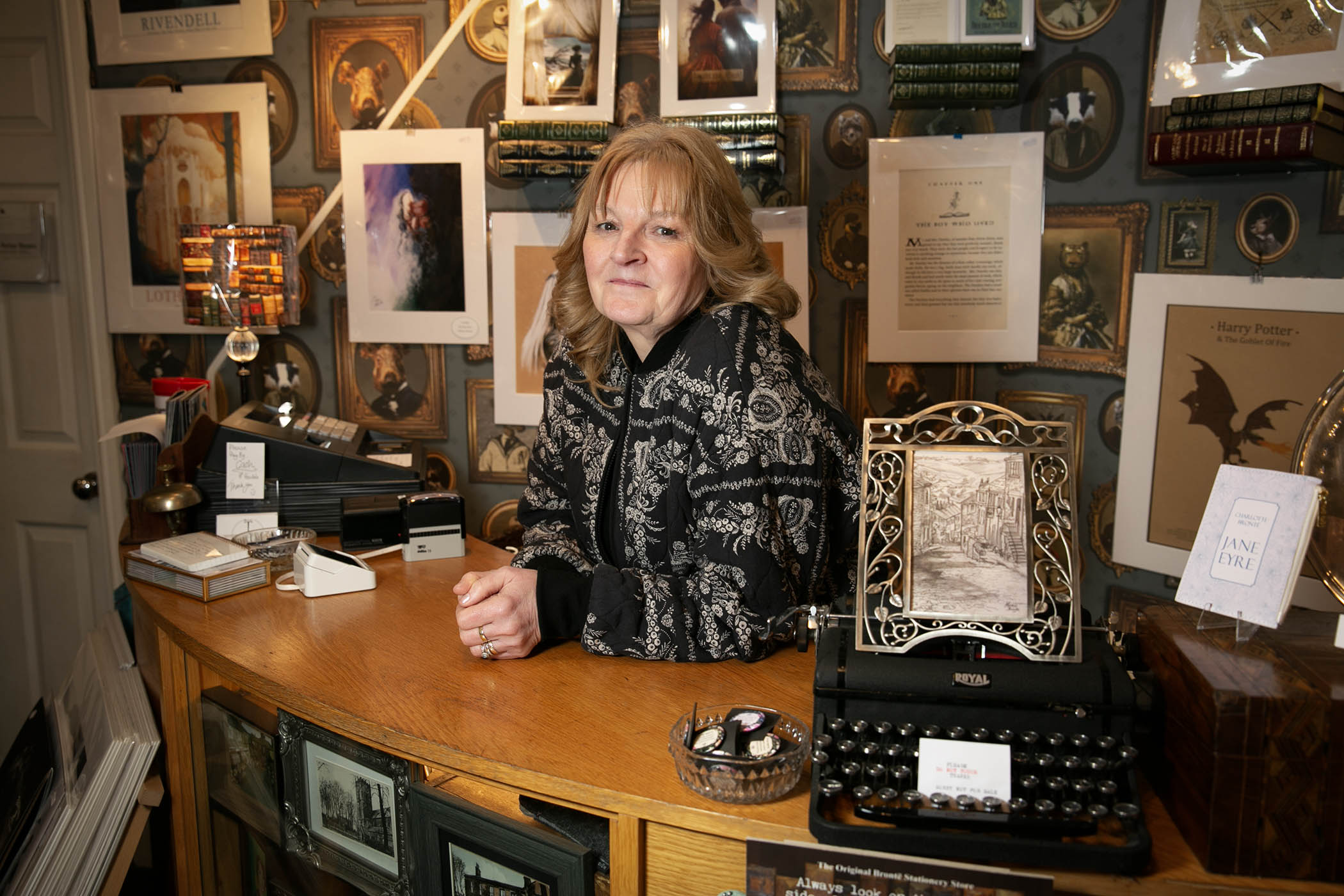
Michelle Smith in Oh La La, on the site of the stationers that sold notepaper to the Brontës
All these years later, Greenwood’s store still sells stationery but is now called Oh La La. Working on the shop floor is Michelle Smith, a Lancastrian who moved to the village a decade ago and whose favourite Brontë is Charlotte. Her take on Elordi’s accent from the three-minute trailer is understated. “I don’t think he’s done bad,” she said.
Diane Park, who runs the nearby bookshop and first read Wuthering Heights in her 50s, has a similar reaction. “He does come across as a bit Yorkshire,” she said. “It doesn’t really matter, does it? I’m going to think of it as a glorious story and try not to say in my head: ‘Oh, that didn’t happen. That didn’t happen.’ I’m going to enjoy it and hopefully be shocked. Apparently, it’s very erotic.”
Roper, who can be considered somewhat of an expert, having reconstructed northern English dialects back to 1200, is also impressed with Elordi. “He doesn’t just do a generic northern accent, but throws in specific Yorkshire things. Like the smoothing of the vowel in ‘wife’ as ‘waf’, or having short vowels in ‘take’ and ‘make’ as ‘tek’ and ‘mek’. So, to my ears, it sounds great.”
Robbie’s accent as Cathy arguably gives more credence to Elordi’s modern take on Heathcliff. Conacher said received pronunciation was an unusual choice that Robbie, who “works in a much more technical way to Jacob”, honed with tongue twisters and Shakespearean insults. A Yorkshire Heathcliff, Roper suggests, might have altered his accent to meet an RP Cathy halfway. “I think there was probably a level to which a northerner might be able to code-switch to make themselves understood,” he said.
That may be the mission of Fennell’s Wuthering Heights: to make itself understood across time and tides. Because even almost 180 years after it was first published, Emily Brontë’s novel is finding new readers to obsess over its swirling lust, their minds driven to distraction by a will-o’-the-wisp in the distance.
“It’s jealousy. It’s envy. It’s cruelty. It’s betrayal,” said Ward, the final resting place of the Brontës a few short footsteps behind him. Up here, an accent feels like the smallest of things.
Photographs by Richard Saker for The Observer, Warner Bros.