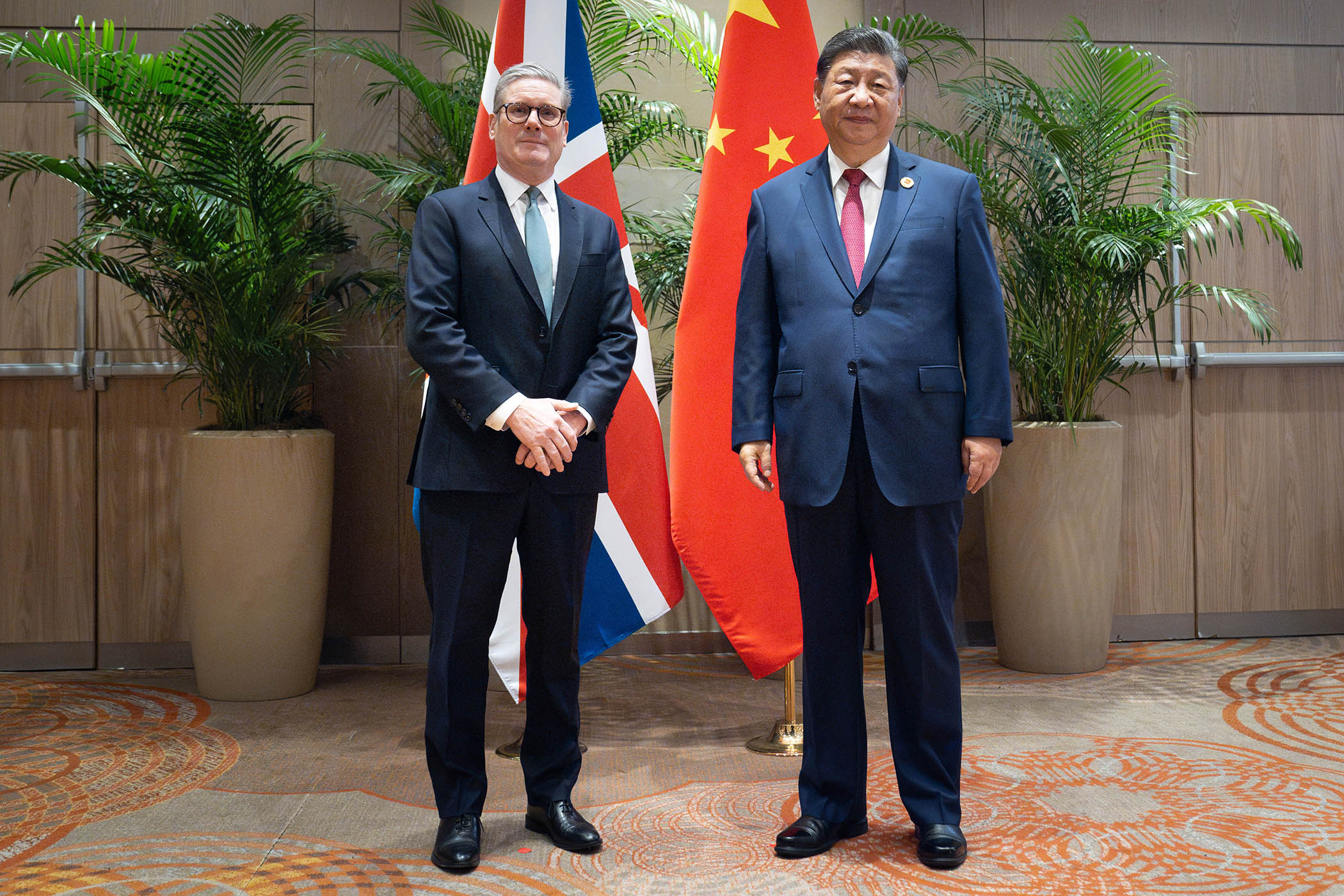

Keir Starmer will this week become the first British prime minister in eight years to visit China. His three-day trip to Beijing and Shanghai, which starts on Wednesday, will include a meeting with President Xi Jinping and a banquet in the Great Hall of the People, hosted by premier Li Qiang.
The purpose is to drum up commercial deals. Starmer will be accompanied by the business secretary, Peter Kyle, the economic secretary to the Treasury, Lucy Rigby, and a business delegation including senior executives from companies including HSBC, Diageo, Octopus, Brompton and Jaguar Land Rover.
Jonathan Powell, the prime minister’s national security adviser, and Varun Chandra, his business guru, who has just been appointed special envoy to the US on trade, will also be part of Starmer’s entourage. Nobody in Whitehall is in any doubt that this is a big diplomatic moment as the world adjusts to the presidency of Donald Trump and the rebalancing of power between east and west.
Since 2010, the UK’s relationship with China has swung wildly from the “golden age” promised by David Cameron, who took the Chinese premier to a pub near Chequers, to the “deep freeze” approach followed by Boris Johnson, Liz Truss and Rishi Sunak, who regarded China as a hostile state.
Starmer is setting out to pursue what Downing Street calls a “hard-headed, grown-up approach” for the sake of the economy. “Sticking our heads in the sand and pretending China does not matter would be reckless, making Britain poorer and less secure,” a source said. “The Tories left the country with whiplash, lurching wildly from one extreme to the other. We are replacing mood swings and mixed messages with clear judgment and resolve. By taking a steady, consistent course in the national interest, we will protect our security and back jobs at home.” The prime minister has said now is the time to reject the “simplistic binary choice” between “golden age” or “ice age”.
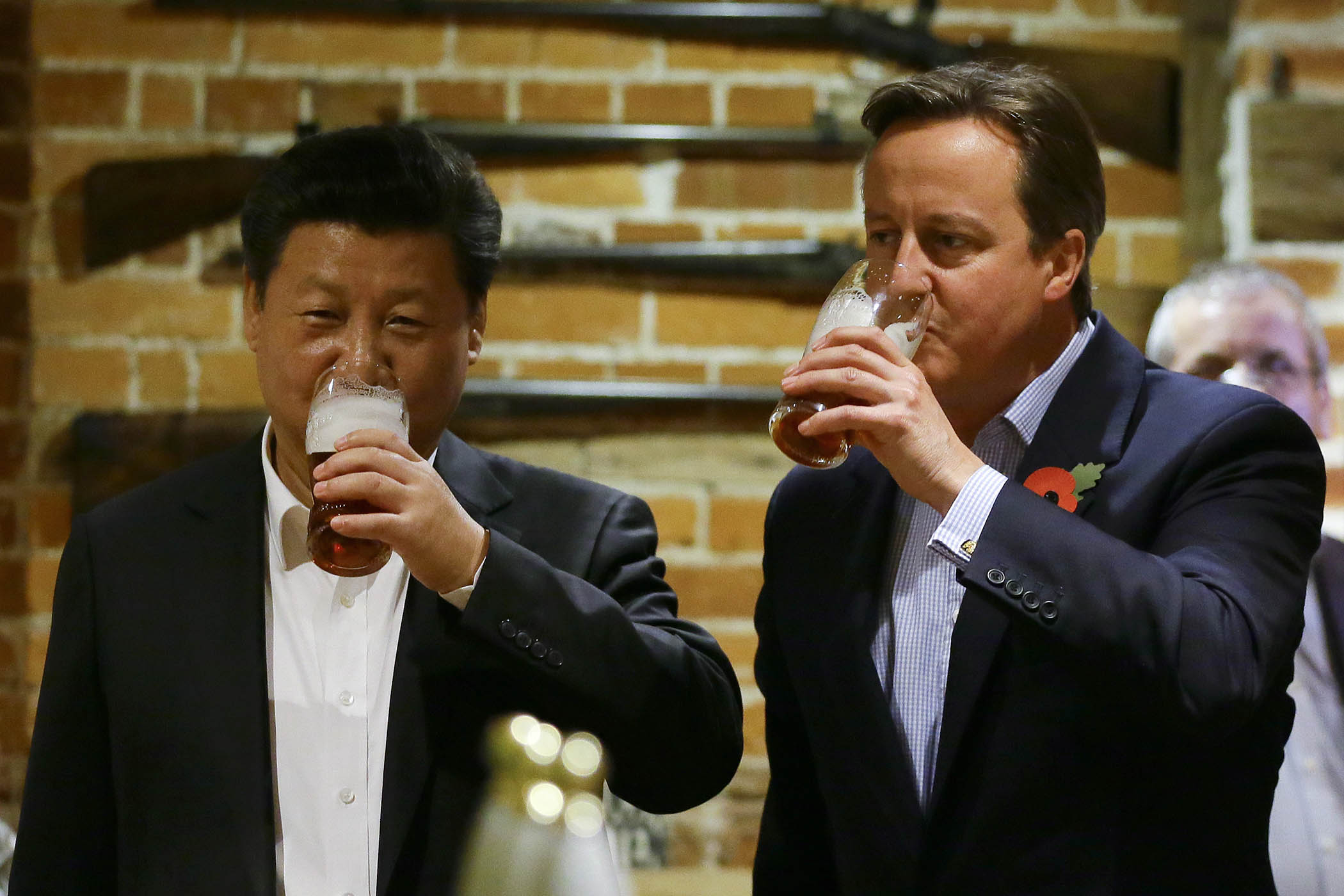
David Cameron and Xi Jinping drink pints of beer at The Plough pub in Princes Risborough during the Chinese president’s 2015 state visit
No 10 points out that China is already the UK’s third largest trading partner, supporting 370,000 British jobs. With a population of more than 1.4billion and a consumer class of about 900million people, it is also a huge market to expand into. Other leaders are beating a path to Beijing’s door. The Canadian prime minister, Mark Carney, visited earlier this month, and the French president, Emmanuel Macron, was there in December. Next month it will be the turn of Friedrich Merz, the German chancellor. Since Theresa May went to China in early 2018, Macron has visited three times and German leaders have made four trips.
Yet the prime minister is also going to Beijing with a list of concerns about human rights and national security. These include the fate of Jimmy Lai, the dissident businessman imprisoned in Hong Kong who has been convicted of “conspiracy to commit collusion with foreign forces”, and China’s decision to sanction British MPs over what it called the spreading of “lies and disinformation” about human rights abuses.
Starmer is also likely to raise the rounding up of Uyghur Muslims in Xinjiang. Last week Ed Miliband, the energy secretary, said: “We engage with China. We challenge China where necessary.” But in his patch there is already concern about the security implications of wind farms being built by Chinese companies and the ethical dilemma of buying solar panels from China, where there have been allegations of forced labour in supply chains. China has also been accused of cyber-hacking, trying to recruit informants in parliament, harassing Hong Kong pro-democracy activists in the UK and suppressing criticism by an academic at a British university.
The uneasy trade-offs are highlighted by the fact that the prime minister’s visit appears to have been dependent on a controversial new Chinese super-embassy being allowed to go ahead on the site of the Royal Mint building in London. Critics warned that this could allow Beijing to access data cables running into the City of London. Priti Patel, the shadow foreign secretary, said that Starmer was giving China “a colossal spy hub in the heart of our capital” and had “sold off our national security to the Chinese Communist party”.
‘Keir Starmer thinks it was a dereliction of duty by previous prime ministers not to go to China’
‘Keir Starmer thinks it was a dereliction of duty by previous prime ministers not to go to China’
No 10 source
Yet events in Davos have changed calculations for governments around the world. Trump’s threat to invade Greenland and impose tariffs on Nato allies who resisted his imperial ambitions left other leaders in no doubt that the US is no longer a reliable ally. The president’s false claim that other nations’ troops in Afghanistan “stayed a little off the front lines” demonstrated that America is not even a friend.
Newsletters
Choose the newsletters you want to receive
View more
For information about how The Observer protects your data, read our Privacy Policy
Starmer’s suggestion that Trump should apologise for his “insulting and frankly appalling” remarks showed how much strain the so-called “special relationship” between the US and the UK is under.
“Last week underlines the need to engage properly with all sorts of geopolitical players – the US, the EU and China,” said a source in No 10. “We have to recognise the security and intelligence threat that China poses and protect ourselves appropriately, but equally engage commercially with the world’s second biggest economy. That’s why the PM is taking a plane-load of business leaders. He thinks it was a dereliction of duty of previous prime ministers not to go.”
China is attempting to present itself as a force for stability amid the Trump chaos. Two months ago Jonathan Powell, the prime minister’s most trusted foreign policy aide, flew to Beijing to prepare the ground for this week’s visit. China’s ministry of foreign affairs put out a photograph of him shaking hands with foreign minister Wang Yi, with a statement about the importance of the UK and China enhancing “mutual trust” in a “turbulent and rapidly changing world”. In reality, though, there is so little faith on the British side that ministers visiting China have been issued with “burner” phones to ensure government networks are not compromised.
Bronwen Maddox, director of the foreign policy thinktank Chatham House, says the prime minister has the tricky task of navigating his way around a triangle of China, the US and the EU. “It’s the three big relationships and he’s trying to move from one point of the triangle to another without offending any of them. But I think he is beginning to have to make choices, and his position with both China and the US will be easier if he has stronger ties with Europe.”
This week’s trip makes it clear that Starmer is hedging his bets.
Photograph by Stefan Rousseau - WPA Pool/Getty Images, Kirsty Wigglesworth - WPA Pool/Getty Images