
On a drizzly day in the autumn of 2024, I turned up, harried, for my appointment to pick up my German citizenship. I’d rather expected a long queue and a quick turnaround at a consular window, filling in more forms, the stamping of documents and that would be it. Caricatures run deep. I suppose I thought it would all be a bit, well, German.
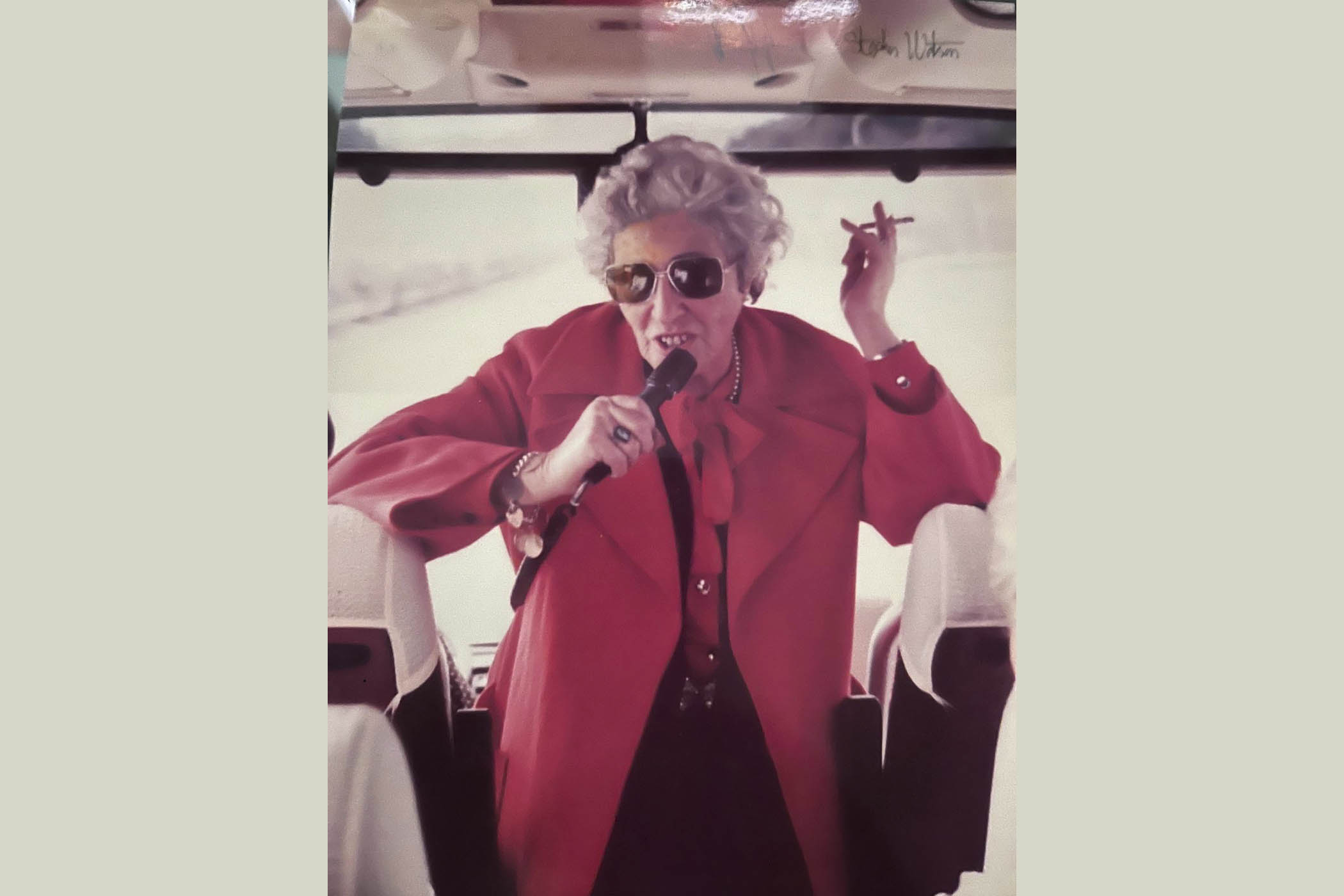
When I was asked to take a seat in the waiting room at the embassy, it all started to catch up with me. What, I wondered, would my grandmother Elsie think if she could see me now. Elsie who had made the decision to pack up the family home in Berlin and fled the Nazis in 1936, who forbade us from buying German cars and, at the same time, kept a collection of pewter plates and taught me to speak German and love hefty plum tarts lathered in whipped cream. What, frankly, did I think of myself?
Initially, I’d been against the idea. After Brexit, some members of my family started to take up the option, available to Jews who had been stripped of their citizenship by the Nazis, to apply for a German passport. To begin with, I felt sad, even disloyal, at the thought of it: Britain had taken us and so many other Jews in; the British had enabled us to make their country our home; we had built a community, lives and livelihoods here. Just because the British people had, madly and sadly, voted to leave the European Union, it felt somehow ungrateful.
Over the following few years, my thinking made less sense to me. I was arguing more and more publicly to rejoin the European Union, but not rejoining myself. I dislike the “pull up the drawbridge” nationalism of so many in the Brexit camp but I didn’t want to resume a relationship with a country and culture that is woven into my family’s story. If there’s a shared world-view that I hope my children can enjoy, it's European enlightenment, and yet I wasn’t giving them the chance to be a part of it. And, yes, I’m sure there was convenience (how brilliant for me and them to be able to live and work and travel and study in Europe). And so, I changed my mind; or, perhaps more honestly, I showed up at the German embassy in Belgravia in two minds.
I was called upstairs. Malin Bruegemann, the German foreign ministry official who had reviewed my application and that of my extended family, explained the process. On 25 November 1941, the Nazi government stripped all German Jews living outside the Reich of their citizenship. She held a folder in her hand. It contained my German citizenship certificate. “When I hand this to you,” she said, “I will be returning something to you that never should have been taken away.” This, she explained, was part of the Federal Republic of Germany’s programme of “making good”, although we know there are some things that you can never make good.
This was more than enough for me. I was in floods. (My family on Elsie’s side – the Alexanders – are renownedly easy weepers: at our son’s bar mitzvah, the synagogue kindly provided a box of tissues under my chair.) Malin asked me what Germany meant to me and it all came pouring out: tastes, phrases, stories and places – history that feels close, that shapes the way you think about the every day.
There’s a choice in writing about this that I’ve been unkeen to make. Journalism exposes so much of what you think, there’s a safety and comfort in keeping some things private. Then again, I’ve been meaning for a long time to say thank-you: I didn’t know that the state could act with such heart. Malin’s approach to the restoration of my citizenship is something I will never forget. It was an act of government, a statement of principle delivered with curiosity and tenderness.
There’s another reason for mentioning it. I read this week that Michael Moritz, the wildly successful tech investor who grew up in Wales and made his fortune in Silicon Valley, is looking to get his German passport too. He told the BBC that the reason was that “Britain is an uncomfortable place for Jews today”.
He cited the murder of two Jews at the Manchester synagogue on Yom Kippur, and the real fear among some Jews in north London who worry about wearing the Star of David on the tube. He could have mentioned too the concern you hear from some Jews about wearing a yarmulke in public or keeping a mezuzah – the small, cased scroll – up by the front door. Others would have wished him to worry about, as they see it (but I don’t), the permanent tilt of the BBC against Israel. There are those in WhatsApp groups tracking the brisk social media traffic in condemnation of Israel that morphs into hatred of Jews, and the on-the-street cases of racial hatred.
Just as most women can tell you a story of jaw-dropping misogyny and most people of colour have an incident of racism that leaves you lost for words, most Jews have an experience of casual anti-semitism – or worse. (Not long after I became head of BBC News, I was at an event and someone asked if I thought my ethnic heritage made me unfit to run a newsroom.) But it’s materially worse since October 7 and the war Israel waged in Gaza. There is a virulence to anti-semitism, some of it menacing, that is on the rise.
Newsletters
Choose the newsletters you want to receive
View more
For information about how The Observer protects your data, read our Privacy Policy
But I don’t agree with Michael Moritz. The hatred of a few is not the culture of the country. Britain is still what my grandmother taught me it is, a place of tolerance, rule of law and fair play, where Jews aren’t afraid of the police; where the prime minister mourns with you at an anti-semitic atrocity; where parliament has just approved plans for a Holocaust memorial; where Jewish culture and history isn’t just respected, it’s celebrated. It is still a place where I feel deeply grateful to be part of a community, where I’m lucky to live my life and feel all walks of life are open to me. It’s not Jews, these days, who are being demonised and othered by a would-be party of government. If things aren’t “comfortable” because of what’s happened since October 7, then, sadly, that’s not only true for Britain but countries across the world, the US included.
Perhaps Moritz wanted to force us to look at the complacency of our times, the echoes of history that are a little too loud these days. Moritz, who has previously talked about how fortunate his family were to find sanctuary in the UK, told the BBC that Germany was more alive to the past. “I think it's the one place in Europe where what happened [nearly] 100 years ago forms a very central part of the educational system, so you have generations that have been reared with that as part of their consciousness. Does that mean it will prevent dreadful things happening in the future? No, but it gives me some mild form of reassurance.”
Michael Moritz says he has UK and US passports already. I’m delighted for him that he’s getting his German passport too, but not as a rebuke to the UK or a metaphorical escape hatch. When Malin handed over my certificate of citizenship, I was reminded, once again, that history is real. It shapes who we are, where we live, how we think. In my case, two histories: the history of anti-semitism and the history of welcome. The reconnection with Germany and, personally, rejoining the European Union has come, hand in hand, with an appreciation of Britain as a safe haven and an open society, a country that I still think is marked out for its compassion and principle, and that I hope will be to others what it has been for us: home.
Photograph: family handout