The EU referendum was one of the most consequential events in modern British history. We all have memories of hearing the news. On polling day, I was walking through a forest north of Verdun in France and stumbled across a remote village détruit, shafts of sunlight piercing through the leaves to illuminate the shattered stones that were once homes.
Messages from No 10 said it was still on track. “Close, but it’ll be fine.” Reassured, I pressed on, every single step I took representing 100 French or German casualties from the battle there in 1916. It was as if they were warning us today that Europe, to avoid further bloodshed and with nationalism again on the rise, needed to remain partners in perpetuity.
I was scouting out a trail along the old front lines of the first world war to fulfil a soldier’s dream to establish a path of peace after the war. He wanted people from all nations to walk it to remind them that what they shared in common was greater than what divided them. Never again! The soldier with the vision was killed months after writing it down. A hundred years on, here I was picking up his baton and trying to make his dream of a permanent “path of peace” across Europe a reality.
The prolonged debate over Britain’s relationship with Europe has been our bitterest national divide since 1945
The prolonged debate over Britain’s relationship with Europe has been our bitterest national divide since 1945
I woke up at three o’clock the following morning to hear the news. Vote Leave had won. It blew me sideways, all the more so for being alone in the midst of the horrors of the world’s first total war. My belief in the necessity for the EU was shaped by the history of European wars. I descended into a pit of worry and rage, arguing bitterly even with my beloved brother who had voted to leave. I poured out my dismay into a book written under the pseudonym Cato the Younger, dedicated to the memory of Labour MP Jo Cox, murdered by a political extremist a week before the referendum. The book concluded by naming the winners from the outcome: they included Donald Trump, Vladimir Putin, Nigel Farage and a host of speculators who had made millions betting against the pound.
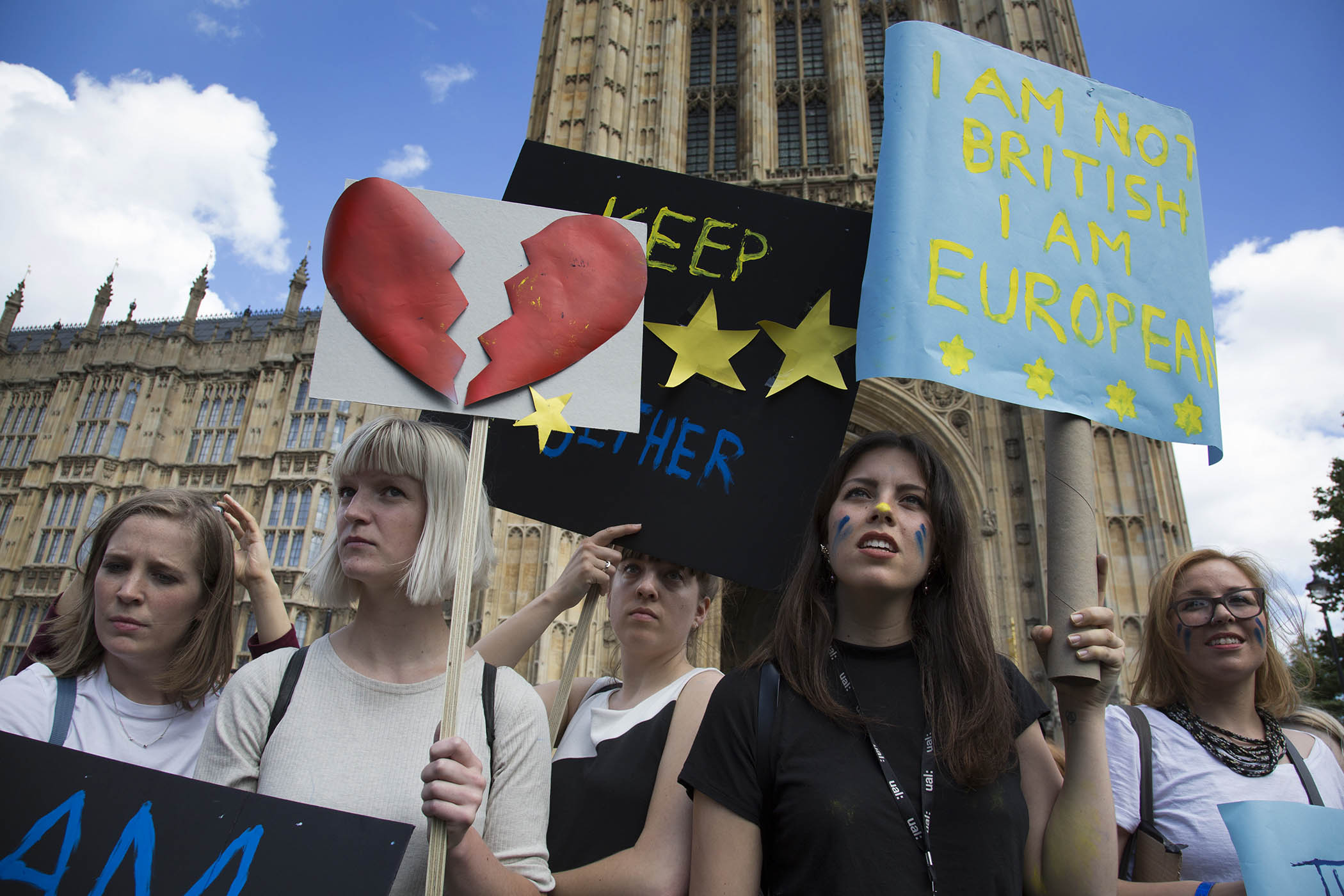
The whole prolonged debate over Britain’s relationship with Europe has been our bitterest national divide since 1945. It has torn apart friendships, families and institutions. Rancour still poisons relationships 10 years on. Five years have been expended extricating Britain from Europe, years that could have usefully been devoted to governing. A reason why it is a debate unlike any other is because it penetrates to the core of our beliefs and identities. For many, where we stood on Brexit defined, and still defines, who we are, our tribe, our sense of self.
I still believe that leaving the EU was a mistake, that the campaign on both sides was unedifying, and that Britain lost out from leaving: those damaged include society’s most vulnerable, as well as small and medium-sized businesses.
But my estimation of the EU became more nuanced. It has performed poorly since 2016 and become mired in bureaucratic brain fog to the detriment of its member states’ interests and Europe as a whole. The Draghi report of 2024 highlighted its lack of competitiveness and dynamism, explaining its steady slide against the US, China and India. Some believe its size and mission, and its obsession with regulation, mean it will never again be a dynamic economic and diplomatic powerhouse in the world – which is precisely why it needed a dynamic Britain prodding it out of its torpor.
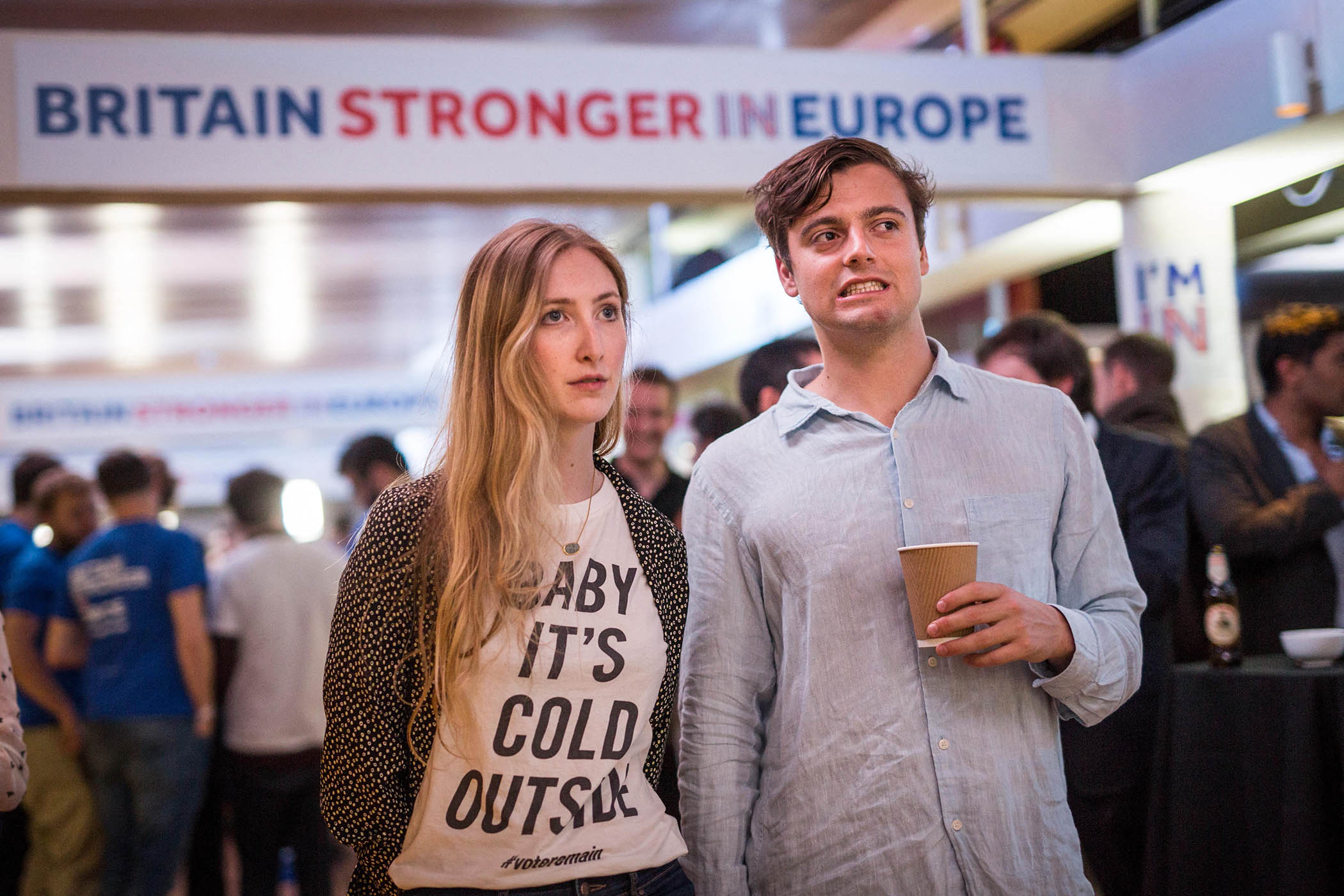
Ten years on though, my outlook has changed. The anger has long gone, replaced by shame for my intemperance and a desire to conciliate, to understand others’ viewpoints and, if possible, to heal. So with the 10th anniversary of the referendum approaching, I decided to edit a book with contributors from all sides of the Brexit divide, to seek out that common ground, to enhance respect and insight into why others feel differently, in the hope that the second decade after the referendum might be less rebarbative. The aspiration was that the long-term interests of Britain and indeed Europe might be prioritised as it faces common difficulties including migration and external aggression, not the least from Russia.
Finding authors from the Brexit side proved a challenge. Two or three of those who made it happen were unwilling to join the spirit of the project. But a good haul did. Douglas Carswell, UKIP MP and cofounder of Vote Leave, opens the volume, followed by Vote Leave’s chair, Gisela Stuart and Paul Stephenson, its director of communications, talking about optimising Britain’s future relations with the EU. The book concludes with Nigel Biggar writing about why he changed from a remainer in 2016 to a Brexiter today. One of my favourite chapters is by the man who for years was the uncompromising leader of the Conservatives’ European Research Group, Steve Baker. While not disavowing any of his views, Baker in association with LSE Prof Paul Dolan – examines the nature of reconciliation and the urgent need for mutual respect in politics today.
The book has more than 30 chapters with a balanced number of pro-EU authors, including David Miliband and Peter Frankopan, and weighty non-combatants including John Curtice, Paul Johnson and Rowan Williams. Handling 40 authors, a potential nightmare, proved light work because all entered into the book’s spirit of thoughtful consideration.
Newsletters
Choose the newsletters you want to receive
View more
For information about how The Observer protects your data, read our Privacy Policy
Some aspects of the whole debate were left unresolved , including the question of money and whether external and illicit flows of cash tipped the scales if at all. Neither was there the space to probe the identity question further. Why exactly did Britain’s membership of the EU provoke such passionately held beliefs, which in many cases trumped objective evidence? Fake news and conspiracy theories spread by social media are undermining the very basis of our western values system based on respect for objective evidence and truth.
The EU matters to Britain. Demonising it and insisting it be held at arm’s length makes no sense
The EU matters to Britain. Demonising it and insisting it be held at arm’s length makes no sense
Will the book have its desired impact? Britain’s deep-seated economic and structural problems, from unemployment among its young to care of its growing proportion of elderly urgently requires a political discourse that is more consensual and long term than in the post-referendum decade. The EU matters to Britain. Demonising it and insisting it be held at arm’s length, as some newspapers, parties and commentators continue to do, makes no sense. It is hurting the prospects of the very people who have already been damaged by their advocacy of Brexit.
Britain cannot return to the EU: it could never rejoin on the same favourable terms, yet more years of governing will be eaten up, and the conflict generated by rejoining would tear our society, whose fabric is already weakened, even farther apart. But optimising Britain’s future relationship with it is both possible and necessary. Doing so will only ever be part of the solution to Britain’s deep problems. But from the least advantaged in the country to big business, a closer relationship matters.
Europe needs to be working more closely with Britain in support of Ukraine and other countries menaced by Russia. Without the growth a more fruitful relationship with the EU will generate, unemployment and social unrest will spread, compounded with job losses from AI. Britain is in its most perilous state since the 1930s. It is confronting a political, an economic, a financial, a technological and cultural crisis. Now, more than ever, we need leaders inspired by what we share in common with our neighbours not what divides us, as in that soldier’s dream. The country has declined further since Brexit: forming a closer relationship with the EU is no longer an option but a necessity.
The Brexit Effect 2016-2026 edited by Anthony Seldon will be published by Cambridge University Press on 18 June (£25). Order a copy from The Observer Shop for £16.99. Delivery charges may apply
Anthony Seldon is a co-founder of the Museum of the Prime Minister
Photographs by Mike Kemp, AFP via Getty Images