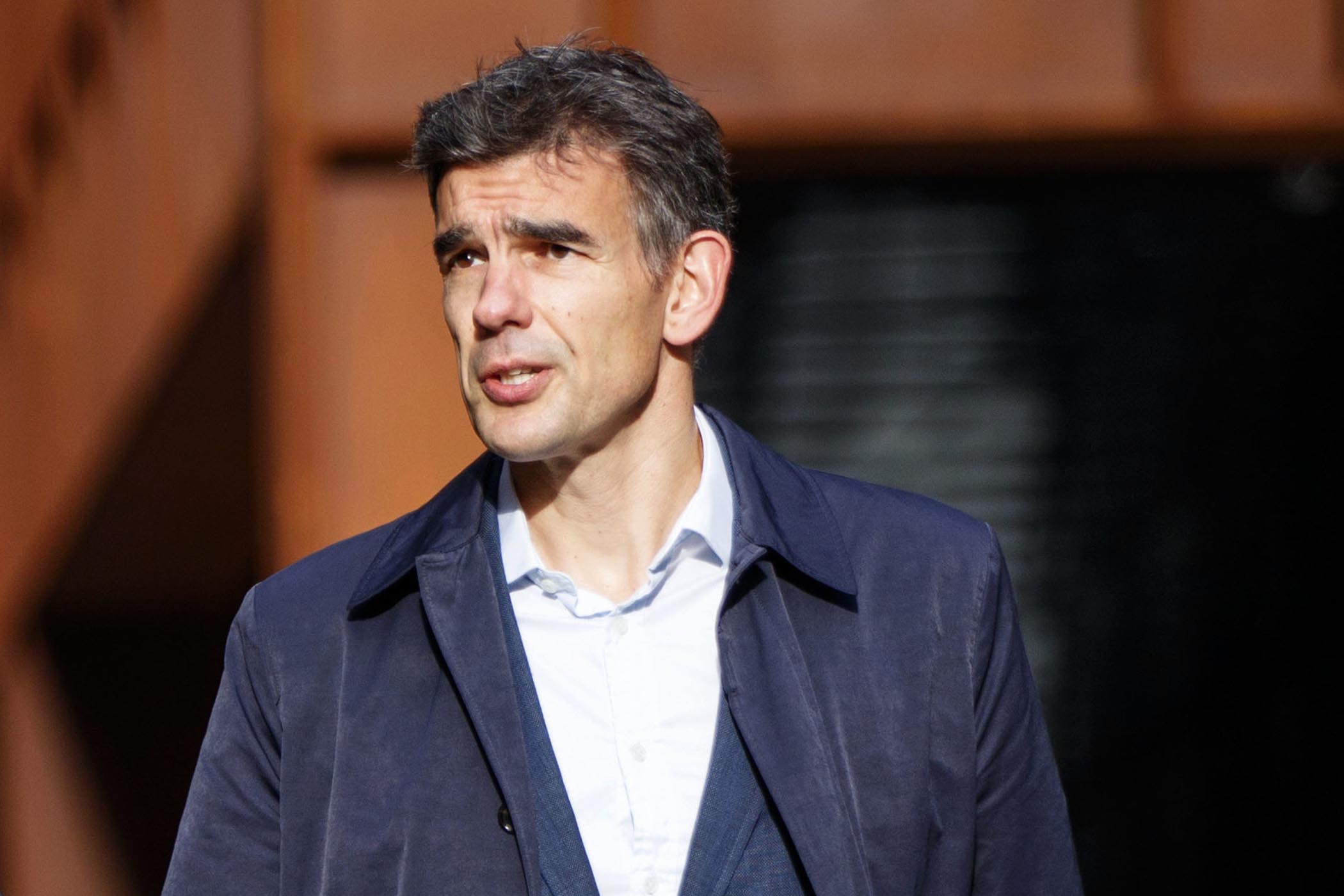



Matt Brittin was widely rumoured to be interested in a political career when he left Google – and now he has got one by accident. The director general of the BBC is not quite the impossible job Tim Davie made it look, but it is a widely misunderstood one. It’s not – or ought not to be – a reward for broadcasting excellence. It is, of course, a job running a vast organisation with more than 21,000 employees, but it is not only that. The BBC is a public body, in spirit and by funding mechanism, and the director general is – like it or not – one of the nation’s most prominent political figures.
Almost all the BBC veterans who opine about the top job suggest that the principal requirement is experience of broadcasting, which Brittin, a former Google executive, conspicuously does not have. But they are all making a category error. The relevant skill is judgment about editorial standards and an active political antenna for where a programme-inspired scandal is about to go, rather than a knowledge about production. The director general gets sacked not when programmes are being put together, but when they fall apart.
Davie made some poor decisions in the role. In the face of internal opposition, he pressed on with a merger of the rolling BBC News channel with the broadcaster’s commercial global service, BBC World News. The merger between a domestic and world audience has been – as, frankly, it was obvious it would be – a fiasco. But that was not what lost him his job.
Instead, it was the sense that he was not a safe custodian of stories that broke into the public realm: whether the presenter of Match of the Day should have something to say on world events; the inadequately slow and soft handling of the egregious case of Huw Edwards; or the allegations of bullying and worse behind the scenes of Strictly Come Dancing.
Davie was finally forced to step down, along with his head of news, Deborah Turness, when an independent production company made a Panorama documentary that spliced together two separate comments by Donald Trump on 6 January 2021 that he uttered more than 50 minutes apart, so it appeared the president was inciting violence at the Capitol in Washington. Davie leaves the BBC with the gift to his successor of a $10bn (£7.5bn) lawsuit filed by the US president that, frivolous as it might be, is not what you want on your first day in office.
Brittin faces a series of very difficult problems. Some of them are the standard ones that every director general faces. The BBC charter expires in December 2027 and he will be pitched straight into a conversation about the terms and references of the elusive idea of public service broadcasting. The BBC’s obligatory funding model in the licence fee has never been harder to justify as the numbers watching television in the old-fashioned way continue their inexorable decline.
Other problems are the kind of internal management issues that happen everywhere. Brittin needs a new deputy – a role the BBC is reportedly creating to assist him – and a new head of news. Budgets are tight and there are going to be more cuts of about 10% over the next three years, which means job losses. It would be foolish – although, at the moment, it seems likely – to make the World Service bear the brunt of the cuts. Even while it is under assault at home, and from the Trumpian right in the US, the broadcaster still has an enviable reputation abroad. This is a common point, but the BBC really is a cheap way to wield soft power.
Then there is the set of problems that are either unusual or peculiarly modern. Brittin has the Trump case to deal with. He has to convince the nation, and its voluble critics in particular, that the BBC is an impartial organisation that serves the whole country. In a recent survey, only 51% of people said it was doing so at the moment. Brittin has to prolong this relationship while also ensuring steady change.
Indeed, his background as a president of Google’s Europe, Middle East and Africa operations is the reason he has been given the job. As the former director general Mark Thompson, now chief executive and chair of CNN, said, Brittin’s appointment is “an advance payment on the future”. The BBC has just signed a landmark deal with YouTube, part of Brittin’s old parish at Google. The BBC will now have to accelerate its shift towards digital, focusing on BBC iPlayer, BBC Sounds and social media to attract younger viewers who prefer streaming over traditional television.
If he really wanted to be radical, Brittin could pay attention to a new report from Nesta in which the innovation charity’s policy adviser, Tony Curzon Price, argues that the BBC is the only institution that can create social media algorithms that respond to understanding rather than outrage.
Newsletters
Choose the newsletters you want to receive
View more
For information about how The Observer protects your data, read our Privacy Policy
Outrage, though, is what Brittin had better get used to. Not content with having his own channel in the form of GB News – a feed that must somehow not be available to people who work at Ofcom – Nigel Farage and his Reform UK party have it in for the BBC. The accusation that the broadcaster exhibits the bias of a liberal elite (if only it did) extends beyond Reform, however, and into the Tory party. The world’s wars – above all, against Hamas in Gaza – bring forth daily claims that BBC foreign correspondents such as Jeremy Bowen and Orla Guerin are biased.
Something will break out of the screen into the newspapers. Greg Dyke resigned as director general in 2004 after BBC journalist Andrew Gilligan aired accusations about the government having “sexed up” intelligence in a dossier on Iraq’s weapons that the Hutton report declared to be “unfounded”. George Entwistle resigned in 2012 after Newsnight wrongly implicated Lord McAlpine in a child sexual abuse scandal.
It will not be the lack of broadcasting experience that counts. It will not be managerial incompetence. People who have worked closely with Brittin speak highly of him as an executive and a manager. It will be political naivety and a failure to recognise that politics is faster than business – and faster than television too – that will consume the new director general if he is not careful. He wanted a job in politics – and now we shall see if he should have been more careful about what he wished for.
Photograph by Tolga Akmen/Pool Photo via AP