


On the face of it, it is odd that private members' clubs appear to be booming. The rich are fleeing the capital. Nightlife is dying. Meanwhile, the hospitality industry is squeezed by higher taxes, tighter margins, a cost-of-living crisis and a new generation that apparently never ventures out of doors. Yet members' clubs – still associated in many people’s minds with faded leather, dwindling membership and genteel irrelevance – are holding up surprisingly well.
“I’m aware of six in development right now,” says Jamie Caring, former commercial director at Soho House, a consultant to new clubs, and the son of Richard Caring, the so-called “King of Mayfair”. Last year the estate agency Knight Frank reported that “more clubs have opened in the past four years than in the three decades following the 1985 opening of the Groucho Club”, and that the “pipeline of prospective openings is the largest it has ever been”. There are now more than 133 clubs in London. Among the newest are Lighthouse Social in Fulham, which opened this year, and the House of Koko, which opened in Camden in 2022. But why now?
Clubland flourished until the mid-20th century, when these male-only, class-based bastions started to look outdated and were displaced by new forms of entertainment. There followed 50 years in the doldrums. But then, in the 1980s, came a wave of new “anti-clubs”, the first of which was the Groucho, on Dean Street in Soho, founded in 1985 by a group of publishers, which cast off old dress codes, targeted members of the arts and co-opted Stephen Fry to help write the club rules. After that came the relaunched Blacks Club, also on Dean Street – the name a riposte to White’s, a famous gentleman’s club – Soho House, Home House and another 60 or so clubs.
The boom was exclusive to London. Private members' clubs once dotted the land but they are dwindling. Norwich stands out as an anomaly, with three. Leeds once had seven but now has none. Only older and richer clubs tend to remain: Edinburgh’s New Club, Manchester’s St James’s Club, Liverpool’s Athenaeum and Artists Club.
Prices vary. Annabel's, one of the five so-called Birley clubs, owned by Caring Sr, is £3,750 a year, plus a £1,850 joining fee, and requires a letter from a member of one of the four others: Harry's Bar, George, Mark's Club or the Bath & Racquets. The Arboretum – a newer club, focused on the environment – is £575 a year, and anyone can join.
Part of the current upswing is cyclical: clubs do well in downturns. Their financial model – pricey to join, cheap to use, subscription-based – is fairly recession-proof. As people reject nightclubs and casinos, they may be looking for a gentler way to spend the evening, somewhere they can make new friends. But the boom may be more fragile than it seems. “The average lifespan of a club is three years,” says Seth Thévoz, a historian who has written several books about London clubs. “The closure rate is 90%. It’s a very speculative venture.”
What has changed, he says, is that there is now a greater readiness to fund them, though he reckons investors may be labouring under the misapprehension that these are easy places to make money: “In fact, they tend to build up huge debt.”
One risk is the enormous startup costs: an exclusive club must be in an exclusive area. In Mayfair, long the centre of clubland, these shaky ventures compete for real estate with international hedge funds. An alternative location might mean somewhere such as Shoreditch or Brixton, still highly fashionable and expensive. Then there's the building itself, which must fight for visibility and prestige. However, Caring warns: “Lots of people come to me and say, ‘We’ve got this place and we’re going to have a members’ club in the basement.’ No one is going to sit in a basement – members’ clubs are really hard to create, foster and sustain. It has to be the best three floors in the building, with the best view.”
And, once up and running, clubs often run into problems. “Members want the best of everything – the best architect, the best chef – but they don’t want to pay full price for it,” says Thévoz.
Famous older clubs such as White's, Boodle’s and the Athenaeum are mostly doing fine: they have either paid off their mortgages or found cheaper ways to remain in their buildings, through trusts, legacies and charities. And there is no need for frantic marketing: membership rolls tend to be stable and quietly replenished. The new generation of clubs can also act as recruiters for older ones: Londoners join a buzzy club in their thirties and may drift into the Athenaeum in their forties.
Even so, some legacy clubs have needed to adapt. “If you look at Annabel’s, it would never have survived if it remained an underground nightclub,” says Caring. “People don’t want to pay for nightclubs. Instead, it’s become much more of an all-day venue. The Sloane Club recently did a huge refurb – they added a workspace and a gym.” Morton’s is one casualty, he says, “because it was only seen as a nightclub”.
And for how long will Boodle's, Brooks's, Buck's, the Travellers and the Savile remain the exclusive preserve of men, when this is now, rightly, being challenged? In 2024, the Garrick was rocked by criticism: many on its star-studded membership list espoused diversity and inclusion in their professional lives but remained part of an all-male club. It voted to drop the men-only rule, but as of this summer had admitted only three women: Judi Dench, Siân Phillips and Celia Imrie.
There are some pitfalls newer clubs can avoid. One, according to Caring, is to stop them from becoming pseudo offices – something he says kills a club because people make fewer social connections and want to leave at the end of the day. While people are often happy to keep paying their membership fees for a social club, on the off-chance they will want to pop in, shared workspaces follow different rules: if you cease to need it, you cancel your subscription. Soho House became a sea of laptops in the 2010s; it eventually restricted them to designated times and areas. But this policy remains contentious with members, many of whom want to work there.
The clubs that survive are likely to grow slowly, curating their memberships and gradually establishing themselves. At the centre of the current boom is a question: how do you expand when you are supposed to be exclusive?
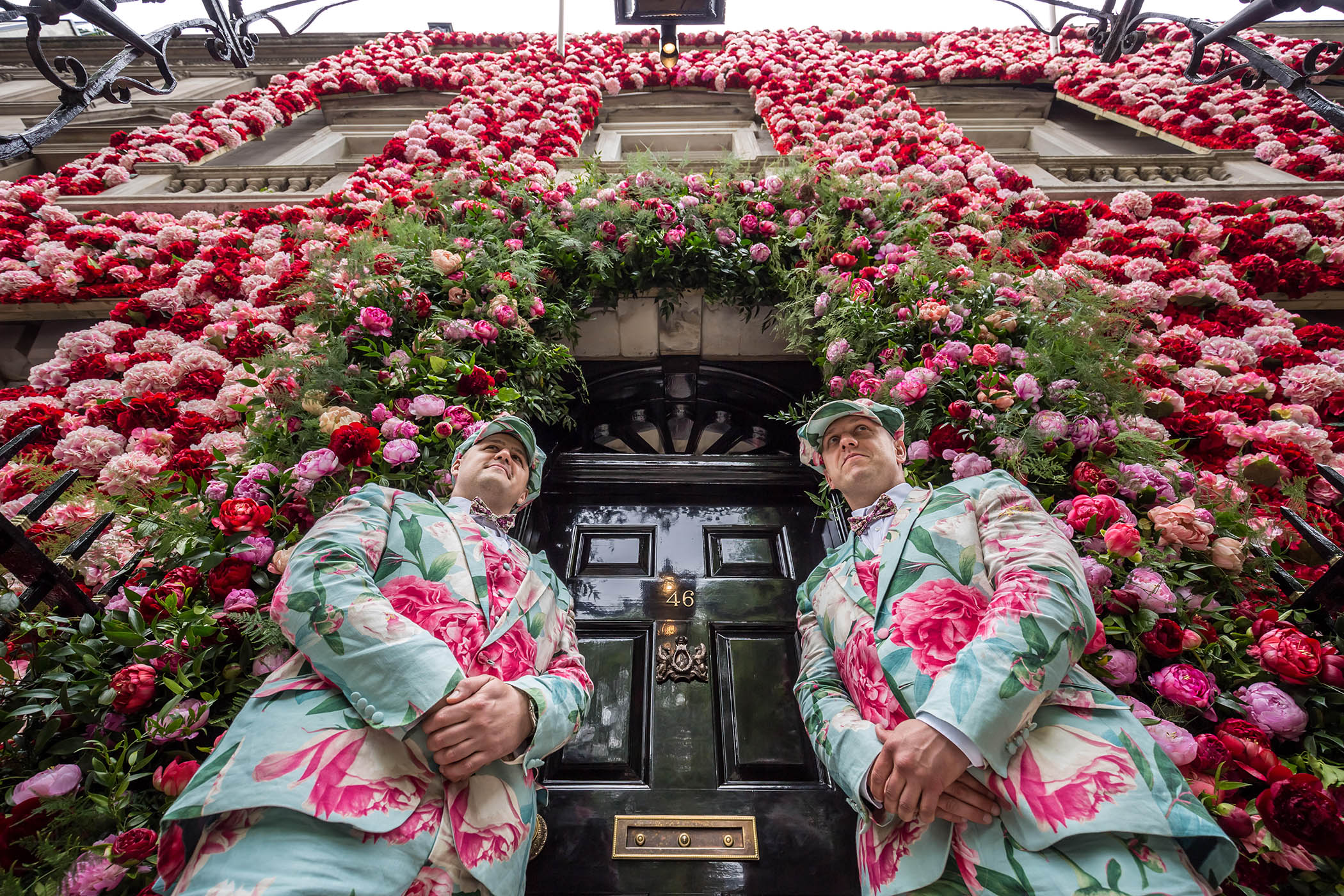
Photograph by Guy Corbishley / Alamy
Newsletters
Choose the newsletters you want to receive
View more
For information about how The Observer protects your data, read our Privacy Policy